
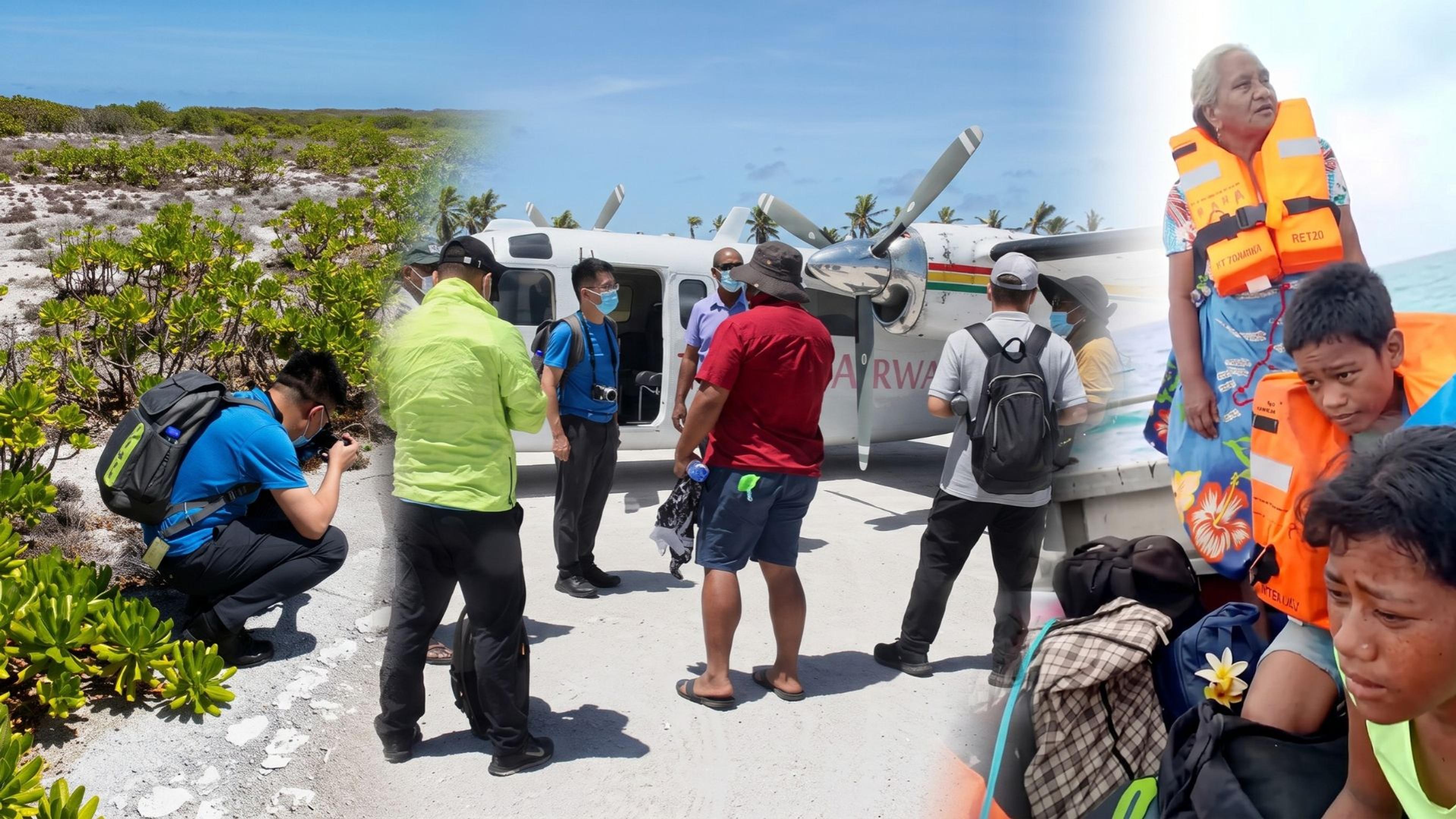
Residents of remote Kanton Island have been relocated to Tarawa with 24 hours' notice as El Niño conditions and poor housing add to concerns about the island's future.
Photo/PMN News composite
Pacific Region
Pacific climate threat grows as residents in Kiribati evacuated and Fiji set to close schools
From Kanton residents being moved to Tarawa with a day's notice to drought-hit communities running short of water, governments are facing growing pressure from extreme weather and El Niño.

PMN News
Published
24 November 2026, 8:20pm
Share
Copy Link
Top stories

Tuilaepa says he invited Kennedy to Sāmoa to boost tourism and not change vaccine policy
Christine RovoiTue, 24 Nov

Pacific diabetes burden puts traditional foods back into spotlight
Aui'a Vaimaila Leatinu'uMon, 23 Nov
Top stories
Tuilaepa says he invited Kennedy to Sāmoa to boost tourism and not change vaccine policy
Christine RovoiTue, 24 Nov
Pacific diabetes burden puts traditional foods back into spotlight
Aui'a Vaimaila Leatinu'uMon, 23 Nov
Pacific communities are facing a fresh wave of climate pressure.
The Kiribati government has evacuated an entire remote island and Fiji is preparing to close every school for five days because of a worsening El Niño drought.
On Kanton Island (Canton or Abariringa), a former United States military base, about 40 to 50 residents have been told to leave their homes with just 24 hours' notice and travel to the Kiribati capital Tarawa.
Most of those living on the remote atoll are government workers and missionaries.
The office of Kiribati President Taneti Maamau says the temporary move is needed because of strong El Niño conditions, poor housing, the island's remote location and the difficulty of providing emergency help quickly.
But residents have reportedly been told they may not return for up to four years while housing, infrastructure and support services are upgraded.
Watch the impact of El Niño in Kiribati below.
Social media messages from residents describe the sadness of leaving their homes and gardens behind.
“Kanton my land! We are leaving you behind and with all our memories,” one translated message said.
The evacuation has also raised wider questions about the future of Kanton, which sits in a strategically important part of the Pacific between Fiji and Hawaiʻi.
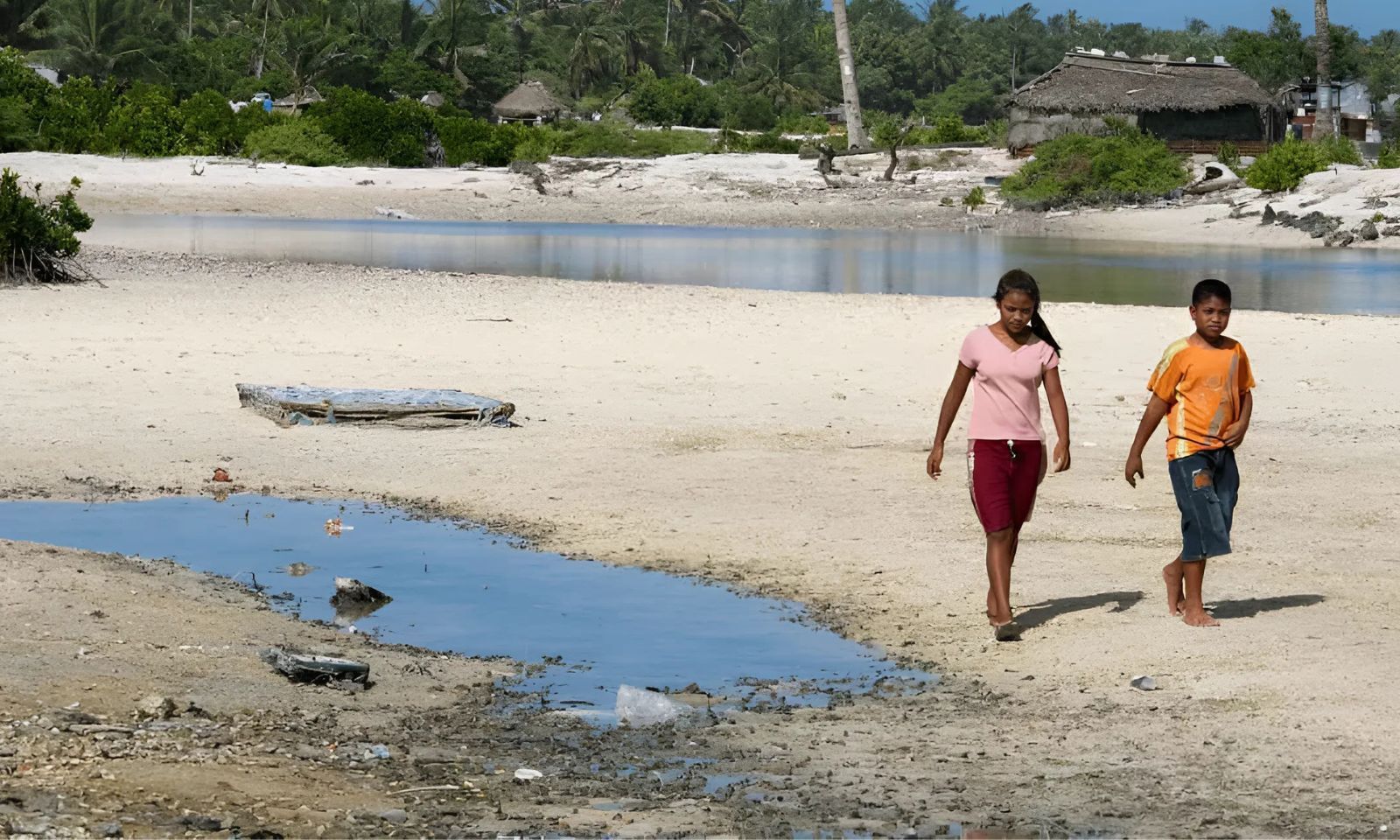
El Niño conditions and poor housing add to concerns about the island's future. Photo/UN/Eskinder Debebe
Kiribati switched diplomatic relations from Taiwan to China in 2019. In 2023, a Chinese technical team funded by Beijing visited Kanton to carry out a feasibility study for an upgraded runway.
New Zealand's caretaker government says it is aware of the evacuation and is monitoring the situation.
Massey University defence and security expert Associate Professor Anna Powles says any Chinese involvement in future development of Kanton would raise serious concerns for New Zealand, Australia and other regional partners.
“There will be serious questions raised about the nature of the infrastructure and China's intentions on Kanton and surrounding maritime areas... given its strategic value," she told TVNZ 1News.
Kiribati's government has previously said Kanton would not be used for military purposes and has promoted plans to develop the island as an eco-tourism destination.
While Kanton faces an uncertain future, Fiji is taking a different kind of emergency measure as drought worsens.
Watch Fiji's Prime Minister Sitiveni Rabuka's announcement of a National State of Disaster below.
All schools across Fiji will close to students from Monday 30 November to Friday 4 December under a Ministry of Education directive issued after the government declared a 30-day National State of Disaster over the El Niño drought from 10 November.
Teachers and school staff will continue working while school sports competitions and other events during the closure will be cancelled.
The government says the closure is a precaution to protect students as water supplies come under increasing pressure.
On Batiki Island, 354 people are also receiving emergency drinking water from Germany. The shipment contains 30,600 litres of bottled water for 82 households and is due to arrive on 26 November.
“When the community of Batiki approached us for assistance, we recognised the urgency of their situation and wanted to provide practical support,” German Ambassador to Fiji Nicole Menzenbach said.
The drought is also affecting Solomon Islands where the Australian Defence Force has delivered 535,000 litres of drinking water to communities in Western Province.
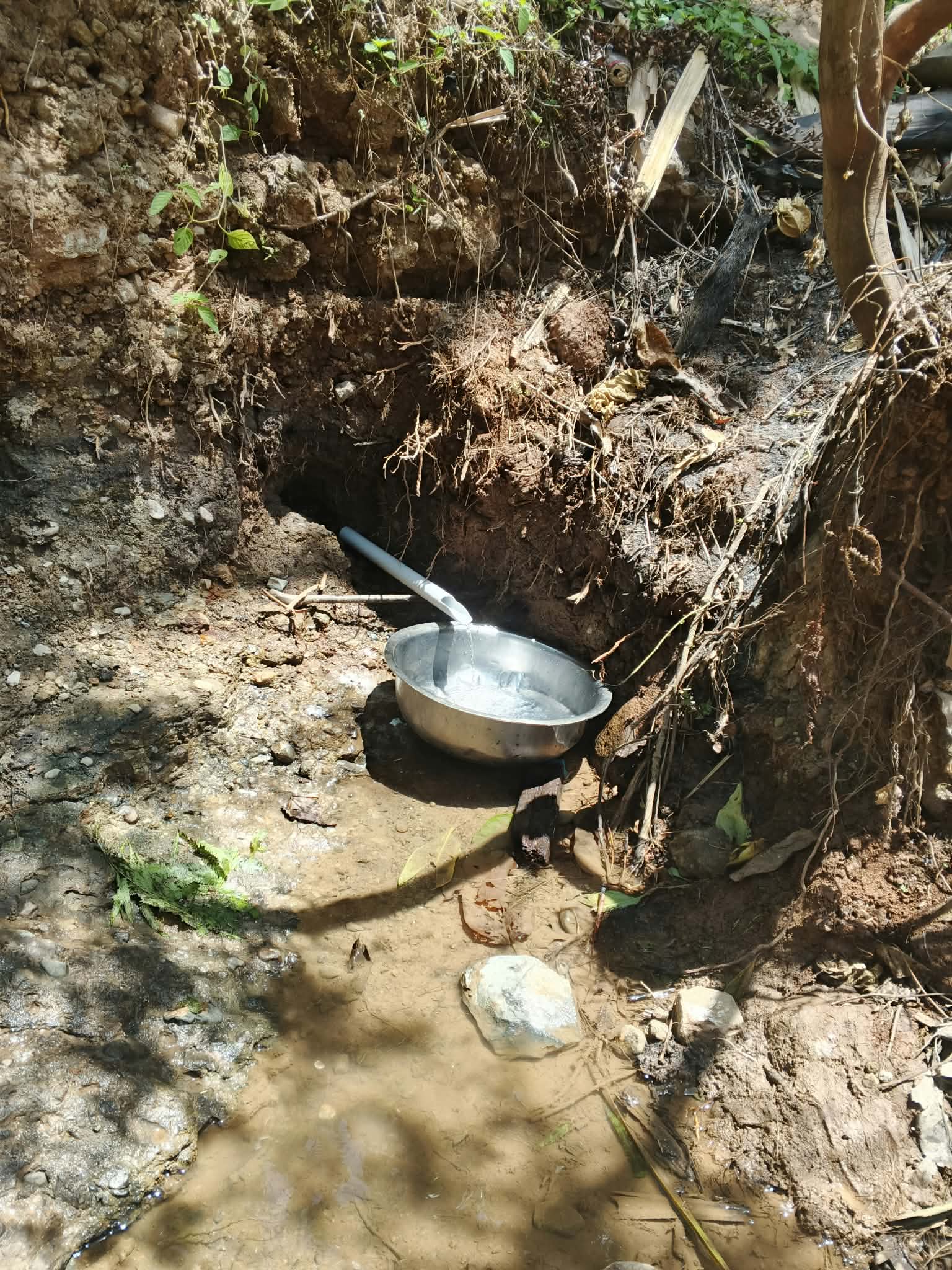
One of the water sources in Gizo Town, Solomon Islands, has dried up as prolonged dry conditions linked to El Niño continue to affect parts of the Pacific. Photo/Lorina Tulo Eddie
The water, produced through a desalination plant aboard ADV Reliant, is being distributed to Gizo, Noro, Nila and Simbo, with government barges taking supplies to outer islands.
In Vanuatu, authorities are dealing with reported outbreaks of dengue fever and diarrhoea alongside water shortages while water tank projects are being accelerated on Epi, Ambae and Santo.
The wider weather pattern is also raising concern about the cyclone season.
Climate scientists say the strong El Niño is shifting cyclone risk further east towards countries including Tonga, Niue, Sāmoa, the southern Cook Islands, Wallis and Futuna and French Polynesia.
The region has already seen Tropical Cyclone Wati form in October and Tropical Cyclone Xavier reach Category 5 strength near the northern Cook Islands last week.
Listen to Cook Islands Prime Minister Mark Brown's update on Cyclone Xavier below.
Regional agencies have established an El Niño Working Group to monitor the growing impacts.
Officials say the challenge is increasingly about managing several pressures at once - drought, water shortages, extreme weather, cyclone risk and the rising cost of protecting remote communities.