US senators investigate RFK Jr over disputed Sāmoa vaccine claims
Christine RovoiMon, 16 Nov
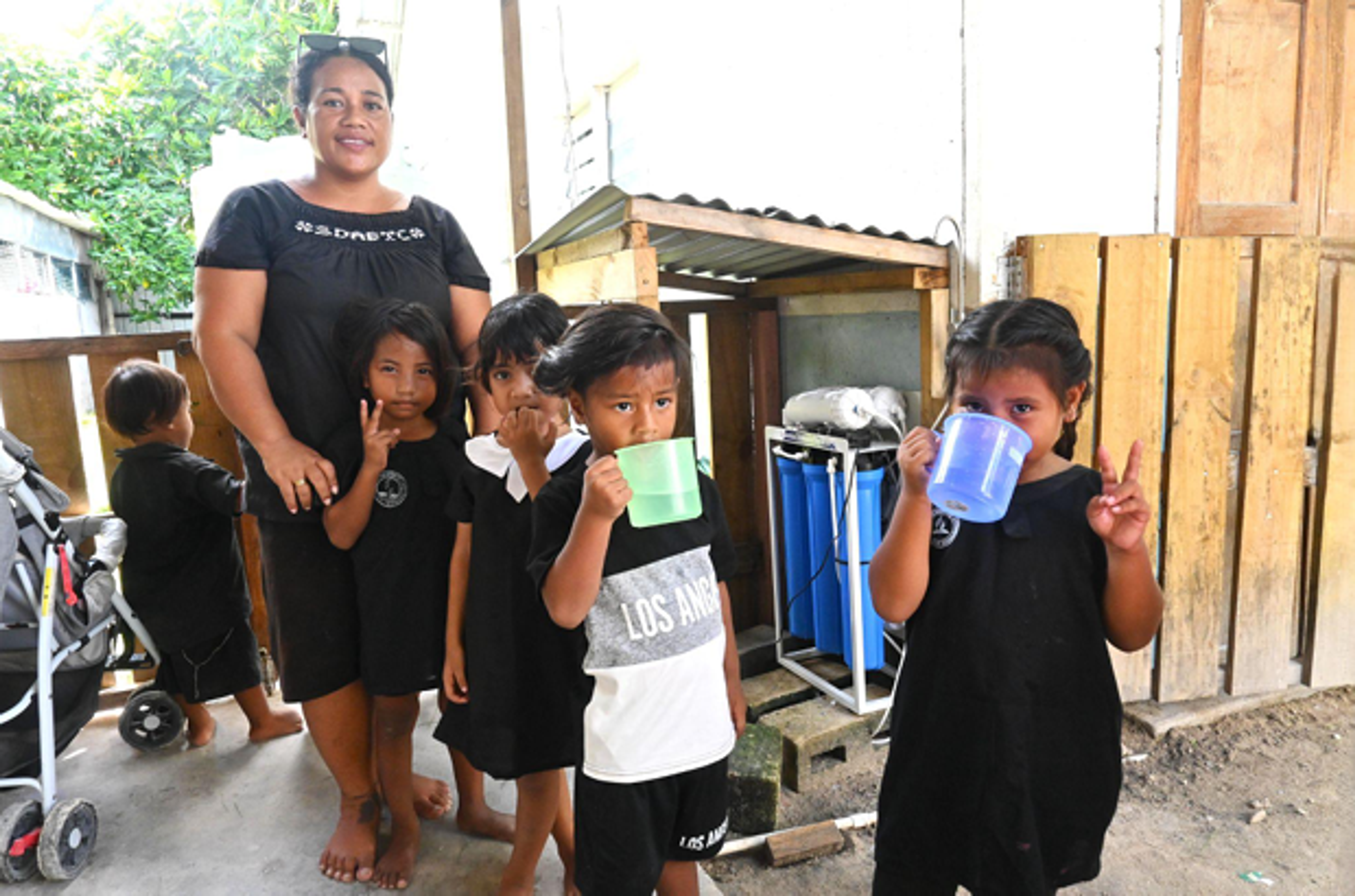
Children at SDA Besio Preschool in Kiribati with water purified by solar-powered systems.
Photo/Supplied
Over 4500 children now have clean drinking water as drought, saltwater intrusion and pressure on freshwater supplies put more communities at risk.


Thousands of children in Kiribati are now getting a safe drink at school and becoming less dependent on whether the rain comes.
Twenty-one solar-powered drinking water systems have been installed at 15 preschools and six schools in South Tarawa.
This also gives over 4500 children access to a more reliable source of clean water.
The project comes as countries across the Pacific face growing pressure on freshwater supplies.
A 2025 report by the Pacific Community found 76 per cent of Kiribati's population had access to at least basic drinking-water services.
In Solomon Islands, the figure is just 67 per cent, according to the United Nations Children’s Fund (UNICEF).
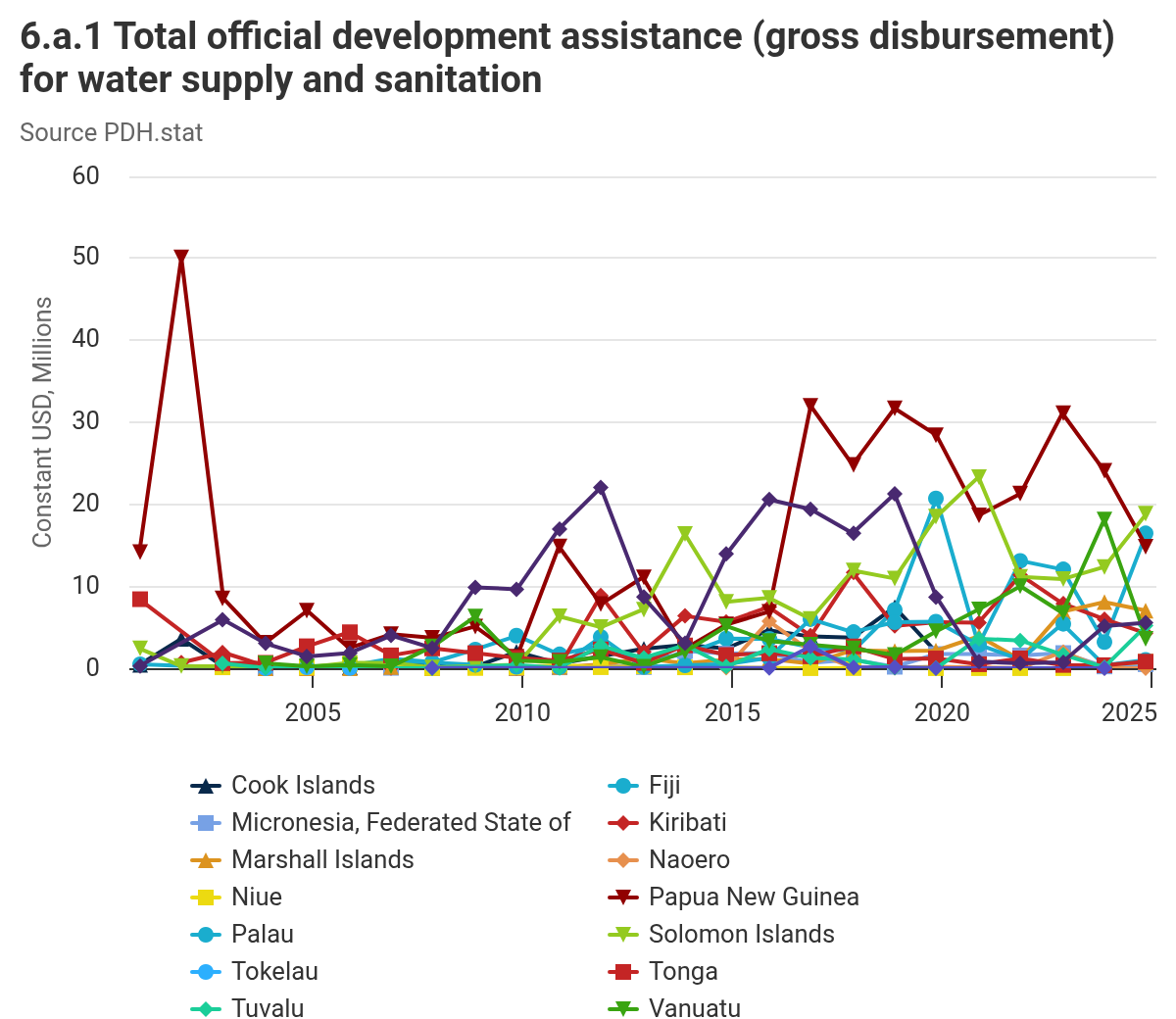
Image/Pacific Data Hub
A joint report by UNICEF and the World Health Organization (WHO) released in 2025 found the Pacific is not on track to achieve universal access to basic drinking water by 2030, with climate-related disasters adding pressure to vulnerable water supplies.
"Millions of people in the Pacific still lack something as basic as clean water, a toilet, or a place to wash their hands,” a UNICEF statement reads.
"Water, sanitation and hygiene are not privileges, they are basic human rights … We must accelerate action, especially for the most marginalised communities."
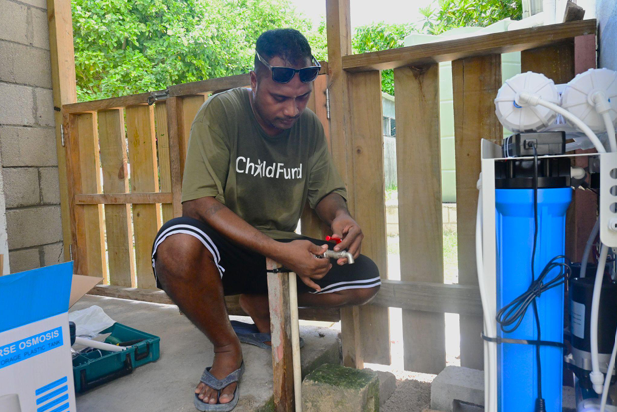
A worker installs a solar-water system in Kiribati. Photo/Supplied
In Kiribati, long dry periods can leave families struggling to find enough safe drinking water while saltwater intrusion can make groundwater unsafe to drink.
“During prolonged dry periods, families often struggled to access enough safe drinking water. In some communities, groundwater was also affected by saltwater intrusion, making it unsuitable for drinking,” Okoro Iuka, Climate Resilience Programme Manager with ChildFund Kiribati, says in a statement to PMN News.
Iuka, who was born and raised in Tabiteuea North, says reliable access to clean water can ease pressure on families and improve health and hygiene.
“It helps reduce people's exposure to waterborne diseases and is particularly important for children, older people and other vulnerable members of the community,” she says.
“It also helps reduce the daily burden of water collection, especially for women and children, and gives communities greater confidence in managing their water needs.”
Josie Pagani, Chief Executive of ChildFund New Zealand, says for some families, treating unsafe water.
“Others boiled their supplies to make them safer, but the cost of fuel made boiling water unaffordable for some, while the process also took time away from other daily activities,” she said in a statement.
Pagani says the consequences can reach into the classroom with waterborne illness affecting children’s ability to attend and concentrate at school.
"Children should be able to concentrate on learning without worrying about where their next drink of water will come from. Access to drinking water isn't just lifesaving. It's fundamental to the future of these kids."
The 21 systems were installed by a local engineering company at a cost of about NZ$42,860, covering freight, installation and practical training.
Each school nominated a representative to learn how to operate and maintain the equipment, with the aim of giving schools and communities the skills to keep the systems running.
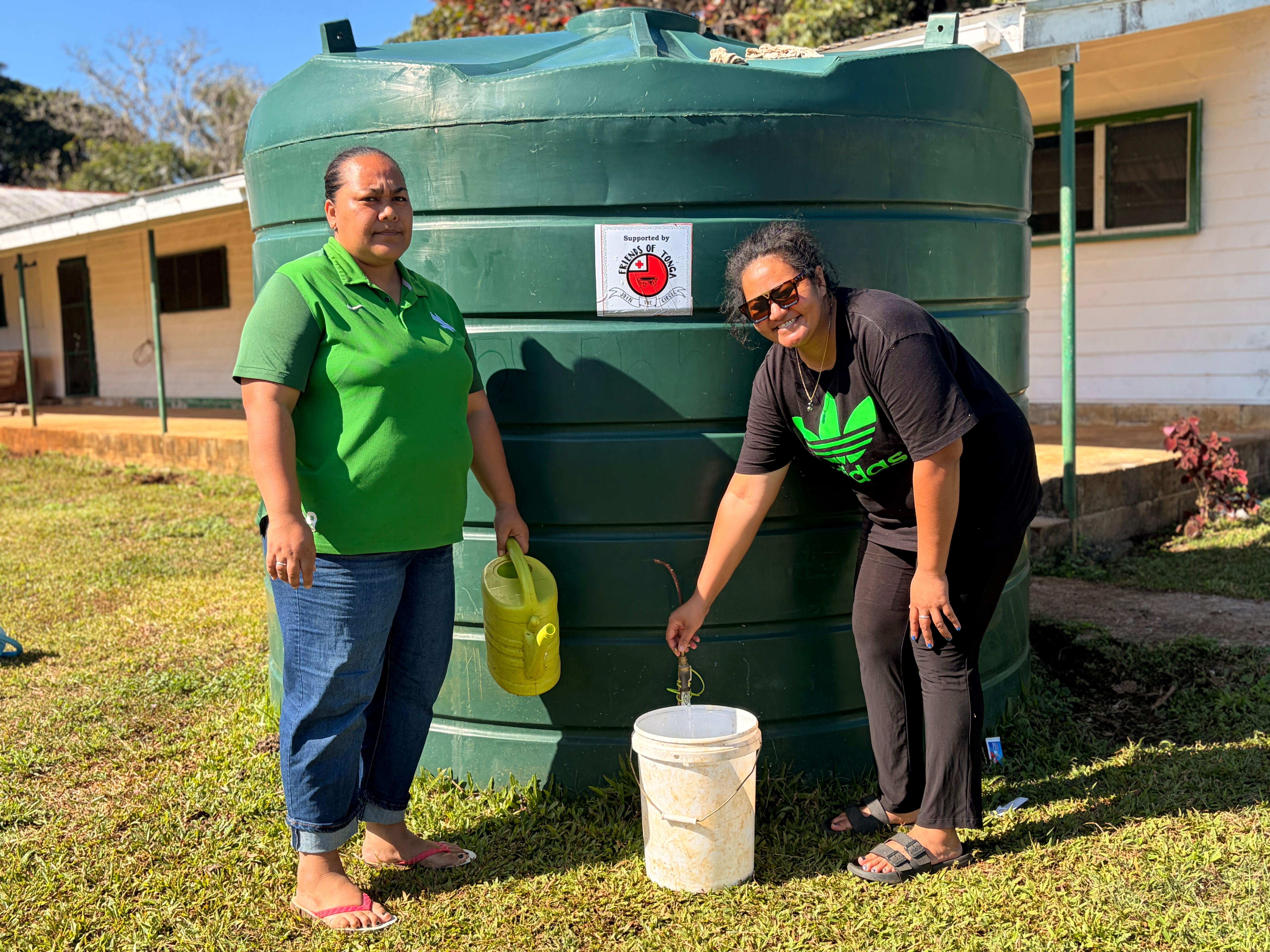
Water tank installation completed in Vava'u. Photo/Civil Society Forum of Tonga/Emosi Cagi
The Netherlands funded the installations, which complement ChildFund Kiribati's wider water projects under its Impact Pacific programme, supported by New Zealand's Ministry of Foreign Affairs and Trade.
Pagani says the project shows how different governments, funders and aid organisations can work together as international aid budgets come under pressure.
Iuka says similar work is already taking place in Kiribati's outer islands. In Kiebu in Makin, local people have been trained to maintain 11 solar-powered water systems.
“This shows that the work is not only about providing infrastructure, but also building community ownership and responsibility for sustaining these services.”
But the new systems are not a solution for everyone.
Despite the new installations, Iuka says many communities across Kiribati still lack reliable access to safe drinking water.
“The needs are much greater than what individual projects can address.”
Iuka is calling for continued investment and stronger partnerships to reach more communities and ensure people across Kiribati are not left behind.