
They lost their dignity': Lupus pushing Pacific women out of family and community life
Thomas Tarurongo WynneWed, 07 Oct
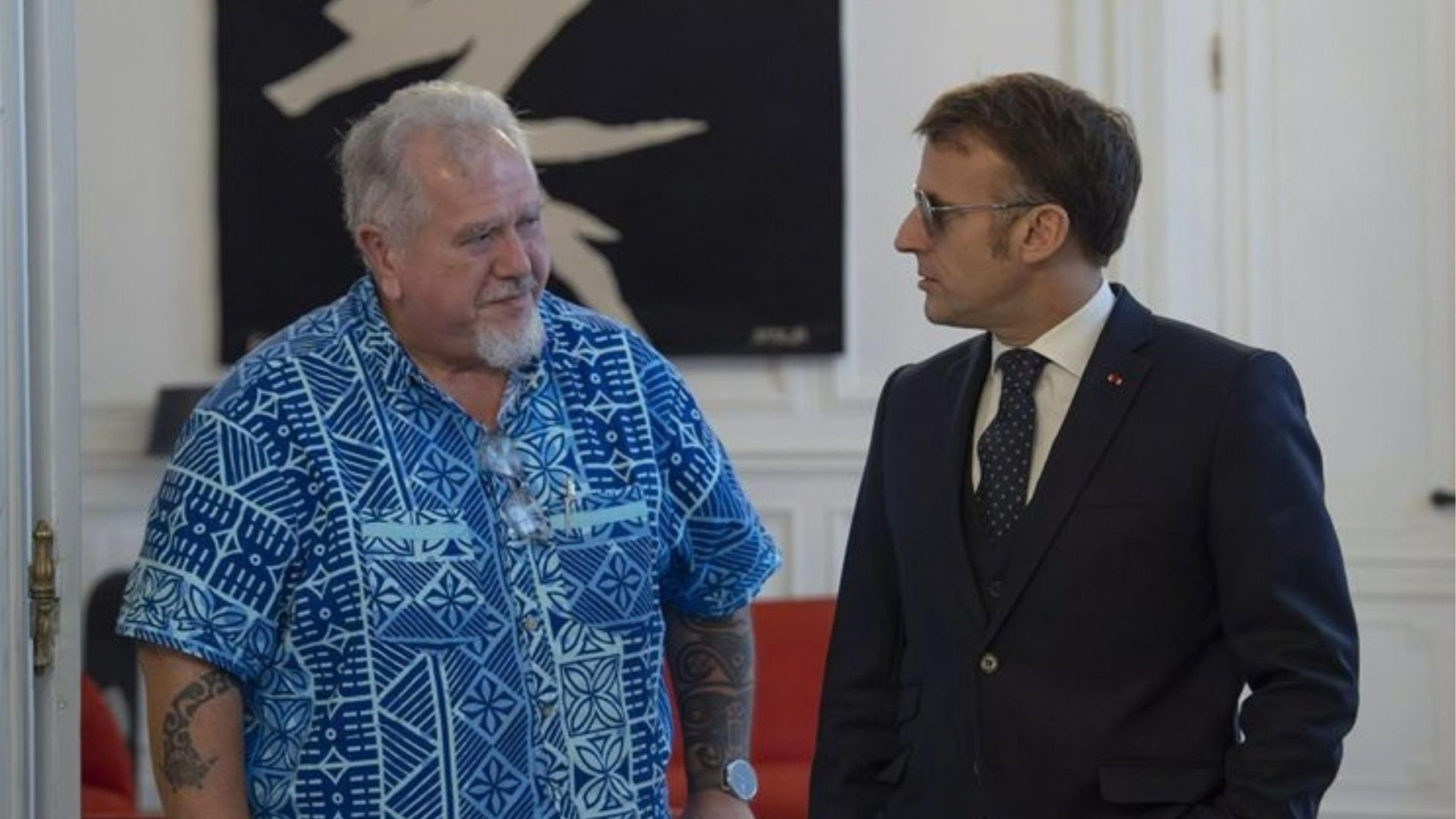
French Polynesia President Moetai Brotherson, left, and French President Emmanuel Macron in Paris in January this year. Brotherson this week called for a UN-backed dialogue on French Polynesia’s political future.
Photo/Facebook/radio.1tahiti/file
President Moetai Brotherson says the people of French Polynesia must be able to freely decide their political future as Paris maintains its opposition to a United Nations role.

French Polynesia President Moetai Brotherson has put a three-step plan to the United Nations for deciding the territory’s political future.
He has challenged France to finally engage in a decolonisation process.
Speaking to the UN Fourth Committee in New York, Brotherson said the process had reached a “deadlock” 13 years after French Polynesia was placed back on the United Nations' list of Non-Self-Governing Territories.
“Sadly, our decolonisation process has reached a deadlock,” Brotherson said. “13 years after our inscription on the UN list, France has yet to engage in a structured dialogue under the auspices of the UN.”
His proposed pathway would begin with information and education on the different political status options available to French Polynesians.
The second step would be a UN visiting mission to hear directly from people in the territory.
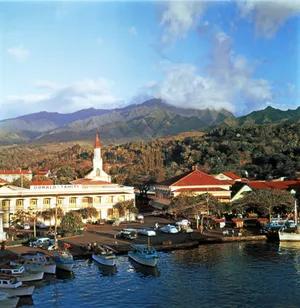
French Polynesia has been on the UN list of Non-Self-Governing Territories since 2013. Photo/Britannica/file
The third would be an agreed pathway towards a referendum allowing the people to decide their political future.
Brotherson stressed that he was not asking France, the UN or his own government to decide the outcome.
“No predetermined outcome, no unilateral imposition. We are not asking France to decide our future. We are asking France to stop preventing us from discussing how we will decide it,” he said.
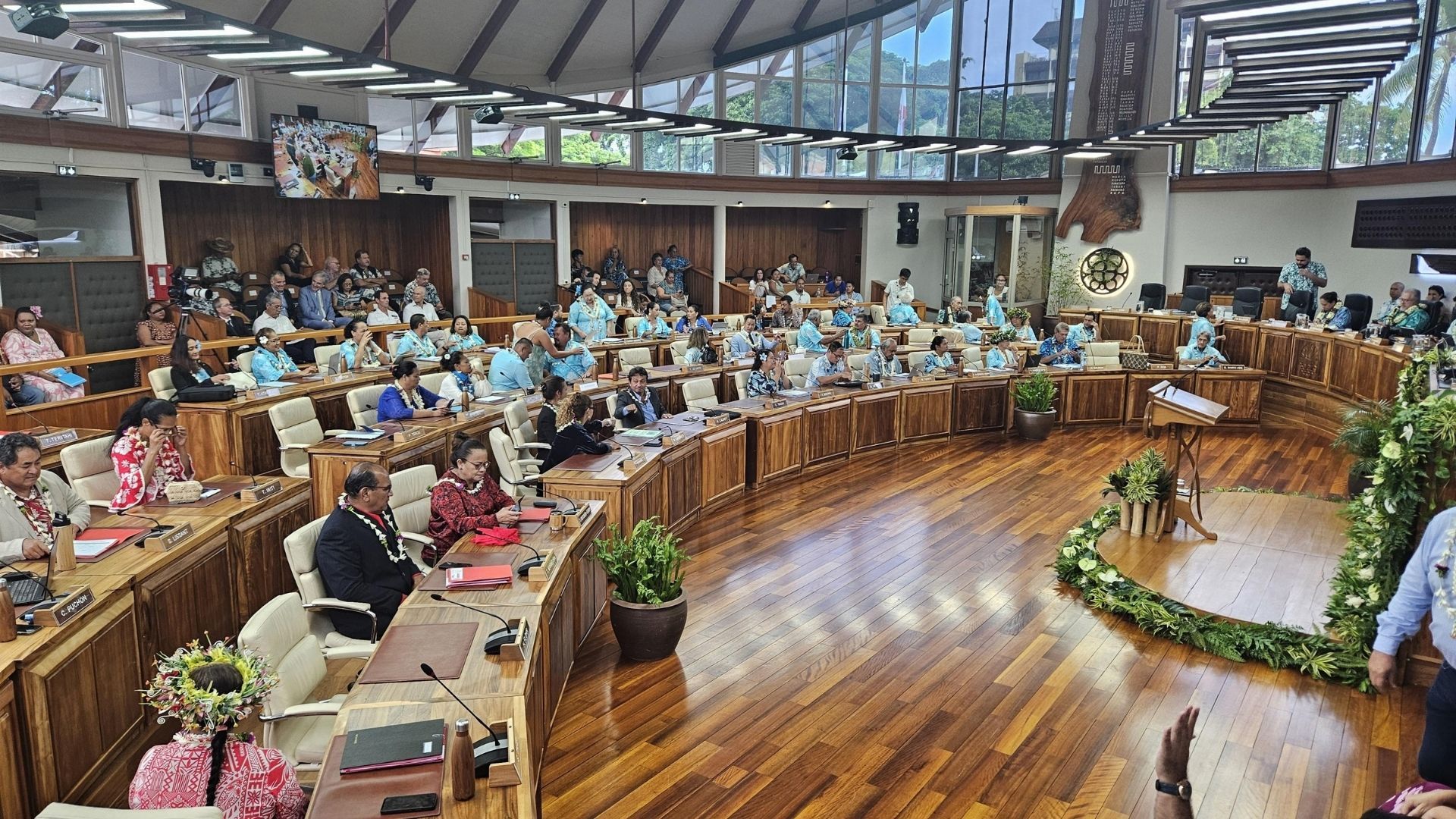
The French Polynesia Assembly backed a resolution calling for dialogue on the territory’s political future, with support from its three main political groups. Photo/tahiti-infos.com/file
The call comes after an unusual show of political unity in French Polynesia.
On 24 September, the territory’s Assembly adopted a resolution backed by its three main political groups, bringing pro-independence and pro-autonomy forces together around the principle that the people should have the right to choose their future.
Brotherson said that unity showed that political forces could disagree on the destination while still agreeing on the right of the people to choose it.
“Our future cannot remain solely a French domestic matter,” he said. “We are asking for a true decolonisation dialogue grounded in international law, involving France, the institutions and political forces of French Polynesia, with the United Nations associated with the process.”
But France has again rejected the idea of UN involvement in the process.
Its representative told the committee that French Polynesia has extensive political autonomy under the French Constitution.
France said its relationship with French Polynesia was based on direct dialogue between Paris and the territory.
“This dialogue is constant and direct. It does not provide for any role for the United Nations,” the representative said.
France also said President Emmanuel Macron and the French Government would consult political stakeholders in French Polynesia while maintaining its position on the UN's role.
Brotherson also raised the legacy of France’s 193 nuclear tests in French Polynesia and the territory’s ocean and deep-seabed resources, saying questions about their future should involve the people.
He linked the push for dialogue to the need to avoid further political tensions in the Pacific.
“The recent history of Kanaky New Caledonia reminds us that dialogue must come before violence, not after it,” he said, stressing that he was not making a comparison or a threat.
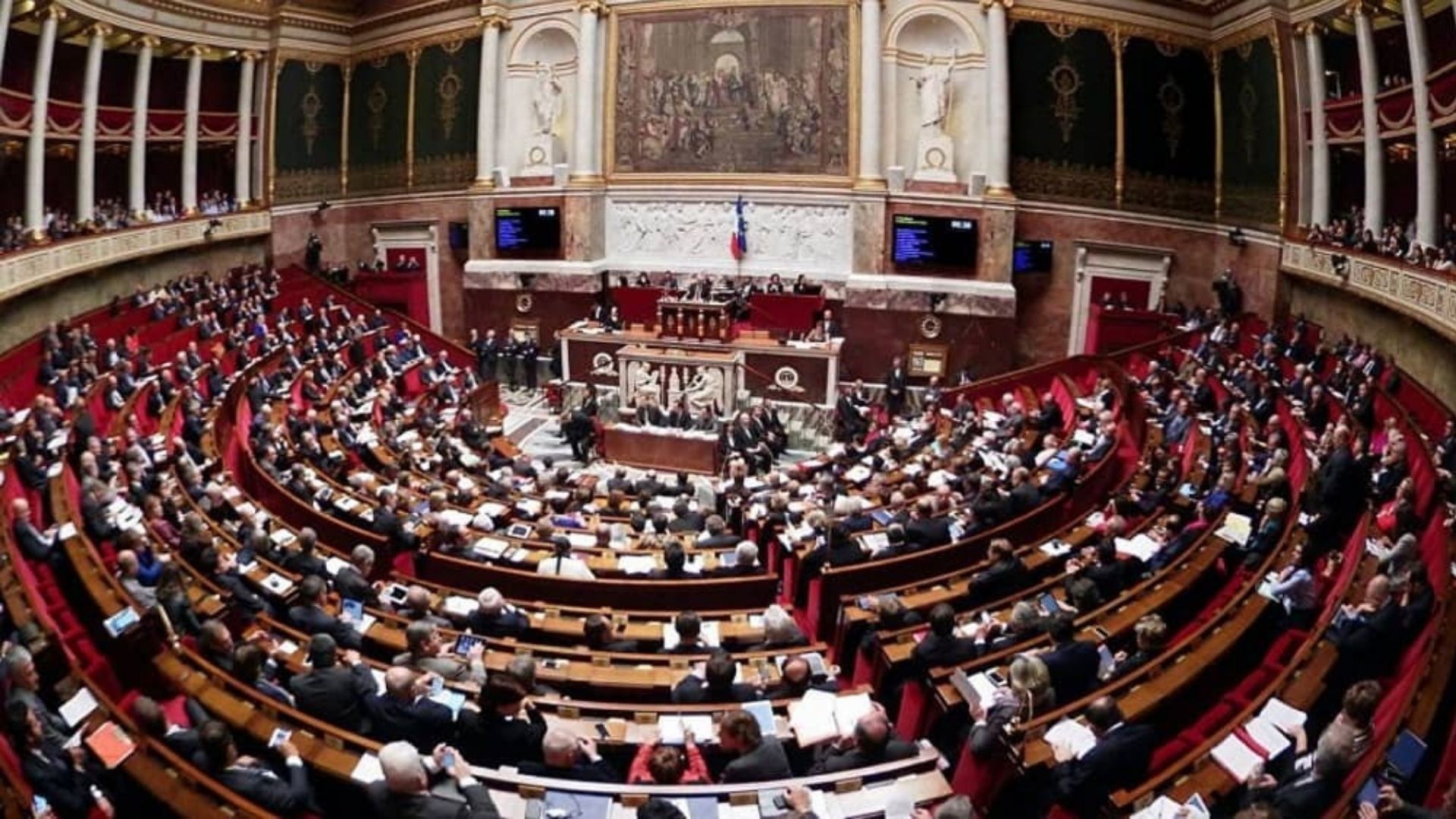
The French National Assembly in Paris, where French Polynesia’s political status remains part of France’s wider constitutional and political framework. Photo/France National Assembly
Brotherson also directly challenged French President Emmanuel Macron, noting the UN committee session was the last during Macron’s two presidential terms.
“When he leaves office, 14 years will have passed, 14 years during which France could have chosen dialogue,” he said.
“For 13 years we have asked, we have sought, we have knocked. Now is the time for France to open the door. Let us open the decolonisation dialogue,” Brotherson said.
The French Polynesian government is seeking UN involvement in a formal decolonisation process while France maintains that the territory’s future should be discussed directly between Paris and French Polynesia.