
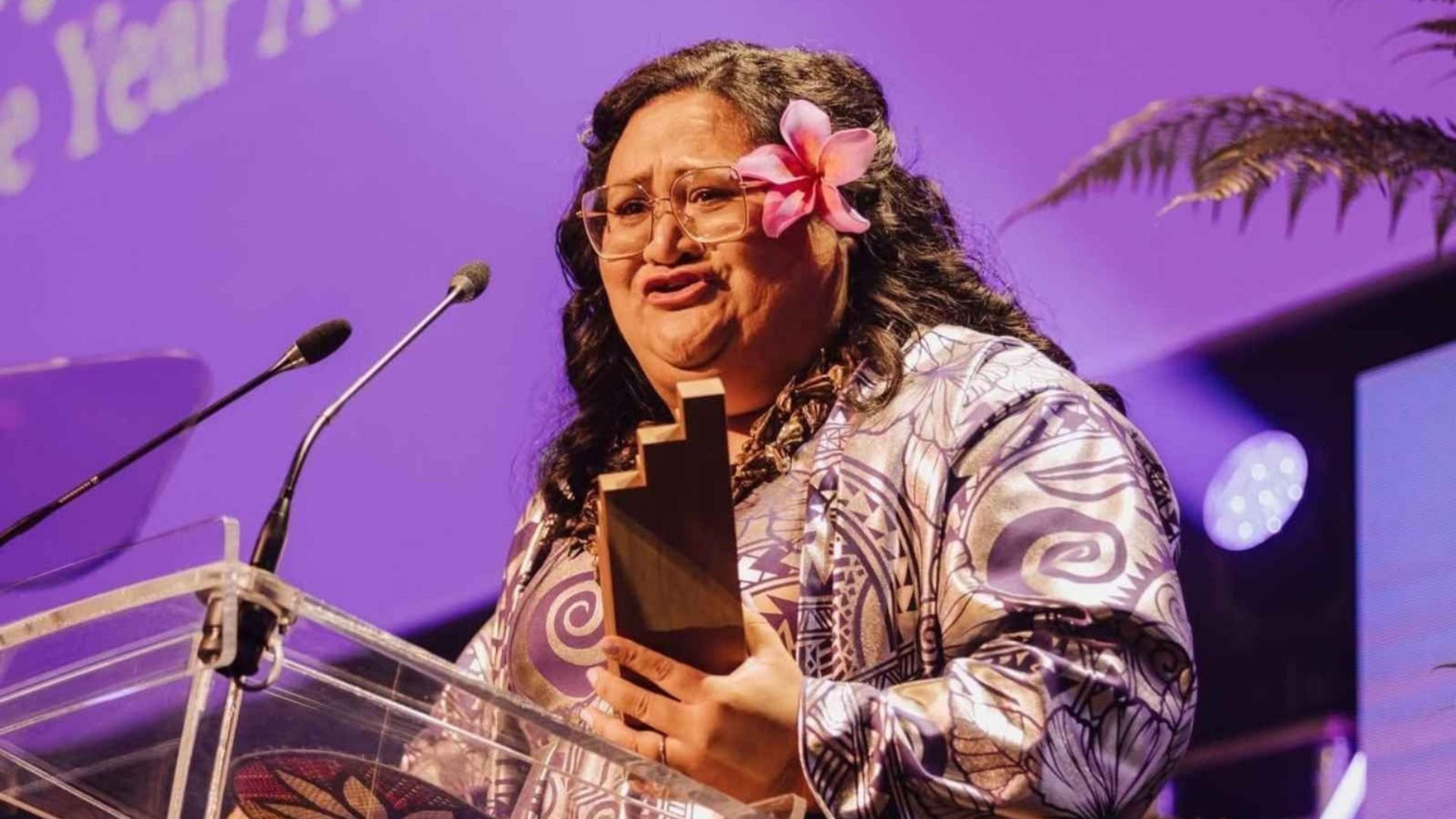
Namulau’ulu Nu’uali’i Eteroa Lafaele-Wharewaka, pictured at the Young New Zealander of the Year awards, has now been named the recipient of AUT’s inaugural Technology and Innovation Award.
Photo/Facebook/NZ of the Year awards/file
Technology
From AUT student to Pacific tech leader: Lafaele wants the next generation to build AI
The Fibre Fale co-founder has been recognised with AUT’s first Technology and Innovation Award but says the bigger goal is making sure Pacific people have a say in how technology shapes their future.

PMN News
Published
23 November 2026, 3:37pm
Share
Copy Link

When Namulau’ulu Nu’uali’i Eteroa Tusipepa Lafaele-Wharewaka went to Auckland University of technology (AUT) to study computer science, she did not know it would lead her to building a technology organisation with her sister.
Now, the Sāmoan New Zealander has received AUT’s inaugural Technology and Innovation Award for her work helping Pacific communities take part in the technology industry.
“Oh, holy heck, I was really shocked," she tells William Terite on Pacific Mornings.
"I just thought I was there just to go and have dinner and just, you know, reunite with all the alumni, make money and find out I was given this greatest honour.”
Lafaele-Wharewaka says the award is about more than personal recognition.
“Within our industry and technology, especially within our communities and minorities, they never look to us as innovators or it's not recognised enough.
Watch Namulau’ulu Nu’uali’i Eteroa Tusipepa Lafaele-Wharewaka's full interview below.
“And I think it's that itself kind of broke the ceiling but also kind of made me reflect even more about the industry itself but also the future generation of new leaders that are great, that are amazing.”
Lafaele-Wharewaka is the co-founder of Fibre Fale, which works to help Pacific communities build digital and technology skills.
She says the decision to build something of her own came after years in the technology industry and feeling boxed into a set career path. “I was tired of being told what to do. Two, I was tired of being told to be put in a box.”
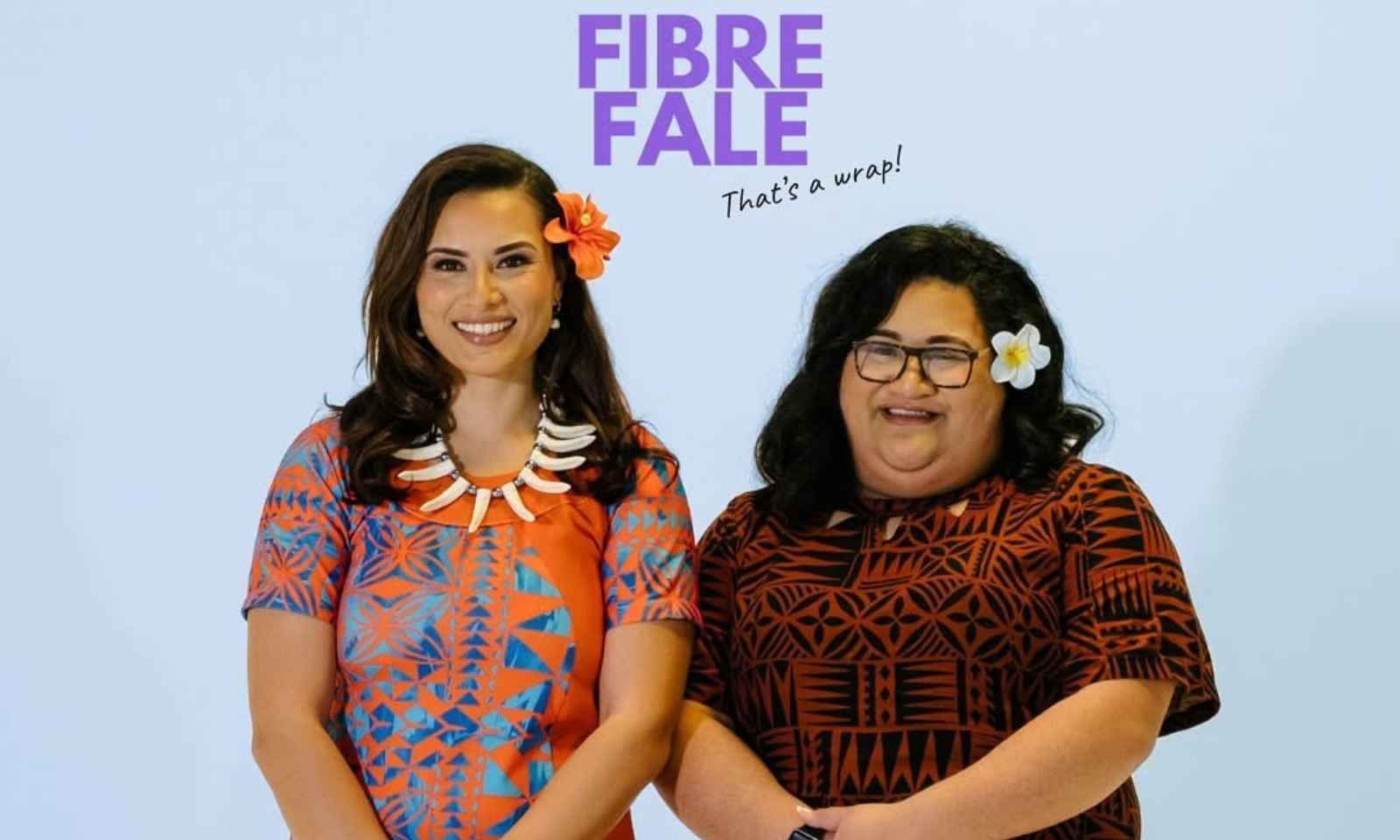
Fibre Fale co-founders Julia Arnott-Neenee, left, and Namulau’ulu Nu’uali’i Eteroa Tusipepa Lafaele-Wharewaka. Photo/Fibre Fale
She says one of her biggest lessons was that talent alone is not enough.
“You can have all the talent you can, but it's actually to identify the power, the power of who will back what you will do, the power of who's going to fund what you'll do.”
Four years into building Fibre Fale, she says she would make the same choice again.
“I get to do something that I love, and two, you know, being able to exercise this vision of self-determination, that itself, I hope, will be the biggest thing that can pass over to the next generation.”
That next generation is now a major focus of her work, particularly as artificial intelligence (AI) changes the way people study, work and do business.
Lafaele-Wharewaka says Pacific communities are already engaging with AI but need more people who understand how the technology works and can help shape it.
Watch Namulau’ulu Nu’uali’i Eteroa Tusipepa Lafaele-Wharewaka's earlier interview on Pacific Mornings below.
“We're not there to sell you tools when we teach you. We're actually here to remind you of your own wisdom.”
She says Pacific communities also need to understand what happens to their data when they use new technology.
“There are a lot of technology, there are a lot of AI tools that are built based on our communities and they don't fully honour and actually acknowledge our data.”
“And so if we don't educate our community, we won't be responsible ancestors when using AI because the next generation are already natives but what are we as the current generation going to do to build guardrails, bridges and also a way of being when using these tools?”
Lafaele-Wharewaka says education is only part of the answer. She wants to see more Pacific people become the people building the technology itself.
“My hope too is while we're educating, we need more builders within AI because the more that we build, the more we're able to understand AI and its models, but also create protection of not only our knowledge, but the future data of our people.”
She says representation in technology is improving as more young Pacific people enter the industry and older generations also become more visible.
But there is still work to do.
“There's only two people at Fibre Fale and the more that we keep on training our people, the more that we can do to create change because even we're getting old. But we really need to make more space for that next gen.”
The award comes after a busy year for Lafaele-Wharewaka, who was named Young New Zealander of the Year in 2025.
She recently returned from Mozilla Festival in Spain where she met technology and social justice organisations working on ways to put people at the centre of technology.
She is also returning to AUT in 2027 to study for a master's degree in computer science.
Watch Namulau’ulu Nu’uali’i Eteroa Tusipepa Lafaele-Wharewaka's full interview below after being named Young New Zealander of the Year 2025.
“I have learned a lot in the six to seven years that I've lived, but I feel like there's still more to unlock. So AUT 2027, let's go.”
She says the journey from a young AUT student to a Pacific technology leader has been about choosing discomfort over staying in a safe place.
“I refuse to live comfortable. It was not easy but it was definitely worth it.”
Lafaele-Wharewaka will return to AUT in 2027 to study for a master's degree in computer science.