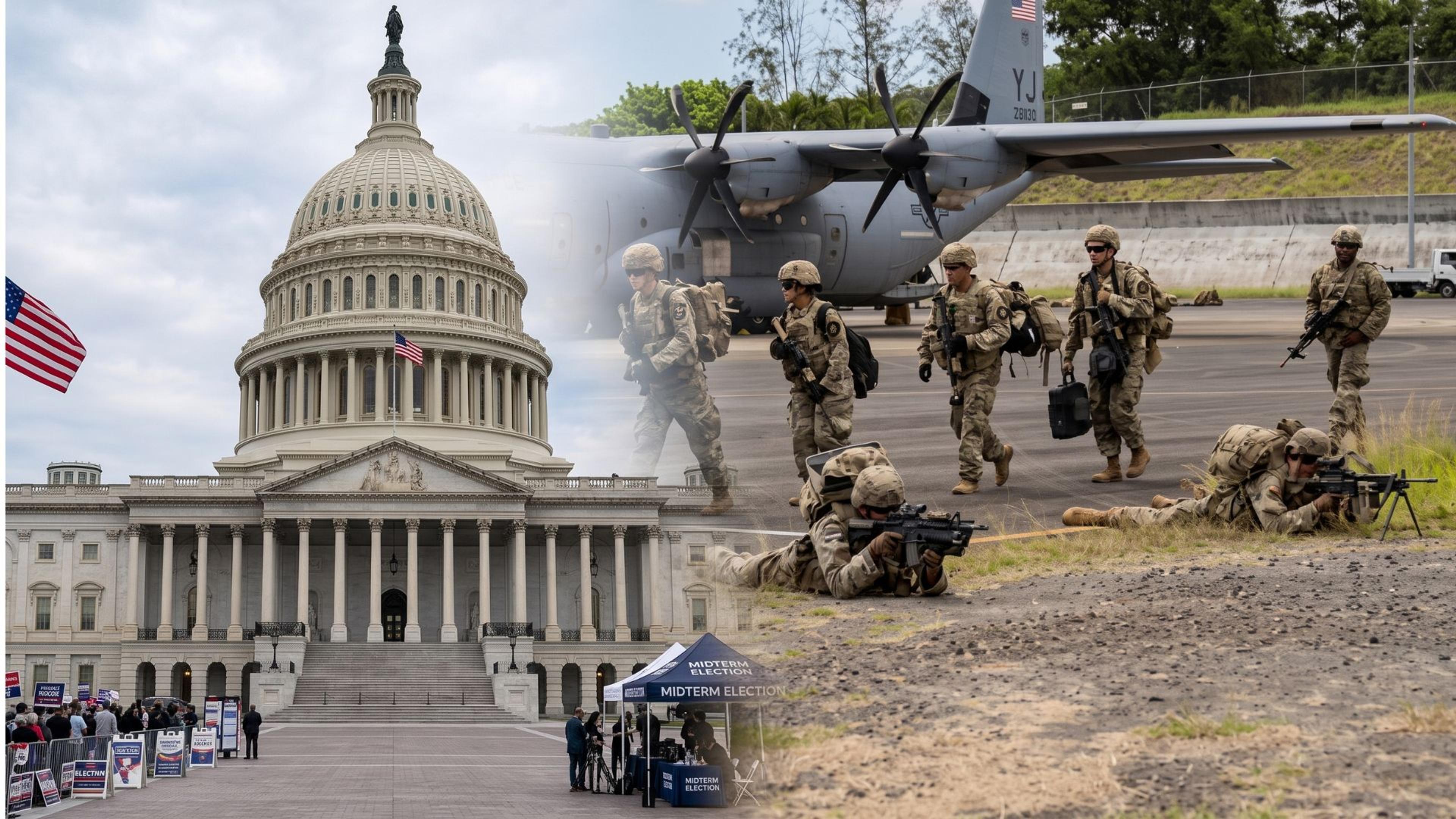
The region’s communities are watching closely as US strategic competition with China increasingly intersects with local land, waters and resources.
Photo/PMN News Composite
Politics
US power shift could reshape Pacific plans
From seabed minerals and military expansion to funding, Pacific communities are watching closely.

Christine Rovoi
Published
04 November 2026, 11:12am
Share
Copy Link
Top stories
Rabuka: Fiji’s election timeline intact as Constitution Bill consultation extended
Elenoa TuragaiviuTue, 03 Nov

Tuioti leads Pacific swimming results at Youth Olympic Games
Latonya LoleTue, 03 Nov
‘Desperate, immature’: Davidson hits back at National, pitches to Pacific voters in NZ
Thomas Tarurongo WynneTue, 03 Nov
Top stories
Rabuka: Fiji’s election timeline intact as Constitution Bill consultation extended
Elenoa TuragaiviuTue, 03 Nov
Tuioti leads Pacific swimming results at Youth Olympic Games
Latonya LoleTue, 03 Nov
‘Desperate, immature’: Davidson hits back at National, pitches to Pacific voters in NZ
Thomas Tarurongo WynneTue, 03 Nov
The United States midterm elections are about more than who controls Congress especially for Pacific communities, experts say.
Millions of Americans are voting in elections that will decide control of the US House of Representatives and Senate for the next two years.
While Donald Trump is not on the ballot, his presidency is. Republicans currently control both chambers while Democrats are hoping to take back the House and potentially the Senate.
Some pollsters have predicted a possible “blue tsunami” as Democrats have a chance of taking control of both chambers.
Former PMN News reporter and Yale senior Andre Fa'aoso says a Democratic win could significantly limit what Trump can get through Congress during the final two years of his presidency.
“Put simply for those of us here in Aotearoa, they don't quite understand what the midterms are all about. Why is this such a consequential election? Well, if you look at what the Trump administration wants to pass in legislation, they definitely need the House's support and they need Senate support in order for that to be passed into legislation," Fa'aoso told William Terite on Pacific Mornings.
Watch Andre Fa'aoso explain what is at stake in the US midterm elections below.
“If the Democrats have a majority in the House, that means that any piece of even controversial legislation, which is along the lines of what Trump has tried to pass over the past two years, tries to make the line to the House, the Democrats are going to immediately strike it down,” Fa'aoso said.
For New Zealand audiences, the first major US midterm results are expected from Wednesday. Key East Coast polls close from about 1pm NZ time and West Coast results following later in the day.
The result could help shape what happens to the region’s seabed, natural resources and military footprint as Washington pushes deeper into the Pacific in the name of national security and competition with China.
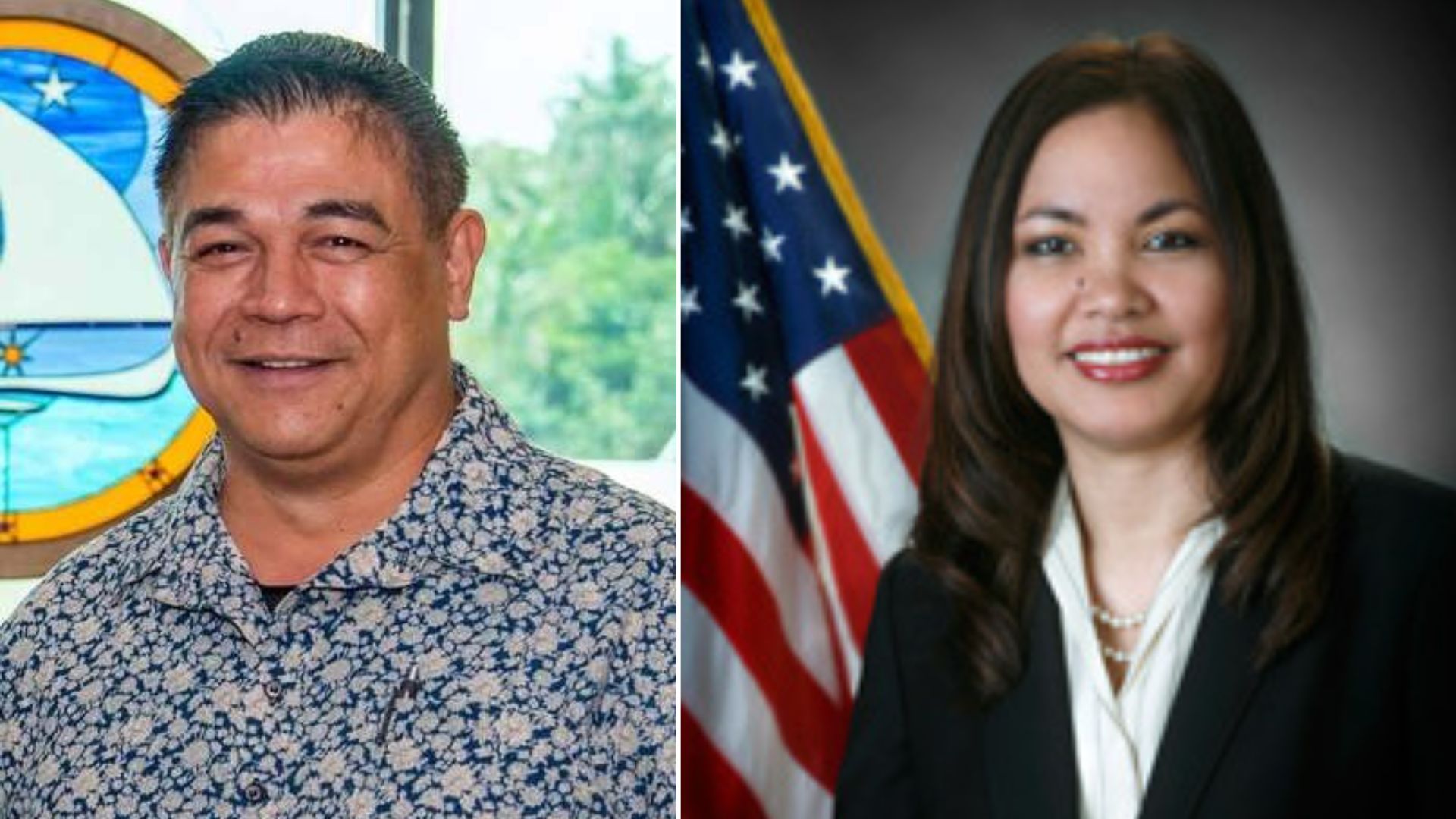
Republican Vicente Ada, left, has won the Guam governorship, defeating Democrat Therese Terlaje while Democrat Alicia Limtiaco, right, has won Guam’s seat in the US House of Representatives. Photo/US department of justice
For Pacific countries, the outcome could also affect the level and direction of US funding and support across the region, from development and climate programmes to infrastructure and security partnerships.
Republicans have made strong gains across the US Pacific territories, despite the expected anti-Trump swing on the mainland.
In Guam, Republican Vicente Ada has won the governorship, defeating Democrat Therese Terlaje while Democrats have taken back control of the local legislature. Democrat Alicia Limtiaco has also defeated Republican congressional delegate James Moylan.
In the Northern Mariana Islands, Republicans have regained the governor's office and local Senate, with former governor Ralph Torres set to return after defeating independent Blas Attao. Republican Kimberly King-Hinds has also been re-elected as the territory's delegate to Congress.
Results are still to come from American Sāmoa where Republican Aumua Amata is seeking re-election.
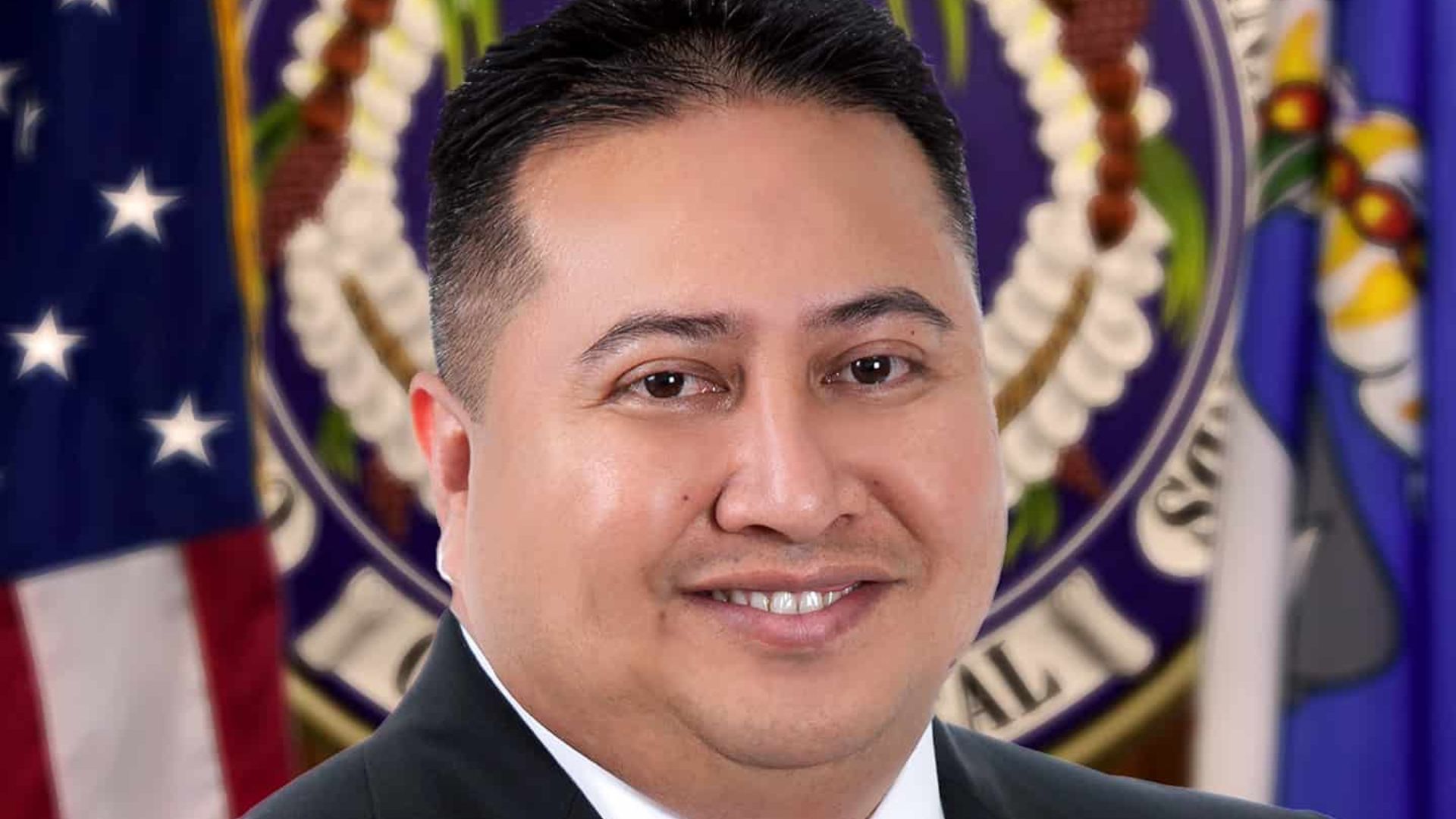
Former Northern Mariana Islands governor Ralph Torres is set to return to office after defeating independent challenger Blas Attao in the US midterm elections. Photo/Commonwealth of the Northern Mariana Islands, United States of America
The results are significant for the Pacific as both King-Hinds and Amata have criticised the Trump Administration over the removal of fishing protections and plans for deep-sea mining in waters around their territories.
The US Pacific territories do not have voting members in Congress, although their delegates can introduce legislation and vote in committees.
One of the biggest concerns for Pacific leaders and advocates is Washington's push to speed up deep sea mining and expand access to seabed minerals in and around US territories.
Plans include proposed mining areas near the Mariana Trench and investigations into mineral resources extending towards American Sāmoa.
Watch the American Sāmoan candidates for the US Midterm election below.
Plans include proposed mining areas near the Mariana Trench and investigations into mineral resources extending towards American Sāmoa.
For Pacific leaders and advocates, the question is not only what resources may be worth in the future but who gets to decide what happens to them.
Dr Theresa “Isa” Arriola, a Saipan-born sociocultural anthropologist and Director of Operations at Blue Ocean Law in the Northern Mariana Islands, says decisions being made now could shape the choices available to island communities for years to come.
“Once those arrangements are in place, they can influence which alternatives are available, which investments are encouraged, et cetera. It starts to snowball," she told local media.
"The anticipated strategic value of minerals is already becoming a basis for federal action, even though many of the assumptions underlining that value are unresolved.”
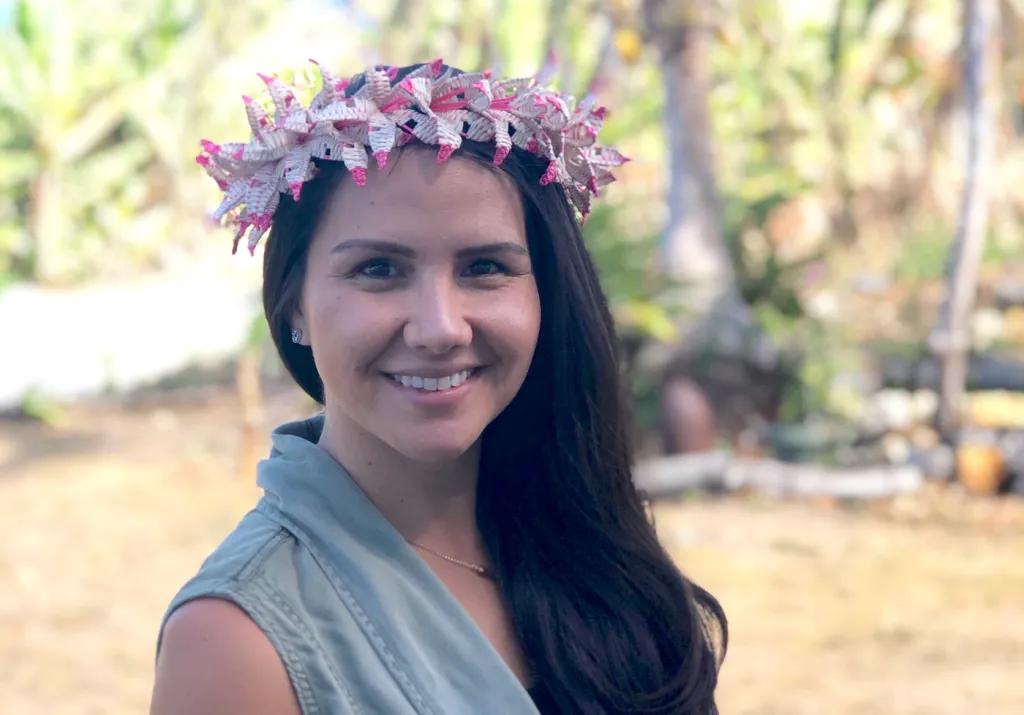
Dr Theresa “Isa” Arriola says decisions over seabed resources could limit the choices available to Pacific island communities for generations. “An archipelago is not a stockpile. Photo/Instagram
Arriola, who also chairs the community advocacy group Our Common Wealth 670, says the rush to secure minerals is happening before questions about their value, environmental impact and commercial use have been fully answered.
“I’m really interested in how that value gets determined and connected to global, national and local security concerns. At what point does the possibility that a resource might be needed in the future become enough to justify decisions about that resource in and around our islands?”
Her message is blunt: "An archipelago is not a stockpile.”
The debate comes as the US expands its military presence across the Pacific, with growing attention on the Northern Mariana Islands, Guam and Palau as part of Washington’s wider defence strategy.
Washington sees a stronger Pacific presence as part of its effort to counter China’s growing influence across the region.
Plans and proposals include more military exercises, expanded missile systems and possible new energy infrastructure including small modular nuclear reactors.
For communities in US territories such as Guam and the Northern Mariana Islands, the debate is especially close to home with military expansion affecting land, waters, infrastructure and everyday life.
But Pacific security cannot be measured only by the number of troops, bases or weapons in the region, Dr Robert Underwood, chairman of the Pacific Centre for Island Security (PCIS) and a former Guam Congressional Delegate, says.
“We are living in a multipolar world in which military strength or military spending cannot affect everything - they cannot be the solution for everything," he told a PCIS virtual forum.
Underwood says Pacific resilience also depends on economic opportunities, strong communities and diplomacy than treating island nations and territories mainly as strategic positions.
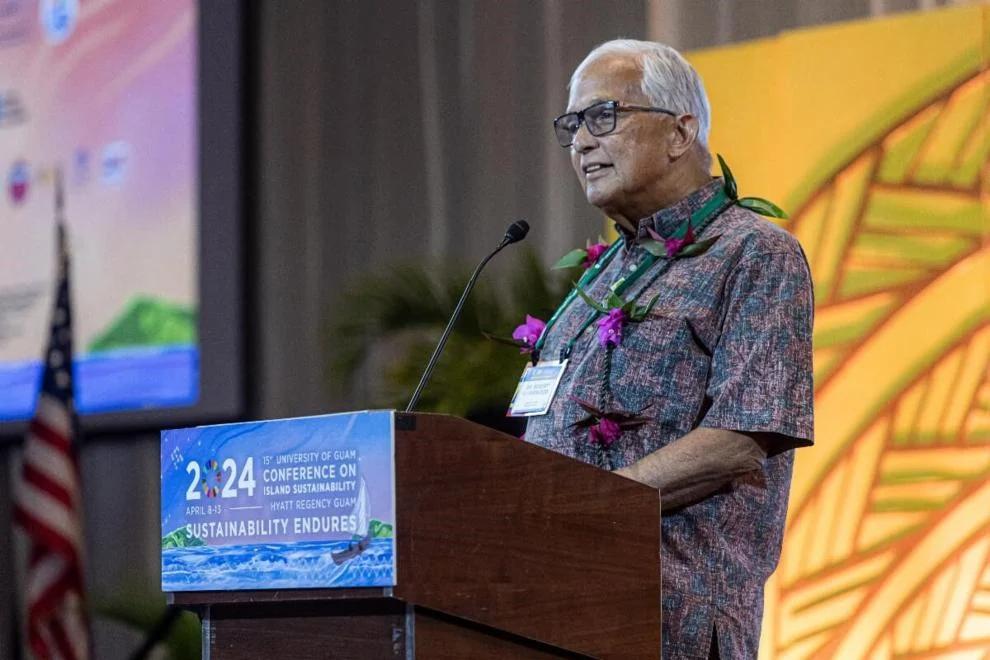
Dr Robert Underwood says Pacific security cannot be measured only by troops, bases and weapons, arguing that economic opportunity, resilient communities and diplomacy must also be central to Washington’s approach. Photo/University of Guam
The US midterm result could now influence how far Washington takes its plans for seabed resources and military expansion, and how much room there is for environmental oversight and local voices.
For Pacific communities, experts say that makes the political shift in Washington a local issue too.
The concern is that decisions made in the US could have consequences for island communities whose waters, land and resources are being drawn further into the competition between major powers.
The message from Pacific voices is that security and economic interests cannot come at the cost of local decision-making.
As Arriola puts it: “An archipelago is not a stockpile.” For more details on the 2026 US midterm elections, click here.
This story has been updated to include Andre Fa'aoso's comments.