
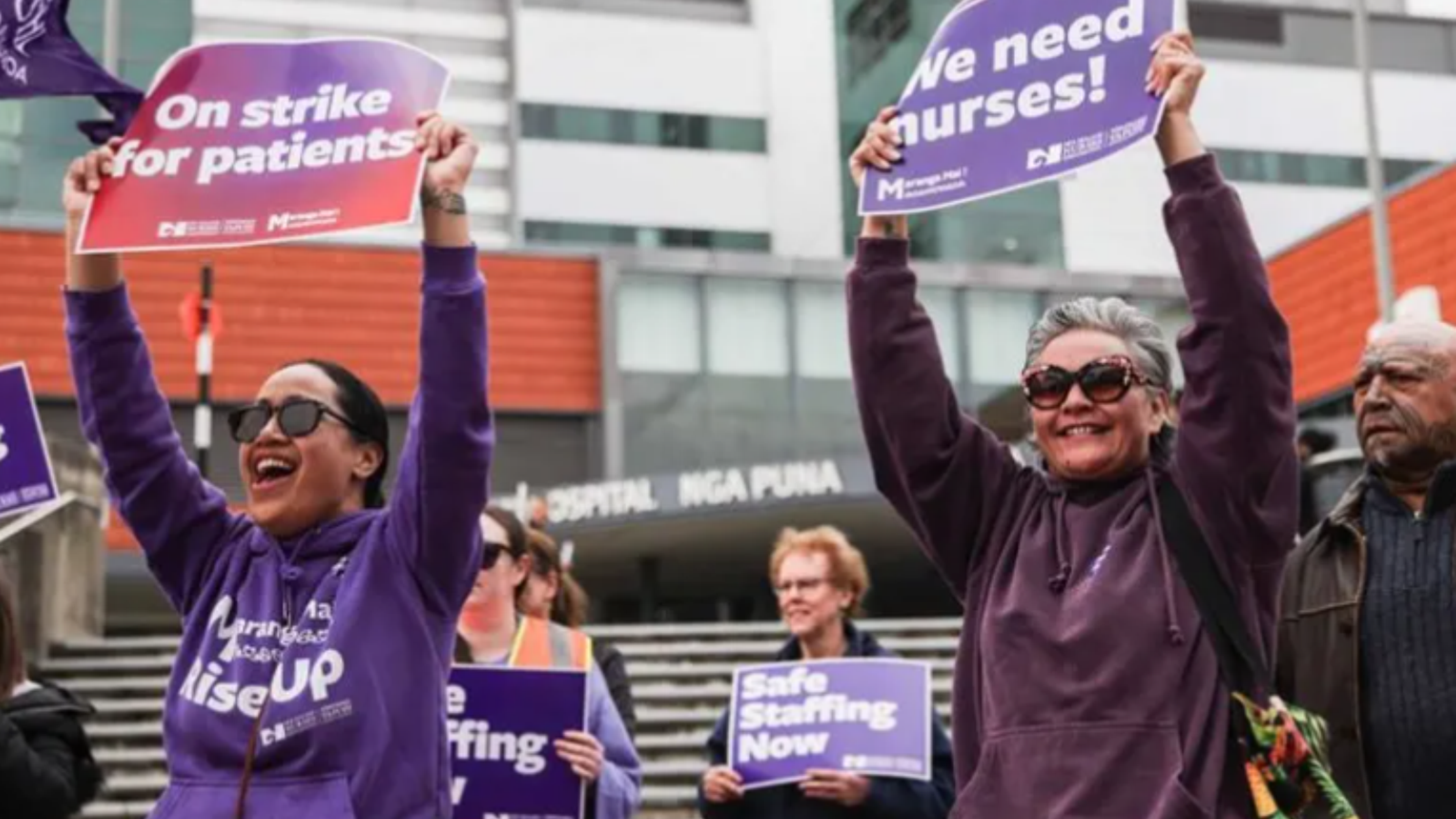
Nurses strike in Wellington over pay offer in 2025.
Photo/RNZ/Samuel Rillstone
Election
Pacific women have waited long enough for equal pay in NZ, says former commissioner
Saunoamaali’i Dr Karanina Sumeo says caring is skilled work and government must stop treating fair pay as a cost.

Thomas Tarurongo Wynne
Published
06 October 2026, 1:56pm
Share
Copy Link
Top stories

Tofiga Fepulea’i brings the laughs while taking top honours at Arts Pasifika Awards
Aui'a Vaimaila Leatinu'uFri, 23 Oct

‘It kind of breaks my heart’: Kiwis run riot after Cook Islands’ brave start
Latonya LoleSun, 25 Oct
Top stories
Tofiga Fepulea’i brings the laughs while taking top honours at Arts Pasifika Awards
Aui'a Vaimaila Leatinu'uFri, 23 Oct
‘It kind of breaks my heart’: Kiwis run riot after Cook Islands’ brave start
Latonya LoleSun, 25 Oct
Pacific women working in care and support have waited long enough for fair pay, says a former Equal Employment Opportunities Commissioner.
Speaking from Sāmoa, Saunoamaali’i Dr Karanina Sumeo says the debate over pay equity should not only be about how much it costs but about how governments choose to value women’s work.
“If they’re looking at money, they chose to give money to landlords,” Sumeo tells Levi Matautia-Morgan on Pacific Mornings.
“So it’s not expensive if they want to give tax incentives and other things to other places, but somehow when it comes to rewarding women whose rights are already being denied, why has that suddenly become expensive?”
Her comments come as pay equity remains a major election issue, after the coalition government changed the Equal Pay Act under urgency last year, stopping 33 claims that were already under way and changing the process for future claims.’
Labour has promised to restore the pay equity law if elected, while National has challenged the cost of doing so. The Greens have also pledged to restore the legislation and fund a settlement for care and support workers.
Listen to Saunoamaali’i Dr Karanina Sumeo's full interview below.
Sumeo says restoring the previous framework would be an important first step, but it would not resolve the wider issue for workers whose claims are still outstanding.
Teachers, health workers and care workers are among those affected, she says.
“Our families who are on struggle street could really do with that $4 extra come January,” she says.
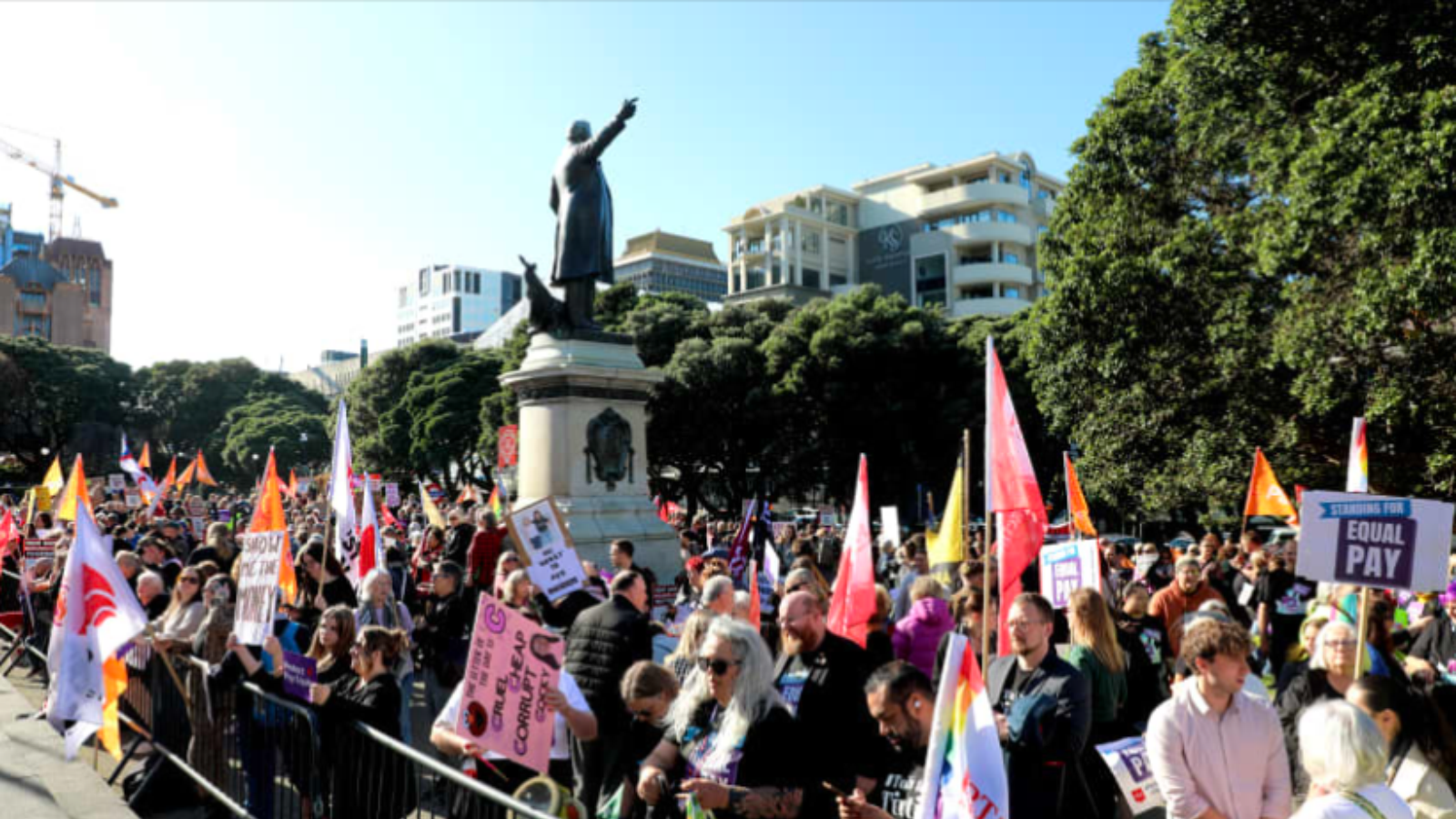
Pay equity protesters voice their opinions outside Parliament in 2025. Photo/RNZ/Marika Khabazi
The care and support workforce has a particular importance for Pacific families, where looking after elders and relatives is often seen as a family responsibility.
But Sumeo says that cultural expectation should not mean the work is undervalued. The work carries real skill and responsibility, she says, even when much of it has traditionally been done by women.
“Care workers, they have to administer medication, they have to administer physical care, they’re watching for symptoms or changes of behaviour,” she says. “Governments make choices. They make decisions about where to put the money, just like any household.”
The New Zealand Nurses Organisation (NZNO) says Labour’s proposed $4-an-hour increase would make a real difference for care and support workers but it is not a substitute for settling their pay equity claim.
“An extra $160 a week will make a real difference for care and support workers who are struggling to cover the basics. But a pay rise isn't pay equity, these workers need their claim settled in full,” NZNO says.
That focus on fair pay comes as jobs and wages rank among the biggest election concerns for Pacific voters with 75 per cent in the PMN-Horizon Research survey saying the issue will influence how they vote.
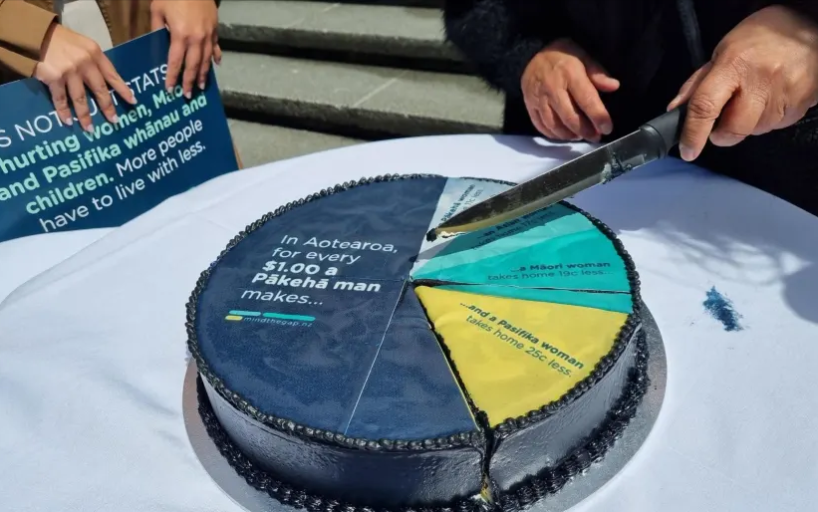
The 2022 Pacific Pay Gap Inquiry Report found that for every dollar a Pākehā man made in 2021, Pasifika women earned just 75 cents. Photo/RNZ/Craig McCulloch
Sumeo previously led the Human Rights Commission’s Pacific Pay Gap Inquiry, which found Pacific women faced a significant pay gap compared with Pākehā men.
PMN News has also reported analysis from the Public Service Association estimating that restoring pay equity could put an average $300 a week into the hands of 91,000 families and benefit 136,000 children.
Sumeo says the issue goes beyond one election promise or one group of workers. “Regardless of who’s in power, this is a wrong that must be made right.”
Asked what she wants from the next government, her message is direct. “Honour the commitment and honour the equity and do it quickly.”
The general election is on 7 November with advance voting starting on 26 October.