

Andre Afamasaga says Pacific communities can strengthen their political voice by helping more young people enrol and vote in the 2026 New Zealand general election.
Photo/Supplied
Opinion
Two ticks, one deadline: Pacific youth urged to make their voices count
With enrolment closing on 25 October, Andre Afamasaga says Pasifika can turn the relationships they have into a stronger voice at the ballot box.
Andre Afamasaga
Published
10 October 2026, 2:10pm
Share
Copy Link
Top stories
'Don't count yourself out': Porirua by-election candidate’s push for voter participation
Taelegalolo'u Mary AfemataFri, 09 Oct
Top stories
'Don't count yourself out': Porirua by-election candidate’s push for voter participation
Taelegalolo'u Mary AfemataFri, 09 Oct
If you’ve seen Red, White & Brass, you know what young Pacific people can get done when there’s a deadline. They lock in, pull together and make it happen.
The film grew out of producer and co-writer Halaifonua “Nua” Finau’s Wellington Tongan community. His church had four weeks to form a brass band before Tonga played France at the 2011 Rugby World Cup. In the story, Maka and Veni miss out on sold-out tickets, so Maka plans to form a band to get into the stadium, even though most have never played a wind instrument. Family and church get pulled in, everyone learns their part and turns up together. I love it because it feels familiar.
Pacific young people face a very real deadline with far greater consequences. The General Election is on 7 November, but 25 October is the last day to enrol or update your details. Voting starts the following morning. Unlike at the previous two elections, you cannot enrol when you turn up to vote.
I have been thinking about young Pacific people and, to be frank, I am lowkey worried.
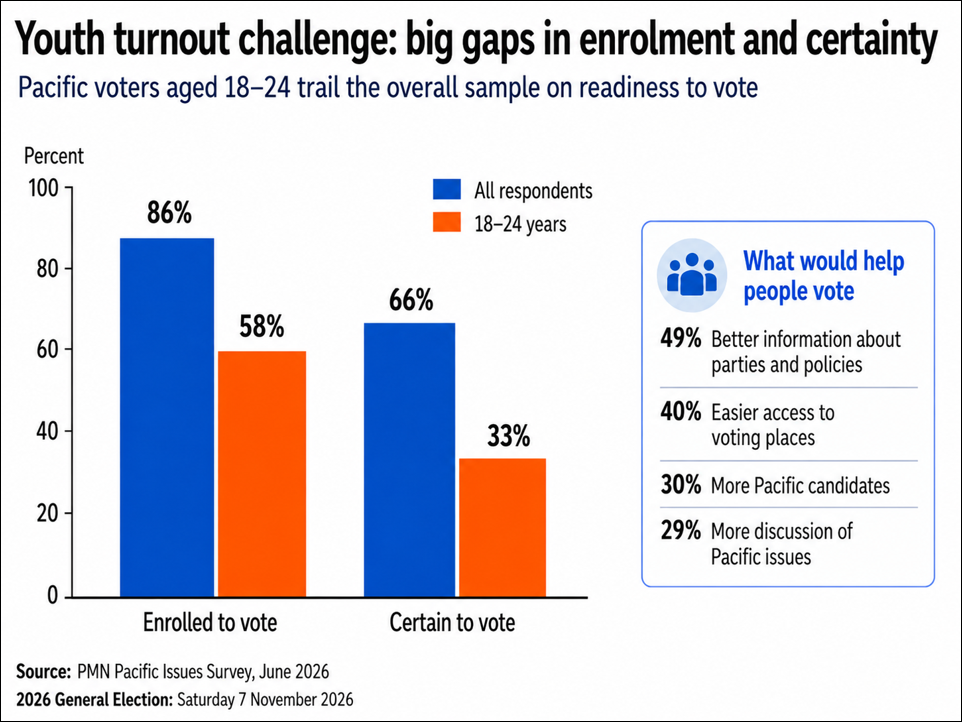
As of 30 September, only 62.2 per cent of eligible 18 to 24-year-olds were enrolled, leaving about 166,000 outside the roll. In July, this masthead’s PMN News-Horizon Research survey found 58 per cent of Pacific respondents aged 18 to 24 said they were enrolled, but only one in three were certain they would vote. This is not an official Pacific youth enrolment rate, but it points to a gap between political voice and voting.
Before I worked in human rights, I was a youth worker, school chaplain and youth and family pastor. These days I’m a stepdad and uncle, chair of Zeal Youth Trust and a trustee of Praxis, which trains youth workers. Both organisations work with Pacific staff and young people.
From the Pacific young people I know, the problem is not a lack of opinions or care for their families and communities. Ask them about jobs, wages, rent, food, mental health support, racism, climate justice, the justice system, Te Tiriti o Waitangi, Palestine, or health and education equity, and you will get a response.
You may not call any of that politics. But decisions about these everyday issues are made through policies, budgets and laws set by Parliament, with consequences that can last generations. Your vote is one way to carry the people and things you care about into Parliament.
University of Otago researcher Dr Stacey Kokaua summed it up well to PMN News. Pacific young people “have, or they can have, quite strong political views... whether they consider them political views is a different thing.”
Listen to Dr Stacey Kokaua's full interview with PMN News Political Reporter Thomas Tarurongo Wynne on Pacific Mornings below.
The disconnect goes beyond young people. I have cousins and friends my age who insist they’re “not political” but distrust the system and wonder whether voting changes anything. The Helen Clark Foundation’s research, based on a 2024 survey, found Pasifika respondents reported voting less than New Zealanders overall, 74 per cent against 81 per cent, but attending protests more often, 36 per cent against 17 per cent. Only 34 per cent said the government in Wellington could be trusted to “do the right thing” most or all the time.
Pacific people are willing to speak up and act on issues they care about. But that does not always translate into votes. Voting will not resolve every concern about politics or Parliament, but it remains one of the most direct ways to influence who makes decisions.
Under MMP, you get two ticks. Your party vote helps determine how many seats each party gets in Parliament. Your electorate vote helps choose your local MP.
Pacific candidates are standing across parties, reflecting that we are not a monolith. I welcome our political diversity. No party speaks for all Pacific communities, and none should take our support for granted. Every party should be judged on its wider policy programme, not just the issues it chooses to emphasise.
Alongside jobs, wages, education, housing and healthcare, consider how parties would support Pacific communities through public services and opportunities. What would they do about the Ministry for Pacific Peoples, access to health training through schemes such as Auckland’s Māori and Pacific Admission Scheme, and dedicated Māori and Pacific scholarships and spaces at universities? Ask what each party would retain, change or introduce, and what those decisions would mean for fairness, opportunity and our communities’ rights and dignity.
The two ticks belong to you, but the consequences are beyond you.

Young Pacific voters have a stake in decisions shaping their future but many remain uncertain about whether they will vote in the 2026 election. Photo/Young Pacific Leaders
There is an extra complication this year. The coalition Government changed the enrolment rules through the Electoral Amendment Act 2025. At the last two general elections, people could enrol or update their details during voting, including on election day. This year, unless you enrol by 25 October, 13 days before election day, you cannot vote.
Before the law change, the Human Rights Commission warned the earlier deadline was likely to disproportionately affect younger people, Māori, Pacific and Asian communities. The Attorney-General also concluded the proposed cutoff appeared to be an unjustified limit on the right to vote. Justice Minister Paul Goldsmith has defended the change on administrative grounds, arguing late enrolments put pressure on the electoral system and delay the official count.
Using 2023 voting data, The Spinoff has analysed how stricter enrolment rules could disproportionately affect Pacific-heavy electorates. PMN News has also reported that enrolment among 18 to 24-year-olds was below 50 per cent in Ōtāhuhu, Māngere and Manurewa. These are different measures, but both raise concerns about the impact of the earlier deadline on Pacific voters.
Labour and the Greens are responding with community outreach. Labour’s Arena Williams told RNZ they are effectively doing some of the Electoral Commission’s work.
We should not leave that work to politicians. In a small way, this article is trying to do some of it too.
Red, White & Brass reminds me what Pacific communities can do with the relationships already around us. Maka’s community had four weeks to learn their parts and turn up together.
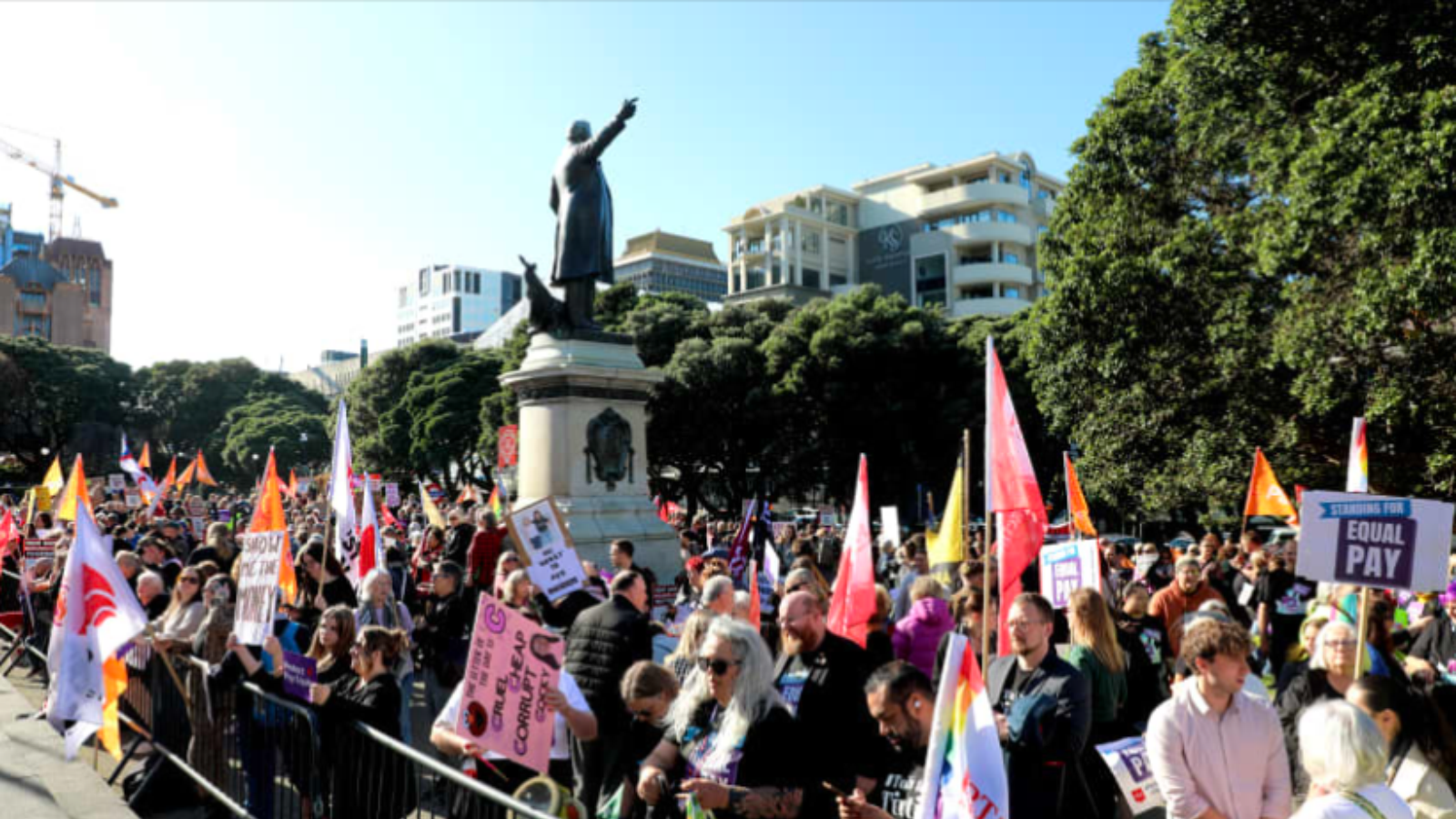
New Zealanders will go to the polls on 7 November 2026, with advance voting opening on 26 October. The enrolment deadline is 25 October. Photo/RNZ/Marika Khabazi
So, if you’re already enrolled, grab someone. Your brother, cousin, teammate, best mate, or the person in the family chat who has an opinion on absolutely everything. Don’t tell them how to vote. Ask whether they’re enrolled. Check at vote.nz before midnight on 25 October. Talk about what you both want from this country. Then make your own choices.
Pacific people already have plenty of political voice. This election, I want more of it to reach the ballot box.
Andre Afamasaga is a human rights advocate, governance practitioner, and social cohesion leader.