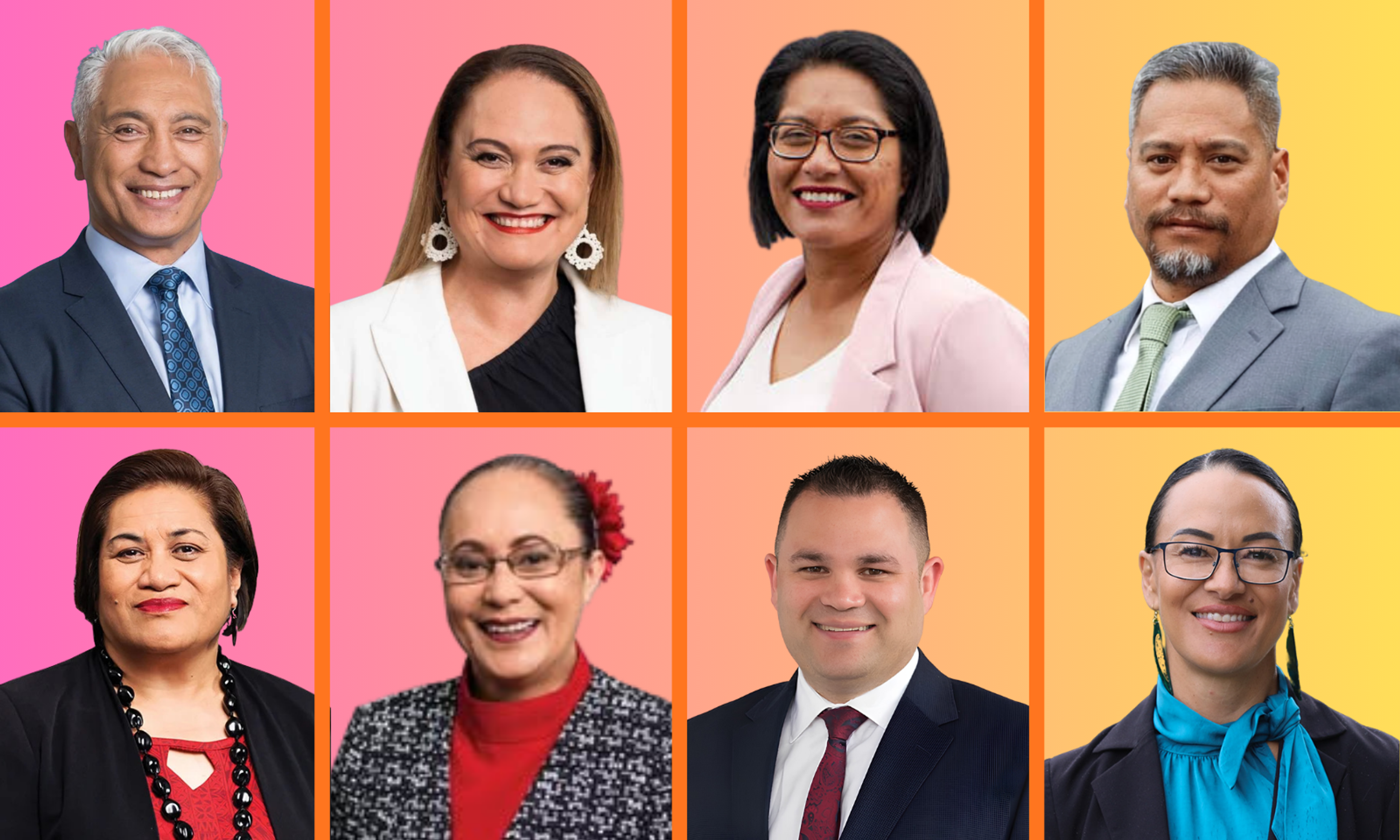
If the recent Roy Morgan results were repeated at the 2026 general election, these Pacific candidates would be among those most likely to end up in Parliament. Clockwise from top left: Alfred Ngaro, Carmel Sepuloni, Barbara Edmonds, Teanau Tuiono, Tania Waikato, Tangi Utikere, Jenny Salesa and Lemauga Lydia Sosene.
Photo/PMN Composite
Opinion
Pacific voters want more representation but few new MPs likely
Nearly eight in 10 Pasifika voters want Pacific representation in Parliament but recent polling suggests limited growth.

Samson Samasoni
Published
11 August 2026, 10:44am
Share
Copy Link
Top stories

Auckland teen turns a trip to Fiji into a mission to fight period poverty
Elenoa TuragaiviuThu, 15 Oct
Top stories
Auckland teen turns a trip to Fiji into a mission to fight period poverty
Elenoa TuragaiviuThu, 15 Oct
Pacific voters want greater representation in Parliament but recent national polling suggests few new Pasifika candidates are on track to get through.
PMN’s Pacific election poll, released in July and conducted by Horizon Research, found 79 per cent of respondents felt it was important for political parties to have Pacific candidates or MPs
The survey also found 39 per cent wanted Pacific representation in government prioritised while 30 per cent said having more Pacific candidates would make them more likely to vote. Among 18 to 24-year-olds, that rose to 37 per cent.
But when the latest Roy Morgan poll is matched against the announced party lists, most of the Pacific MPs likely to make the next Parliament are already established politicians.
National, Labour, the Greens and Opportunity have released their ranked party lists while ACT and New Zealand First have announced candidates but are yet to publish their ranked lists.
According to Roy Morgan, National is on 32 per cent, Labour 25.5 per cent, the Greens 13.5 per cent, ACT and New Zealand First both on 8.5 per cent, and Opportunity on eight per cent.
The poll's seat projection translates to 39 seats for National, 31 for Labour, 17 for the Greens, 10 each for ACT and New Zealand First, three for Te Pāti Māori and 10 for Opportunity.
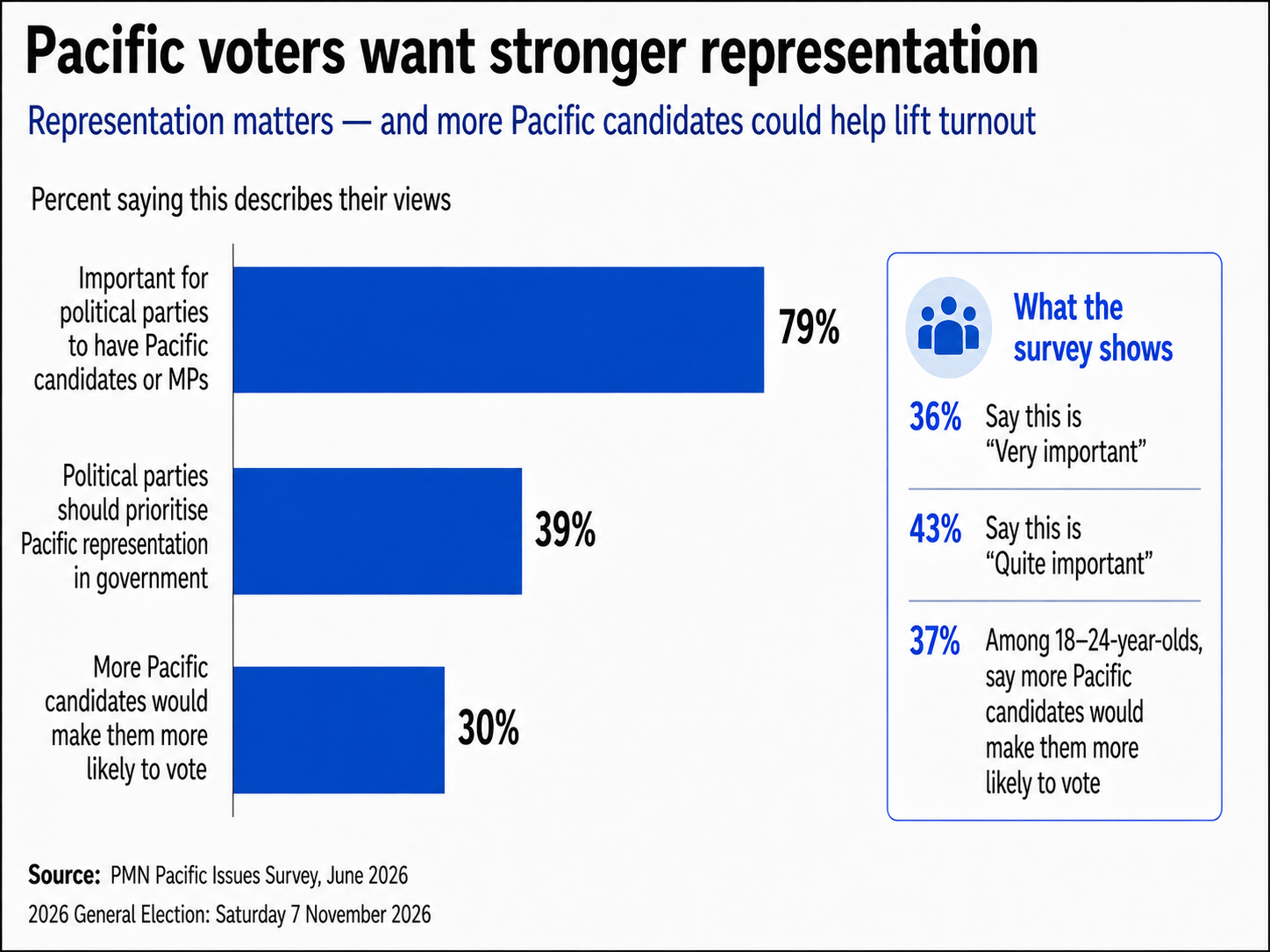
PMN Poll finds that Pacific voters want greater representation in parties and Parliament. Photo/PMN
Labour’s established Pacific bloc
For Labour, the result would largely preserve its existing Pacific representation.
Carmel Sepuloni, ranked second, Barbara Edmonds at number three and Tangi Utikere at 14 are strongly placed through their electorates or the list.
Jenny Salesa at 24 would be expected to return through Panmure-Ōtāhuhu while Lemauga Lydia Sosene, despite being ranked 42nd, is seeking to retain the Māngere seat.
That would leave Labour likely to return five Pacific MPs - Sepuloni, Edmonds, Utikere, Salesa and Sosene.
Other Labour Pacific candidates face a much harder path. Former Takanini MP Anae Neru Leavasa is ranked 32nd, one place below Labour’s projected caucus of 31 seats, and is contesting Botany against National leader Christopher Luxon.
His electorate route would require an extraordinary upset after Luxon won Botany by 16,323 votes in 2023.
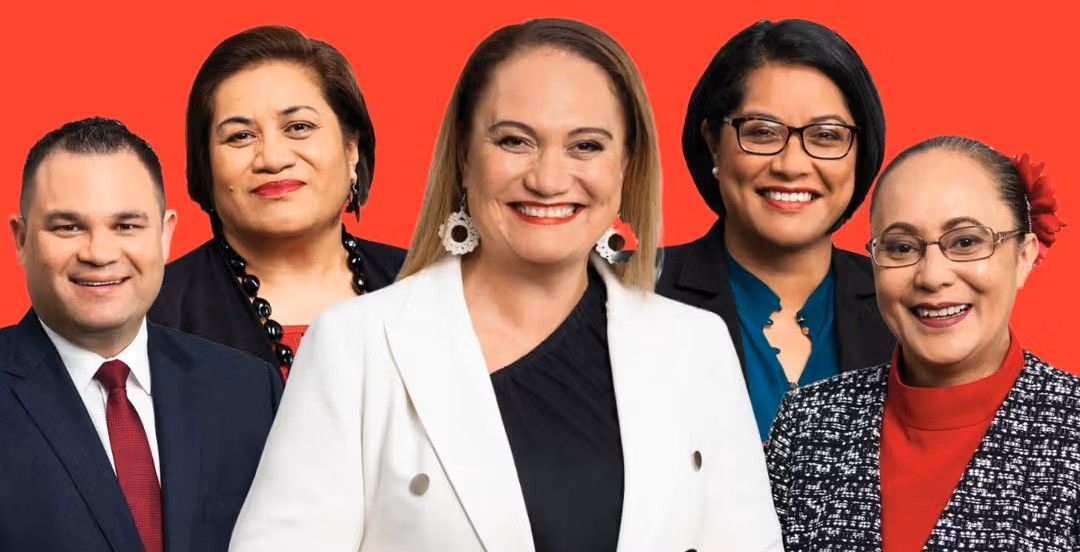
If the Roy Morgan poll were reflected in the election result, Labour’s current Pacific MPs would be well placed to return to Parliament. Photo/PMN Composite.
Former MP Anahila Kanongata’a, ranked 48th and contesting Papakura, would also need an unlikely electorate victory.
Sange Malama, a Tokelauan-Tongan candidate ranked 64th in Rangitata, would be outside the projected list range on 31 Labour seats and faces a strong National electorate.
Henrietta Hunkin-Tagaloa, ranked 67th, is also well outside the projected list range.
Greens buck the trend
The Greens provide the clearest route for new Pacific representation through the list.
Cook Islands Māori MP Teanau Tuiono is ranked third while Tania Waikato, who has Sāmoan and Hawaiian heritage, is 13th.
With 17 Green MPs projected by Roy Morgan, both would make Parliament, with Waikato representing a new Pacific voice.
Other Pacific Green candidates would fall outside the projected cut-off. Zephyr Brown is ranked 24th, Te Whatanui Kipa Leka Taumalolo Skipwith 30th, and prominent Sāmoan artist and wrestler Michel Mulipola is 40th.
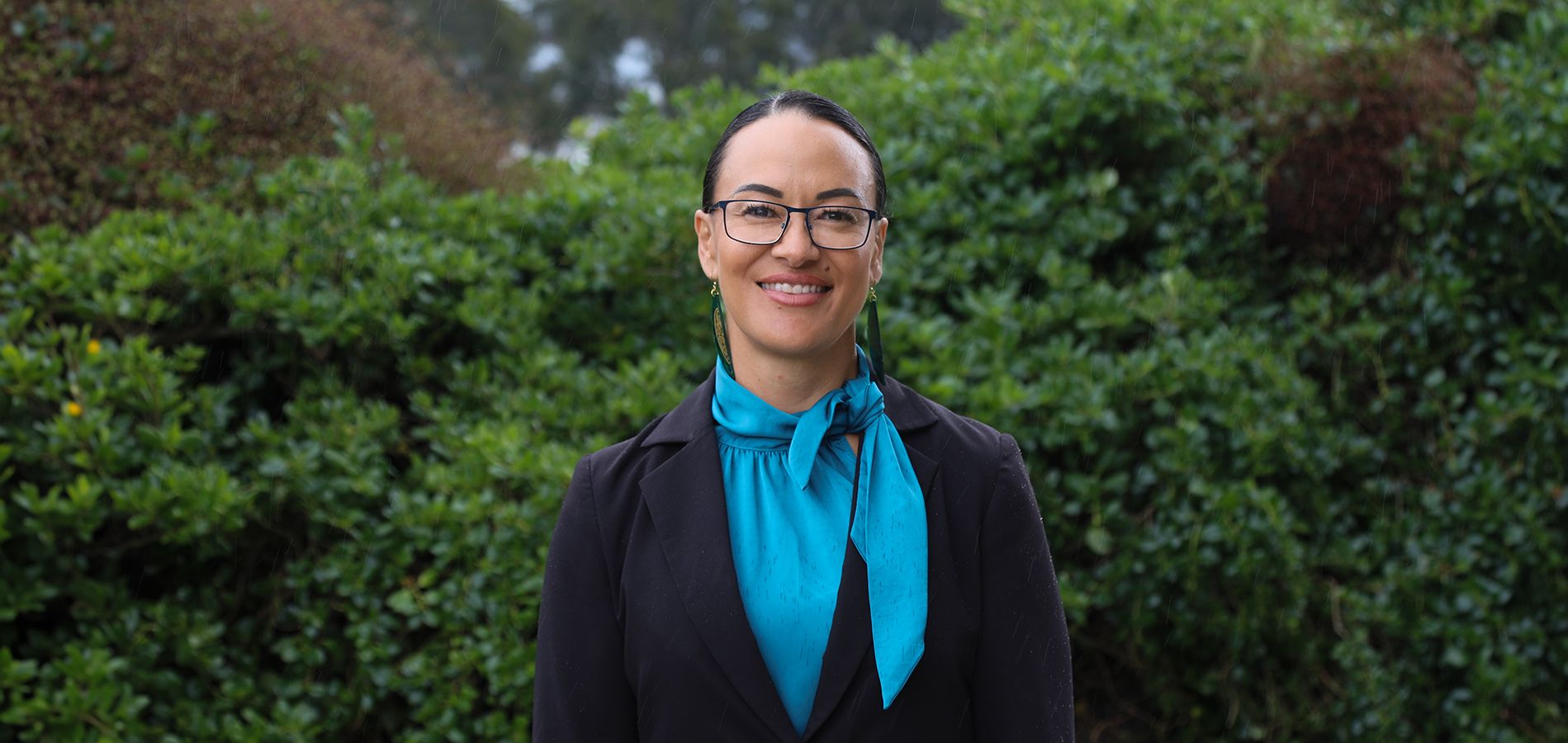
Green candidate Tania Waikato, who is of Sāmoan and Hawaiian heritage. is ranked 13th on the party list and, on the Roy Morgan projection of 17 Green MPs, is well placed to become a new Pacific voice in Parliament. Photo/Supplied.
Henderson key to National’s Pacific representation
National’s Pacific representation is less certain. Angee Nicholas is its highest-ranked Pacific candidate at number 26, followed by Rosemary Bourke at 40, Agnes Loheni at 58 and Zabeen Lateef at 68.
Although National is projected to win 39 seats, Nicholas is not assured of a list place because many lower-ranked National candidates are likely to win electorates and still count towards the party’s total allocation.
Her strongest route will be winning Henderson. Nicholas came within 131 votes of defeating Labour’s Phil Twyford in Te Atatū in 2023 and will face him again in the new electorate.
Opportunity’s strong polling also exposes the difference between a party gaining representation and Pacific candidates benefiting from it.
Roy Morgan gives Opportunity 10 projected MPs but Sāmoan candidate Romeo Tevaga is ranked 12th, leaving him outside the projected list range if the party doesn’t win any electorate seats.

National’s Pacific representation may be dependent on Angee Nicholas who is the party's highest-ranked Pasifika candidate at number 26. However, she might have to win the Henderson seat to guarantee her spot in Parliament. Photo/Supplied.
NZ First remains the wildcard
New Zealand First could still materially change the picture. Roy Morgan also gives it 10 seats, and because it did not win any electorates in 2023, most or all could again be list MPs.
The party has announced several Pacific candidates, including former Cabinet minister Alfred Ngaro, who has Cook Islands heritage, Niuean-Tongan Elliot Ikilei, Sāmoan Esther Tofilau-Tevaga and Tongan Vicky Hau.
NZ First has yet to release its ranked list but the problem for their Pacific candidates is that the top of its list is likely to be crowded.
Alongside Vaovasamanaia Winston Peters and senior figures including Shane Jones, Casey Costello, Mark Patterson and Jenny Marcroft, the party has recruited high-profile candidates such as former Defence Minister Ron Mark, former National MP Harete Hipango-Brownlie, former MP and broadcaster Michael Laws, and former All Blacks captain Taine Randell.
Of the Pacific contenders, Ngaro appears the strongest prospect for a high ranking given his previous parliamentary and Cabinet experience, but until the list is released it is unclear how many Pacific NZ First candidates could make Parliament.
Watch Alfred Ngaro's full interview on why he chose to stand for NZ First.
The bottom line
Taken together, the Roy Morgan numbers currently point to seven Pacific MPs clearly likely from Labour and the Greens, with NZ First capable of lifting the total, and Nicholas potentially making it through if she wins Henderson for National.
But with Pacific voters saying representation matters, the key question is not simply how many Pacific candidates parties select but how many are placed in positions where they can realistically become MPs.