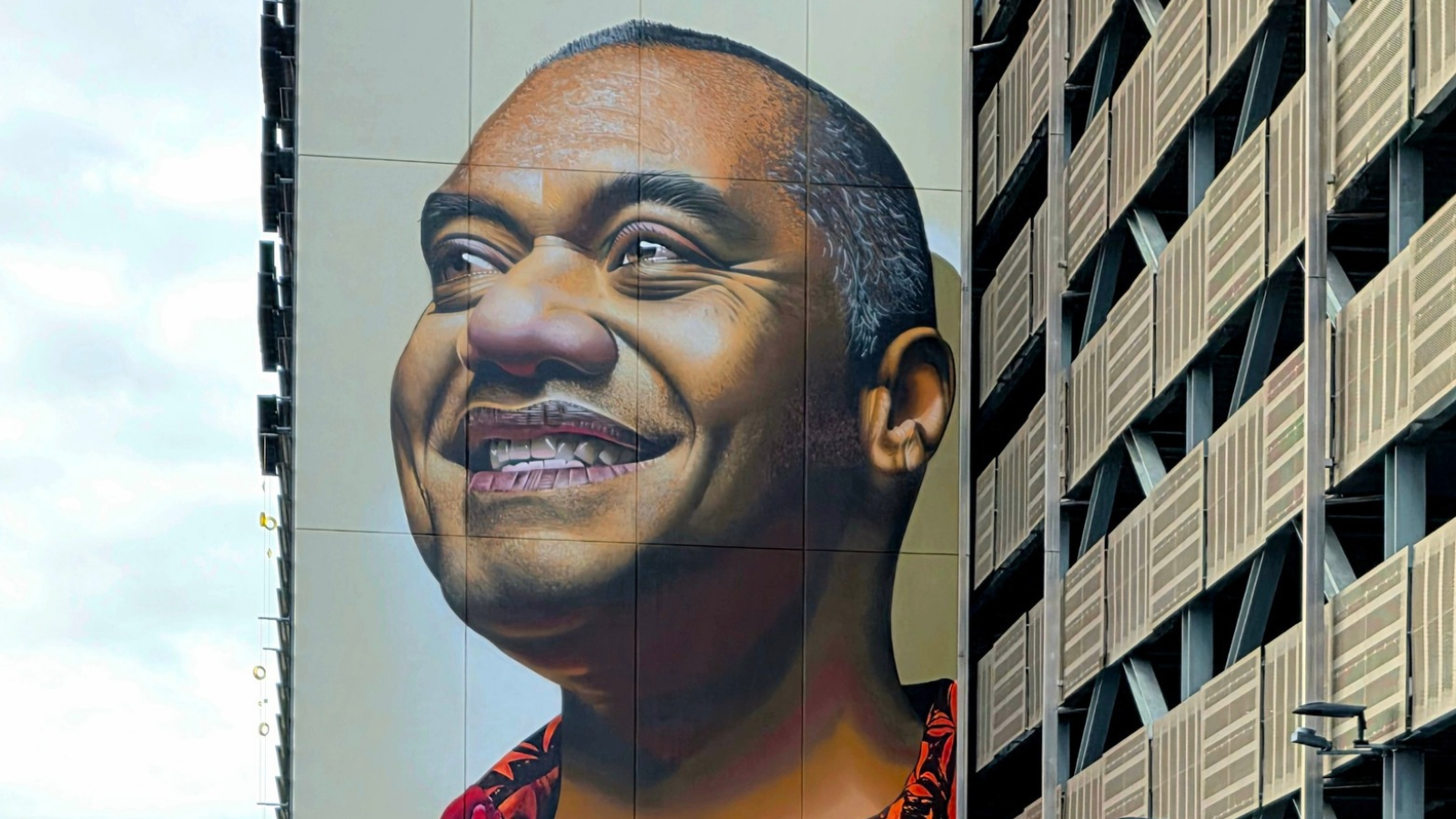
Reflecting on voter engagement after the 2023 election, the late Fa'anānā Efeso Collins, then a newly elected Green MP, said that the drop in Pacific turnout was a great concern.
Photo/PMN News/Thomas Tarurongo Wynne
Opinion
Room for one more? RSVP for democracy closes next Sunday
New rules mean enrolment closes on 25 October, ending election day registration in NZ. As the door closes, who gets left behind at democracy’s table?

Thomas Tarurongo Wynne
Published
17 October 2026, 5:13pm
Share
Copy Link
Top stories
PNG Chiefs win first round against New Zealand Rugby
Christine RovoiSat, 17 Oct
Pacific families must work four days to afford basic food: World Vision
Thomas Tarurongo WynneFri, 16 Oct

Sāmoa demolish France in record-breaking 78-4 RL World Cup opener
Christine RovoiFri, 16 Oct
Top stories
PNG Chiefs win first round against New Zealand Rugby
Christine RovoiSat, 17 Oct
Pacific families must work four days to afford basic food: World Vision
Thomas Tarurongo WynneFri, 16 Oct
Sāmoa demolish France in record-breaking 78-4 RL World Cup opener
Christine RovoiFri, 16 Oct
The tablecloth is laid, the plates are set and the food is cooked. The invitations went out with one request: let us know you are coming by midnight on Sunday 25 October. This is the table of our democracy, and between 26 October and 7 November, we will find out who was able to sit down to eat.
This year, the RSVP date has moved. Under the Electoral Amendment Act 2025, passed by the Government, enrolment closes 13 days before Election Day. In 2023, more than 600,000 people enrolled or updated their details after the writ was issued, with around 110,000 of them doing so on Election Day itself, pulling up a chair as the meal was being served. That late invitation no longer exists.
Justice Minister Paul Goldsmith has said late enrolments “have placed too much strain on the system,” pointing to a final count that used to take two weeks but stretched to three at the last election. Labour has pledged to bring back election-day enrolment if elected. But how do we weigh a quicker final count against a full table of voters?
In our Moana cultures, there is always room at the table for one more. Some guests may decline, and that is their choice. But what about those who simply cannot make it? The young Pacific worker is pulling a double shift because the rent is due. The family who moved three times in the past year and has no fixed address. Or the young person in their bedroom, door closed, scrolling through a world that feels more in their control than the one outside. Did they say choose not to vote, or could they just not get to the table?
Fania Kapao offered one answer on Pacific Mornings in July. “They don't see themselves in the policies that parties bring forward,” she said of young Pacific voters, adding that little effort goes into meeting them face-to-face in their own communities.
Aotearoa is not alone in changing the rules around the ballot box. In the United Kingdom, photo ID became compulsory at polling stations in 2023. The UK Electoral Commission found that at the 2024 general election, tens of thousands of people were initially turned away for lacking accepted ID, and about 16,000 did not return to vote, with awareness lowest among young people and ethnic minority communities.
Watch Fania Kapao’s full interview with Andre Fa'aoso on Pacific Mornings below.
In the United States, research published in the Journal of Politics found same-day registration, the option New Zealand has just removed, lifted turnout among 18-to-24-year-olds by between 3.1 and 7.3 percentage points. Governments describe such changes as necessary for election security and efficiency, while critics see them as voter suppression. Whichever view we hold, when the rules of the table change, whose chairs are left empty?
And what do we all lose when chairs are empty? At the 2023 general election, turnout was 78.2 per cent of enrolled voters, according to official Electoral Commission figures, down four percentage points from 82.2 per cent in 2020.
Auckland Tongan Advisory Council chair Melino Maka told PMN News at the time that more than a million eligible voters did not take part, with around 40 per cent coming from Generations Y and Z.
The decisions of the next three years were still made, just by fewer of us. If a host keeps cooking for empty chairs, do they learn to cook for fewer people? If political parties plan their menus around who turns up, does the food of those who couldn’t make it slowly disappear from the menu?
In 2023, Māngere, Panmure-Ōtāhuhu and Manurewa recorded the three lowest general electorate turnouts in the country, all below 65 per cent. Chief Electoral Officer Karl Le Quesne told Pacific Mornings that “communities with more Pacific people can have lower enrolment and turnout.”
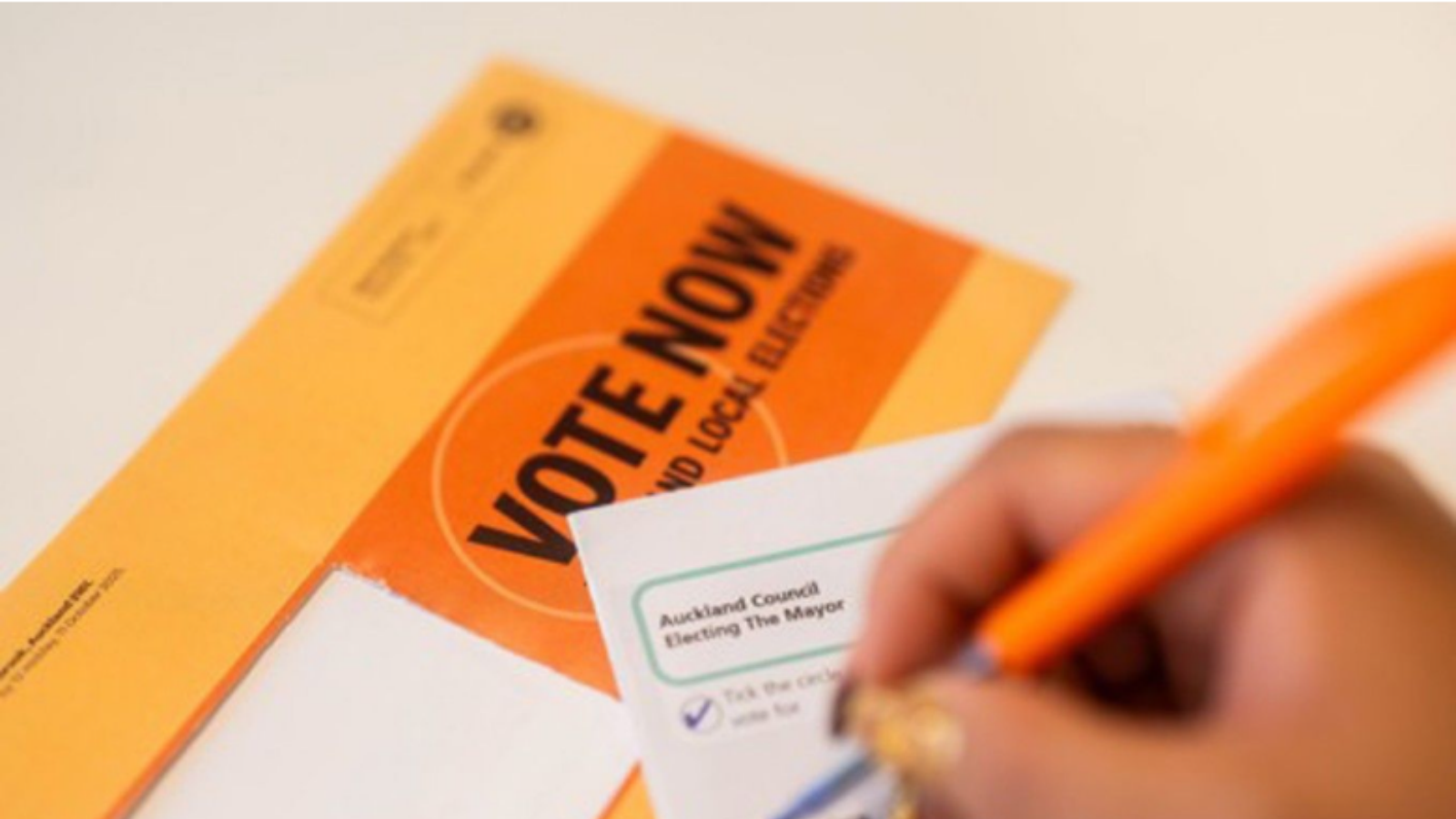
The PMN Horizon Research Pacific Issues Election Survey found that while nearly 60 per cent of participants aged 18 to 24 are registered on the electoral roll, only one in three are certain they will vote. Photo/Auckland Council
Among young Pacific people, the PMN News Horizon Research Pacific Issues Election Survey found nearly 60 per cent of respondents aged 18 to 24 were enrolled, but only one in three were certain to vote. Ethan Reille, from the youth enrolment campaign On a Roll, put it plainly to PMN News: “This time around, the rules have changed and the goalposts have shifted.”
Reflecting on voter engagement after the 2023 election, the late Fa'anānā Efeso Collins, then a newly elected Green MP, told Pacific Mornings that the drop in Pacific turnout was a great concern.
“When we lift our voters, it's better for everybody,” he said.
The table of democracy will be set on 7 November, and the RSVP closes at midnight on Sunday 25 October. Our Pacific families have always found room for one more. Can the same still be said of our democracy?