Online vault aims to return Pacific research to the community
Aui'a Vaimaila Leatinu'uWed, 21 Oct
What does a seat at the table actually mean for the Pacific, if we are still on the menu?
Photo/Pacific Islands Students Fighting Climate Change/Supplied
As the Pacific hosts Pre-COP31 in Fiji and Tuvalu this week, it has a seat. But does it have power? writes PMN political reporter Thomas Tarurongo Wynne.


In Palau last month for the Pacific Islands Forum Leaders Meeting, I sat with a young Palauan stallholder at the markets. We were talking about the effects of global warming and climate change on Palau and its people when he asked me, “How would you like your island? Rare, medium rare or well-cooked?”
It was a haunting reflection of a global crisis on our doorstep
At Aotearoa Youth COP 2026 in Auckland last month, more than 80 rangatahi worked through what climate change means for their lives. Save the Children Generation Hope ambassador, Ollie, told William Terite on Pacific Mornings that one young person summed it up: “if you're not at the table, you are on the menu.”
What happens though, when you finally get a seat at the table, and find you are still on the menu?
Pacific nations are among those that have fought hard for the 1.5-degree limit in the Paris Agreement. Yet as Pacific leaders gathered in Palau last month, the UN Environment Programme released its Limiting Overshoot report, warning that the world is on track to exceed 1.5 degrees, with even its most optimistic scenario reaching a peak of 1.8 degrees.
Palau President Surangel Whipps Jr called it “a fork in the road moment for the planet”.
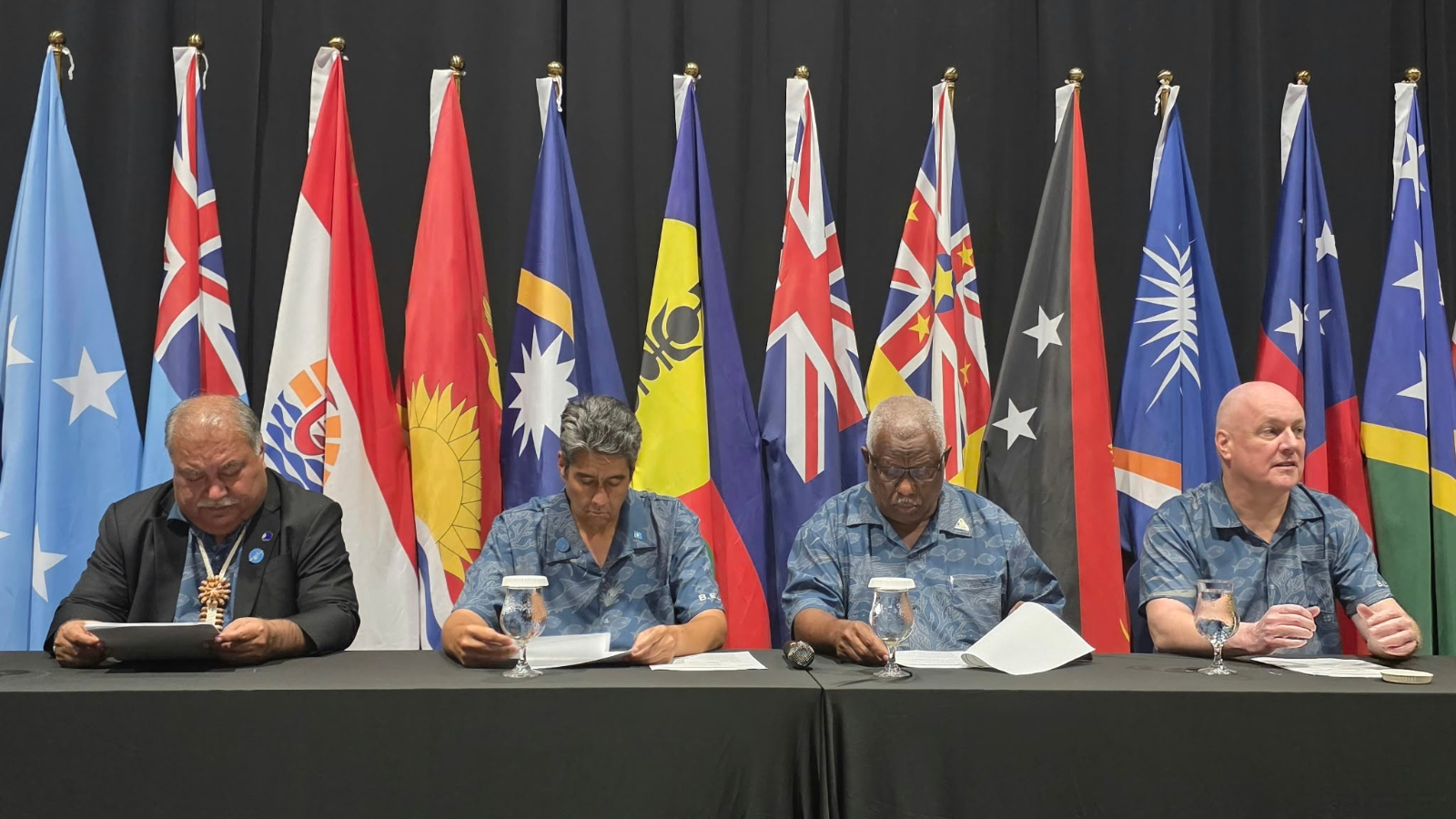
From left: PIF Secretary-General Baron Divavesi Waqa, Palau President and PIF Chair Surangel Whipps Jr, Solomons Foreign Minister, Ricky Nelson Houenipwela and New Zealand Prime Minister Christopher Luxon: Photo/PMN News/Thomas Tarurongo Wynne
So what does having a seat at the table actually mean if the temperature keeps rising?
Next week, the table comes to the Pacific. Fiji hosts the Pre-COP31 ministerial meeting in Nadi, with a special leaders' event in Tuvalu, ahead of COP31 in Antalya, Türkiye, on 9 November. More than 100 young Pacific people have shaped a regional statement through talanoa. Fiji says youth representatives will sit on its official delegation rather than attend as observers.
That is representation at the table. But how does pacific influence become global influence?
Last week, Dutch climate justice group Both ENDS lodged a complaint with the European Commission arguing New Zealand has breached climate commitments in its free trade agreement with the European Union. Aotearoa’s Trade Minister Todd McClay rejected the claim. The complaint is now being assessed by the EC.
International law expert Professor Al Gillespie told Terite the complaint is not frivolous.
“What you're finding now, ironically, is that the strongest mechanism to enforce climate change is not in the climate change agreements, but in trade agreements.”
Listen to Al Gillespie's full interview below.
Asked whether Pacific states could use the same route, Gillespie was direct.
“Only if we had a specific trade agreement with the Pacific that had that obligation.”
The Pacific has also taken the issue to the world's highest court. A campaign by young Pasifika law students, championed by Vanuatu, led the International Court of Justice to set out countries' climate obligations.
On 23 July 2025, the court found that climate treaties and other rules of international law impose obligations on states to protect the climate system. It also found that a breach of those obligations constitute an internationally wrongful act that can entail state responsibility, subject to the legal requirements set out by the court.
Vanuatu's Climate Change Minister, Ralph Regenvanu, described the opinion as “both shield and sword.”
The Pacific won a significant legal argument in The Hague. The question now is whether an advisory opinion itself turns that legal authority into consequences for global emitters.
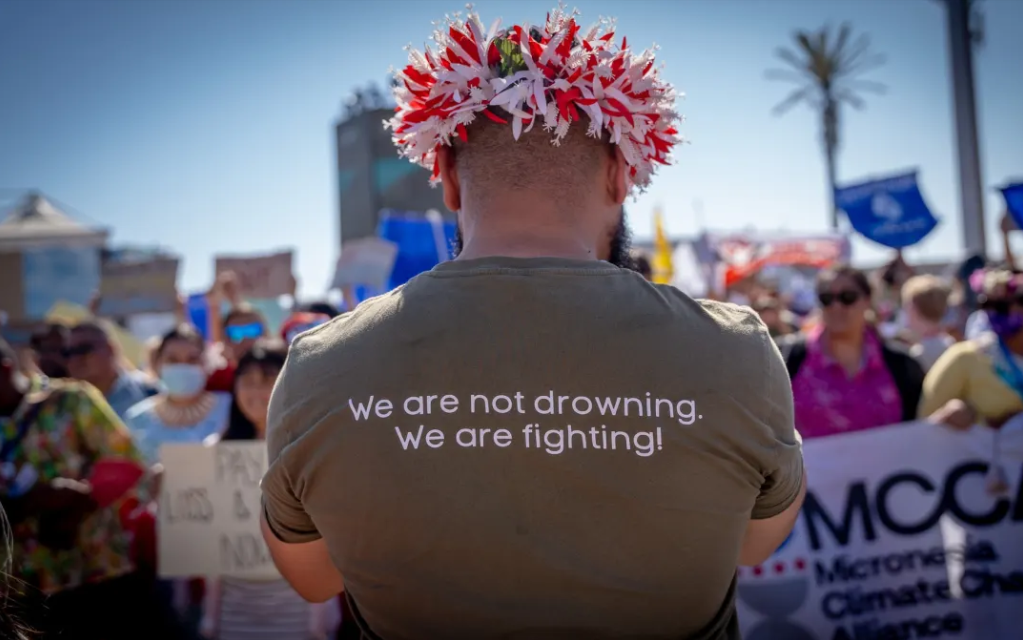
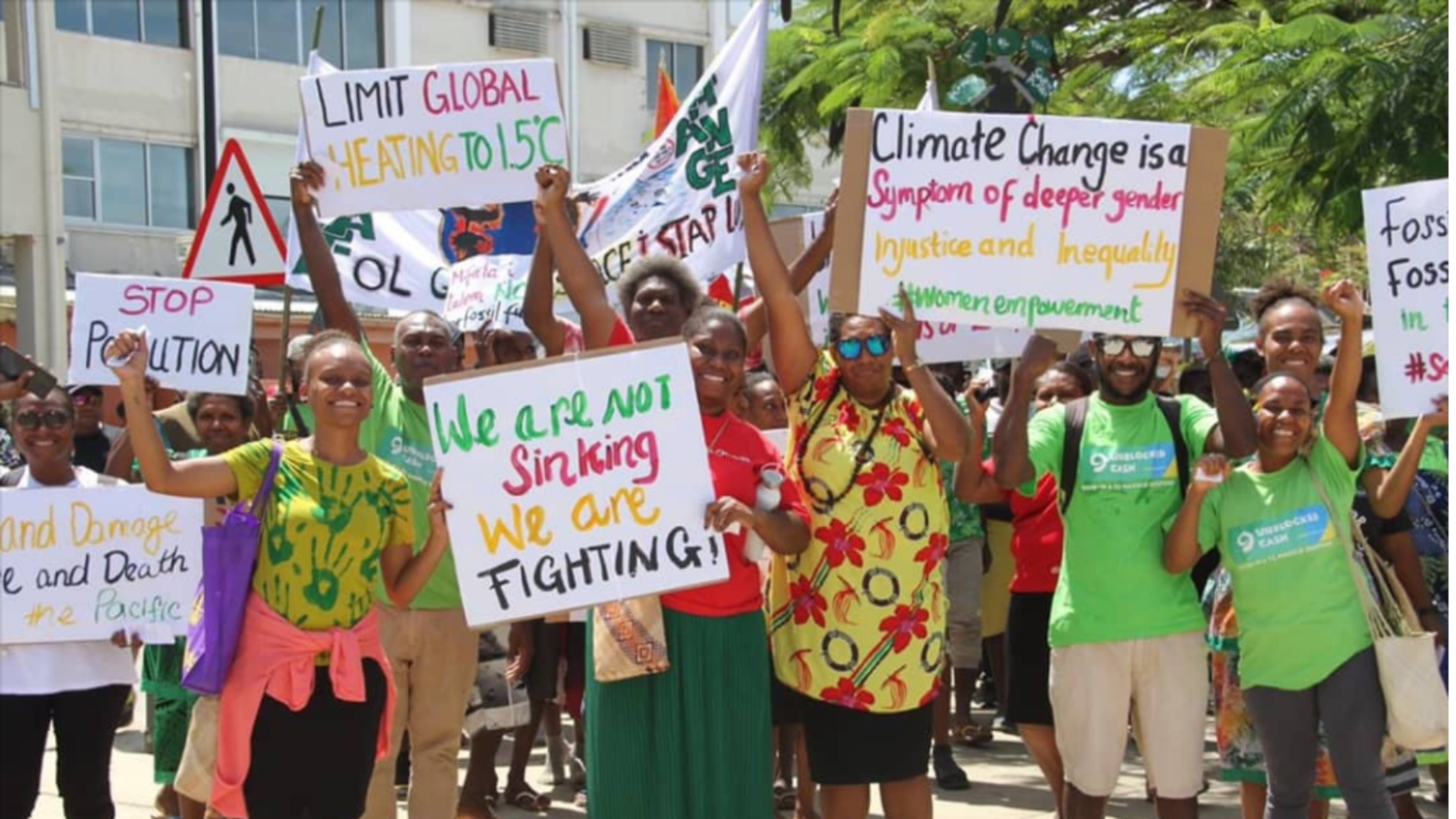
Samoan climate activist Brianna Fruean said, we are not drowning we are fighting. Photo/Facebook/Pacific Islands Students Fighting Climate Change
New Zealand’s Foreign Minister Vaovasamanaia Winston Peters summed it up at a UN leaders' breakfast in New York last September, co-chaired by Tuvalu. “Four countries comprise 60 per cent of the world's emissions,” he told the meeting, while the rest are left wrestling with the problem. The world, Peters says, is “in a battle we can't possibly win”.
The numbers are important as they raise the larger question of responsibility: what can Pacific countries reasonably expect from major emitters, and what obligations remain for countries such as New Zealand?
In Palau, former Miss Pacific Islands Moemoana Schwenke, now a climate campaigner for Greenpeace Australia Pacific, told me the 1.5-degree goal is “not just another number. “It's reality. It's our people. It's our homes.”
With warming now projected at 1.8 degrees even in the most optimistic scenario. For the Pacific, 1.8 degrees is not simply a number. It reaches into coastlines, freshwater, homes, culture and what one generation hopes to leave the next.
The challenge is no longer simply getting to the table. Clearly, we are at the table.
The question now is what that seat can actually achieve, what power follows the Pacific voice, our youth voice, our political and NGO voices. And what must change so our islands are finally taken off the menu.
Pre-COP31 meetings are underway in Fiji and Tuvalu this week, running from 5-8 October.