
Kiwis admit Australia are still the benchmark after Rugby League World Cup final defeat
Christine RovoiMon, 16 Nov
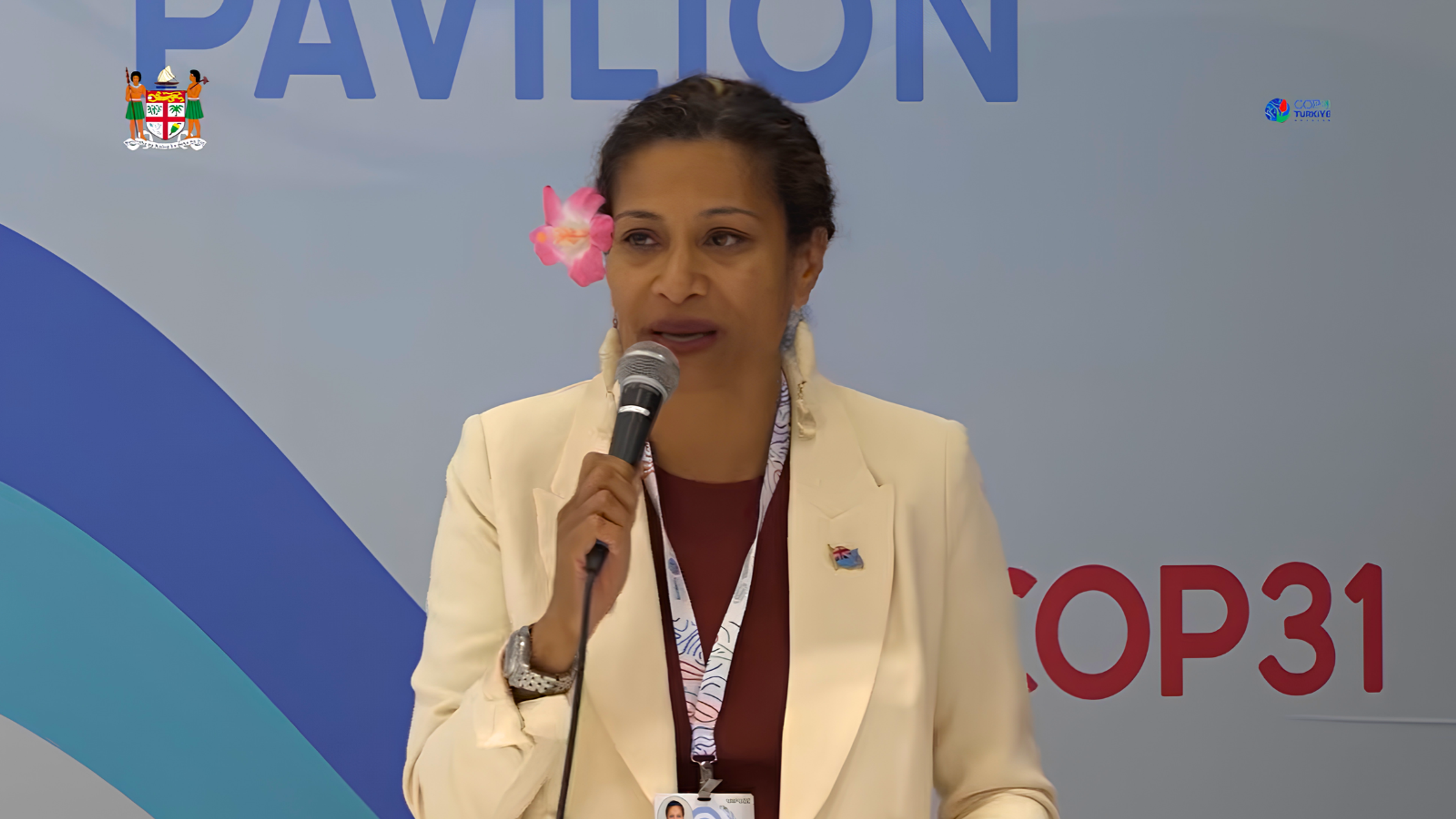
Fiji's Environment Minister, Lynda Tabuya, tells negotiators at the 31st United Nations Conference of Parties (COP31) the region will keep fighting for its future.
Photo/Youtube/Fiji Government
Fiji's environment minister says the region will keep pressing for action as the UN warns the world is heading beyond the climate limit.


The Pacific is refusing to treat a breach of the 1.5°C warming limit as a point of no return.
Fiji's Environment Minister, Lynda Tabuya, tells negotiators at the 31st United Nations Conference of Parties (COP31) the region will keep fighting for its future.
Her message comes after UN Secretary-General António Guterres warned in Antalya, Türkiye, that an overshoot above 1.5°C is not inevitable.
“The Pacific is not drowning. The Pacific is fighting,” Tabuya says.
Speaking as chair of the Pacific Small Island Developing States (PSIDS) at a gathering of Pacific delegations, Tabuya said the region had arrived with clear demands on climate action, science and fairness.
“We've come here with our aspirations, our red lines on the science, the 1.5 degrees, our responsibilities and equity.”
For Pacific island nations, the concern is not simply whether global temperatures briefly pass 1.5°C, but how high temperatures rise, how long they stay there and what happens to communities already facing rising seas, stronger weather events and other climate impacts.
Guterres told world leaders earlier this week that crossing the threshold could no longer be avoided, but said countries could still limit how far and how long temperatures rise above it.
That leaves Pacific negotiators pushing for faster cuts to global emissions and more reliable climate finance.
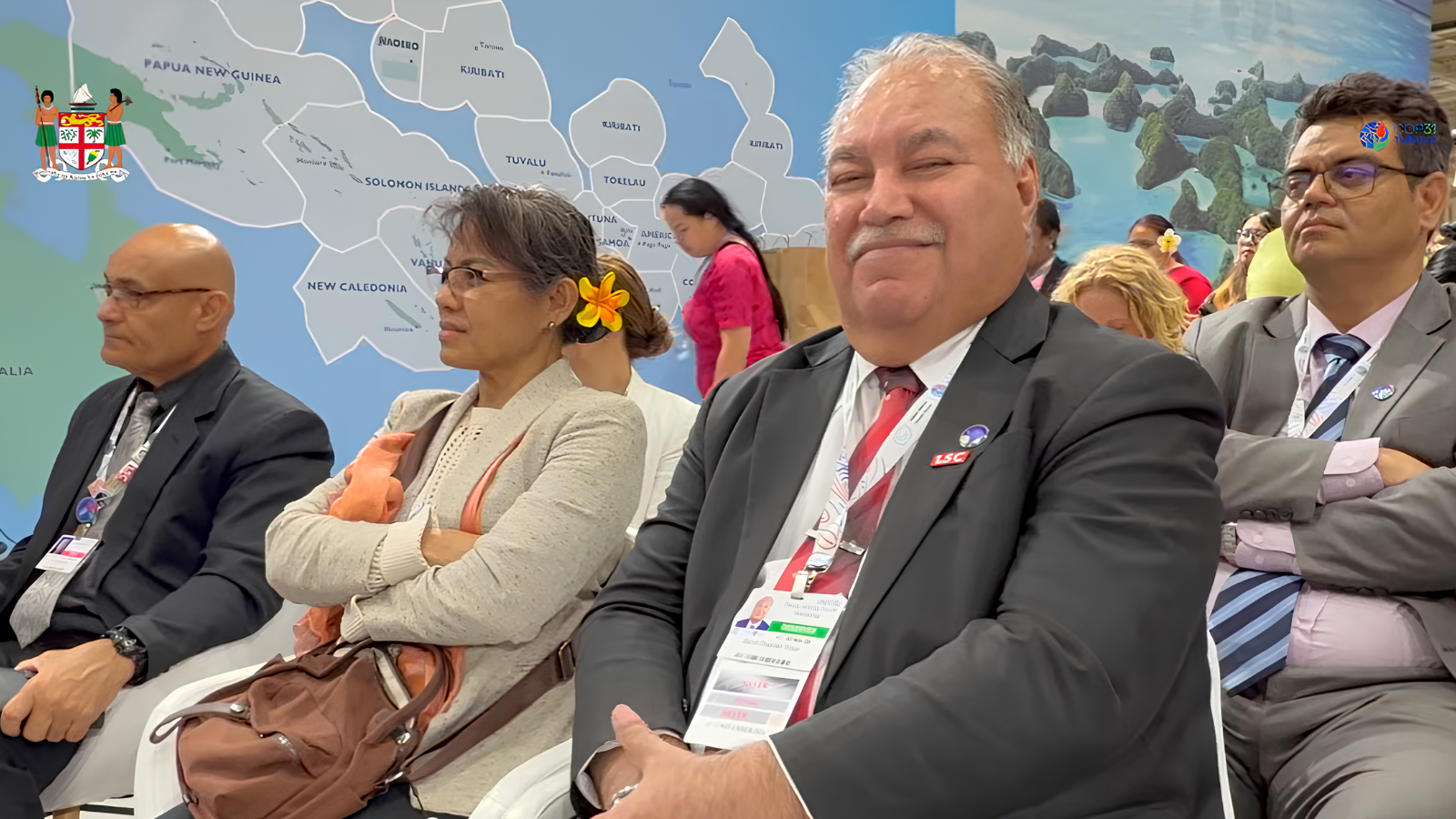
Former Naoero President and Pacific Islands Forum Secretary General, Baron Waqa, attends the Pacific Pavilion at COP31 in Antalya, Türkiye. Photo/Youtube/Fiji Government
Tabuya said the pressure on Pacific representatives can be heavy, particularly as they carry the concerns of some of the world's most climate-vulnerable countries.
“The role we have and expectations upon us can feel intimidating at times, and I felt that myself throughout the last week.
“I often think of it as wearing an invisible armour, an armour woven from perseverance, respect, love for our people, and an unwavering sense of duty to both our region and our planet.”
The Pacific's negotiating position also draws on the International Court of Justice's recent advisory opinion on states' climate responsibilities, which followed a campaign led by Pacific students and taken forward by Vanuatu.
Tabuya said that work had helped turn the Pacific's long-standing calls for climate justice into a stronger legal position.
But the fight is also personal for Tabuya, with Fiji heading to elections in less than 60 days and uncertainty over whether she will still be in government when the next round of climate talks comes around.
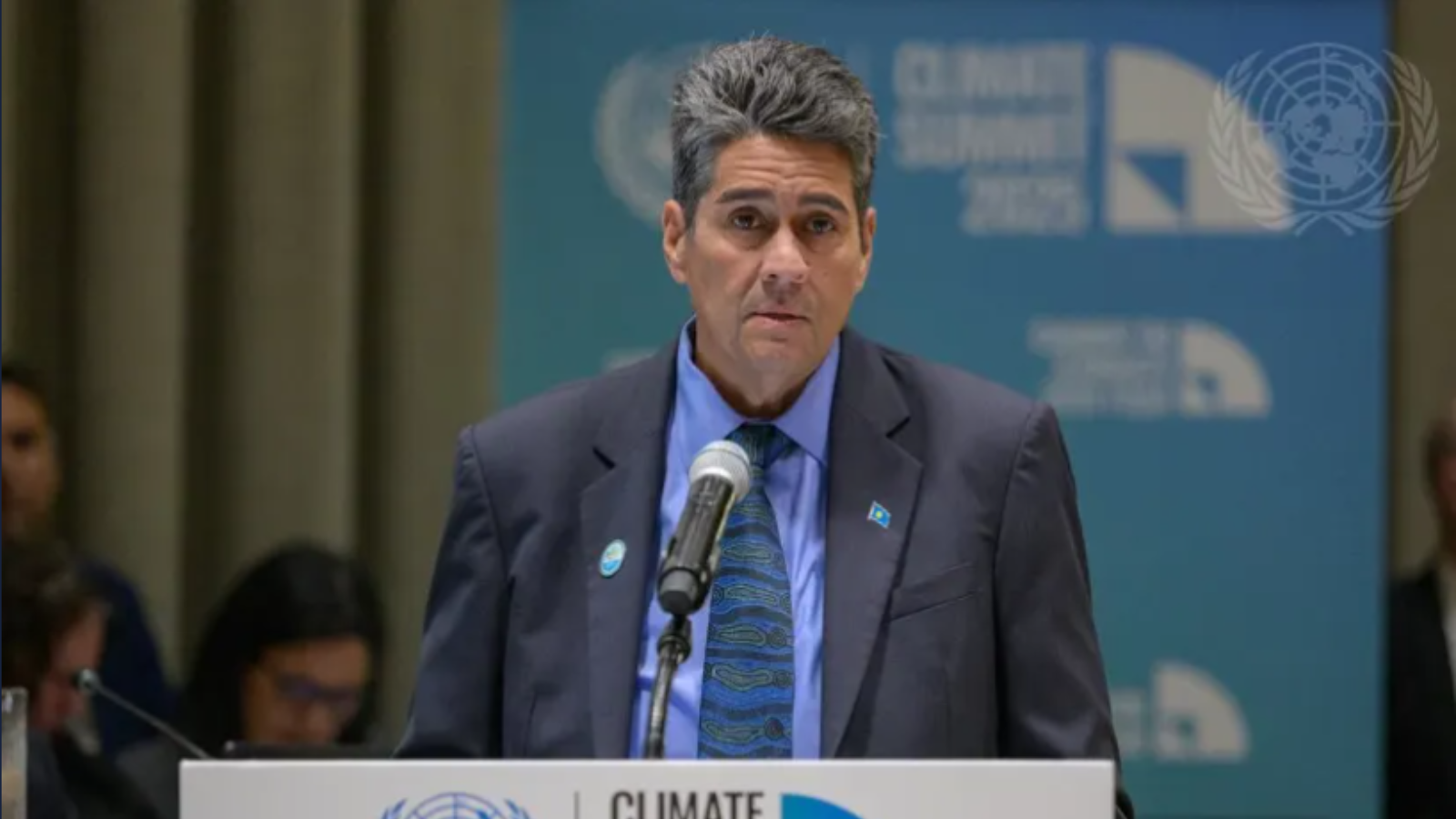
Palau President and Pacific Islands Forum Chair, Surangel Whipps Jr, also reinforced the region's position, pointing to the mandate agreed by Pacific leaders in the Belau Declaration.RNZ/UN/Manuel Elías
“We may not be here next year. Certainly, I don't know if I'm going to be.”
She ended with a message centred on the Pacific’s connection to land and ocean: “This is our vanua (land or home). Tomorrow, we fight again for our moana and for our future.”
Palau President and Pacific Islands Forum Chair, Surangel Whipps Jr, also reinforced the region's position, pointing to the mandate agreed by Pacific leaders in the Belau Declaration.
The Pacific is calling for stronger global emissions cuts and climate finance that is easier for vulnerable countries to access and more predictable.
One focus is the Pacific Resilience Facility, , which is looking for about NZ$890 million in investment to support climate resilience across the region.
Guterres has also called for greater pressure on the fossil fuel industry, including taxes on windfall profits to help vulnerable countries deal with climate change.
“The dinosaurs did not have a lobby. But fossil fuels do.”
And his message to those responsible for the emissions driving global warming was direct: “Polluters must pay.”
COP31 runs until 20 November with Pacific negotiators continuing to push for stronger action even as the world prepares for a period above the 1.5°C threshold.