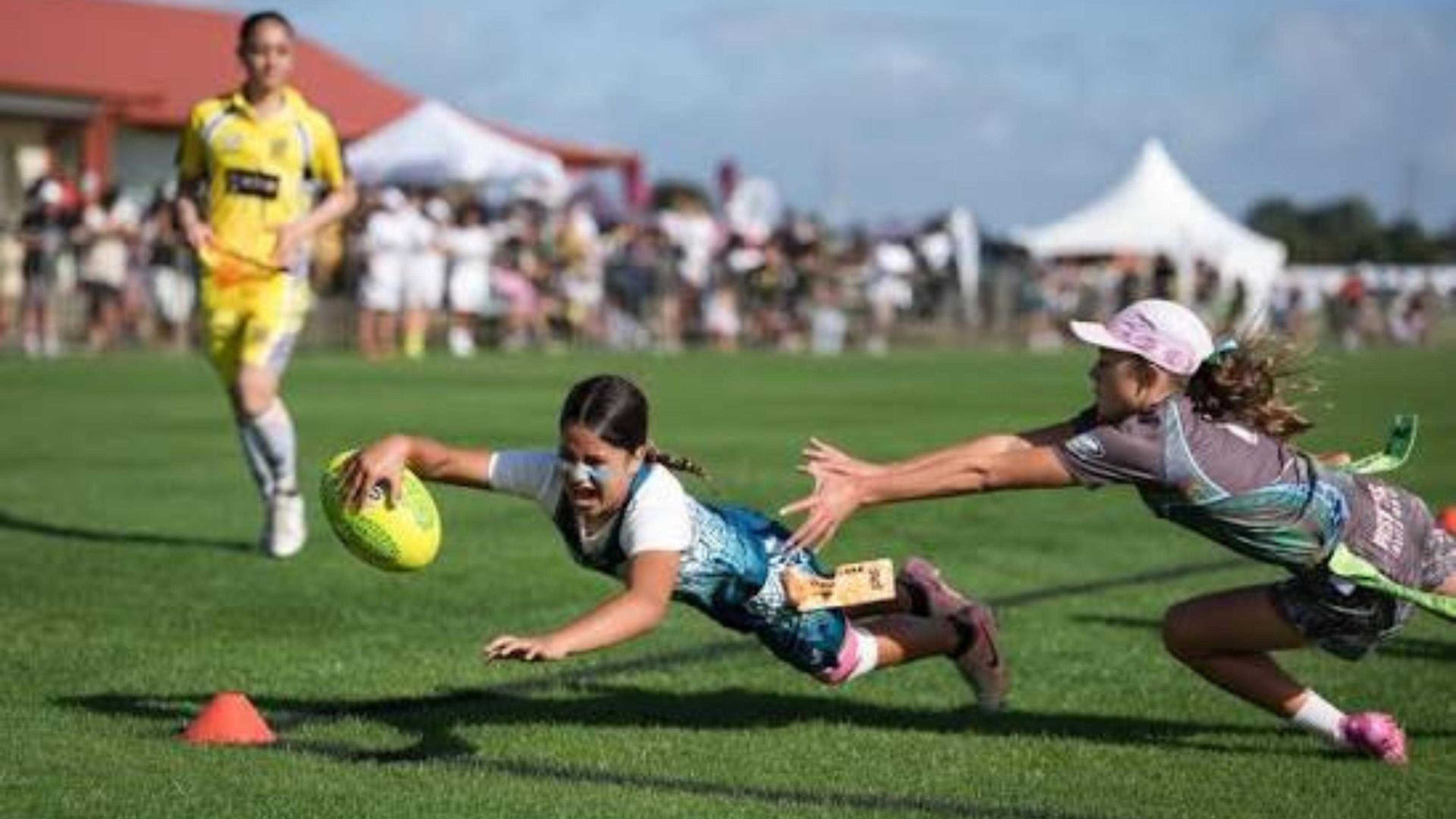
Politics behind keeping 15,000 New Zealanders on the tag football field
Christine RovoiTue, 10 Nov
Tag Football players in action as the minimal-contact sport continues to grow across New Zealand, with affordability becoming an increasing concern for families.
Photo/NZTFI
NZ Tag Football says the next government’s approach to sports could have a direct impact on thousands of Pacific and Māori families.



For New Zealand Tag Football, the political decisions made after the general election will be felt well beyond Wellington.
They could determine whether families can afford to play, whether schools and communities can keep programmes running, and how easily young Pacific and Māori players can stay active.
The code has about 15,000 registered players across New Zealand and its chief executive, Claudius "Claude" Iusitini Ruaporo, says government policy has a direct bearing on the sport's future.
"It has a huge bearing on the direction and the strategic planning for our sport, depending on what policies the governments roll out with regards to the space that we work in," he tells PMN News Political Reporter Thomas Tarurongo Wynne.
The biggest pressure is the cost of taking part.
"Because, you know, you've got to look at cost, you know, with regards to the ever-changing cost of living in this country. And it's a crisis at the moment."
Ruaporo's concern is backed by national participation data.
Sport New Zealand's Active NZ 2024/25 survey found that cost is becoming a bigger barrier for tamariki aged 5 to 11, with 35 per cent citing cost as a barrier to taking part in physical activity - up 13 percentage points from the previous year.
The report says: "As may be expected, cost of living pressures have meant affordability issues have grown, especially for tamariki, with 35 per cent citing cost as a barrier (up 13 percentage points from last year)."

Claude Iusitini Ruaporo says government policy and the rising cost of living could have a direct impact on participation. Photo/nztagfootball.com
The finding gives fresh weight to the challenge facing community sports such as Tag, where participation fees are only one part of the cost for families already dealing with higher household, transport and other everyday expenses.
Former Aktive Auckland chief executive Jennah Wootten has also warned about the effect of rising household costs on families trying to keep children involved.
"The ongoing impact of the cost-of-living crisis in Auckland has seen many families sacrifice participation in sport and recreation," Wootten said.
The pressure is also showing up in national participation data. Sport New Zealand's Active NZ survey found that 35 per cent of tamariki cited cost as a barrier to taking part in physical activity, up 13 percentage points over 12 months.
For New Zealand Tag, the challenge is finding ways to keep the game affordable while still providing a pathway from school and community programmes through to elite competition.
The organisation works across Year 7 and 8, secondary schools and community programmes, while also looking to grow into new communities, including the Asian market.

Jennah Wootten says the cost-of-living crisis is forcing some families to sacrifice participation in sport and recreation. Photo/Supplied
Its appeal is simple: Tag is a minimal-contact game that does not require players to have a particular body type or level of physical size.
"Our strap line is the game for everybody, double meaning as in everybody and every type of body."
That inclusive approach is important, Ruaporo says, because the benefits go beyond sport.
"It's all about, you know, mental well-being and health and well-being, fitness as well, and just getting kids out and getting people engaged in the community."
New Zealand Tag has been looking at entry-level programmes, school participation and "Have A Go Days" to give children and families opportunities to play without the full cost of competitive sport.
"We've got to work out ways where it's got to be sustainable, obviously, to deliver these programmes."
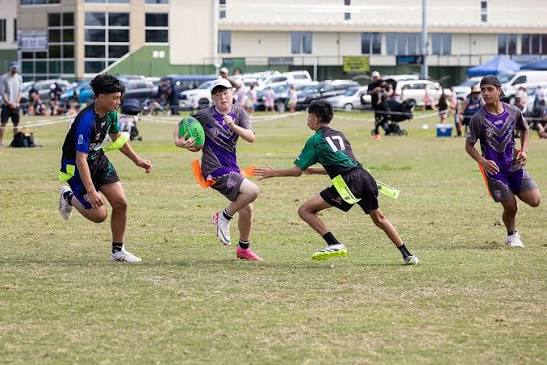
New Zealand Tag Football has about 15,000 registered players across the country, with strong participation from Pacific and Māori communities. Photo/Instagram
Ruaporo has seen that challenge change over more than three decades in the game.
He was there when Tag arrived in New Zealand in 1993-94, playing in the open men's grades during what he describes as the pioneering days. The sport has since grown into an international game, with 236 teams from 38 nations taking part at the recent World Cup in Coffs Harbour, Australia.
But growth has also made the politics around sport harder to ignore.
"Especially that saying when they say, oh, politics and sports should never mix. It's been mixed since the beginning of time."
For community sport, he says, political decisions can show up in very practical ways from access to grounds and council support to funding and local partnerships.
Listen to Claudius "Claude" Iusitini Ruaporo' full interview below.
"If you don't have local MP support, it's going to be a struggle securing grounds, getting local businesses to get behind you. At the end of the day, you've got to play the game."
For a code with a strong Pacific and Māori presence, Ruaporo says the issue is therefore bigger than simply keeping Tag teams on the field. It is about whether families can continue to access affordable activity and the health, social and community benefits that come with it.