Tongan artist puts women makers and ancestral knowledge at centre of new exhibition
Aui'a Vaimaila Leatinu'uWed, 25 Nov
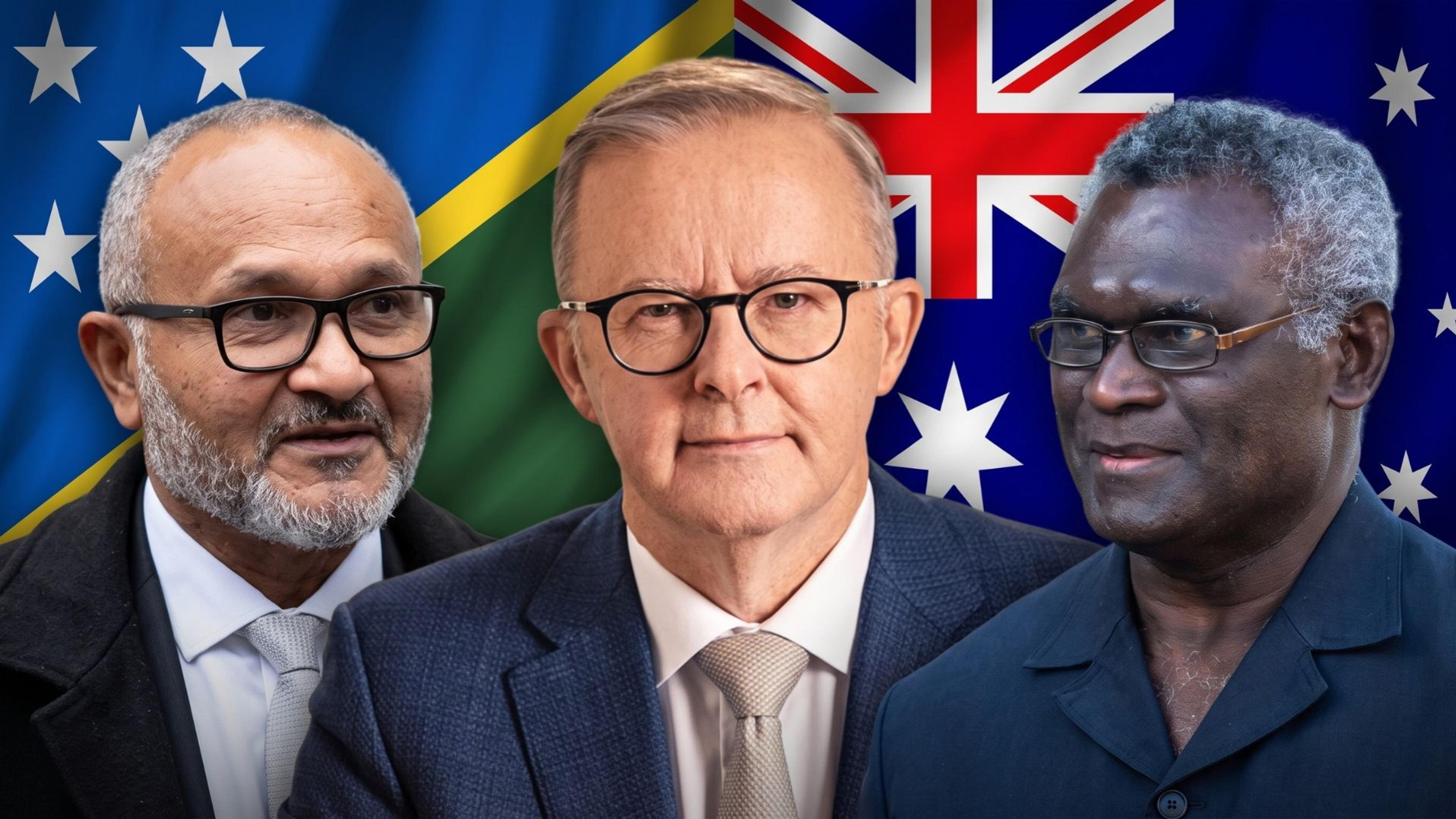
From left: Solomon Islands Prime Minister Matthew Wale, Australian Prime Minister Anthony Albanese and former Solomon Islands prime minister and Opposition Leader Manasseh Sogavare as the Pacific island nation weighs a new security partnership with Canberra.
Photo/PMN News composite
Security expert Anna Powles says the agreement marks a major shift towards Canberra but its future now depends on Solomon Islands' Parliament and how Beijing responds.


Solomon Islands' new NZ$894.02 million security treaty with Australia may be a major shift in the Pacific but the deal still has a crucial hurdle to clear at home.
The treaty must be ratified by Solomon Islands' Parliament where Prime Minister Matthew Wale faces a political challenge and strong opposition from former prime minister Manasseh Sogavare.
Sogavare's government signed a security agreement with China in 2022 and has since defended the deal.
Massey University security expert Anna Powles says the speed of the new agreement reflects the concerns on both sides but there is still a fight ahead.
“I think there certainly is going to be a challenge doing that,” Powles tells William Terite on Pacific Mornings.
The treaty makes Australia Solomon Islands' primary security partner and commits Honiara to consulting Australia on critical infrastructure and ensuring security cooperation is with Pacific Islands Forum members.
Listen to Anna Powles' full interview below.
Wale says the treaty marks a reset for Solomon Islands after years of uncertainty over its security relationships. “Those days are done, gone," he told media.
The agreement also says Solomon Islands will not allow its territory to be used for a foreign military or security base.
Powles says the agreement effectively realigns Solomon Islands with Australia after years of close security ties with China.
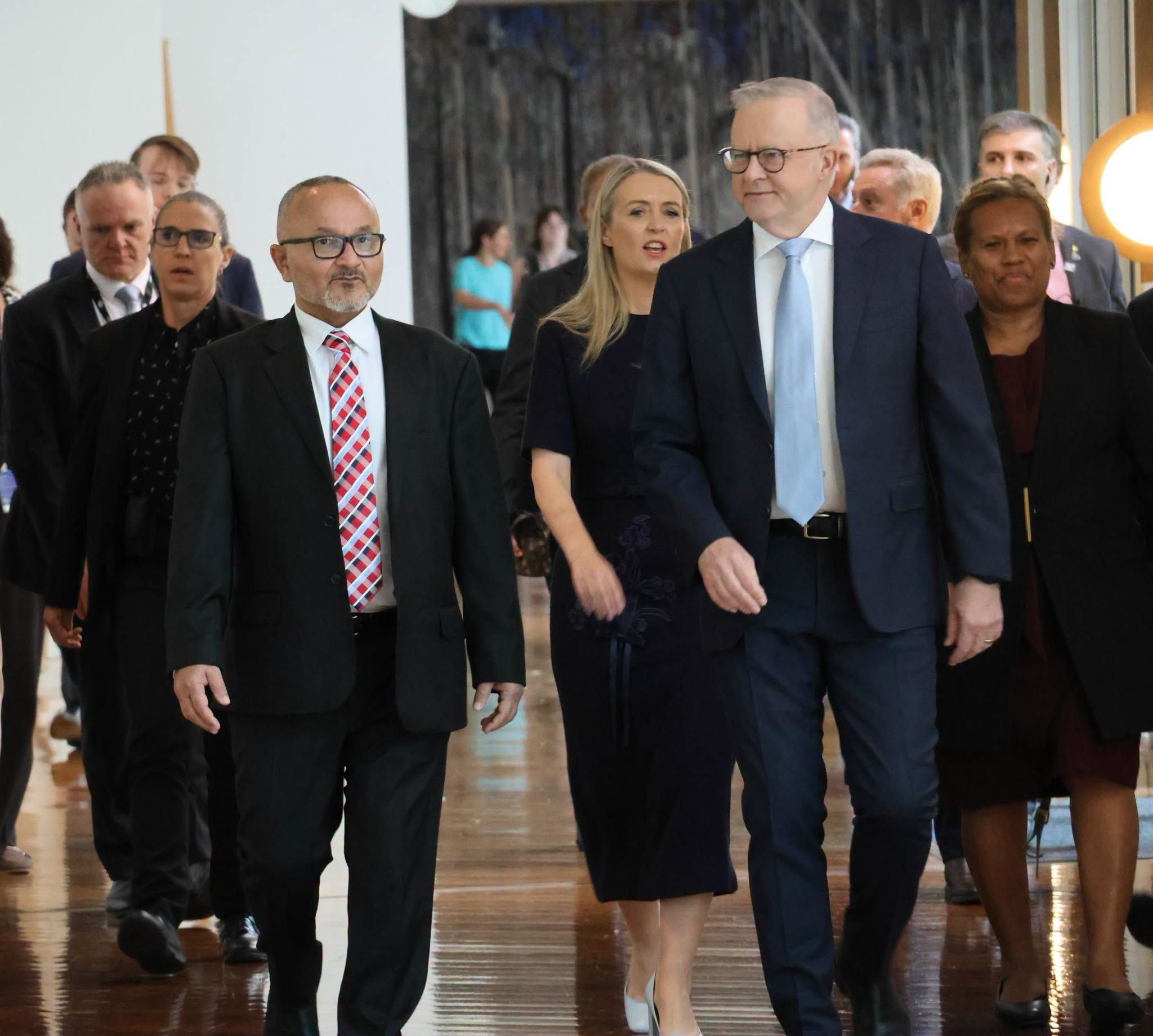
Solomon Islands Prime Minister Matthew Wale and Australian Prime Minister Anthony Albanese meet in Canberra to sign the new Australia-Solomon Islands security treaty. Photo/Facebook/DFAT
“There is no doubt that it is a significant agreement. There is a very weighty price tag attached to it, around $740 million Australian, and it covers both economic development, human capital development, as well as security.”
The agreement follows Solomon Islands' decision not to renew its 2022 security pact with China, which is understood to expire in April 2027.
But Powles says the end of the security agreement does not mean China is leaving Solomon Islands.
“China will no doubt remain a Solomon Islands economic partner and the two-way trade between Solomon Islands and China has increased over the years, and there's no reason to believe that the economic partnership between the two countries will shift.”
She expects China to maintain its engagement with the country and the wider Pacific. “But I doubt we will see China step back and will likely double down in terms of its engagement with the region.”
The 2022 China-Solomon Islands security agreement raised concern across the region because of the possibility of a greater Chinese security presence in the Pacific.
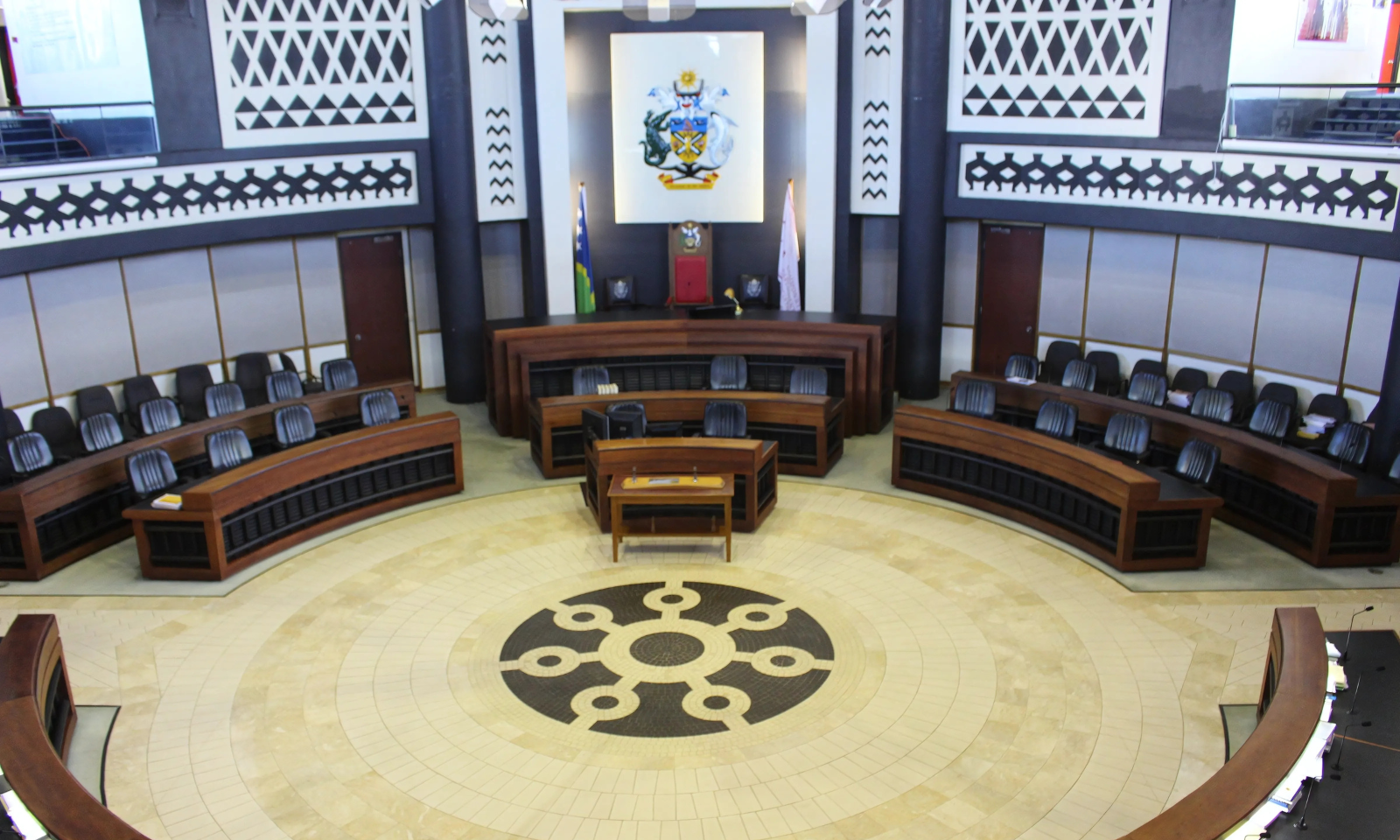
Solomon Islands Prime Minister Matthew Wale faces the next test of the new security treaty as it moves towards ratification by Parliament. Photo/Solomon Islands govt
Powles says Solomon Islands has had one of China's strongest security relationships in the region. “We've seen the greatest sort of security footprint by China in Solomon Islands.”
China has criticised the new Australian treaty but has not confirmed whether the 2022 agreement has been formally ended.
The deal with Australia also includes support for free education, sports programmes, renewable energy, infrastructure and improved visa arrangements.
Powles says those development measures could help Prime Minister Wale build support for the treaty at home.
“There is going to be public support, popular support for some of the human capital development initiatives under the treaty, such as free education, which has been a key policy reform piece of Prime Minister Wallet since he came to office," she said.
Sogavare, who is the current Opposition leader, says the government needs to explain what Solomon Islands could lose by ending its security arrangements with China.
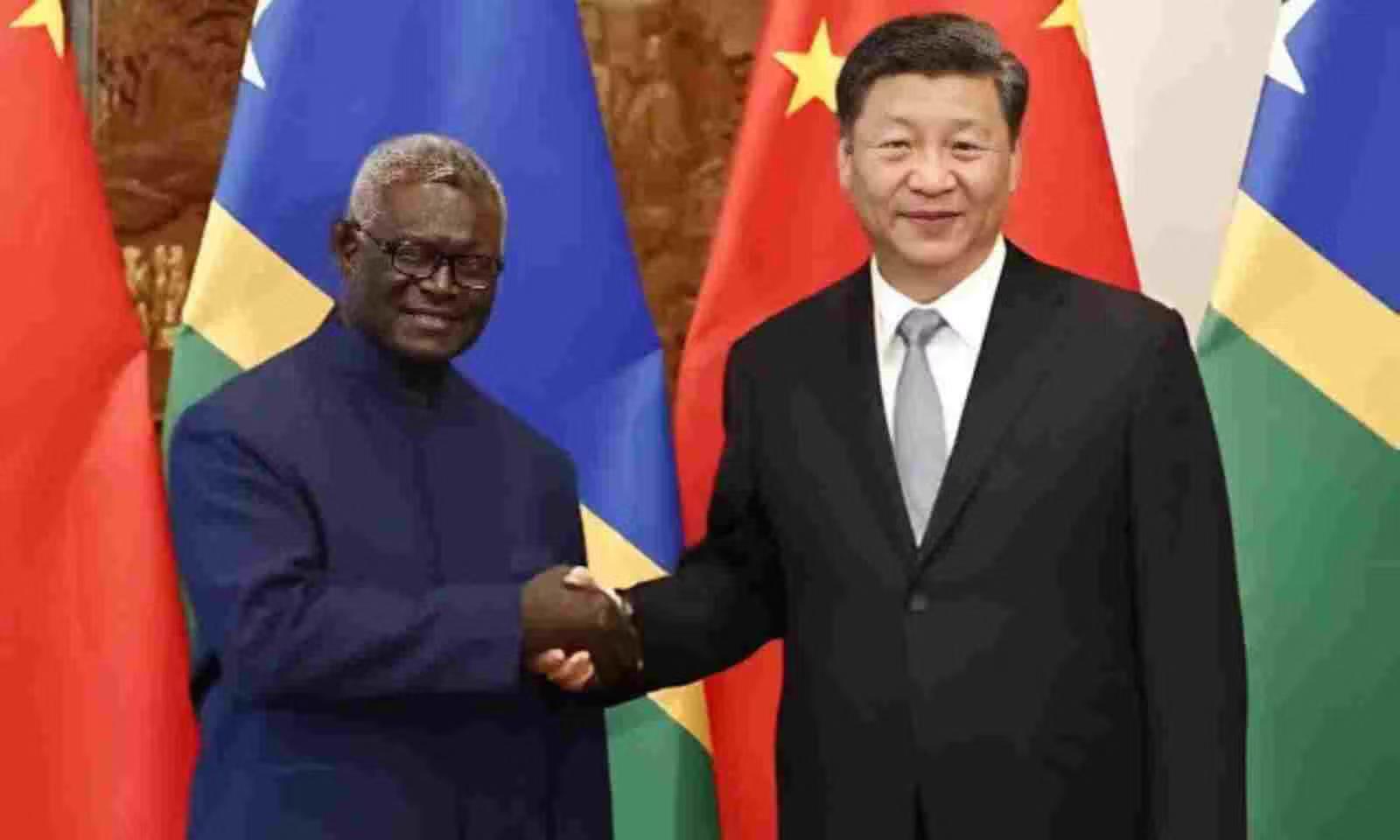
Former Solomon Islands prime minister Manasseh Sogavare meets Chinese President Xi Jinping as the future of Solomon Islands' security relationship with China comes under renewed scrutiny. Photo/Chinese Foreign Ministry/file
“It must explain the reasons for doing so, the assessment undertaken before making the decision and what alternative arrangements will provide the cooperation and assistance previously received," his statement read.
He says Solomon Islands should be able to work with multiple partners without giving up its independence.
“We must be able to work with China, Australia, the United States and other countries without losing our ability to make independent decisions in the interests of our people.”
Powles says the next six months will be closely watched as the treaty moves towards parliamentary consideration.
“There's no doubt there are going to be some challenges and everyone's going to be watching very, very closely over the next six months.”
For New Zealand, Powles expects the broad approach to Pacific security to remain largely unchanged regardless of the outcome of the country's election. “I think it's fairly bipartisan.”
She says there is wide support for security being managed collectively by Pacific countries, which is also reflected in the new Solomon Islands-Australia treaty.
“I think there was strong concern expressed by the New Zealand government at the 2022 agreement.”
The new treaty therefore marks a significant change in Solomon Islands' security alignment but Powles says the next test will be whether the agreement can survive the country's domestic political process and what China does next.