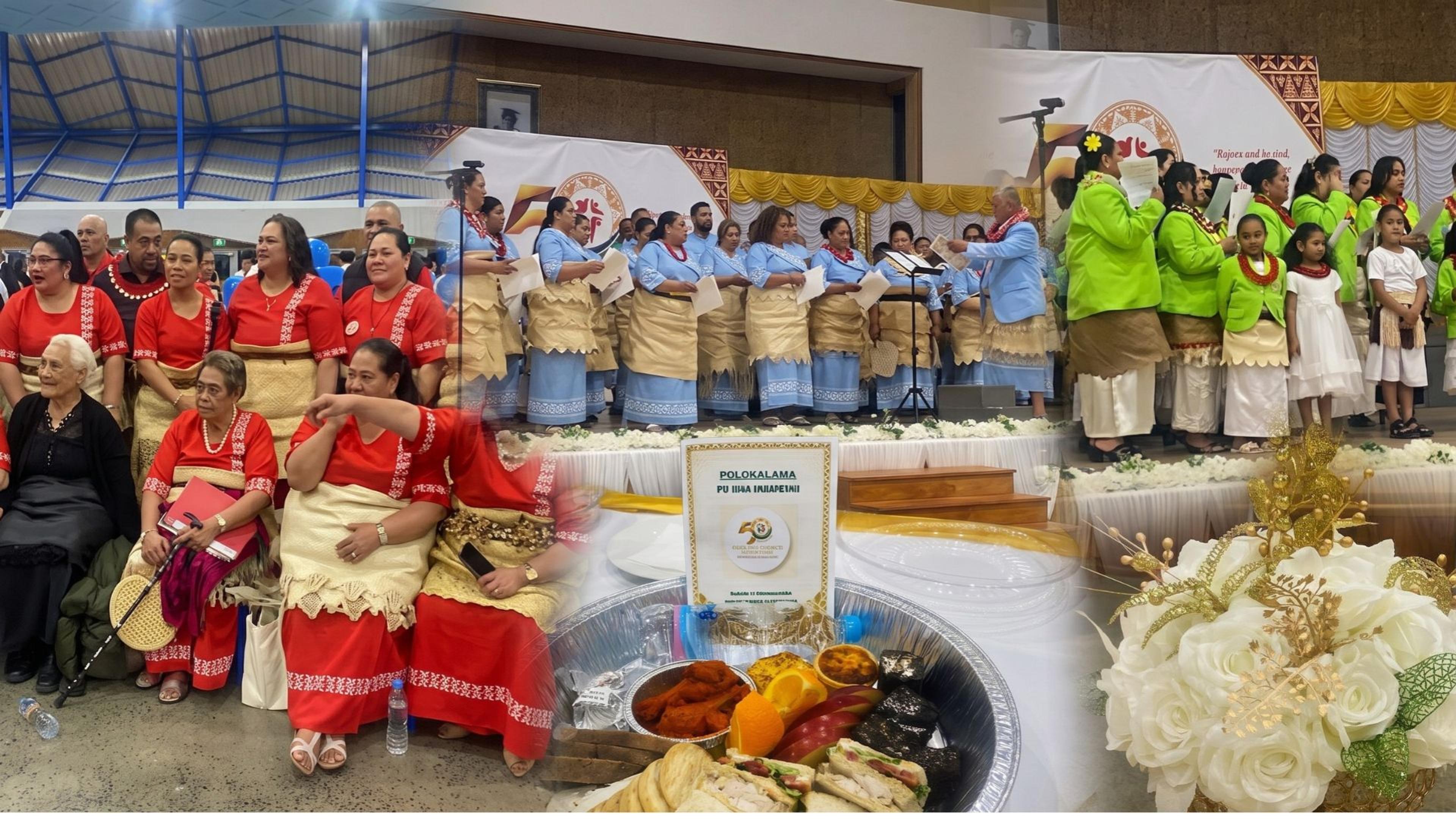

From left: Teariki Tuiono, Vaia Tony Lafotanoa, Rachel Afeaki Taumoepeau and Riki Manarangi discuss the rise of professional and highly skilled work in Pacific communities.
Photo/PMN News composite
Business
Two Pacific economies under one roof as workforce divide widens, new data shows
The government figures reveal more people are moving into professional work while job losses hit driving, manufacturing and clerical roles, creating very different fortunes within the same families.

Thomas Tarurongo Wynne
Published
25 November 2026, 1:44pm
Share
Copy Link
Top stories


World Rugby suspends Oceania Rugby from council over internal governance concerns
Christine RovoiTue, 24 Nov

Pacific child protection comes under pressure as violence remains widespread - experts
Christine RovoiTue, 24 Nov
Top stories
World Rugby suspends Oceania Rugby from council over internal governance concerns
Christine RovoiTue, 24 Nov
Pacific child protection comes under pressure as violence remains widespread - experts
Christine RovoiTue, 24 Nov
Pacific people are reaching record numbers in professional and highly skilled jobs while unemployment continues to rise, according to new figures from the Ministry of Business, Innovation and Employment.
The data shows this is creating a growing divide within the same families and communities.
The figures also show the number of Pacific professionals rose by 3700 in the year to September to 34,800.
That makes professionals the largest of the eight Pacific occupation groups measured by the ministry.
But Pacific unemployment has also climbed to 11.8 per cent, up 3.4 percentage points over five years while underutilisation sits at 21.5 per cent.
Labour's deputy leader Carmel Sepuloni says the growing gap is a concern especially for young Pacific people.
Watch Carmel Sepuloni's full interview below.
"What we don't want to see is an increase in the divide between those that have and those that don't within our Pacific communities," she tells William Terite on Pacific Mornings.
She says Pacific people have lost jobs in sectors where they are strongly represented, including healthcare and construction.
"When unemployment is high, then the reality is that our young population are the ones that are in the most precarious position."
The latest figures show the number of Pacific people in highly skilled jobs rose by 3900 over the year to 55,900. Photo/RNZ
The latest figures show the number of Pacific people in highly skilled jobs rose by 3900 over the year to 55,900.
At the same time, low-skilled jobs fell by 4200 including a drop of 2100 among machinery operators and drivers, and 800 among clerical workers.
Vaia Tony Lafotanoa, a consultant and entrepreneur, says the two trends are happening at the same time.
He says it is possible to see both sides of the economy within a single Pacific family.
"It's a polarisation. Growth at the top, and losses in driving, manufacturing, clerical work, where many of our families earn," Lafotanoa tells PMN News.
"It's not uncommon to have two or three very different economies living within that Pacific household. It's the uncle that's lost the driving job, or the mum that's lost the cleaning or manufacturing job."

Vaia Tony Lafotanoa says the two trends are happening at the same time and that it is possible to see both sides of the economy within a single Pacific family. Photo/PMN News
He says the progress of today’s professionals has also been built on the work of earlier generations. "I love that saying, the factory floor paid for the lecture theatre."
Bernadette Scanlon, Ministry for Pacific Peoples Deputy Secretary Policy and Insights, says the increase highlights "the growing contribution Pacific peoples are making to New Zealand's workforce and economy".
"While these figures are encouraging, there is still more work to do. Pacific peoples continue to experience higher levels of unemployment and underutilisation than the wider population."
Teariki Tuiono, a former Kaiārahi for the University of Auckland’s Faculty of Science, says the growth also reflects values passed through Pacific families.
"We put a lot of emphasis on our faith, so God first, family and then community as well," Tuiono told PMN News.
His message to young Pacific people is simple. "You already got the goods. Just go for it."
Listen to Riki Manarangi's full interview below.
Consultant and entrepreneur Riki Manarangi says technology is the biggest driver, helping young people build on the skills and experience of their parents.
Pacific Business Trust says the figures point to a wider shift away from factory and driving jobs toward services and higher-skilled work.
"Ultimately, we want Pasifika peoples not only to participate in the economy, but also to own businesses and help shape its future," the Trust says.
But Rachel Afeaki Taumoepeau, a company director speaking from Sāmoa, says the job market is highly competitive and there are not enough jobs for Pacific workers.
She says technology, including artificial intelligence (AI), is also changing the types of jobs available. Pacific people are "more likely to be the first to be told that they don't have a job".
Listen to Rachel Afeaki Taumoepeau's full interview below.
Green Party MP Teanau Tuiono says the two sides of the Pacific economy should not be treated as separate communities.
"We are one community," he tells Terite.
For Pacific families, the challenge now is making sure the growth in professional and highly skilled work creates opportunities without leaving those losing jobs further behind.
Listen to Teanau Tuiono's full interview below.