
LEAO claims Silver Scroll with first pure Gagana Sāmoa winner
Brooke FonotiWed, 21 Oct
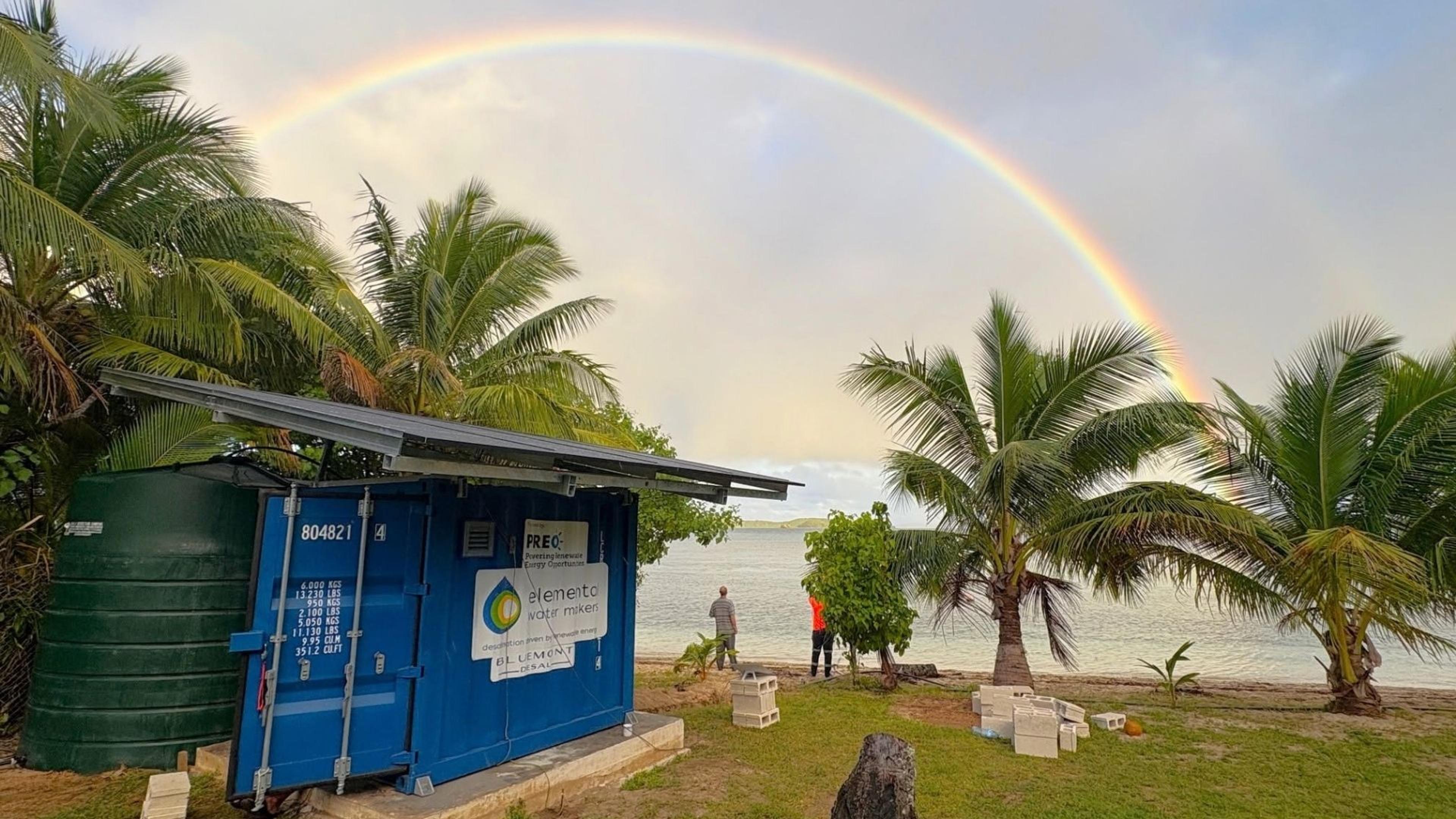
People in remote Tongan communities are gaining access to a more reliable source of drinking water through solar-powered desalination systems.
Photo/Facebook/Elemental Water Makers
Two remote islands in Vava'u are already producing drinking water from the sea, with a wider rollout now being discussed with the Tongan government.


A solar-powered way of turning seawater into drinking water could be expanded to 23 more remote communities in Tonga after systems were installed on two islands in Vava’u.
The installations on Hunga and Matamaka are already producing fresh drinking water, which are also giving communities a more reliable supply when rainwater tanks run low.
Bluemont, the Australian company behind the project, says it is in discussion with the Tongan government over a proposal to expand solar-powered desalination to 23 additional remote island communities, with potential support from the Asian Development Bank (ADB).
The expansion has not been confirmed but Bluemont and would depend on further talks and funding.
The systems use solar-powered reverse osmosis to remove salt from seawater. Each unit can produce up to 4300 litres of drinking water a day and give the two islands a combined capacity of up to 8600 litres.
The project builds on Tonga's wider use of solar power with the 2-megawatt Matatoa Solar Farm at Tofoa on Tongatapu commissioned in 2017 and still listed in Tonga Power's current renewable-energy portfolio.
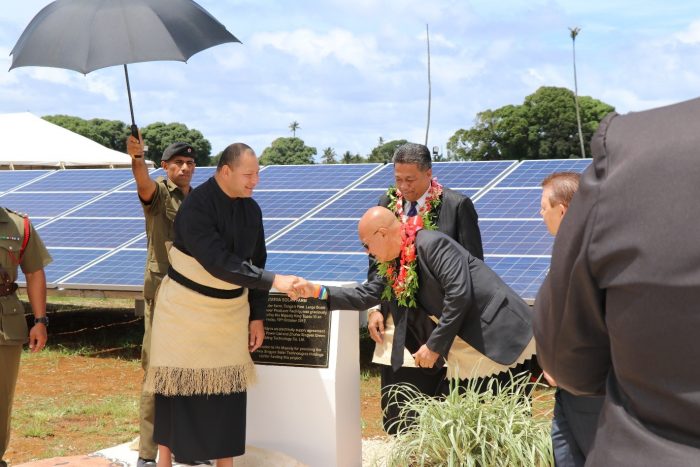
Tonga's King Tupou VI opened the 2-megawatt Matatoa Solar Farm at Tofoa on Tongatapu in October 2017, marking a major addition to the Kingdom's renewable energy generation. Photo/Tonga Power Ltd/file
For remote communities, water shortages can mean rationing or the expensive and difficult task of bringing bottled water in by boat.
The challenge is familiar to rural Vava’u where limited rainwater supplies can leave families facing long dry periods and costly water deliveries from the main islands.
Tongan project manager Siaosi Lepuha Faka’osi, who led the local team, said the new system gives communities greater control over their water supply.

Tongan project manager Siaosi Lepuha Faka’osi led the local team involved in installing the solar-powered desalination systems on Hunga and Matamaka.
“This system gives independence back to the people. Instead of waiting for water to arrive, they can now produce their own supply every day, right on the island," Faka'osi told Kaniva News.
He said water shortages can become serious very quickly on the outer islands.
“When the water runs out on these islands, the situation becomes very serious very quickly. That’s why this project is so important. It provides security, dignity, and peace of mind for our communities.”
Paul Hart, Bluemont Director, said having a reliable local water source had changed life for the communities.
“It was life changing for me as well as the villagers who now have a reliable source of clean drinking water for the first time ever,” Hart said in a statement.
“With the declaration of the 'Super El Niño', this work could not be more important.”
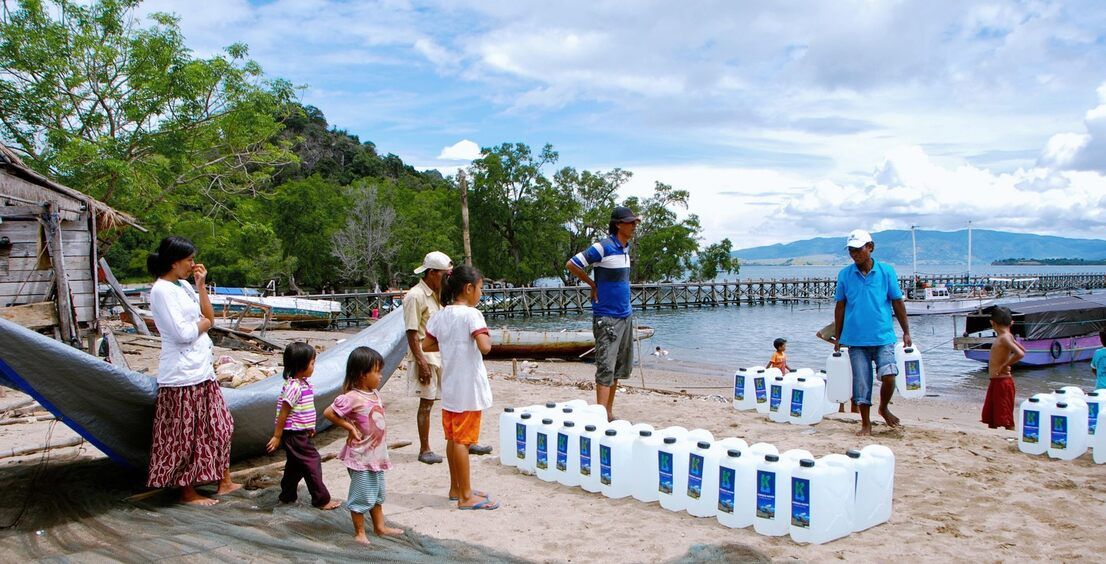
Water supplies in remote Pacific communities can be affected by long dry periods and limited rainwater collection, increasing the need for reliable local water sources. Photo/Elemental Water Makers
The systems are designed to reduce reliance on rainwater harvesting, which can leave isolated islands exposed when rainfall is low.
The project has also put local communities at the centre of running the systems.
Ten people on each island were trained to operate and maintain the equipment including at least five women from each community. A Tonga Water Board (TWB) representative also took part in the training.
TWB chief executive Quddus Fielea said in August that the Board remained committed to providing “safe, reliable and affordable water” across the Kingdom.
The Board has more than 13,000 registered connections across Tongatapu, Vava’u, Ha’apai and ‘Eua.
The systems are expected to operate for about 15 years and need limited maintenance. They also run without fossil fuel and use solar power to produce drinking water.
Bluemont worked with Dutch technology provider Elemental Water Makers, Pacific Technologies New Zealand, Tonga Water Board Poate Vai 'O Tonga, and the communities on Hunga and Matamaka to plan, transport, install and commission the systems.
The project received grant support through Powering Renewable Energy Opportunities (PREO).
For Hunga and Matamaka, the systems offer a way to strengthen water supplies without relying solely on rainfall or fuel-powered water production.
The proposed expansion would test whether the same approach could work across more of Tonga’s isolated communities as they face growing pressure on freshwater supplies.