Cocaine traffickers exploit Pacific tuna routes as drug seizures mount, report reveals
Christine RovoiWed, 14 Oct
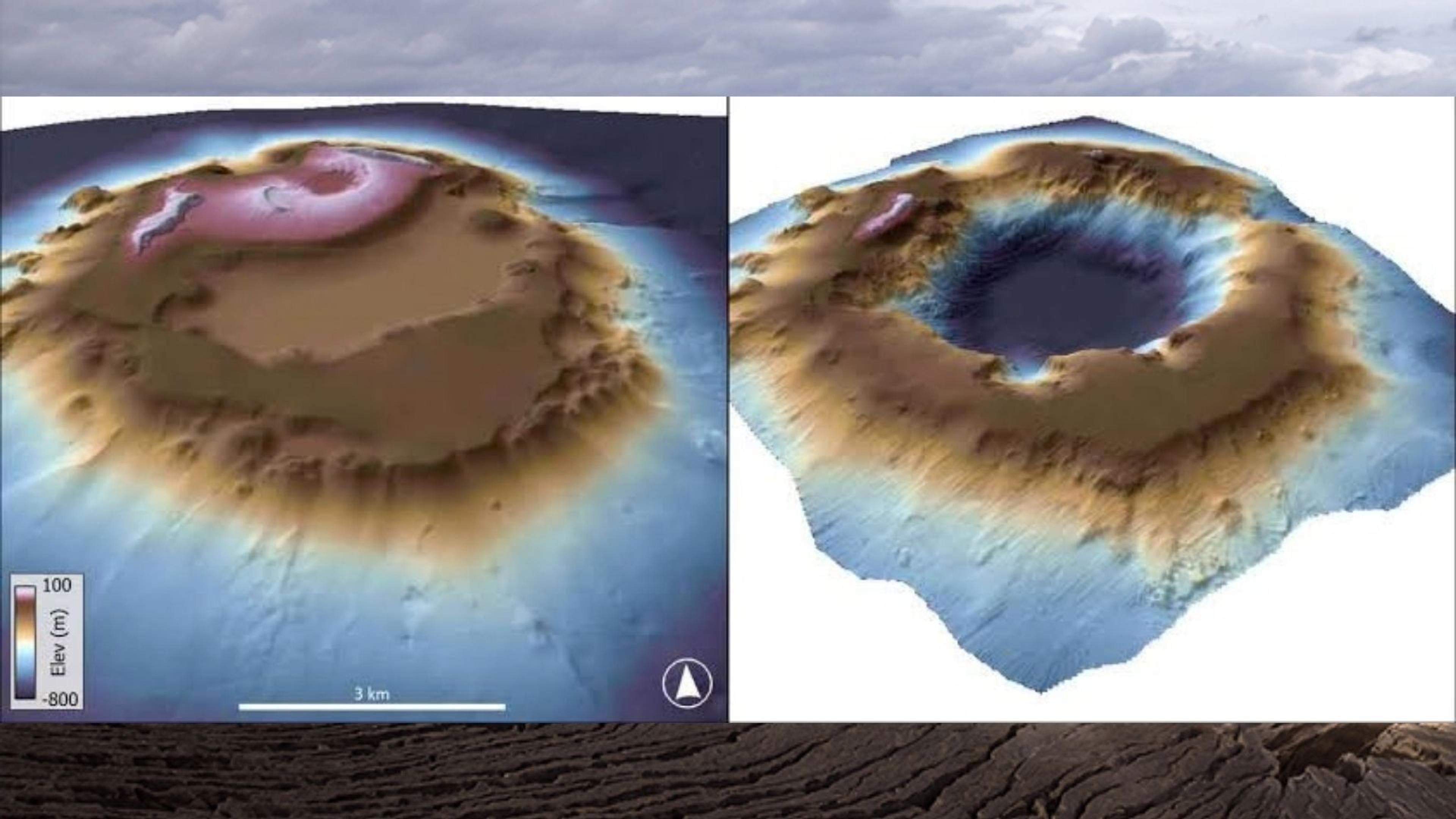
The Hunga Tonga-Hunga Haʻapai caldera before and after the collapse: The caldera was dramatically reshaped by the January 2022 eruption and remains the focus of ongoing scientific research.
Photo/IUGS-Geoheritage.org
Scientists say the collapse explains why the 2022 Hunga Tonga-Hunga Haʻapai eruption produced powerful tsunamis across Tonga and the region.


The scale of what happened beneath Tonga during the 2022 Hunga Tonga-Hunga Haʻapai eruption is becoming clearer.
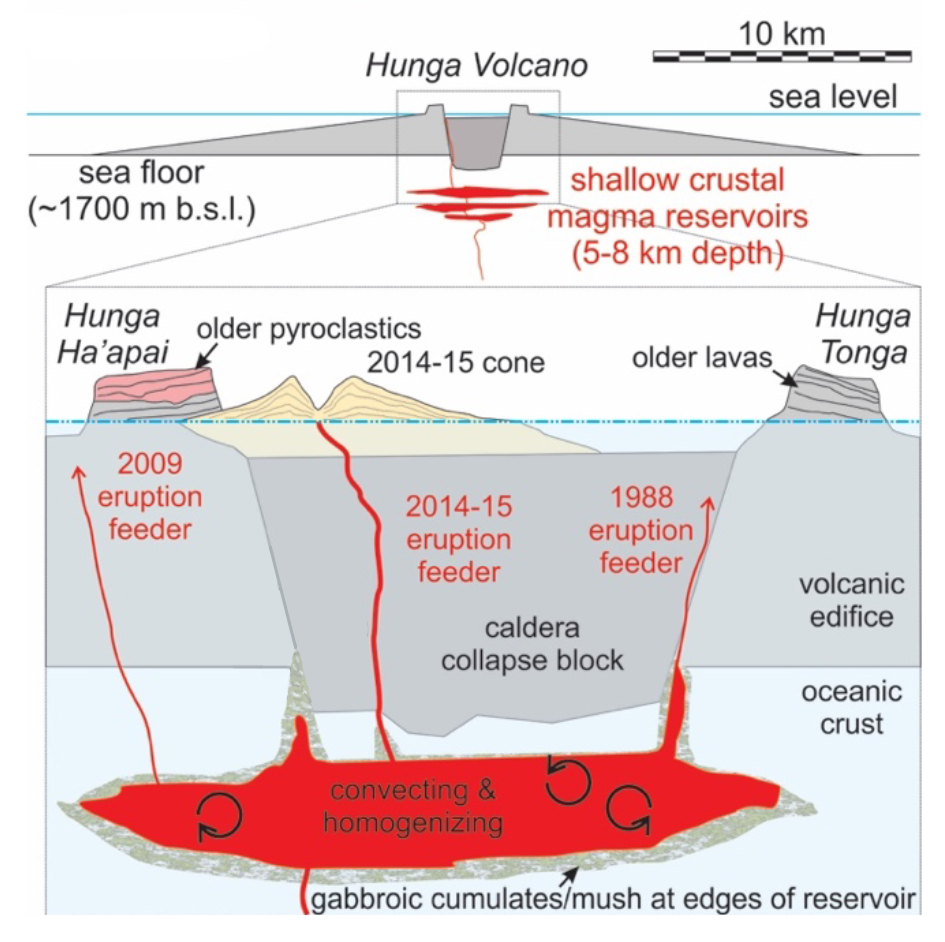
Scientists say a huge section of the seafloor collapsed almost at the same time as the eruption, sending the underwater caldera from about 150 metres deep to around 850 metres.
The new findings, published in Nature Geoscience, give scientists a much clearer picture of how the eruption reshaped the seafloor and helped drive the powerful tsunamis that struck Tonga and other parts of the Pacific.
The Korea Polar Research Institute (KOPRI) led the study with international researchers, including scientists from New Zealand.
They used detailed maps of the seafloor taken before and after the eruption to measure the changes.
The study found the caldera, which is about five kilometres wide, collapsed in a rapid, piston-like movement as the volcano erupted.
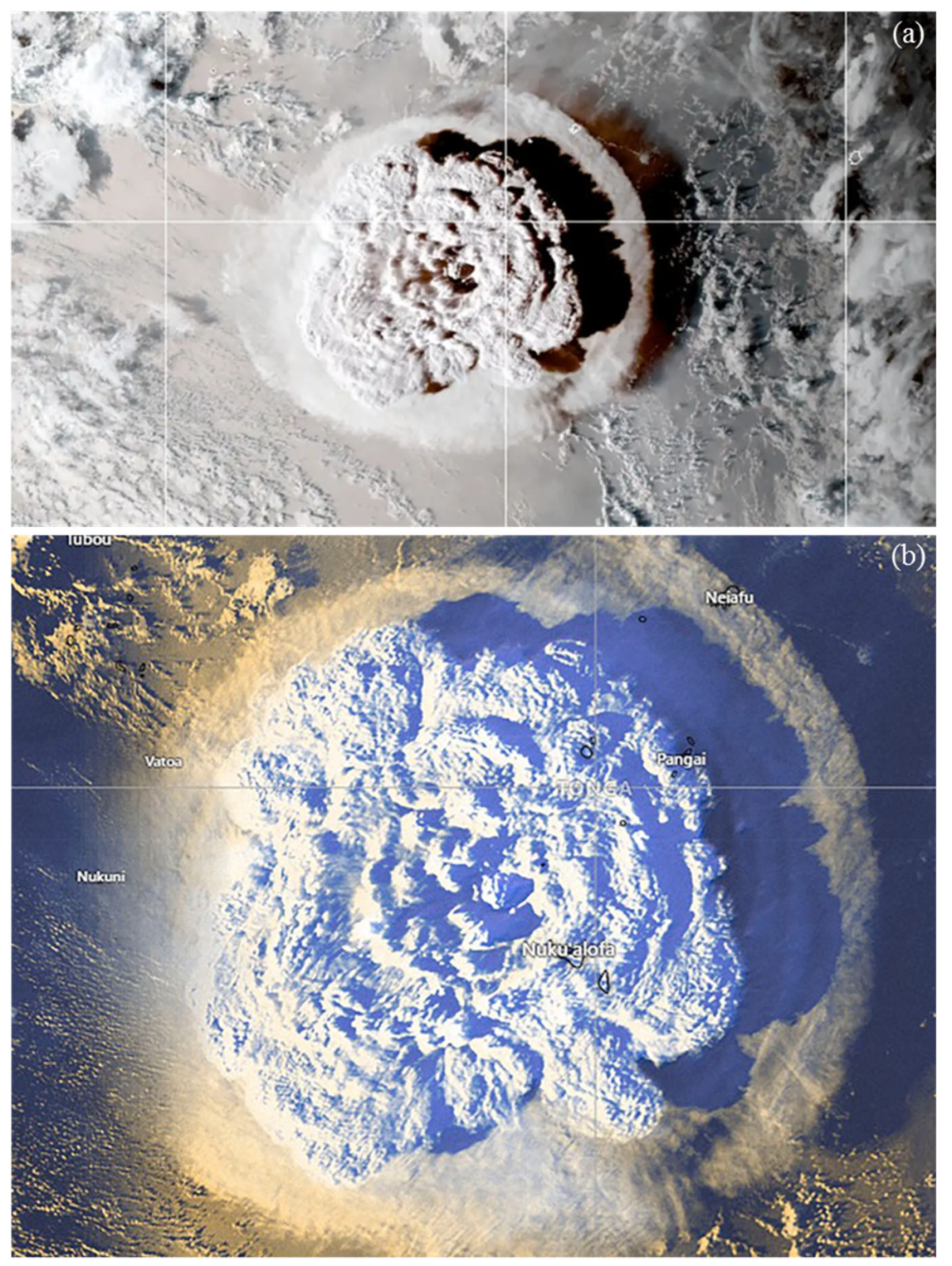
Hunga Tonga-Hunga Haʻapai erupted violently on 15 January 2022, triggering tsunamis across Tonga and the Pacific. Photo/EGU
About 8.9 cubic kilometres of material was displaced. Of that, scientists estimate 6.85 cubic kilometres came from the collapse of the caldera itself.
That is roughly the equivalent of the volume carried by hundreds of millions of large dump trucks. The speed of the collapse is what matters most for understanding the tsunami.
When such a large section of the seafloor suddenly drops, it pushes and pulls a huge amount of seawater with it. Scientists say this rapid movement would have added to the tsunami generated by the eruption.
Watch Tongan Royal Family member Hon Frederica Tuita's full interview with William Terite on Pacific Mornings on the fourth anniversary of the Hunga-Tonga-Hunga-Ha'apai eruption.
It also helps explain the destructive waves that reached Tonga and other Pacific coastlines.
The study also found evidence that landslides were happening at the same time as the caldera was collapsing.
Researchers say this shows the eruption was not a single event but a series of violent changes happening together beneath the ocean.
For Tonga, the findings offer a better picture of what happened during one of the most powerful volcanic eruptions of the modern era.
During a volcanology mission to three Tongan volcanoes in November 2025, Tonga Geological Services was part of a team that visited Hunga Tonga-Hunga Haʻapai, Tofua and Home Reef.
Tonga’s Ministry of Lands, Survey, Planning and Natural Resources said it would continue daily monitoring of Home Reef using satellite observations of heat flow and sulphur dioxide, as well as visual and radar imagery.
Scientists aboard KOPRI’s research vessel Araon surveyed the seafloor around Hunga Tonga-Hunga Haʻapai after the 2022 eruption. Photo/EGU
“This field visit provides the first important ground-truthing for these satellite observations and with the high-precision 3-D model to be constructed from the mission data, there will be greater accuracy of ongoing forecasts of the volcanic activity,” the ministry said.
The 15 January 2022 eruption produced tsunamis, a huge atmospheric pressure wave, and a volcanic plume that rose more than 55km into the atmosphere.
It also damaged more than 190 kilometres of undersea telecommunications cables.
The new study was made possible by repeated high-resolution surveys of the volcano.
Just months after the eruption, researchers were able to return to the site and map the newly formed caldera.
KOPRI's research vessel, Araon, was used to collect data from the seafloor, giving scientists a rare chance to compare the underwater volcano before and after its collapse.
Researchers say the findings matter beyond Tonga because submarine volcanoes are difficult to study and their tsunami risks remain poorly understood.
The study suggests that even a relatively small submarine caldera can produce a much larger tsunami when its collapse happens rapidly.
For Tongans who lived through the 2022 tsunami, the science is tied to memories that remain raw four years later.
Tongan survivor Lusiana Kikau, whose family worked at Fafa Island Resort when the tsunami struck, told ABC Pacific that her main priority was saving her young daughter.
“So, we were just trying to save our daughter, so we tried to clear with two other Fijian staff, we were together on that island, just tried to save our daughter,” she said.
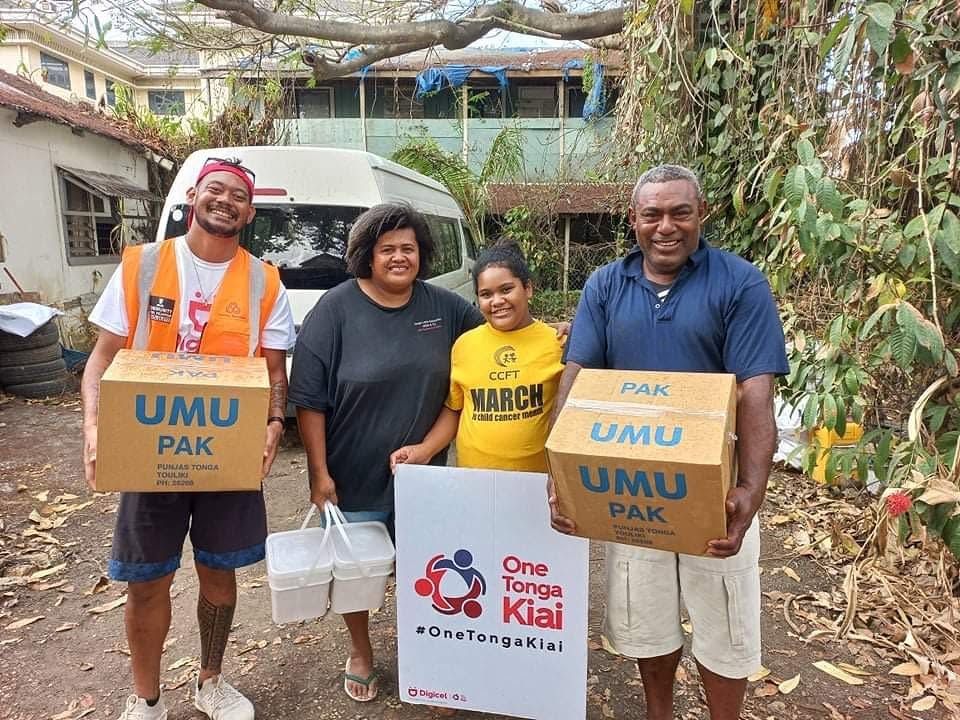
Survivor Lusiana Kikau, second from left, from Fiji and her family were at Fafa Island Resort when the 2022 tsunami struck Tonga. Photo/Facebook/Digicel
Kikau said the experience still affects her.
“Sometimes when I hear loud sounds ... I'm scared, I always remember what happened on that day, when the loud sound like thunder or any sound.”
For Pacific communities living around some of the world's most active volcanic and seismic zones, the findings offer another piece of the puzzle in understanding how hazards can unfold beneath the ocean, often with little warning.