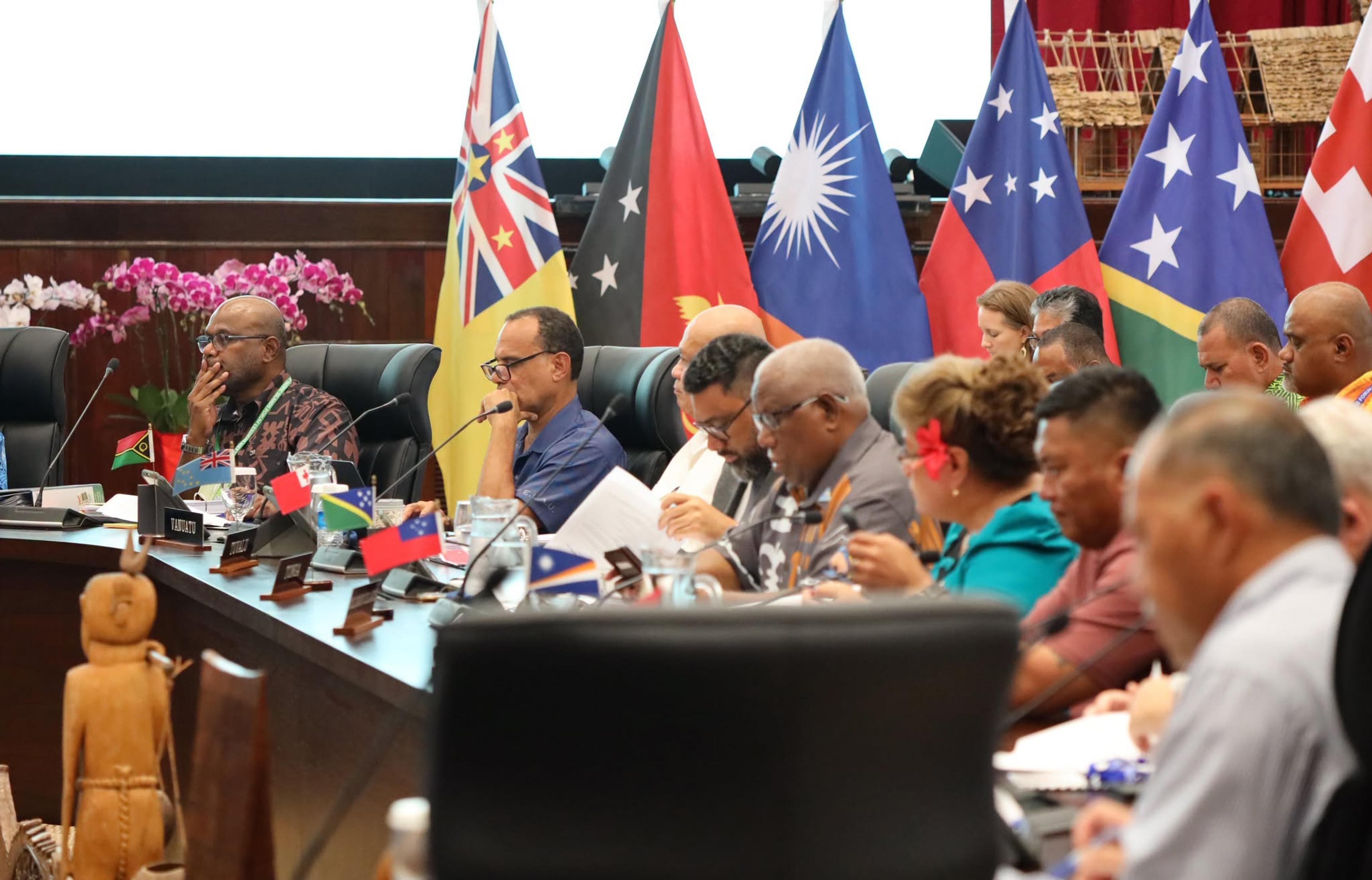
Small Island States leaders and representatives meet in Palau at the start of Pacific Islands Forum week to discuss shared priorities and strengthen their collective voice.
Photo/Pacific Islands Forum
Pacific Region
Smaller Island States sharpen their voice as Palau takes SIS chair
Smaller Island States are pushing for a stronger collective voice and turning decisions made last year into action that reaches their people.

Thomas Tarurongo Wynne, Political Reporter
Published
01 September 2026, 4:00am
Share
Copy Link
Top stories
PNG Chiefs win first round against New Zealand Rugby
Christine RovoiSat, 17 Oct
Pacific families must work four days to afford basic food: World Vision
Thomas Tarurongo WynneFri, 16 Oct

Sāmoa demolish France in record-breaking 78-4 RL World Cup opener
Christine RovoiFri, 16 Oct
Top stories
PNG Chiefs win first round against New Zealand Rugby
Christine RovoiSat, 17 Oct
Pacific families must work four days to afford basic food: World Vision
Thomas Tarurongo WynneFri, 16 Oct
Sāmoa demolish France in record-breaking 78-4 RL World Cup opener
Christine RovoiFri, 16 Oct
The Smaller Island States (SIS) have opened Pacific Islands Forum week in Palau by putting their own priorities front and centre.
These include new work areas and membership rules aimed at giving the group a stronger voice in regional decisions.
Palau formally took over the SIS chairmanship from Kiribati at the Leaders Meeting in Koror.
Kiribati President Taneti Maamau, who is not in Palau, called for stronger advocacy and support for the region’s smallest island countries.
Speaking virtually from Tarawa, Maamau said the meeting was an important chance for SIS leaders to find common solutions to the challenges facing their countries.
He said work agreed by leaders in Manila last year had focused on two key areas - looking again at what defines a Small Island State and setting clearer shared priorities.
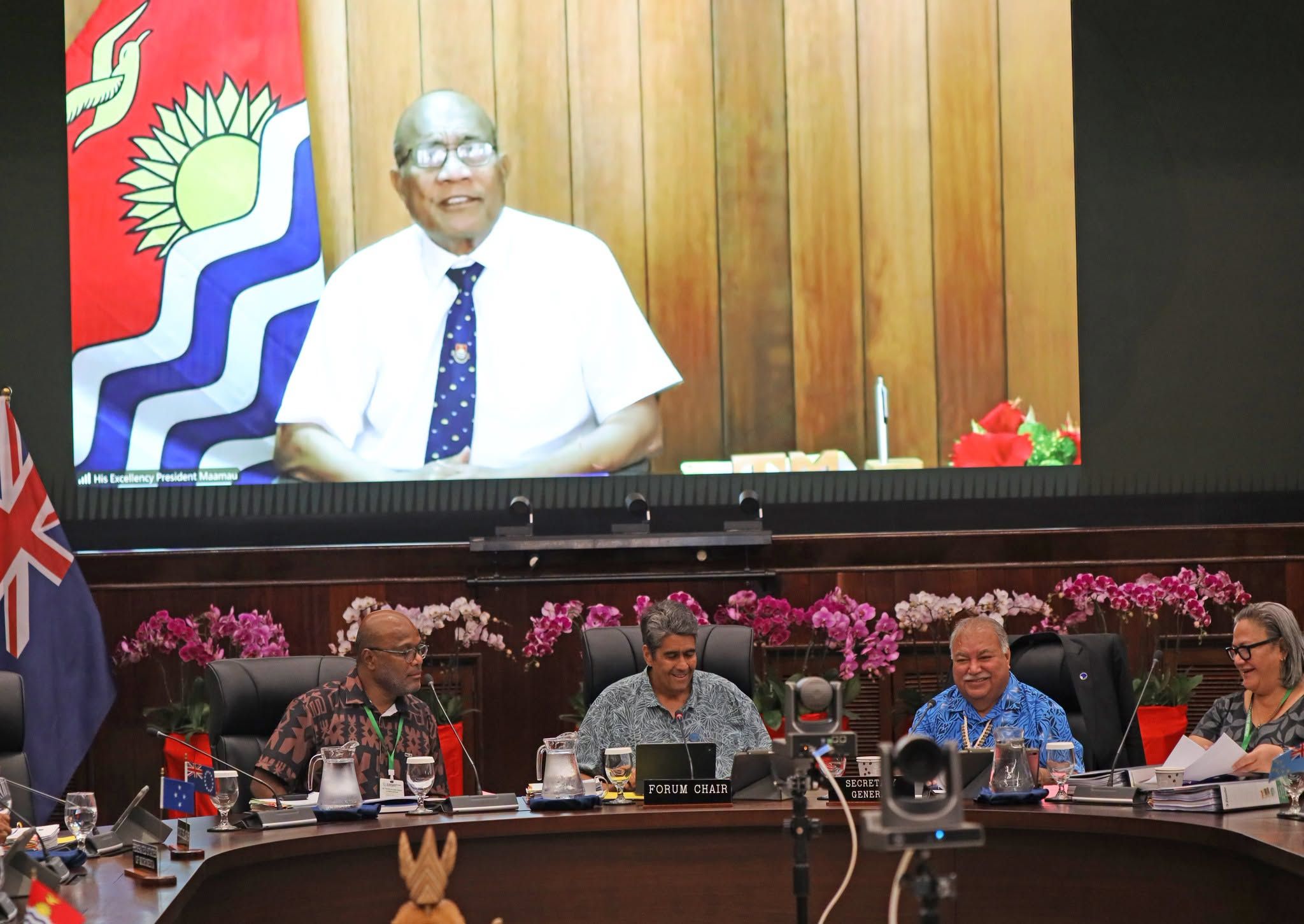
Kiribati President Taneti Maamau speaks virtually from Tarawa during the Small Island States Leaders Meeting. Photo/Pacific Islands Forum
Maamau said he was confident that work would strengthen the group’s international advocacy and help improve access to funding for SIS economies.
He also backed Palau to raise the group’s political profile and strengthen its engagement and support both within the Pacific and globally.
Taking over the chair, Palau President Surangel Whipps Jr said the SIS meeting was a key first step before the wider Forum discussions.
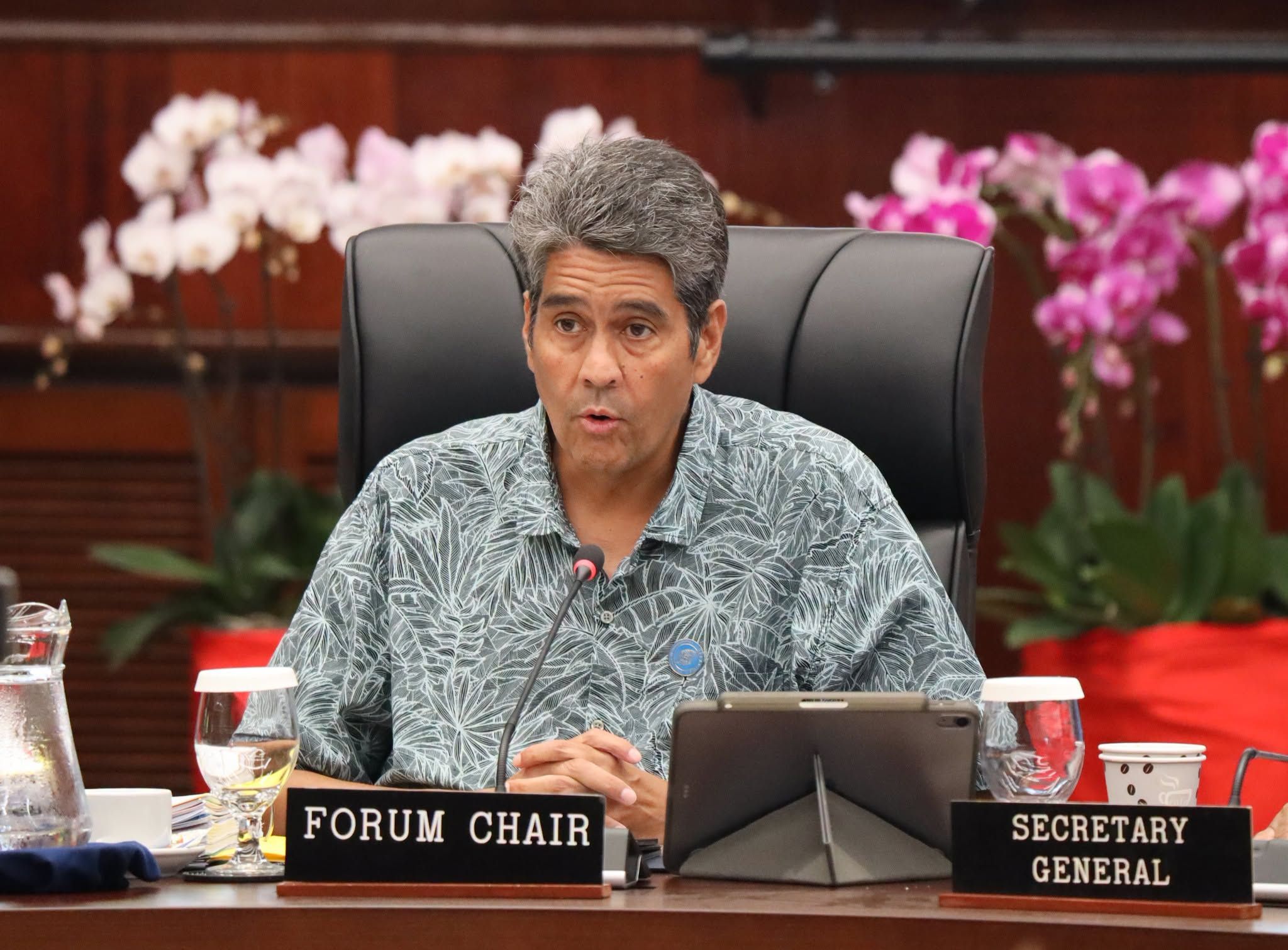
Palau President Surangel Whipps Jr welcomes Small Island States leaders to Koror as Palau takes over the SIS chairmanship. Photo/Pacific Islands Forum
He said the region’s economic strength must be a "vehicle for elevating the livelihoods of our people" and creating sustainable opportunities that bring Pacific countries closer together.
Whipps said the priority was to establish a "clear, unified voice" so their particular needs are heard during the wider Forum deliberations.
Palau’s Forum theme: BELAU: Building Economies, Livelihoods, Action and Unity reflects that focus.
Whipps said economic growth must lead to better lives for Pacific people.
But the message from the SIS meeting was also about what happens after the leaders leave Palau.
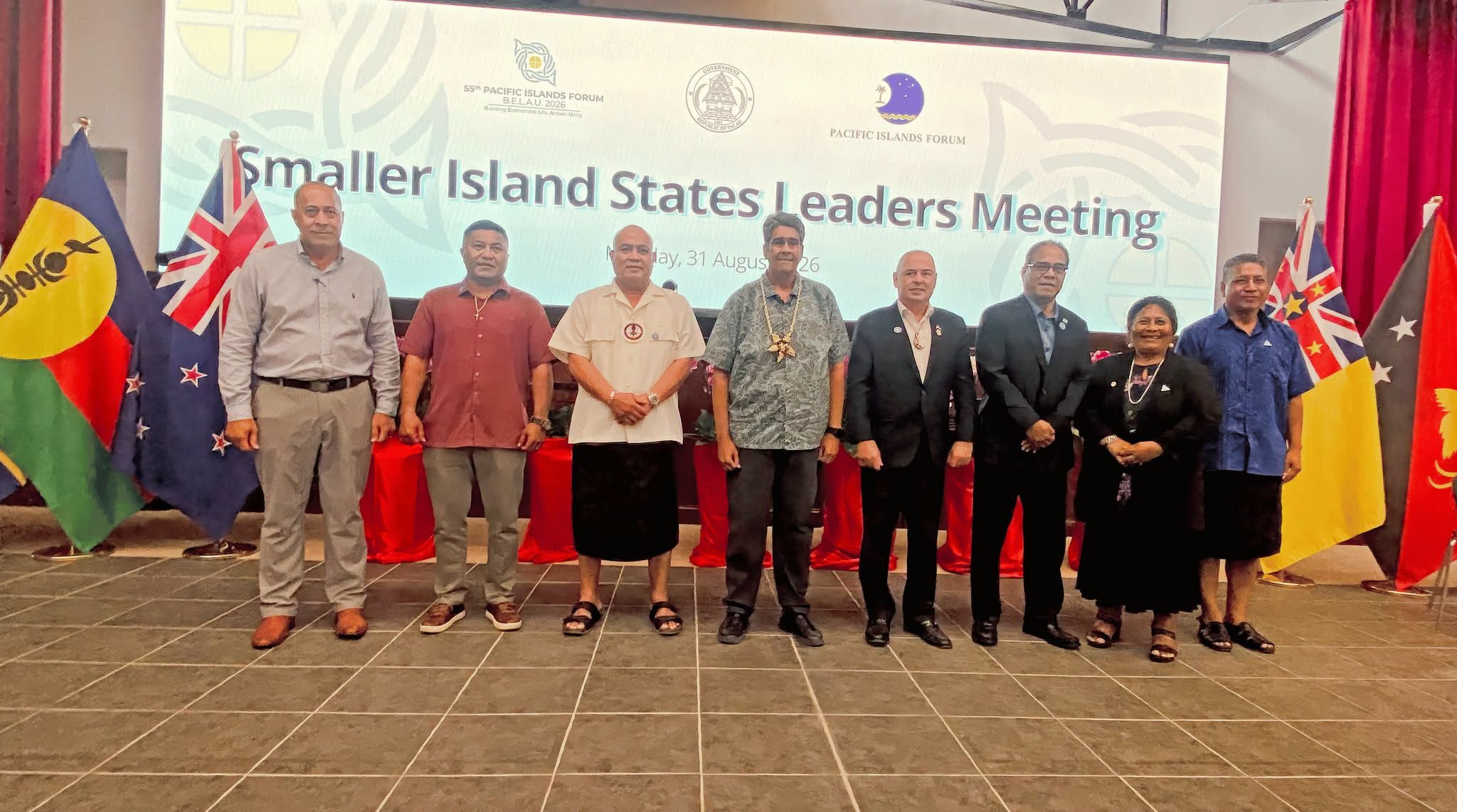
Small Island States leaders meet in Palau to discuss regional priorities, including new work areas and a modernised membership framework. Photo/Pacific Islands Forum
Pacific Islands Forum Secretary-General Baron Waqa urged SIS leaders to turn decisions made in 2025 into practical action.
Among the proposals before leaders is a modernised membership framework that keeps "structural smallness" at its centre.
This allows SIS members to retain their collective say over who belongs to the group.
Officials have also developed eight work areas across the four priorities agreed by SIS leaders last year to provide a roadmap for coordinated regional work from 2027.
Waqa said the plan is based on member ownership and making better use of existing regional organisations than creating new structures.
That focus on delivery was echoed by Whipps Jr, who said the value of the meeting should not be measured by the language in regional statements but by the "tangible outcomes generated for our people".
With Palau now leading the SIS grouping, Whipps Jr says the focus will be on turning that stronger collective voice into results and ensuring the smaller states are not simply heard during Forum week but have a clear hand in shaping what happens next.