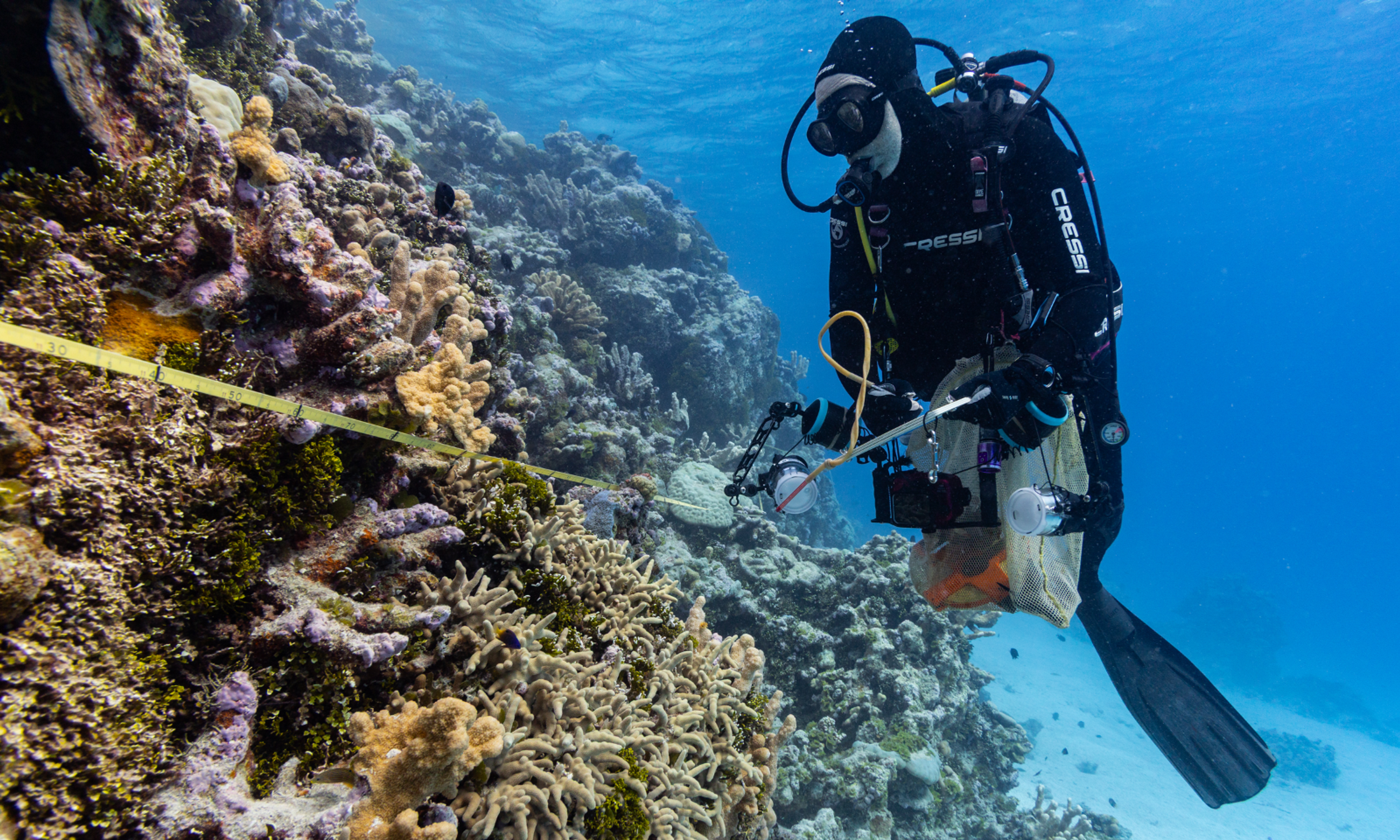
A National Geographic Pristine Seas diver conducts a SCUBA survey near Ailuk Atoll.
Photo/National Geographic Pristine Seas/Iñigo San Félix
Pacific Region
Sharks, science and sovereignty: Marshall Islands lead new push to protect Pacific reefs
National Geographic Pristine Seas' mission is uncovering thriving marine life in the Marshall Islands.

Aui'a Vaimaila Leatinu'u
Published
15 April 2026, 12:07pm
Share
Copy Link
Top stories


Auckland teen turns a trip to Fiji into a mission to fight period poverty
Elenoa TuragaiviuThu, 15 Oct
Top stories
Auckland teen turns a trip to Fiji into a mission to fight period poverty
Elenoa TuragaiviuThu, 15 Oct
In the clear waters of Ailuk Atoll in the Marshall Islands, underwater cameras are picking up something rare in today’s oceans: large numbers of sharks and Napoleon wrasse moving through healthy coral reefs.
But for scientists and communities in the Pacific nation, the discovery is only part of the story. The bigger question is whether these ecosystems can survive the growing pressure facing the Pacific.
A National Geographic Pristine Seas expedition is now surveying seven atolls including Erikub, Ailuk, Taka, Ujelang, Ailinginae, Jemo, and Enewetak. The team is working with Marshallese scientists and leaders to map biodiversity and identity areas that need protection.
Ryan Jenkinson, the expedition leader, says the programme is about more than science, it’s about who leads it.
Local students visited the Argo to learn about environmental DNA (eDNA) sampling, a method where scientists identify organisms by testing water samples.
“The education aspect of our work is more important because that's where the long-term impact comes from,” Jenkinson says.
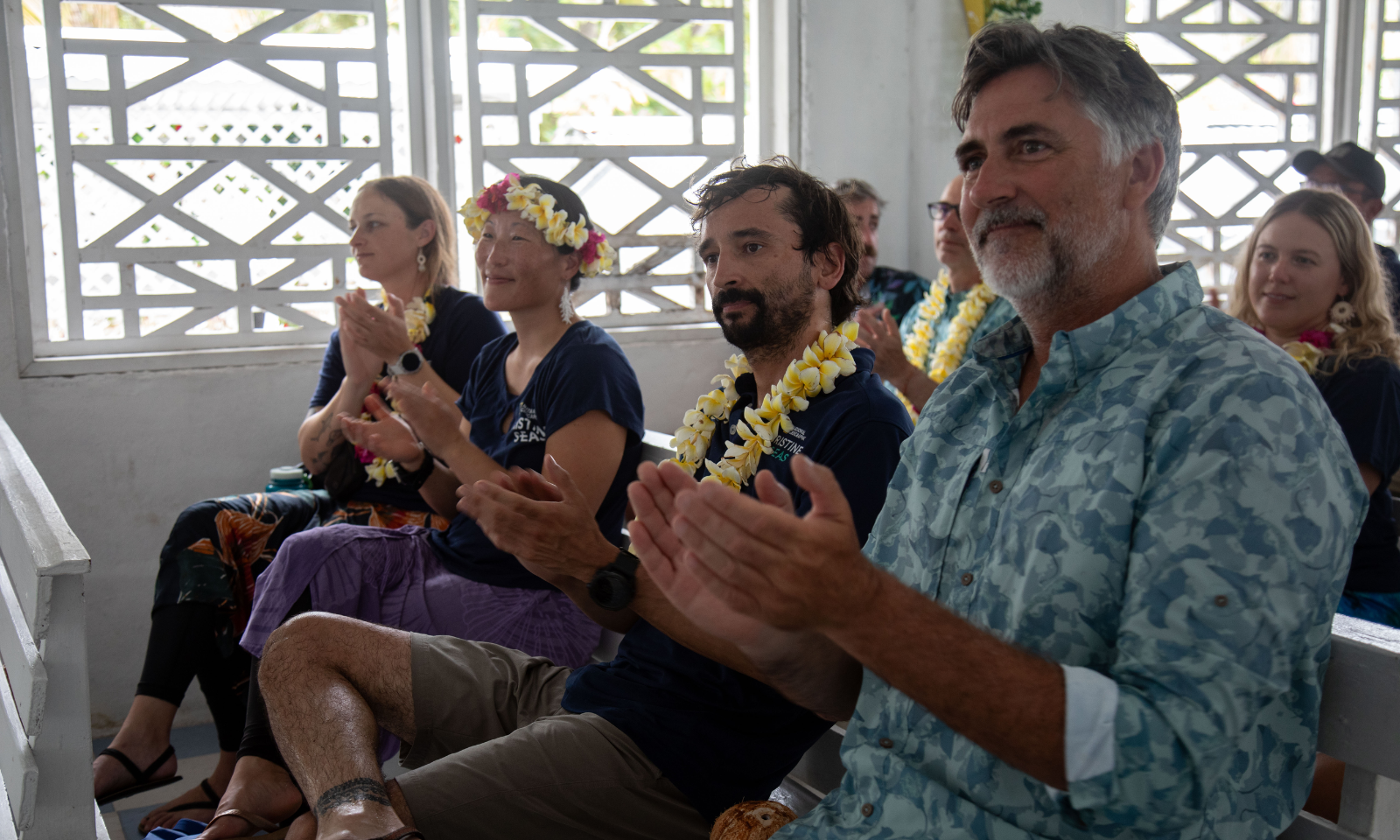
National Geographic Pristine Seas team members (left to right): Mollie Ashbury, Tye Kindinger, Juan Mayorga and Ryan Jenkinson at the Ailuk Day celebrations. Pristine Seas was invited to celebrate Ailuk Day with members of the community. Photo/National Geographic Pristine Seas/Hamza Kiyani
“We are being led by Marshallese people who work at Marshall Islands Marine Resources Authority [MIMRA] who are showing this. So, this isn't some far-fetched thing for the kids of the Marshall Islands.
“We have kids, who were once kids growing up in the same schools, who are leading us now. So it's not a big outside organisation coming in. We want it to feel more like a family working towards a common goal.”
That approach reflects a wider Pacific shift where indigenous knowledge and local leadership are increasingly shaping how oceans are managed.
This expedition is the NGPS’s 50th global mission. This is the organisation’s second visit to RMI, having first conducted an exploratory survey of four northern atolls in 2023.
Listen to Ryan Jenkinson’s full interview below.
During the 2023 expedition, researchers found a “staggering” amount of large marine life at Bokak Atoll, which is an RMI marine protected area.
Lead scientist Juan Mayorga says that the Marshallese have long treated some "uninhabited atolls as reserves, used only with permission.
Scientists say these practices may help explain why some reefs remain strong today. At the same time, the region is on the frontline of climate change.
An NGPS editor’s note on the 2023 expedition says “fully protected areas, which ban extractive activities, are best for economies, biodiversity and the climate”.
Earlier surveys in 2023 found both thriving marine life and stark damage at Bokak Atoll including large areas of dead coral described as a "ghost forest", left behind by past ocean warming.
This year’s mission aims to understand that contrast: how some reefs stay resilient while others collapse.
Researchers are using SCUBA surveys, deep sea cameras, and a submersible called the Argonauta, to study areas rarely seen while also collecting environmental DNA samples to track marine life.
Early results from Ailuk suggest reefs there remain vibrant.
Protected islets are also supporting strong seabird populations and deeper waters show high numbers of large fish.
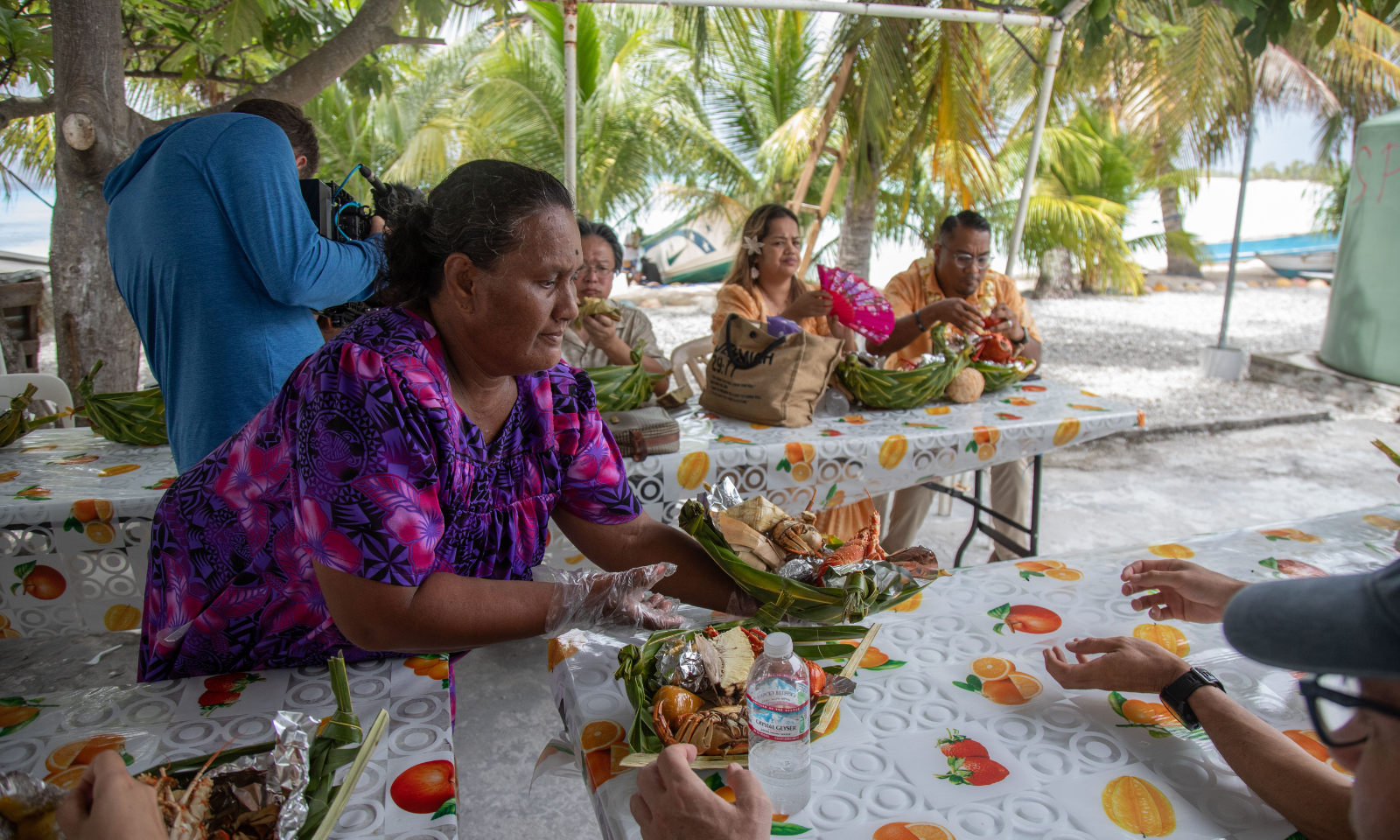
National Geographic Pristine Seas was invited to celebrate Ailuk Day with members of the community. Photo/National Geographic Pristine Seas/Hamza Kiyani
In a press release, Tye Kindinger, Pristine Seas scientist, says these relatively untouched atolls offer a “window” into what healthy coral reef systems can look like without heavy human impact.
But across the wider Pacific, those conditions are becoming harder to maintain.
Rising ocean temperatures are increasing the risk of coral bleaching while industrial fishing fleets operate across vast areas of the ocean, including parts of the Marshall Islands’ waters.
The challenge now is turning scientific findings into real protection.
Data from both the 2023 and current expeditions is being fed into Reimaanlok, the country’s national framework for community-based conservation.
Meaning "look towards the future," the Reimaanlok process combines traditional knowledge with modern science to drive ocean management.
The framework is a legally binding process used to meet the requirements of the Protected Areas Network (PAN) Act 2015.
Conservation plans are only approved by traditional chiefs, mayors, and the Director of the Marshall Islands Marine Resources Authority. This ensures that local rules, like no-fishing zones, are backed by national law.
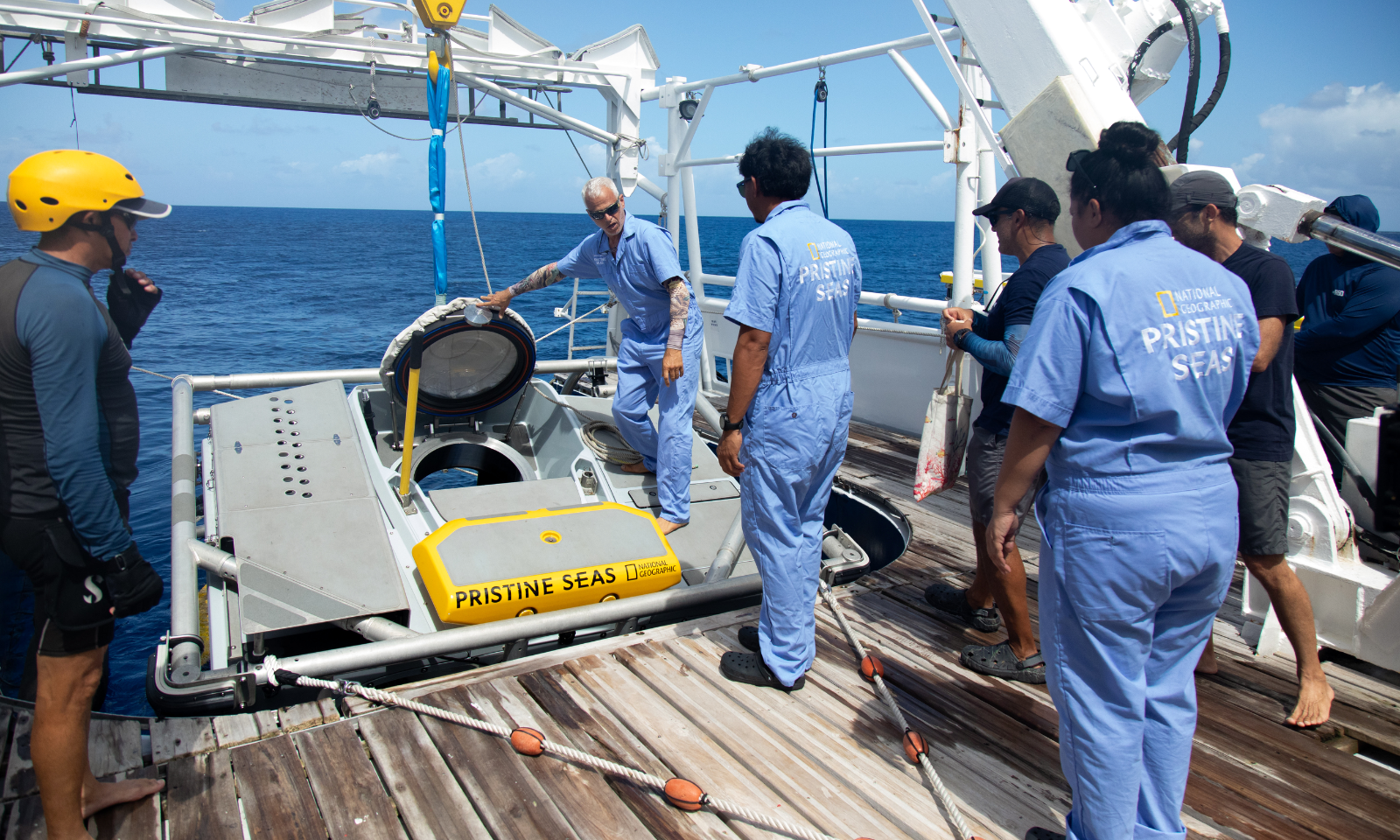
Local scientists Ben Yamamura (center) and Alicia Edwards (right) from the Marshall Islands Marine Resource Authority prepare to dive in National Geographic Pristine Seas’ submersible, the Argonauta. Photo/National Geographic Pristine Seas/Hamza Kiyani
Local scientists are central to that process. Ben Yamamura and Alicia Edwards, scientists at the MIMRA, are guiding the research, helping decide where data is collected and how it will be used.
“They helped us figure out what places would be most effective for the Reimaanlok process at each of those locations, where we collect data, what data is most interesting to them and can provide the most context.
“There's incredible traditional knowledge about the Marshall Islands and that they have about their own marine resources.”
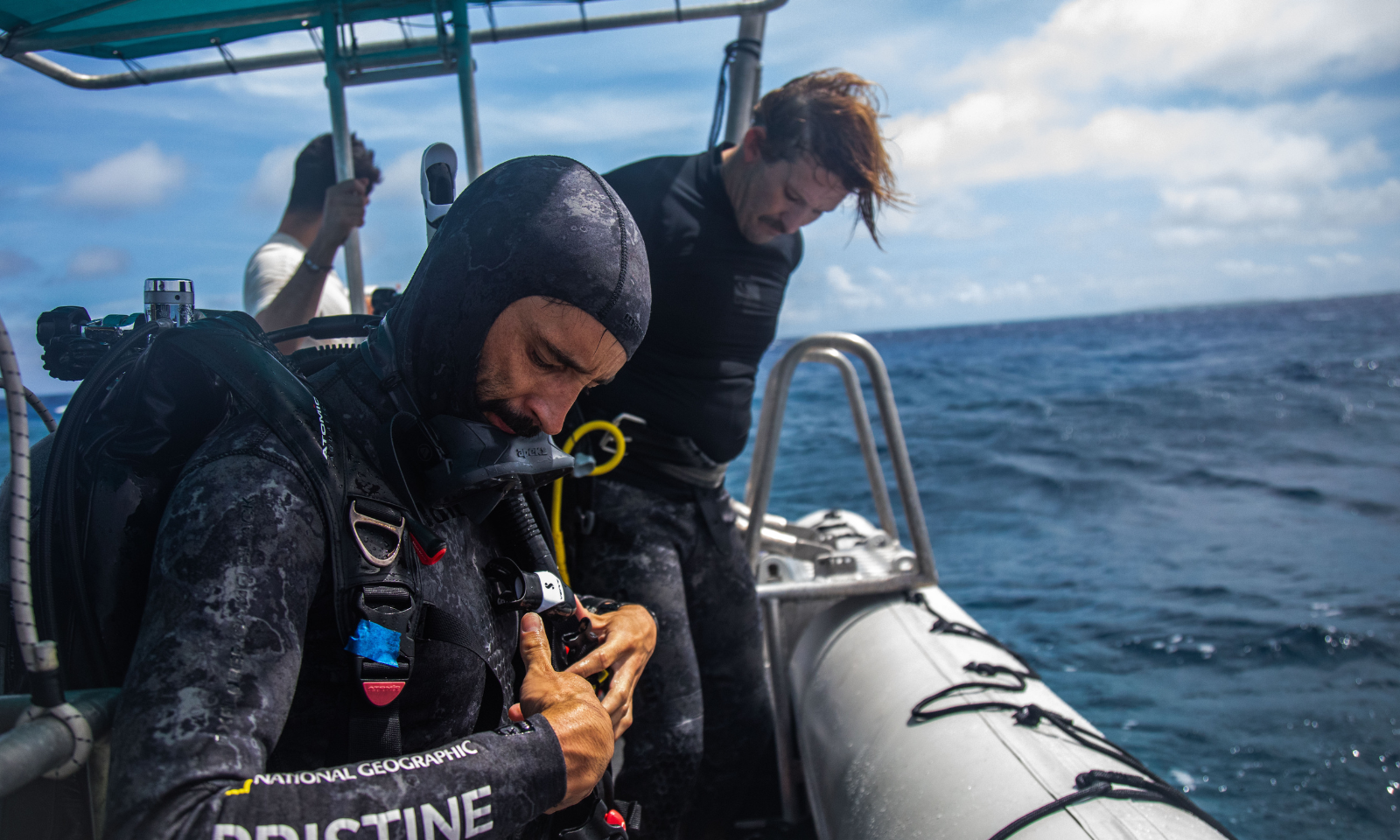
National Geographic Pristine Seas team member Juan Mayorga (left) and Vyv Summers (right) prepare for a SCUBA dive survey near Ailuk Atoll. Photo/National Geographic Pristine Seas/Hamza Kiyani
Jenkinson says their return reflects the strong collaboration with local partners, such as the Marshall Islands MIMRA. The 2023 expedition concluded its final leg at Rongerik Atoll. Over those five weeks, the crew and MIMRA partners conducted 452 dives and spent 643 hours underwater.
The team's findings will be handed back to the Marshall Islands government and communtiies alongside a scientific report and documentary to designate its first national marine sanctuary in January 2025, legally protecting it from fishing.
For Pacific nations like the Marshall Islands, the stakes are high. As President Hilda Heine warned earlier this year, the ocean as their ancestors knew it is disappearing.
What happens next: from enforcement at sea to global action on climate will decide whether places like Ailuk remain rare exceptions, or become the future of ocean recovery.