

William Terite
Photo/Supplied
Opinion
Will's Word: The case for and against public sector job cuts
Nearly 9000 jobs could go in sweeping changes to the public service. Pacific Mornings host William Terite looks at how we got here.

William Terite
Published
20 May 2026, 8:54am
Share
Copy Link
Top stories

Charter school results spark debate over equity, funding and Māori, Pacific education
Aui'a Vaimaila Leatinu'uThu, 11 Jun

Australia's govt warns seasonal workers who leave PALM scheme lose all protections
Christine RovoiWed, 10 Jun

Sāmoa overdraft plan raises questions under new district funding law
Renate RiversThu, 11 Jun
Top stories
Charter school results spark debate over equity, funding and Māori, Pacific education
Aui'a Vaimaila Leatinu'uThu, 11 Jun
Australia's govt warns seasonal workers who leave PALM scheme lose all protections
Christine RovoiWed, 10 Jun
Sāmoa overdraft plan raises questions under new district funding law
Renate RiversThu, 11 Jun
So the Government has confirmed plans to cut around 8700 public service jobs over the next three years, in a move it says will save taxpayers about $2.4 billion bucks, that's some serious savings.
Finance Minister Nicola Willis argues the system has become too bloated, overly complex, and in some areas outdated. She’s also signalling a shift toward digitisation and the greater use of AI, in the name of so-called efficiency.
The aim is to bring the size of the core public service workforce back towards historic levels, around one per cent of the population.
Now, don’t get me wrong, I’m all for cost-saving measures, especially in a post-Covid environment.
As the years go by, and I get older and a bit more understanding of economics and fiscal decision-making, I’ll admit some of the rose-tinted view I had during the Jacinda Ardern era has worn off.
Ardern led the country through an extraordinary period during Covid, and I’m not here to criticise the scale of borrowing or spending during that time.
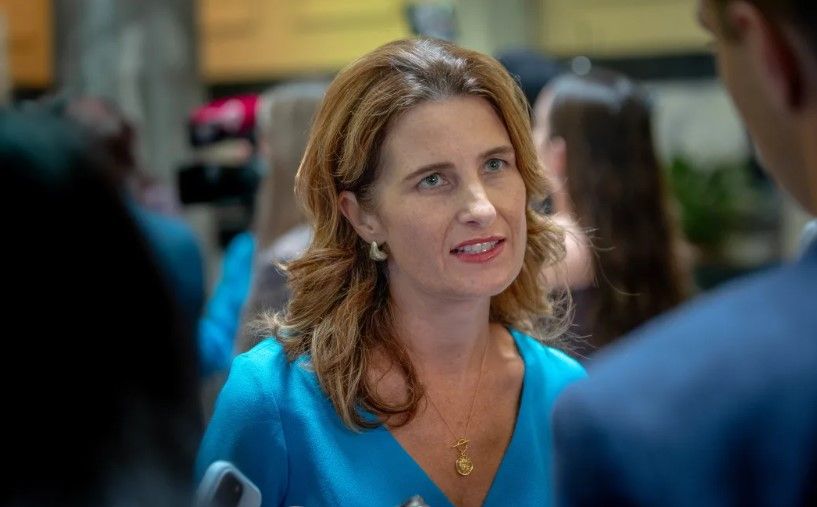
Finance Minister Nicola Willis outlines major public service cuts aimed at driving efficiency and reducing government spending. Photo/RNZ/Mark Papalii
But those decisions, alongside the Reserve Bank keeping interest rates at historic lows during Covid, contributed to inflationary pressures, a rapid expansion in public sector numbers, and significantly higher levels of government debt.
So frankly, it helps to explain where we are today.
The Christopher Luxon Government is now trying to rein in spending and find savings wherever it believes there is inefficiency, or at least that’s its argument to voters.
Listen to Will's Word below.
In that respect, yesterday’s announcement from Willis is not surprising. Since taking office, the Government has been clear that it wants to reduce waste, streamline agencies, and push for greater efficiency. The Public Service Commissioner Sir Brian Roche’s review last year was an early signal of this direction.
But amid all the talk of savings and efficiency, we cannot ignore the human cost.
It is all well and good to say people should shift into the private sector, but that raises a very real question: where exactly are those jobs?
I know people who have worked in the public sector who have been out of stable full-time work for more than a year.
So, to Willis, Paul Goldsmith and Luxon, when you talk about these cuts, there needs to be a bit more recognition of the real impact on thousands of New Zealanders.
And if we are serious about reducing the size of government, then there is also a fair question about whether that should extend to the number of ministers and portfolios at Cabinet level.
Fair’s fair, right?