
Full-circle homecoming as Isaako joins Kiwis' historic RLWC clash against Cook Islands
Brooke FonotiTue, 20 Oct
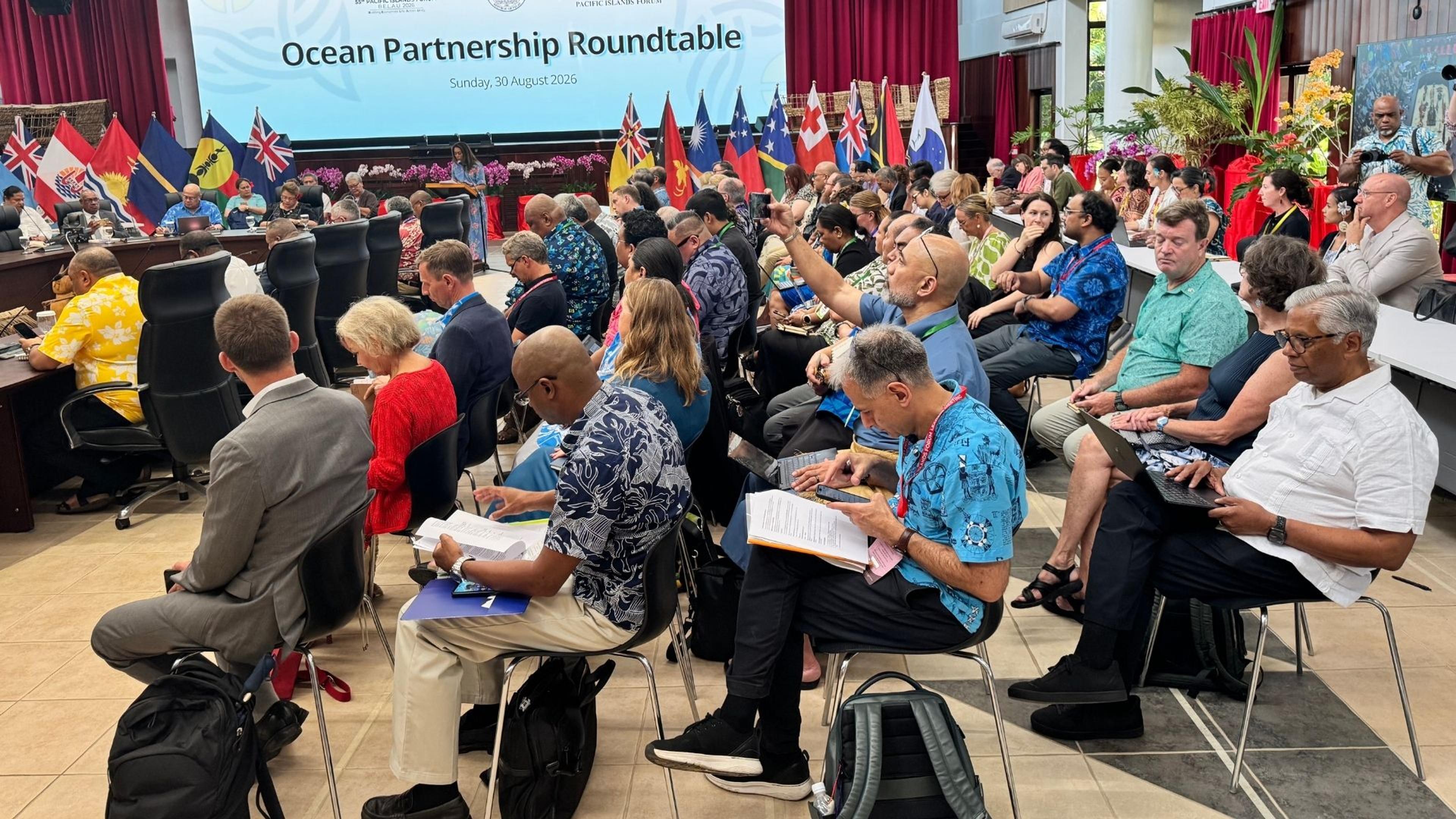
Pacific leaders and ocean partners meet in Palau for an Oceans Partnership Forum roundtable, where climate resilience, sustainable ocean management and the future of the region’s marine resources were discussed.
Photo/PMN News/Thomas Wynne
International partners are urged to help close the funding gap but Greenpeace says communities should not have to chase polluters for climate finance.


New Zealand is stepping up its push for a US$500 million (NZ$845.06 million) Pacific resilience fund with Foreign Minister Vaovasamanaia Winston Peters urging international partners to help close the funding gap.
Speaking at an Oceans Partnership Forum roundtable in Palau on Monday, Peters said New Zealand was “vigorously knocking on doors” in Europe, the Middle East and North America for more contributions to the Pacific Resilience Facility (PRF).
Aotearoa has pledged $20 million to the fund but Peters acknowledged it remains well short of its US$500m goal.
“If you don't ask, you'll never know,” he said.
Fiji's Minister for Justice and Political Affairs, Siromi Turaga, told Parliament earlier this year that the Facility was created because Pacific countries have struggled to access existing climate finance.
“Its creation responds to longstanding challenges faced by Pacific nations in accessing global climate finance, including complex procedures and financing models that are not well-suited to the Pacific realities,” he said.
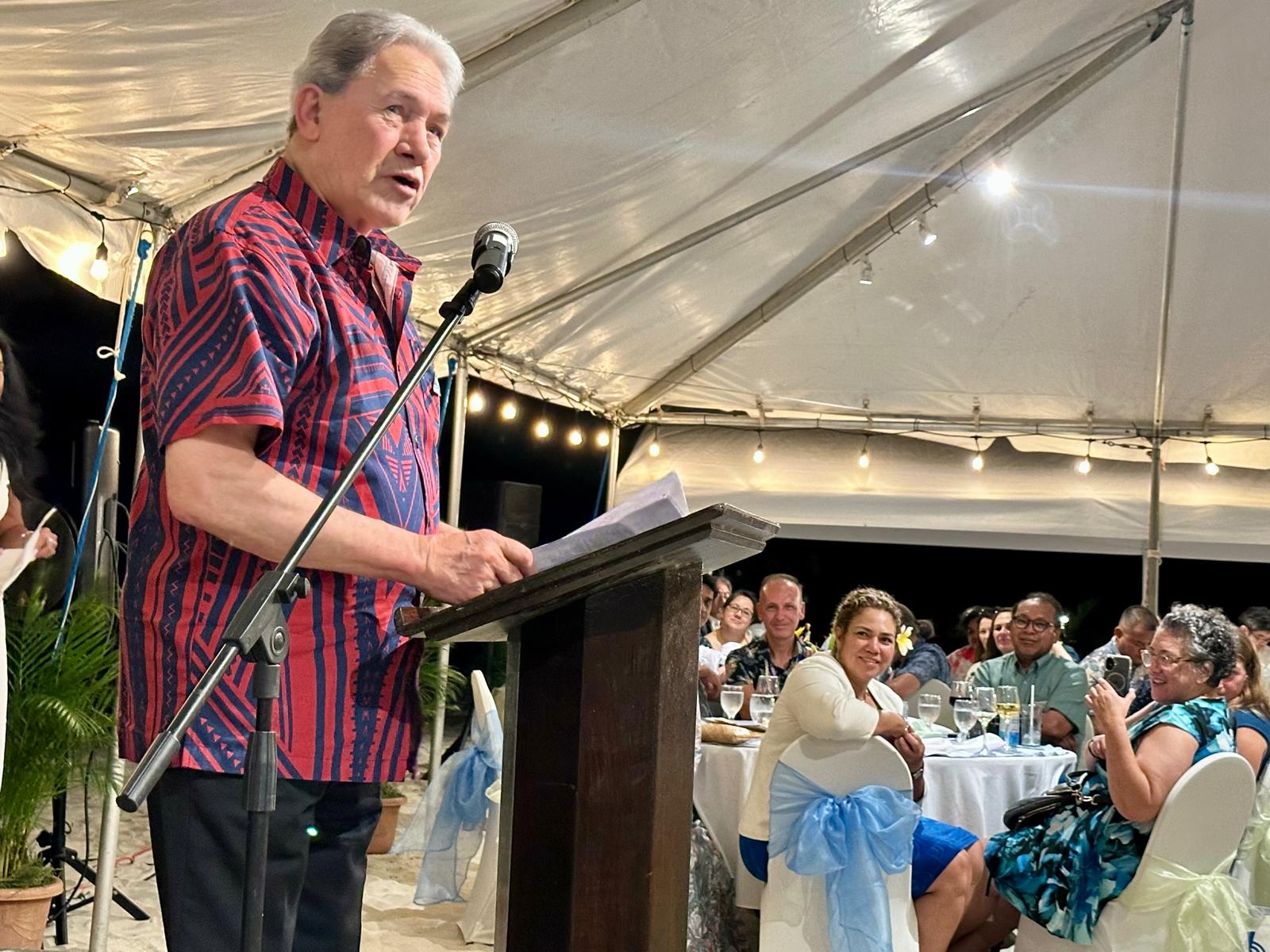
New Zealand Foreign Minister Vaovasamanaia Winston Peters speaks at an Oceans Partnership Forum roundtable in Palau, where he urged international partners to contribute to the Pacific Resilience Facility. Photo/PMN News/Thomas Wynne
Turaga said the facility was designed to provide “simplified and accessible funding” and strengthen Pacific “ownership, leadership and control” over climate and disaster resilience financing.
But Greenpeace says the Pacific should not have to keep asking wealthy countries for money to deal with the effects of climate change.
Rae Bainteiti, Pacific Political Coordinator at Greenpeace Australia, says climate finance should be treated as a responsibility of major polluting nations.
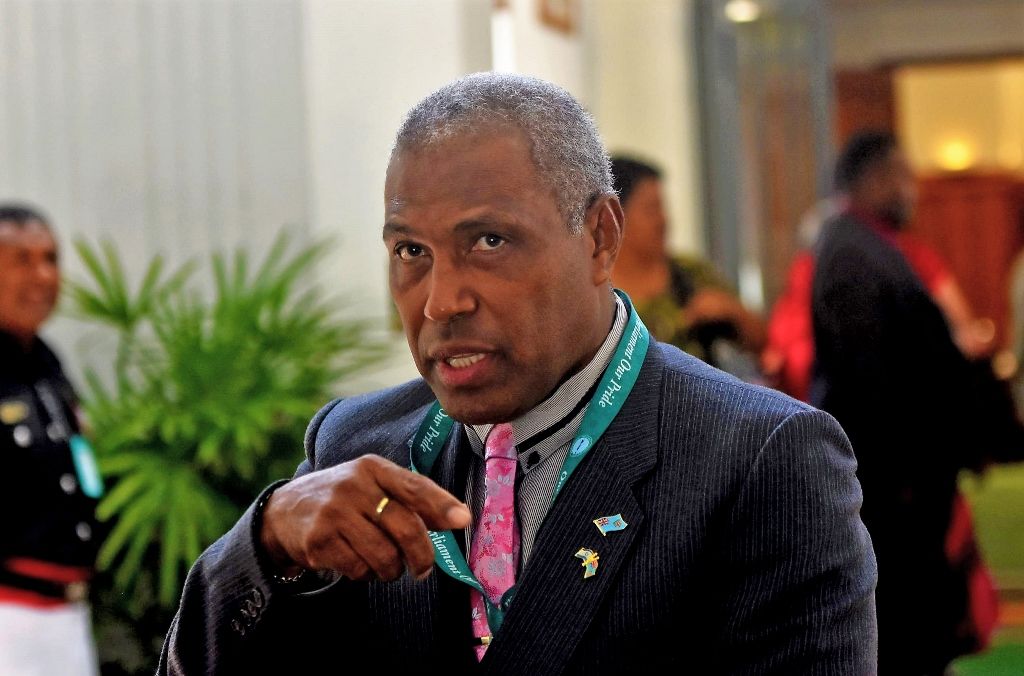
Fiji Minister for Justice and Political Affairs Siromi Turaga has backed the Pacific Resilience Facility as a way to improve Pacific access to climate and disaster resilience funding. Photo/Fiji govt/file
“Pacific Islands communities shouldn’t have to rely on door-knocking asking for funding - climate impact funding is simply the right for big polluting nations to do.”
The funding debate comes as Pacific leaders gather in Palau to discuss the region’s priorities around oceans, climate, and development.
Bainteiti says Pacific communities have a deep relationship with the ocean that goes beyond its economic value.
“Pacific communities have inextricable cultural, traditional and personal ties to the ocean and our environment. We are not separate from the oceans.
“Our people have worked with the ocean, balancing opportunity and management, taking only what we need while protecting and replenishing our waters through traditional knowledge and practices.”
Peters told the forum that the ocean remains central to Pacific economies and livelihoods.

Greenpeace Australia Pacific Pacific Political Coordinator Rae Bainteiti says Pacific communities should not have to rely on wealthy countries to provide climate finance. Photo/Greenpeace
He warned that climate change is already affecting one of the region’s most important resources, tuna.
He pointed to New Zealand’s support for climate science aimed at helping Pacific countries understand how warming oceans are changing tuna movements.
But Greenpeace says the threats facing Pacific communities go well beyond climate change.
“The Pacific way of living as one with the ocean is under threat,” Bainteiti says.
“Global heating is already impacting our oceans, fisheries, food security and communities.
"At the same time, militarisation and the emerging threat of deep sea mining are putting additional pressure on our ocean and environment, including tuna.”
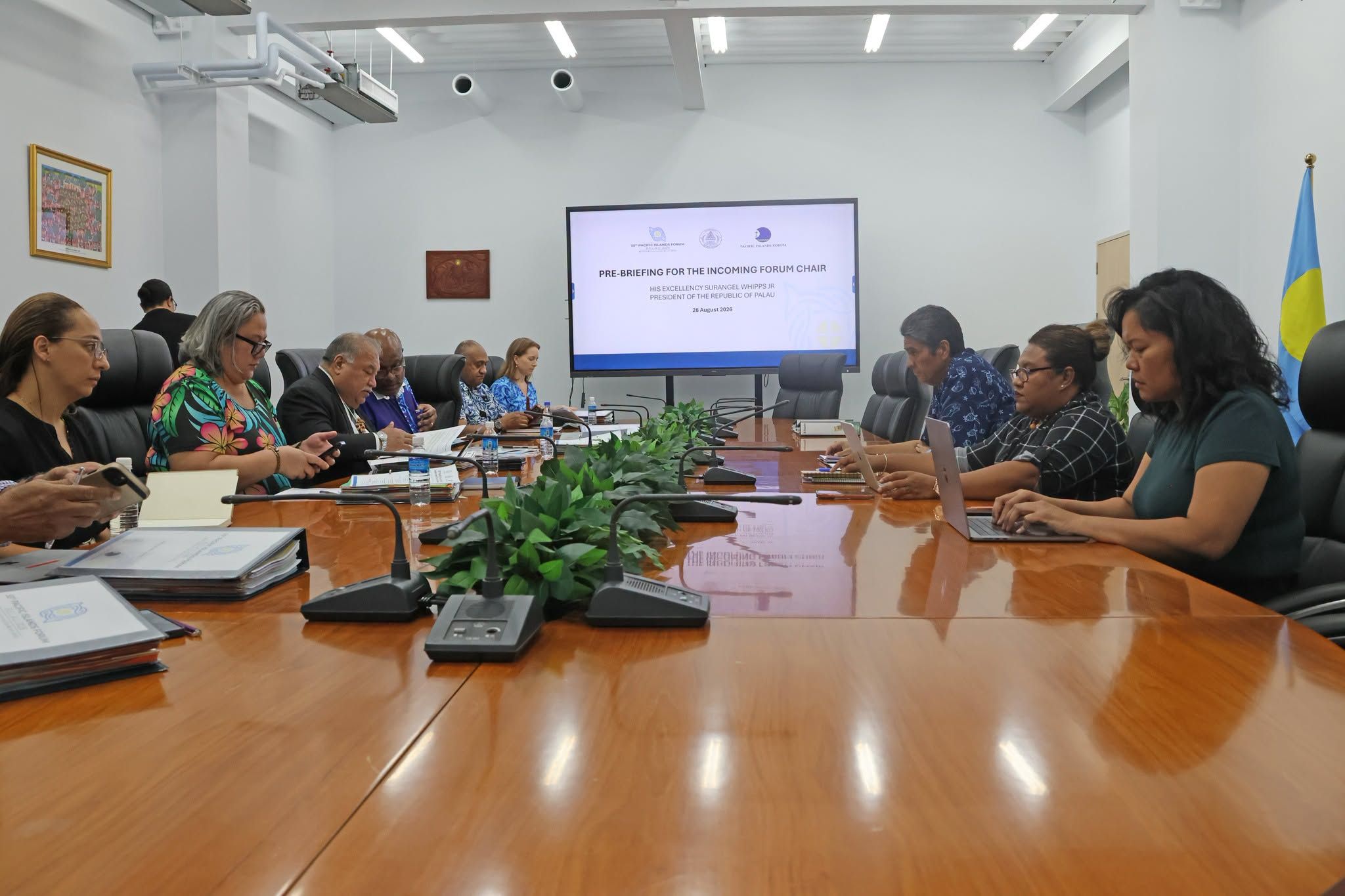
Pacific Islands Forum Secretariat officials, including Secretary-General Baron Waqa, meet with Palau President Surangel Whipps Jr and his team in Koror ahead of the leaders summit this week. Photo/Facebook/Pacific Islands Forum
Bainteiti says the resilience fund must be easy for communities to access and must not become trapped in government processes.
“The Pacific Resilience Facility must ultimately be accessible and reach the communities it was created to support, and not become clogged up in the government machine.”
While welcoming the facility, Greenpeace says funding alone will not solve the region’s climate and environmental problems.
“You can’t just throw money at the problem.”
Bainteiti says Pacific countries also need stronger action from world leaders, including efforts to keep the 1.5C warming limit within reach, and support for a moratorium on deep sea mining.
Peters says the discussions in Palau will help shape New Zealand’s preparations to host the Pacific Islands Forum in 2027.
Listen to Winston Peters speak with media in Palau ahead of the PIF Leaders meeting.
The question is not simply how much money is raised, but who provides it, how easily it can be accessed and whether it comes with action to address the causes of the crisis.
The 55th Pacific Islands Forum Leaders Meeting ends on 4 September.
PMN News political reporter Thomas Tarurongo Wynne is in Koror to cover the summit and bring Pacific audiences the latest from the Leaders Meeting.
Watch PMN News Political Reporter Thomas Wynne's update from Koror, Palau, below.