
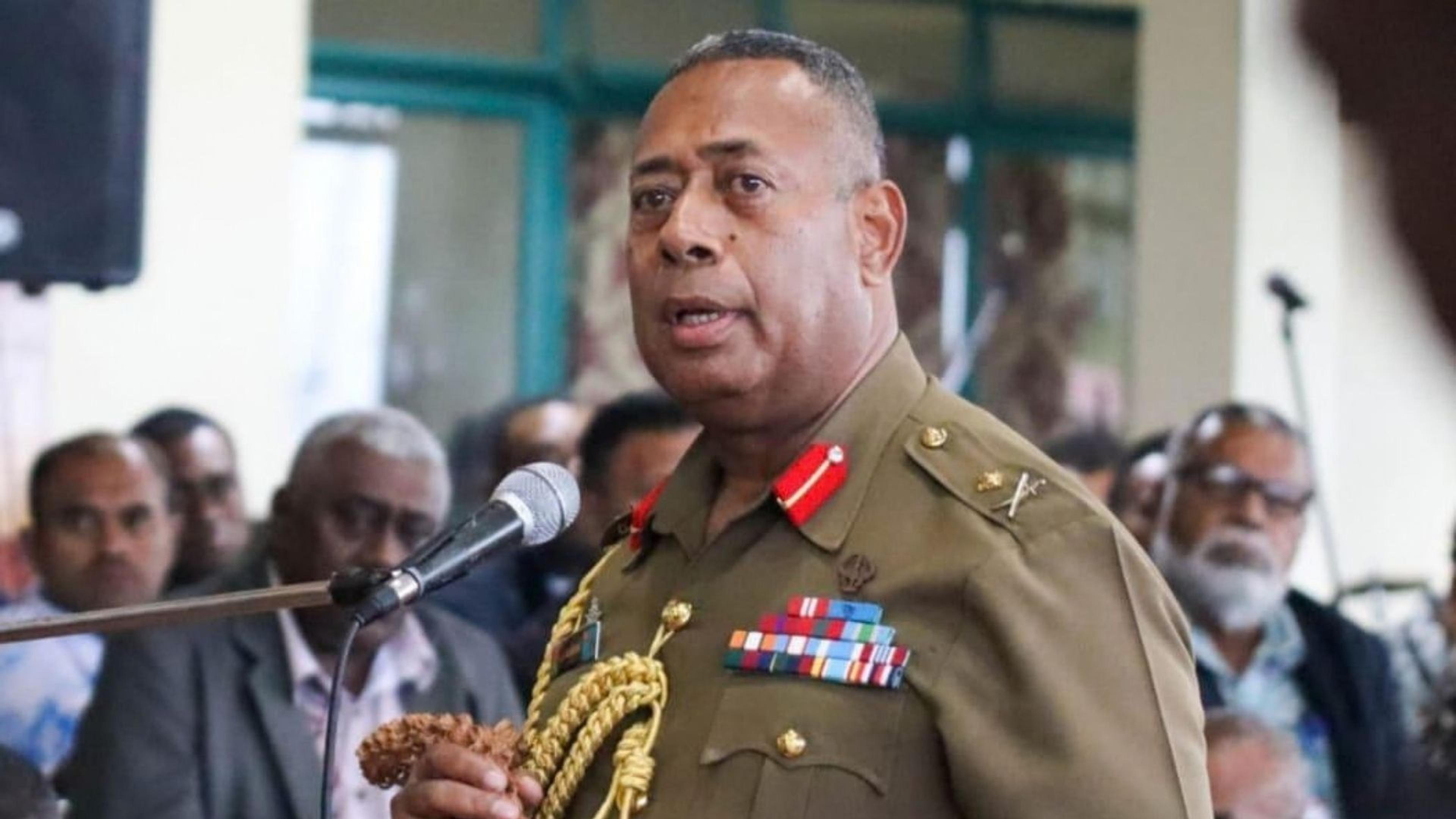
Fiji Military Forces Commander Major General Ro Jone Kalouniwai has called on his soldiers to respect democracy and the will of the people.
Photo/Facebook/Republic of Fiji Military Forces/file
Pacific Region
Fiji's army chief warns the gun must never overrule the ballot
Major-General Ro Jone Kalouniwai invokes Fiji’s coup history as the country debates constitutional changes and prepares for its next general election.

Christine Rovoi
Published
12 October 2026, 10:47am
Share
Copy Link


Fiji’s military chief has delivered a pointed message to soldiers ahead of the country’s next election: the people’s choice must come before military power.
Republic of Fiji Military Forces (RFMF) Commander Major-General Ro Jone Kalouniwai warned that Fiji’s history had shown the dangers of force being used to override democracy.
He said Fiji's independence meant little if the ballot box could be overruled by the gun.
“Our history has taught us, sometimes painfully, that a Fiji where the gun overrules the ballot is no independence at all,” he said .
Kalouniwai made the remarks while addressing military personnel during the final rehearsal for Fiji Day at Albert Park in Suva, ahead of the country’s 56th independence anniversary on 10 October.
His message comes as Fiji considers proposed amendments to its 2013 Constitution and prepares for its next general election, with the role of the military and public trust in national institutions part of the wider debate.
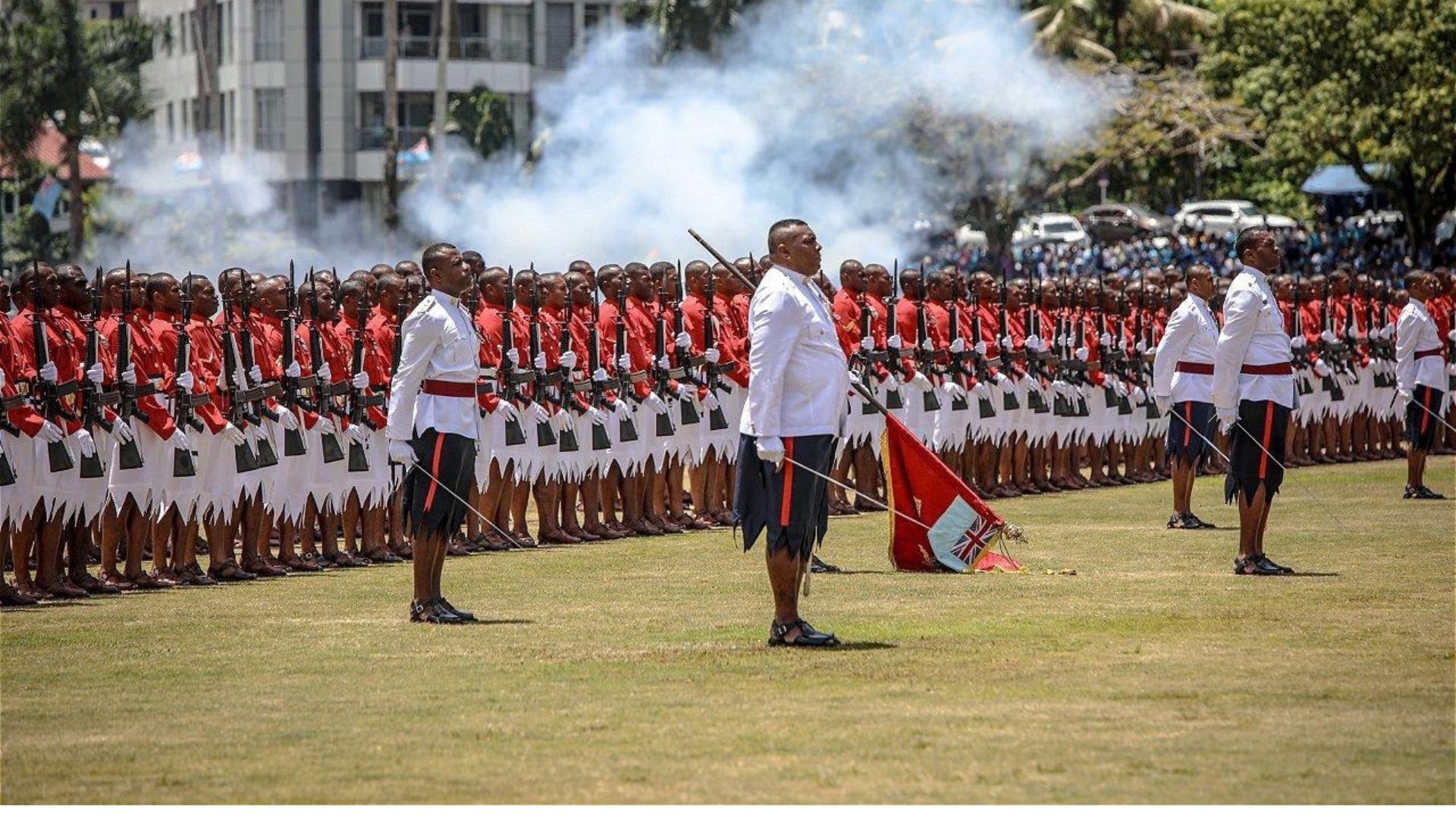
Fiji military personnel take part in Fiji Day celebrations at Albert Park in Suva on 10 October 2026, as Fiji marks 56 years of independence. Photo/Facebook/Fiji government
Power belongs to the people
Kalouniwai said neither Parliament nor the military owned the authority entrusted to them.
Both institutions, he said, had a duty to serve the people.
“The House holds the voice of the people, and this Force holds the strength of the people. Both are held in trust,” he said.
He urged Parliament to debate issues honestly and courageously, while calling on public servants and military personnel to act with discipline, humility and respect for the law.
The commander also stressed that citizens must be able to vote freely and have their decisions respected.
“Let every Fijian claim their place at the ballot box, knowing their choice will be protected and their verdict respected,” he said.
Kalouniwai said the promise of independence in 1970 was that Fijians would govern themselves, and that the people's voice must remain supreme.
“We choose service over power and unity over division,” he said.
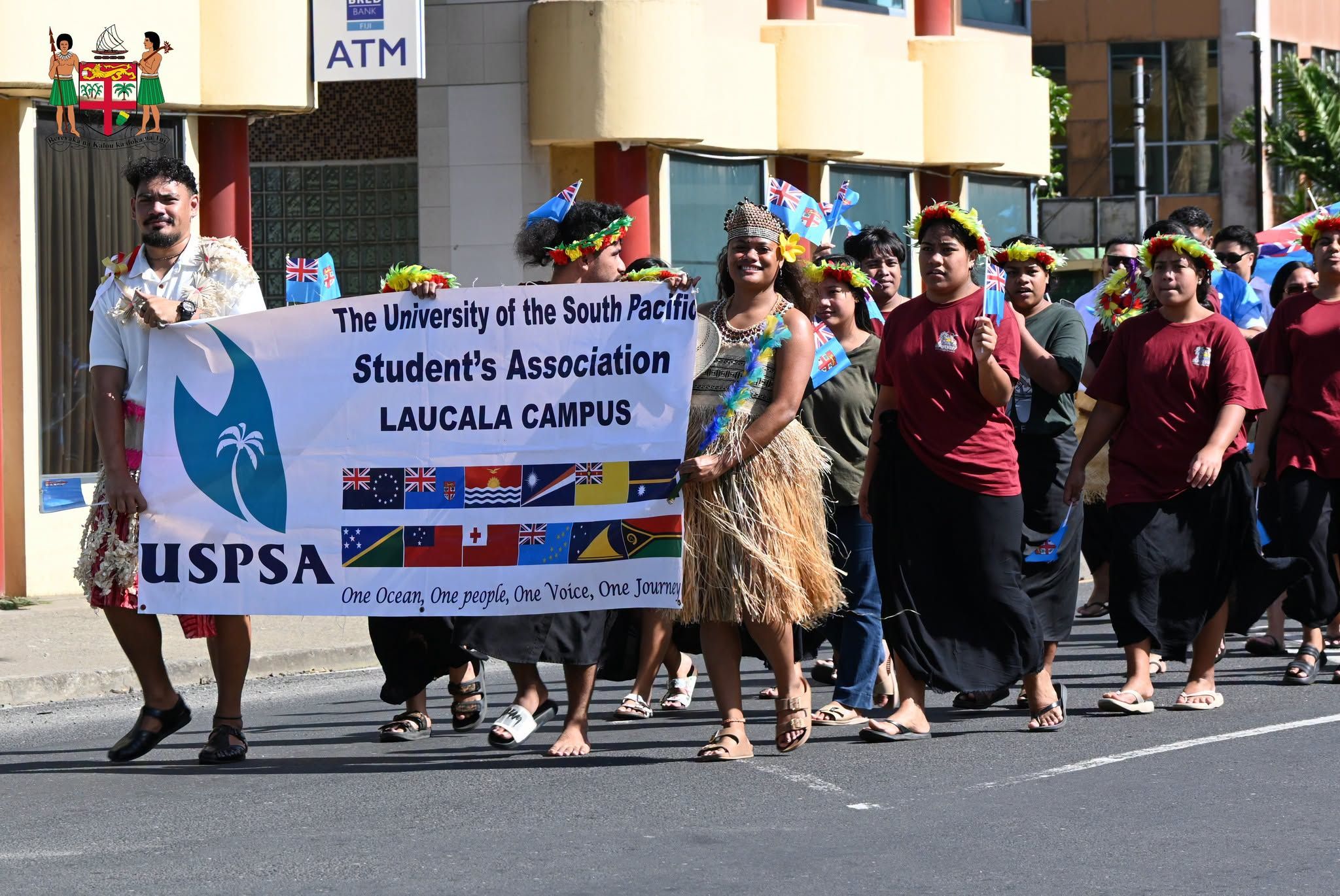
Pacific university students take part in the Fiji Day parade in Suva on Saturday, 10 October 2026, joining celebrations marking Fiji’s 56th anniversary of independence. Photo/Facebook/Fiji government
Constitutional debate
The comments come as Fiji considers changes to its constitutional framework, including proposed provisions setting out the RFMF’s role and its relationship with civilian government.
Civil society groups have also warned that Fiji’s constitutional review must not undermine democratic accountability or put the next election at risk.
In a joint statement on 18 September, the Centre for Democracy & Dialogue, Fiji Women’s Rights Movement, Fiji Council of Social Services, Pacific Centre for Peacebuilding, Social Empowerment and Education Programme, and femLINK Pacific called for the election to be held within the constitutionally required timeframe.
“Fiji’s Constitution belongs to the people. It must not be rewritten in a manner that compromises the people’s right to choose their government on time,” the groups said.
Fiji Council of Social Services executive director Vani Catanasiga has separately stressed the need for people to have enough time and information to understand proposed constitutional changes before voting in a referendum.
Watch Fiji's Minister for Policing and Communications, Iowane Naivalurua, speak at Fiji Day celebrations in Auckland as part of Fijian Language Week which was marked across NZ last week.
The country has experienced four coups since 1987, making the relationship between the military, elected leaders and democratic institutions a significant issue in Fiji’s political history.
Kalouniwai’s address places responsibility on both Parliament and the military to respect the law and the public’s right to choose its leaders.
His message is clear as Fiji approaches another election: military strength must serve the people, not override their democratic choice.
New video scandal puts govt under scrutiny
Meanwhile, a second explicit video involving a Fiji cabinet minister has surfaced online, prompting renewed scrutiny of the government led by Prime Minister Sitiveni Rabuka.
Local media reported the one-minute clip appeared on the minister’s Facebook profile on Friday night, before being removed.
The minister has not publicly confirmed whether the account was hacked or the video posted accidentally.
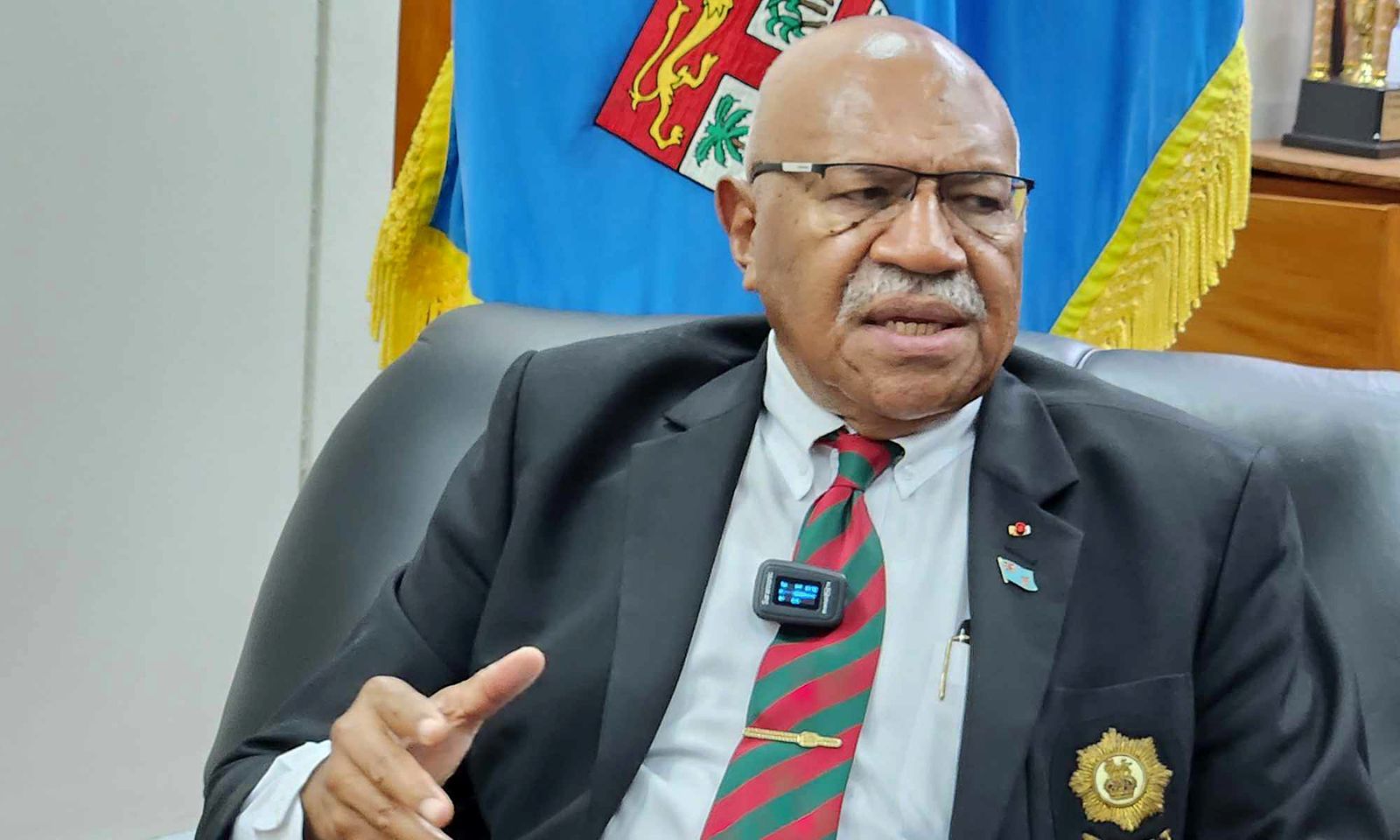
Fiji Prime Minister Sitiveni Rabuka is facing renewed scrutiny after an explicit video involving a cabinet minister surfaced online ahead of Fiji Day. Photo/Facebook/Fiji government
The Fiji Sun newspaper reported on Monday that Rabuka was challenging anyone making allegations against the minister to come forward and testify, saying he wanted to give the minister an opportunity to defend himself.
It follows the leak of an intimate video involving former cabinet minister Lynda Tabuya in December 2024.
This story has been updated to include the latest developments surrounding the explicit video.