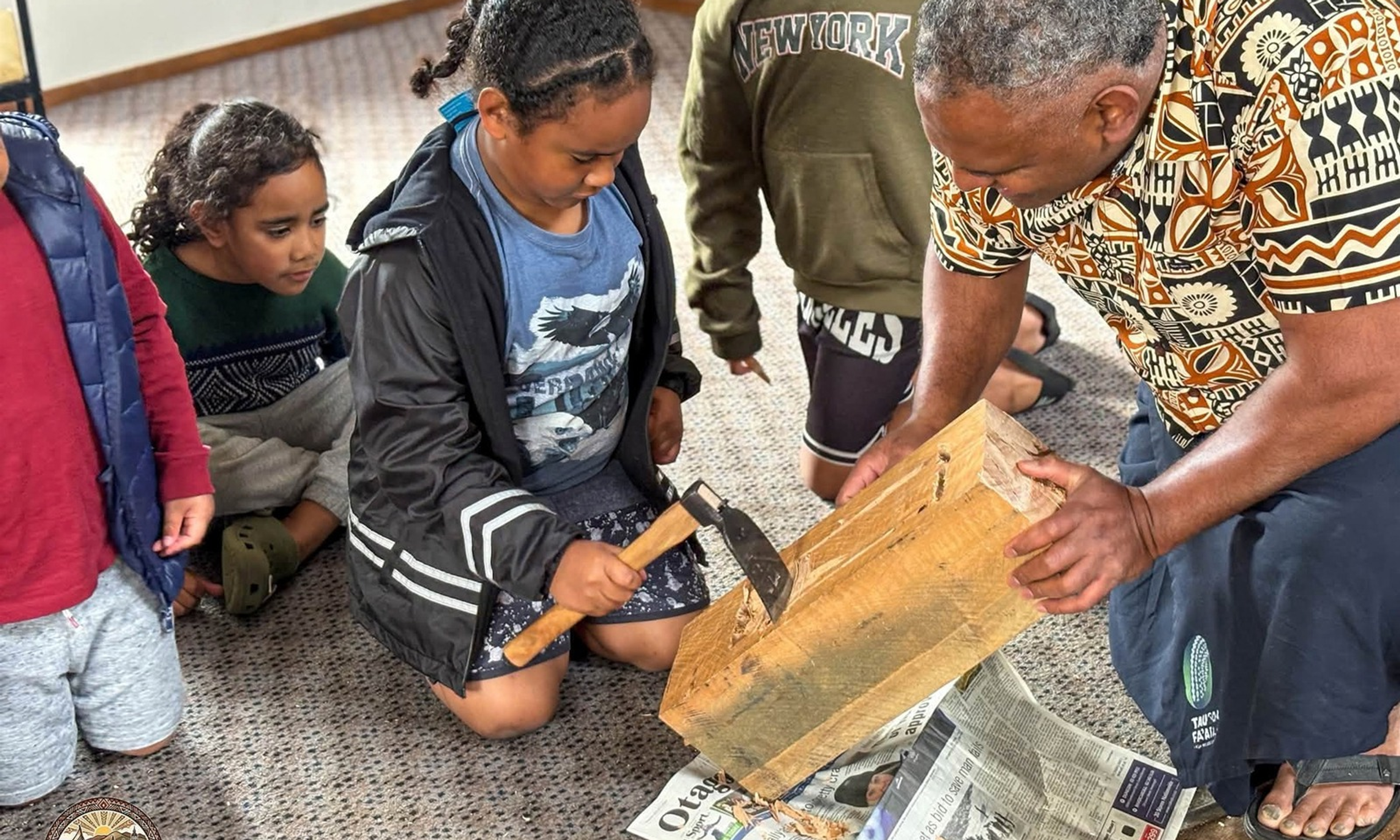
Fijian Community Dunedin Inc President Eric Nabalarua helps children during a wood carving learning session.
Photo/Fijian Community Dunedin Inc
Language & Culture
From the kitchen to the classroom, Fijian culture continues to thrive in Aotearoa
From traditional pottery and bark-cloth printing to a community cookbook, families are finding creative ways to pass their language, skills and heritage on to the next generation.

Elenoa Turagaiviu
Published
09 October 2026, 11:51pm
Share
Copy Link
Top stories
'Don't count yourself out': Porirua by-election candidate’s push for voter participation
Taelegalolo'u Mary AfemataFri, 09 Oct
Deep sea mining could give investors a legal route to challenge climate action - experts
Christine RovoiThu, 08 Oct
Top stories
'Don't count yourself out': Porirua by-election candidate’s push for voter participation
Taelegalolo'u Mary AfemataFri, 09 Oct
Deep sea mining could give investors a legal route to challenge climate action - experts
Christine RovoiThu, 08 Oct
PhotoFijian communities across Aotearoa New Zealand are keeping their language alive, not just in classrooms but around the kitchen table, through traditional crafts and in the songs children sing together.
This year’s Macawa ni Vosa Vakaviti (Fijian Language Week) has brought communities together to celebrate their heritage with a focus on making sure younger generations can carry their language and cultural knowledge into the future.
The theme, "Na noqu vosa me tekivu mai vale ka me'u na vosataka e na veisiga" (My language starts at home and I need to speak it every day), reflects the role families play in keeping Vosa Vakaviti alive.
In Auckland, artisans from Fiji brought traditional crafts and cultural treasures to Tāmaki Makaurau including a delegation from the Fiji Crafts Society (FCS) and 130 marama ni Lomaiviti (women from Lomaiviti Province).
At Auckland Museum, Niqa Tuvuki FCS President, said the displays were about sharing the stories and knowledge behind the work, not simply showcasing finished products.
"We are not simply exhibiting products; we are bringing a piece of Fiji to New Zealand,” she told the crowd. “ We are bringing the stories, traditions, skills, and the heritage of our people."
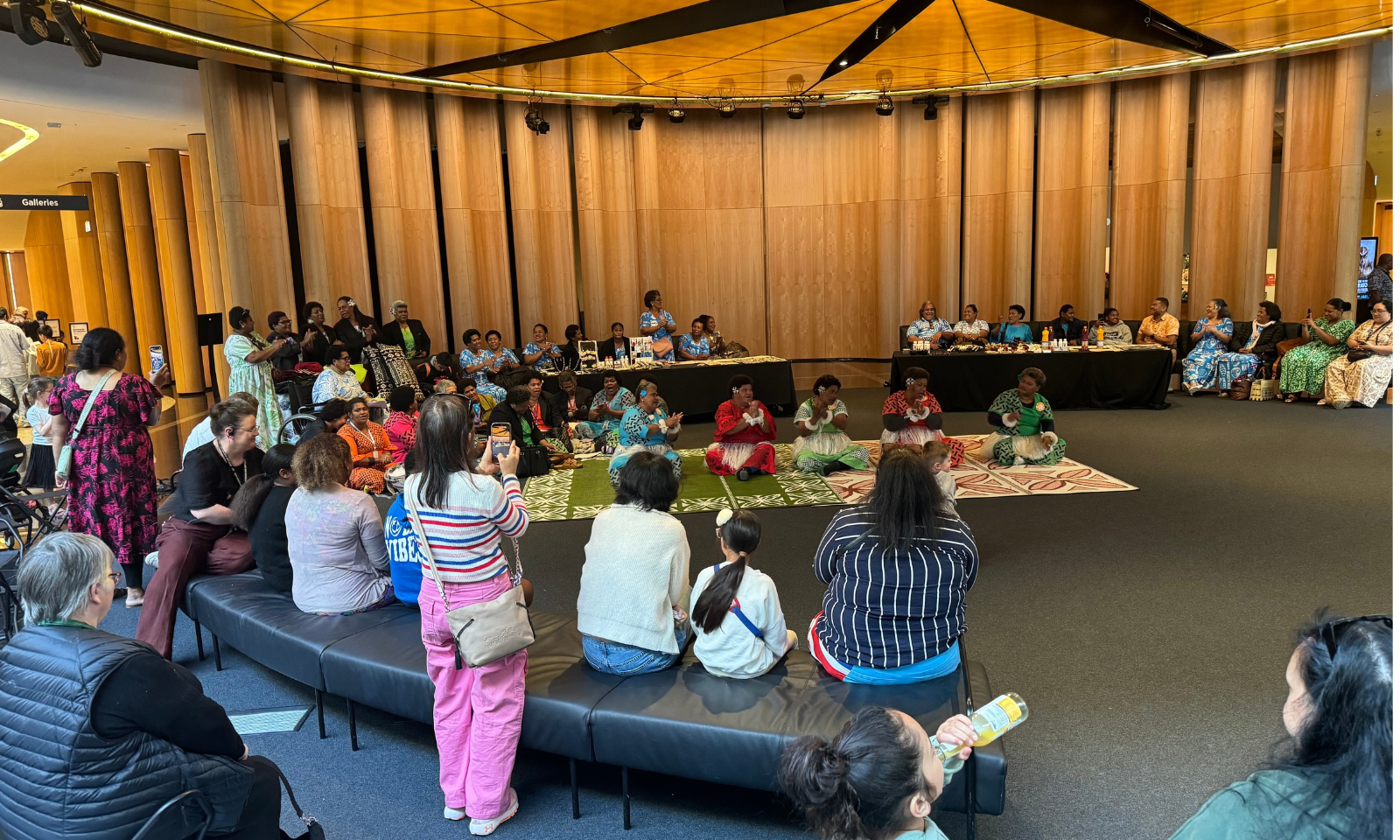
Members of the Fiji Craft Society and Marama ni Lomaiviti were at the Auckland Museum on Thursday for a special cultural performance showcasin the richness and beauty of Fijian arts and culture. Photo/ PMN News
The exhibits featured masi (bark cloth), pottery, woven mats, textiles, and jewelry. A standout piece was the Iri ni Daku, a hand-woven fan made exclusively by women of Daku Village in the Tailevu province.
“We hope that our presence encourages the younger generations to value their language, their heritage, and cultural identity,” Tuvuki said.
Community leader Greg Traill told PMN News it was the first time artisans had travelled from Fiji to showcase their arts and culture at Fijian Language Week in Aotearoa.
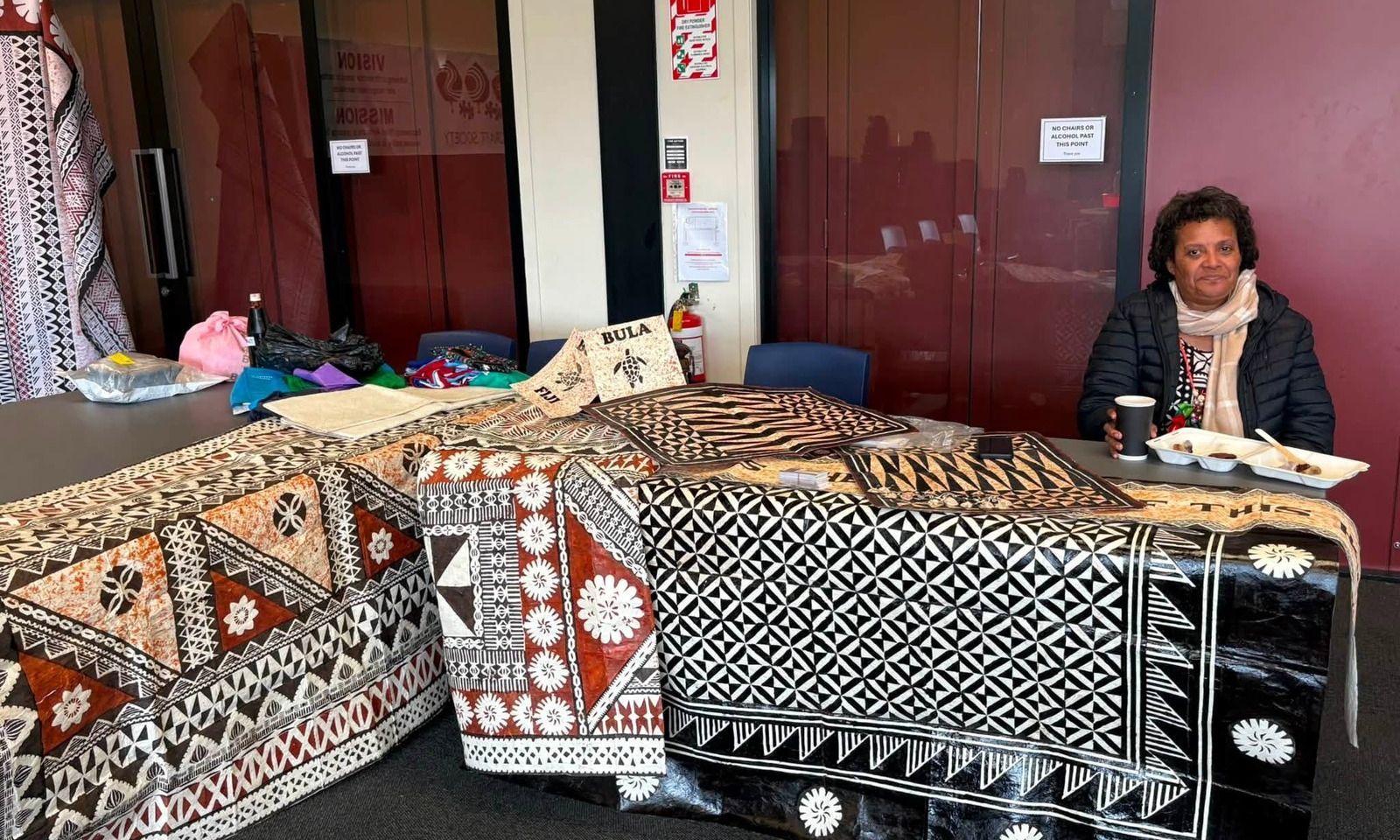
A woman artisan displaying the works of her hands, printed masi ( bark cloth). Photo/Fiji Community Auckland
“The Fiji community here has really appreciated them being here and celebrating and bringing Fiji to Auckland,” he said.
He said the scale of displays and the response from the public had been encouraging.
“The treasures they bring themselves bring the culture and the language alive, and I'm sure it's reignited the passions for our Fijian community here in Auckland to safeguard our identity and be proud of their culture.”
Among the visiting artisans is Ilisoni Naqasima, the only male potter in his village of Lawai in the province of Nadroga, who said he learnt the craft from the women in his family.
“It is such an eye-opening experience to be able to come and showcase this art of pottery making, something that is unique to where I come from,” he told PMN News.
“I learnt pottery from my mother, my aunties and grandmother and now I am passing this knowledge to the younger generation so that this art does not die out.”
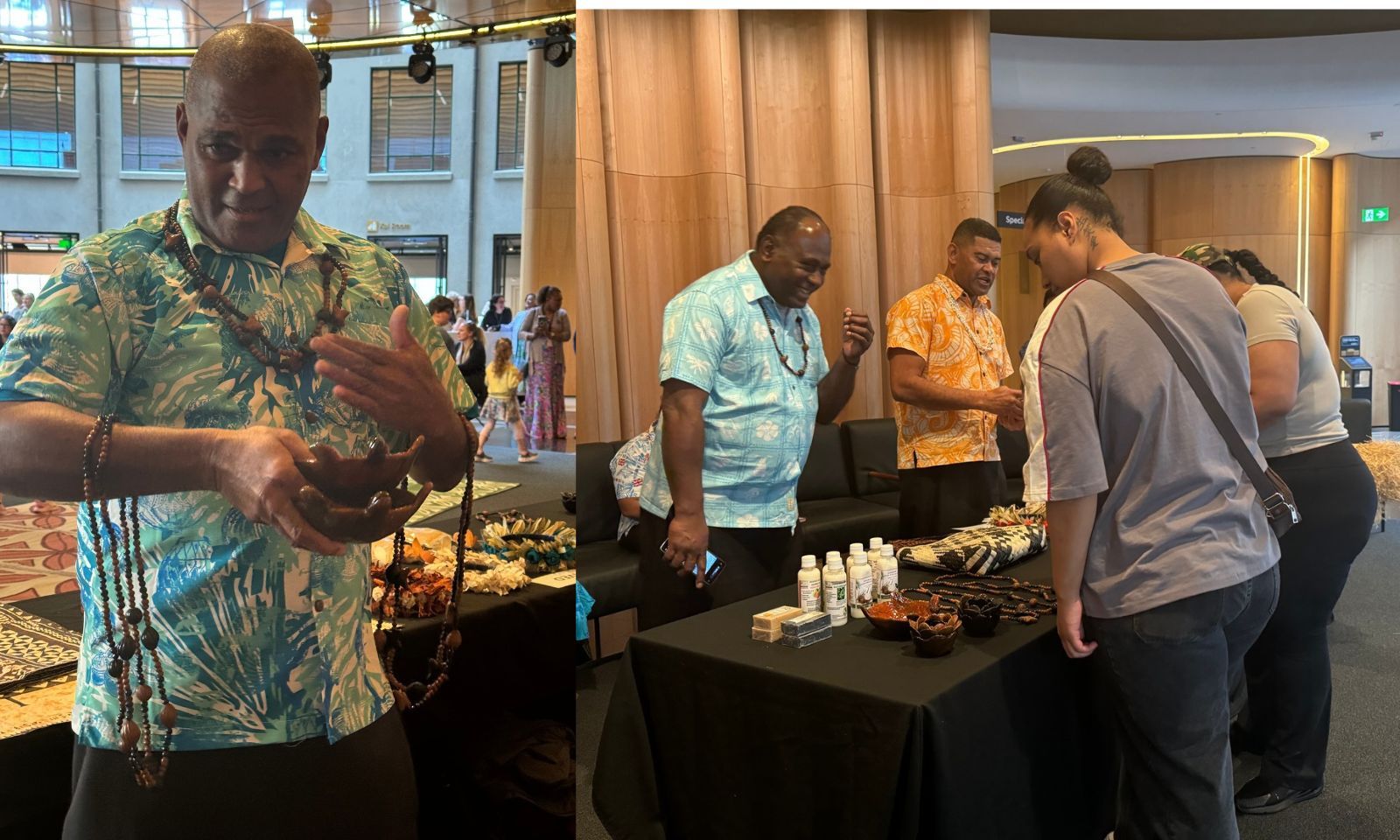
Left - Ilisoni Naqasima shows off his necklaces and bowls made from clay. Right -Artisans displaying their craft. Photo/PMN Fiji
Further south in Otago, the Dunedin Fijian community focused on giving children practical ways to connect with their heritage.
Young people learnt Kesakesa, the traditional art of masi printing and explored Fijian wood carving, known as Sivisivi with craftsman Maciu Yabakirua.
The children also visited the University of Otago campus, singing Fijian songs and performing at the University of Otago’s Business School to share their culture with students and staff.
In Hamilton, the Fiji Society of Hamilton took a different approach, launching a community cookbook to help young people learn through food and family conversations.
The idea came from 15-year-old Talei Prior, who prefers helping in the kitchen before attending her Monday evening language classes, which she has been taking for the past three years.
Her mother, Tegan McIntyre, said cooking had become another way for Talei to pick up everyday Fijian words and phrases.
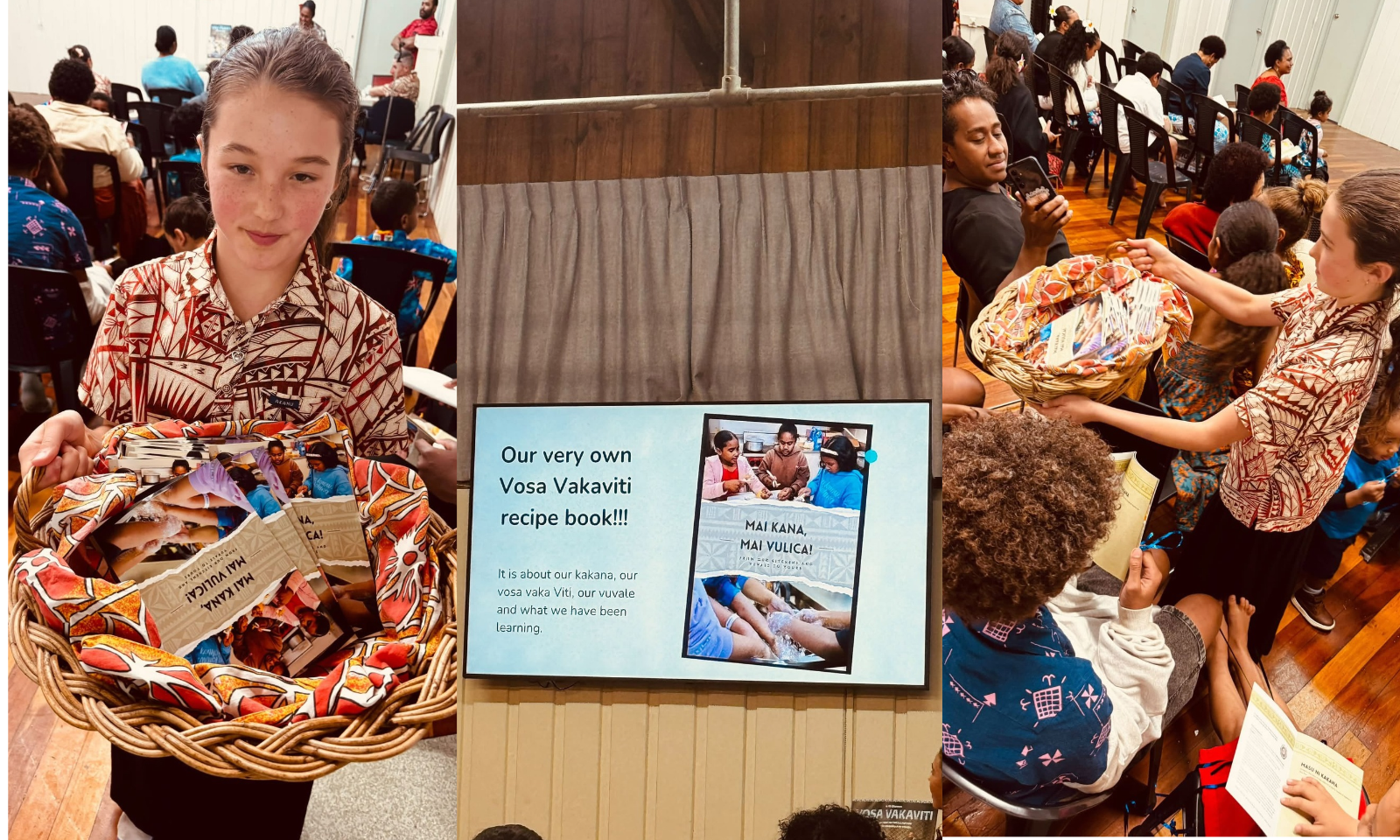
Talei Prior with the cookbooks after the launch this week. Photo/Fiji Society Hamilton.
"Talei’s learning her Vosa vakaViti in a different kind of way," McIntyre said.
"Through the banter, laughter, and conversations in the kitchen, she's picking up the everyday Fijian words and phrases used when people come together around food."
The Fiji Society in Hamilton has called on its members to submit family recipes.
The cookbook brings together family recipes, a masu (prayer) used by the children and a glossary of Fijian food terms.
Talei helped format and create the book, which was funded through the Ministry for Pacific Peoples' Fijian Language Week fund.
For her 10-year-old sister, Milli Prior, learning the language while young is something she can carry throughout her life. "It's cool because I'm learning the language when I'm young, so I can have it for the rest of my life."
Watch Auckland's Fiji Day Co-ordinator Greg Traill speaking with PMN Tonga below.
The week's activities and celebrations culminate this Saturday 10 October with Fiji Day, marking the country’s independence from British rule in 1970.
Events will include displays, sports, traditional food and festivities, bringing the diaspora together to celebrate Fiji’s heritage.
In Auckland, Fiji's Minister for Policing and Communications, Major-General Ioane Naivalura is expected to attend as chief guest alongside New Zealand's Minister for Pacific Peoples, Paul Goldsmith.
From the crafts passed down through generations to the words learnt while preparing a family meal, the celebrations show how Fijian culture continues to be shared, practised and kept alive across Aotearoa.