
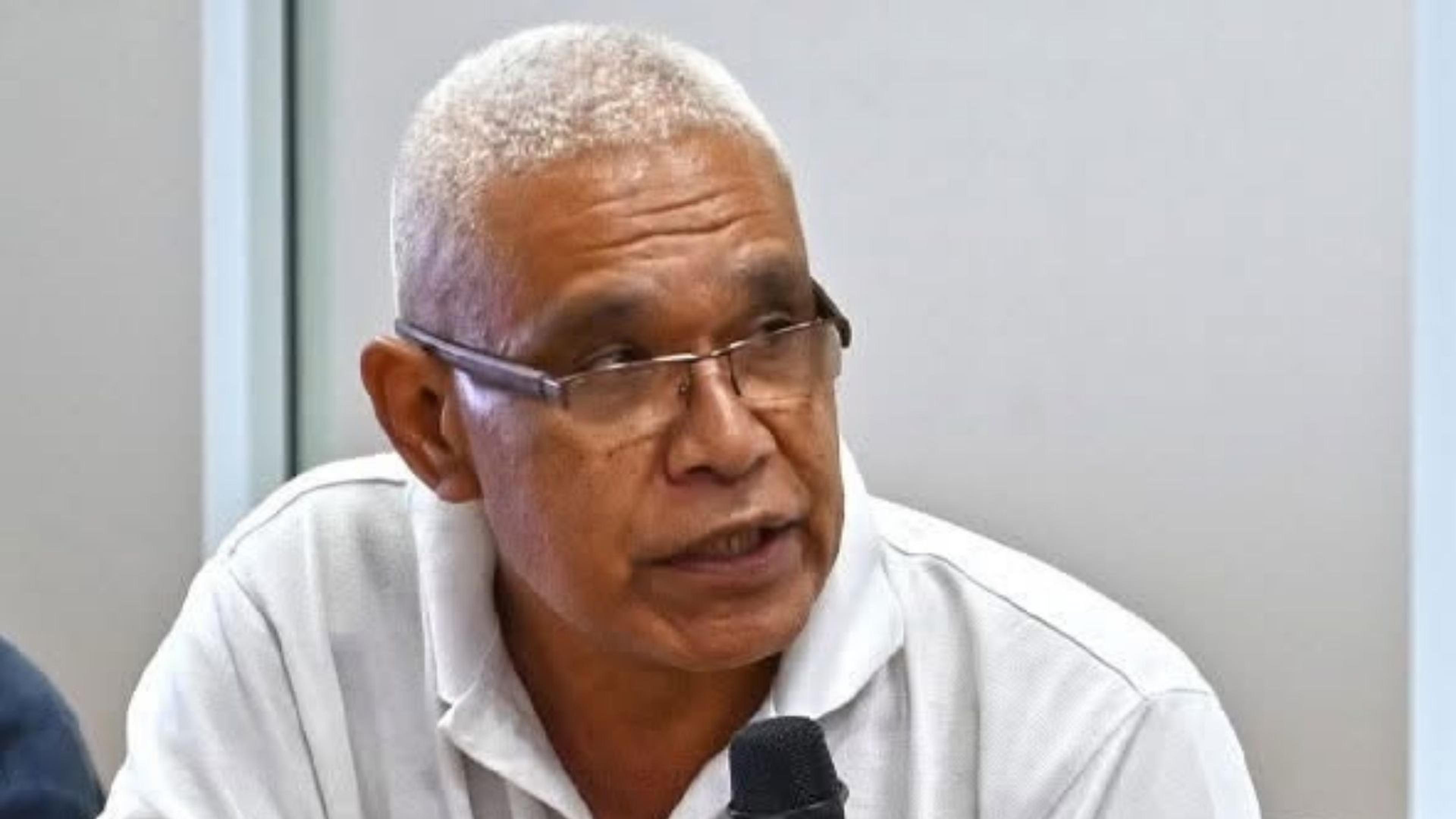
Former journalist Josefa Nata has appeared before Fiji's Truth and Reconciliation Commission in Suva where he accepted responsibility for his role in the 2000 coup and told commissioners that "no coup" can ever be justified.
Photo/Facebook/Jo Nata
Politics
'No coup can ever be justified': former rebel tells the Fiji truth and reconciliation hearing
After serving 24 years in prison, former journalist Josefa Nata says he accepts responsibility for his role in the 2000 coup and will "forever" carry the shame.

Christine Rovoi
Published
19 June 2026, 7:50pm
Share
Copy Link
Top stories
World Vision warns children will pay for aid cuts beyond the Pacific
Thomas Tarurongo WynneMon, 12 Oct
Mate Ma’a Tonga’s 40-year legacy lives on through generations
Elton Lonaratha JnrMon, 12 Oct
Top stories
World Vision warns children will pay for aid cuts beyond the Pacific
Thomas Tarurongo WynneMon, 12 Oct
Mate Ma’a Tonga’s 40-year legacy lives on through generations
Elton Lonaratha JnrMon, 12 Oct
A former journalist jailed for his role in Fiji's 2000 coup has delivered a blunt message to the country's Truth and Reconciliation Commission: no coup can ever be justified.
Appearing before the commission in Suva, Josefa 'Jo' Nata spoke openly about his involvement in one of the most turbulent chapters in Fiji's history, saying he accepts responsibility for his actions and the damage caused to the nation.
"I take full responsibility for my misguided involvement. I had borne the consequences. Forever will I carry the shame," Nata told commissioners. "No coup, in my view, can ever be justified."
Nata recently completed a 24-year prison sentence linked to the 2000 civilian coup, which saw George Speight and armed supporters seize Parliament and hold members of the government hostage.
Addressing commissioners Joaquim Da Fonseca and Rachna Nath, Nata said the events of 2000 left lasting scars on Fiji and contributed to distrust between iTaukei and Indo-Fijian communities.
His appearance is among a series of testimonies being heard by the Fiji Truth and Reconciliation Commission as it examines some of the country's most difficult chapters and seeks to promote national healing.

The Fiji Truth and Reconciliation Commission continues hearing from people connected to some of the country's most significant political events as part of efforts to promote healing and national unity. Photo/Supplied
The Truth and Reconciliation Commission was set up by the coalition government of Prime Minister Sitiveni Rabuka as part of a commitment to address the lasting impact of Fiji's coup history.
The commission is tasked with examining past human rights abuses and helping the country confront the divisions and mistrust left behind by decades of political upheaval.
While expressing remorse, Nata also challenged claims about the extent of his involvement in the takeover.
Watch Josefa Nata during his address to the Truth and Reconciliation Commission in Suva below.
He told the commission he was not involved in planning the operation and only became caught up in events after hostages had already been taken inside Parliament.
"The Court branded me as one of the masterminds of the events of May 19, 2000. This is a dubious honour I readily and unreservedly declined," Nata said. "That honour belongs elsewhere."
Nata used his appearance to encourage accountability and reconciliation, arguing that Fiji cannot move forward without honestly confronting the impact of past political upheaval.
The commission is hearing accounts from people affected by some of Fiji's most significant political and social conflicts.
The process is aimed at helping build a shared understanding of the past and strengthening national unity.
The commission's work has received support from civil society groups and human rights advocates, who say testimonies such as Nata's are important in building an honest public record of Fiji's past.
But some commentators have urged caution, warning that revisiting old political grievances must be handled carefully, with transparency, fairness and a strong focus on the experiences of victims and affected communities.
For many Fijians, the commission's work remains closely tied to questions of accountability, forgiveness and whether the country can finally move beyond the legacy of its coups.
As the commission continues to hear from key figures connected to Fiji's political past, Nata's testimony stands out.
For a country that has experienced multiple coups, a public admission of responsibility - coupled with a clear statement that "no coup" can be justified - adds weight to efforts to move beyond a chapter that has shaped generations of Fijians.