
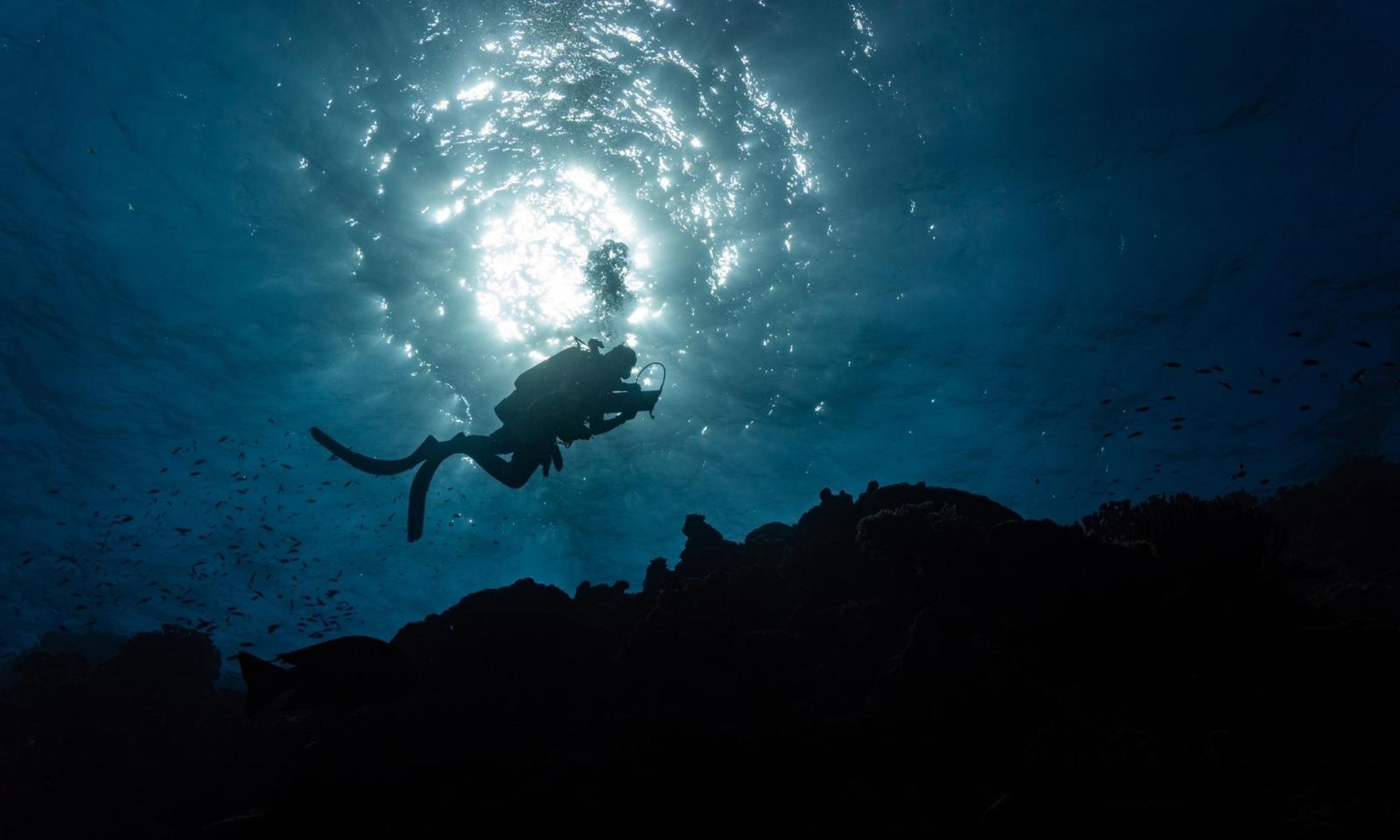
A National Geographic Pristine Seas team member surveys the reefs of Erikub Atoll.
Photo/National Geographic Pristine Seas/Iñigo San Félix
Pacific Region
Atomic exile leaves remote Marshall Islands atoll as rare window into ocean recovery
Decades after nuclear testing forced communities into exile, scientists are heading to one of the Pacific’s most isolated atolls to study how nature has recovered in the near total absence of people.

Aui'a Vaimaila Leatinu'u
Published
19 May 2026, 3:28pm
Share
Copy Link
Top stories



Auckland teen turns a trip to Fiji into a mission to fight period poverty
Elenoa TuragaiviuThu, 15 Oct
Top stories
Auckland teen turns a trip to Fiji into a mission to fight period poverty
Elenoa TuragaiviuThu, 15 Oct
A remote atoll in the Republic of the Marshall Islands, once linked to forced displacement caused by American nuclear testing, is now the focus of a major international science mission to understand how ocean life recovers in isolation.
The National Geographic Pristine Seas (NGPS) expedition is surveying some of the remote waters in the Marshall Islands (RMI). The mission brings together local navigators, scientists, and the Marshall Islands Marine Resources Authority (MIMRA).
The team is travelling across seven atolls in the Ralik and Ratak chains, including places where little modern scientific research has ever been done. Their final and most remote stop is Ujelang Atoll, more than 200 kilometres south-west of Enewetak.
Kelly Moore, the Expedition Leader, says Ujelang carries a difficult but important history.
“The story of Ujelang really stuck with me. People of this area were displaced because of the nuclear testing and this atoll has been largely uninhabited since the 1980s,” Moore says.
Moore says unlike the first leg, which focused more on inhabited communities to the east, her team is steering further west toward three highly isolated atolls at the edge of the country.
Listen to Kelly Moore’s full interview below.
The people of Enewetak Atoll, located mid-way between Hawai’i and Australia, were forced to relocate from their home ahead of the United States' 1948 weapons tests. They remained at Ujelang for over three decades before returning to Enewetak.
Moore says that a long period without permanent human presence may have allowed marine life to recover in unusual ways.
“What's happened since then is we've seen seabirds return. There's seagrass beds that we're excited to study, some of the only ones recorded anywhere in the Marshall Islands.
“No modern science has touched it, and there hasn't really been a comprehensive survey of what lives in those waters.”
A total of 43 atmospheric nuclear tests were detonated on Enewetak between 1948 and 1958, vaporising islands and leaving long-term radioactive contamination across the marine ecosystem.
Once the people of Enewetak left Ujelang 1980, the small atoll was abandoned to the elements, creating a strict, four-decade sanctuary where nature was granted total dominion where seabirds eventually returned.
For this expedition, all data collected will feed into Reimaanlok, the national conservation framework legally binding modern science with traditional knowledge.
Reimaanlok requires the explicit approval of local leaders and traditional chiefs so that the Marshallese people retain total control over the data.
Moore supports this notion, saying that global conservation only succeeds when local communities, who inherently understand generational cycles of tides, winds, and spawning, make the decisions.
“They have already observed their oceans. They know it better than anybody. They've studied the tides. They know the winds. They know when the groupers are spawning and the turtles are near shore and nesting.
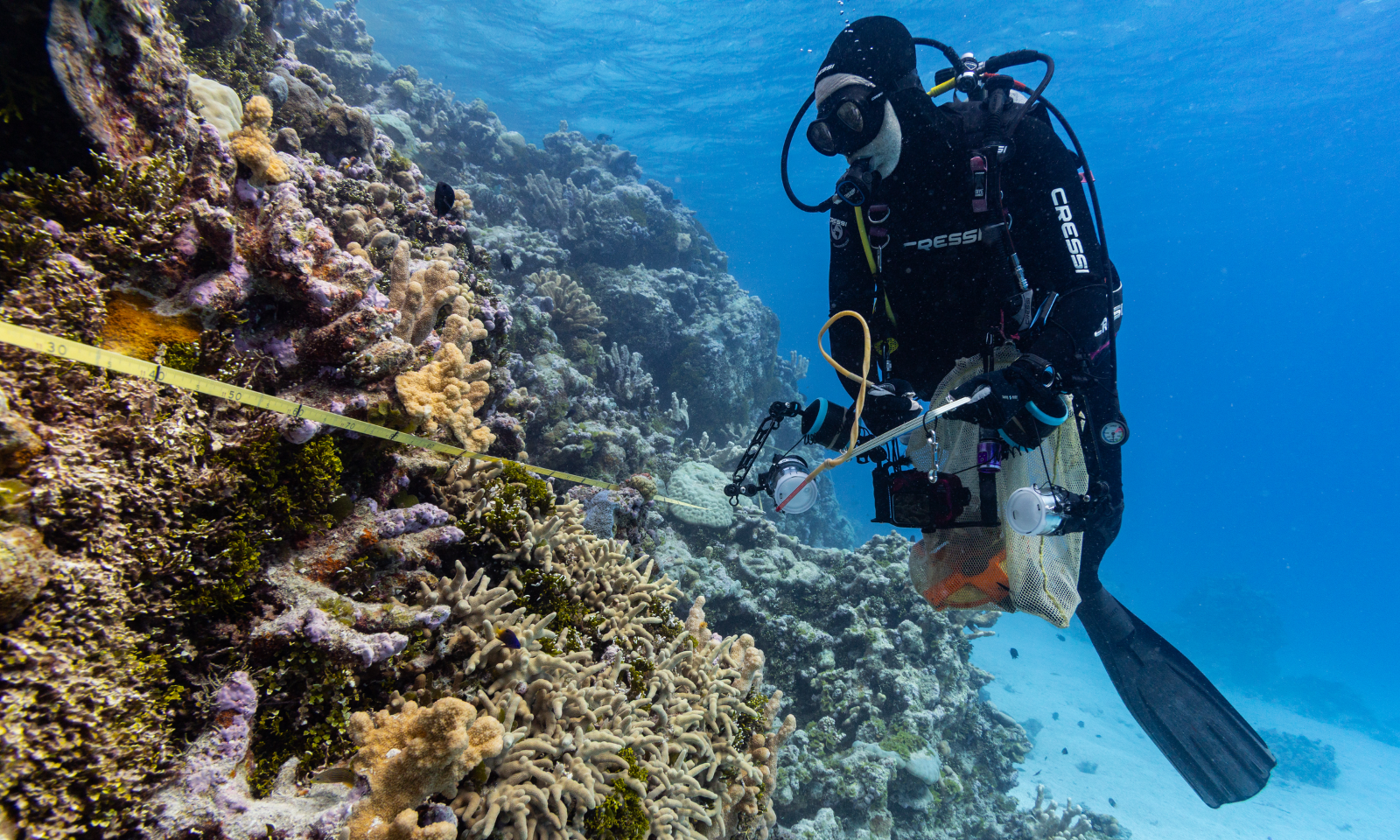
A National Geographic Pristine Seas diver conducts a SCUBA survey near Ailuk Atoll. Photo/National Geographic Pristine Seas/Iñigo San Félix
“There’s no better way to protect or conserve an area than if you know it like that. Our goal is to support that process with data that we collect, given that we have this cutting-edge technology on the ship and experts in coral reef ecology, seabirds and deep sea communities.”
Ryan Jenkinson, an expedition leader from the first leg, says it was an incredibly powerful message when communities manage their own backyard.
Findings from the expedition’s first leg included unexplained drop in seabird populations at Taka Atoll or the rapid, 12 hour biodiversity snapshot captured at Jemo Atoll.
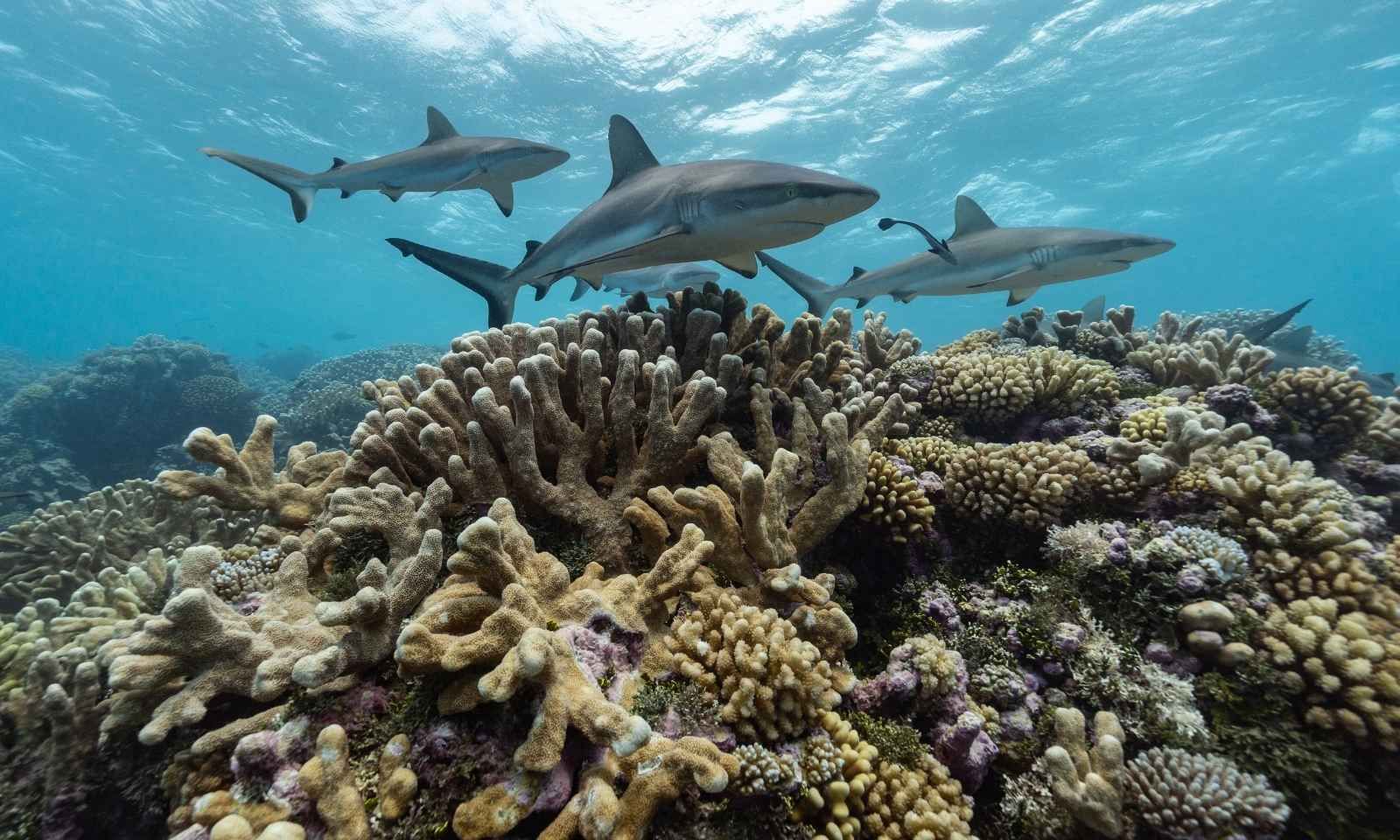
Sharks patrol the reefs of Taka Atoll. Photo/National Geographic Pristine Seas/Iñigo San Félix
As the research vessel Argo continues its final weeks in the Marshall Islands waters, the team is preparing to hand over its findings to local authorities.
They will provide what scientists describe as one of the most detailed ecological snapshots ever collected in the region.
The expedition, which started with ocean literacy training and environmental DNA work with young people in Majuro, is expected to end with a final debrief between researchers and Marshallese partners in early June.
*This article has been updated to clarify that the people of Enewetak returned home in 1980, and to correctly reflect that Enewetak remains inhabited while Ujelang is uninhabited.