Fiji's army chief warns the gun must never overrule the ballot
Christine RovoiMon, 12 Oct
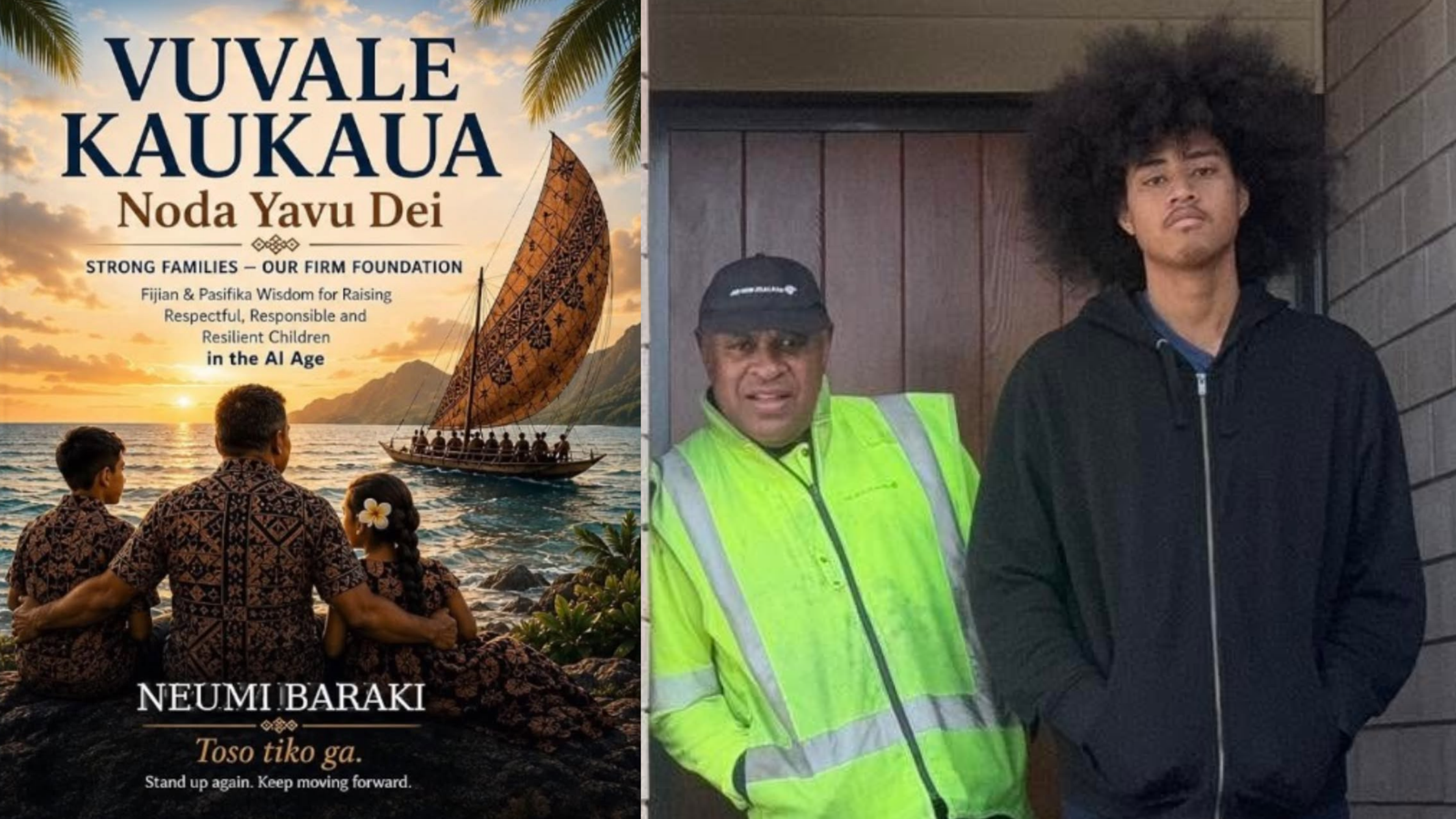
Tukai Neumi Baraki with his son Brett.
Photo/Facebook
Tukai Neumi Baraki from Auckland shares i-Taukei knowledge to help Fijian families keep their culture and language alive across generations.

Keeping a child connected to their roots while growing up far from home takes more than telling them where they come from.
It means speaking the language, sharing the stories and putting cultural values into practice every day.
For Fijian father Tukai Neumi Baraki, that lesson has become a new book, Vuvale Kaukaua - Noda Yavu Dei: Strong Families, Our Firm Foundation, written to help families in the diaspora pass on the values that shaped generations before them.
The Auckland-based single dad draws on his own journey raising his teenage son, Brett, alongside the village wisdom and faith he grew up with in Fiji.
“That is something that we should never forget,” Baraki tells Pacific Days.
“That we come from a culture that is thousands of years old, from a proud history of traditional and cultural values.
Watch Tukai Neumi Baraki's full interview below.
“If we always keep that in mind, then that should help greatly in coming and living in a place where we are strangers.”
Raised by his grandparents in Vanua Levu, Baraki says holding on to his heritage while raising a child in a different country takes deliberate effort.
One of his strongest messages to parents is to keep speaking the Fijian language, Vosa Vakaviti, at home even when children are surrounded by English at school and in everyday life.
“Keeping anchored to our identity and our values, that helped me a lot as a dad,” he says. “Speaking to my son, we always kept our Fijian language alive at home, not speaking English. Language is the conduit that carries all of those cultural values to our present day.
“To keep the language alive and fluent, we need to be around people who speak it all the time. But because we are away, then of course that will be eroded. We cannot escape the fact that that happens, but if we make a deliberate effort to always speak it at home, the children will always hear the language.”
Baraki says his book has 18 chapters centred around traditional Fijian proverbs, linking cultural knowledge with the practical challenges parents face today.
Topics include teaching young children about body safety and keeping communication open through the teenage years.
One proverb, “Lutu na niu, lutu ki vuna (the coconut falls close to its roots),” reflects the importance of a strong family foundation.
“A strong family is not a perfect family. It is a family willing to talk, listen, correct, forgive, protect, teach and begin again,” he says.
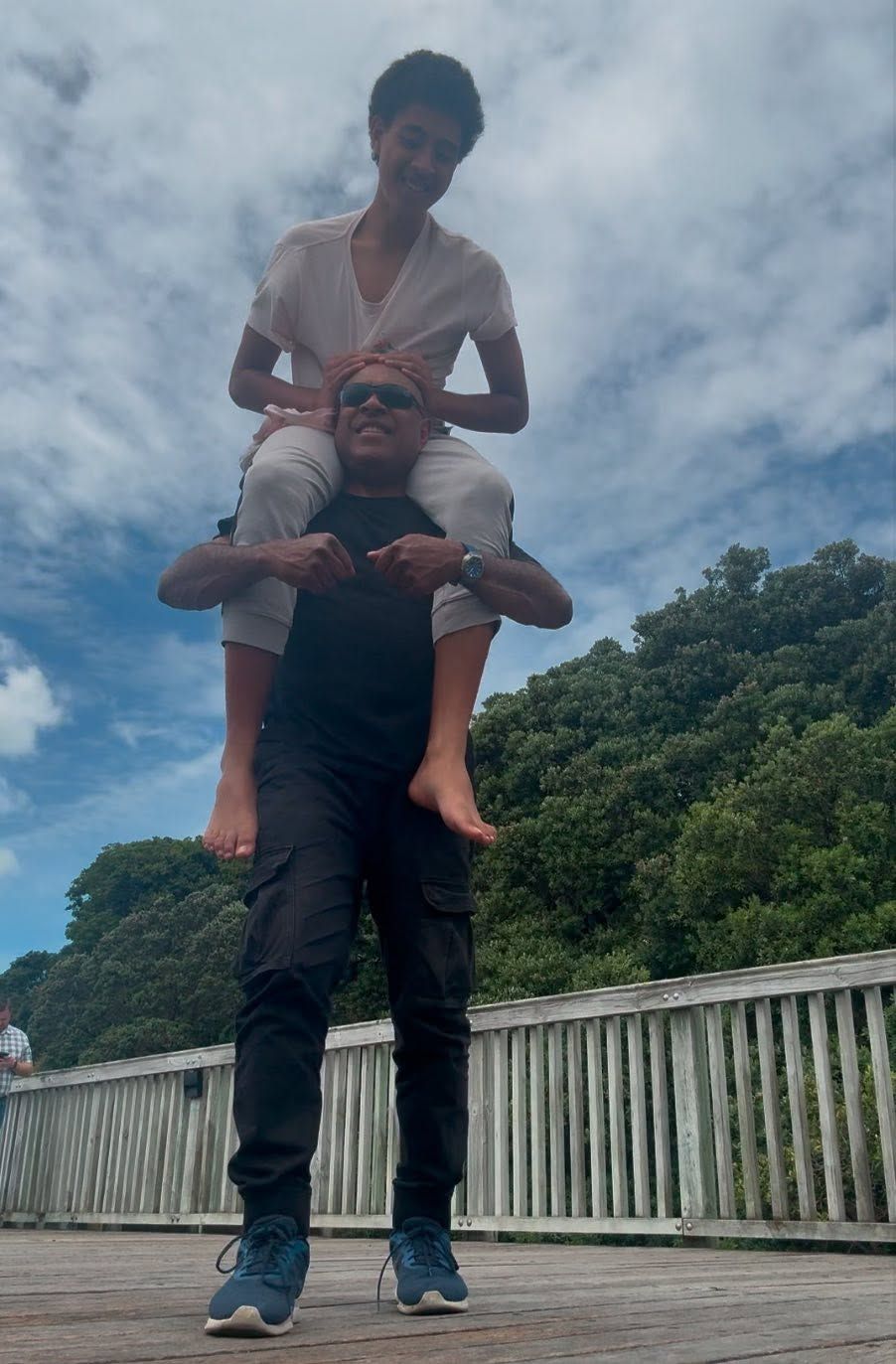
Father and son against the world. Photo/Facebook
Although the book is deeply rooted in i-Taukei (indigenous Fijian) values, Baraki chose to write it in English to reach younger generations.
A glossary included at the back of the book explains traditions and cultural concepts.
Baraki has also spent more than six years making language-learning videos for YouTube and Facebook with Brett, who is now in Year 11.
During a recent video for Fijian Language Week, Macawa ni Vosa Vakaviti, Brett explained the deeper meaning of kerekere, translated as “please” or a request.
“Kerekere is not just ‘please’ or begging,” Brett says. “But it is a sacred act of trust that holds a community together.”
Their videos are one way father and son share language and cultural knowledge with other families, showing how everyday conversations can carry meaning beyond a word's direct translation.
The book’s release adds to community-led efforts to keep the Fijian culture alive across Aotearoa. In Hamilton, the Fiji Society has supported a community cookbook created by 15-year-old Talei Prior, bringing language and cultural learning into the kitchen.
“Talei’s learning her Vosa vakaViti in a different kind of way,” Talei’s mother Tegan McIntyre says. She also notes that kitchen banter helps her daughters pick up everyday phrases.
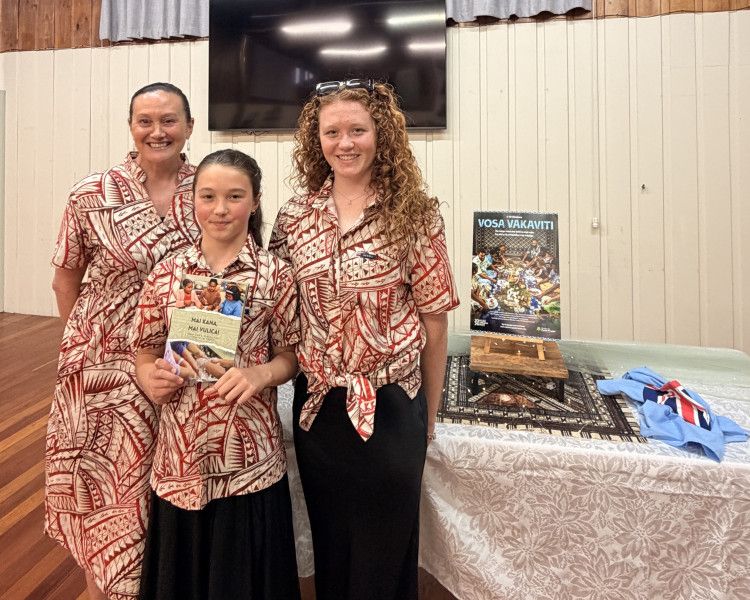
(L-R) Tegan McIntyre, Milli and Talei Prior. Photo/Ministry of Pacific Peoples
Talei’s 10-year-old sister Milli adds, “It's cool because I'm learning the language when I'm young, so I can have it for the rest of my life.”
For Baraki, the message is also for single parents and grandparents who are trying to pass on their heritage while raising children away from their ancestral homes.
“Toso tiko ga, tabu soro - keep moving, never give up.”
Vuvale Kaukaua - Noda Yavu Dei: Strong Families, Our Firm Foundation is available as a Kindle edition and in paperback through Amazon.
Baraki hopes it will be a useful resource for Fijian parents around the world.