Trump's new tariffs spare Pacific but trade shock could still hit island economies
Christine RovoiThu, 26 Nov

New Zealand’s election remains on a knife edge as special votes are counted, with the final results set to determine the make-up of the next Parliament.
Photo/PMN News composite
Special votes could shift the seat numbers and decide which side has the strongest hand as NZ waits to learn who will form the next government.



Explainer: New Zealanders will finally get a clearer idea of who can form the next government when the Electoral Commission releases the official general election results today (Friday 27 November).
This is because the 7 November election left no clear winner with Prime Minister Christopher Luxon's National-led bloc ahead but short of a majority.
About 2.4 million New Zealanders cast a vote in this election and around 400,000 special votes still being processed for the final count.
Preliminary results have National, ACT and NZ First on 67 seats in the 131-seat Parliament while Labour, the Greens and Te Pāti Māori have 57 seats.
Centrist party Opportunity has seven seats, potentially putting it in a key position if neither side can reach the numbers needed to govern.
But before the political parties start serious negotiations, there are still hundreds of thousands of votes to be added to the preliminary tally.
Special votes are cast by people who cannot vote at their usual polling place or whose circumstances require them to use a different voting process.
They include people voting outside their electorate, overseas voters and people who enrolled after the printed electoral roll closed but before enrolment closed entirely.
About 400,000 special votes are expected to be included in this year's final count.
Watch PMN's Pacific Election Debate ahead of the 7 November vote below.
They take longer to process because each declaration has to be checked to make sure the voter is enrolled and eligible, and that the required paperwork has been completed correctly.
“We check the voter was enrolled in the electorate where they voted, and check that the special declaration form has been completed and witnessed,” the Electoral Commission says.
“Special votes that are allowed can only be counted after these checks have been done. Votes are tallied and quality assurance checks are made before we release the results.”
Yes. The preliminary results are particularly close in some electorates.
Labour is currently trailing National by 139 votes in Wairarapa and 456 votes in Hamilton East.
If special votes change either result, the number of seats held by the major blocs could shift.
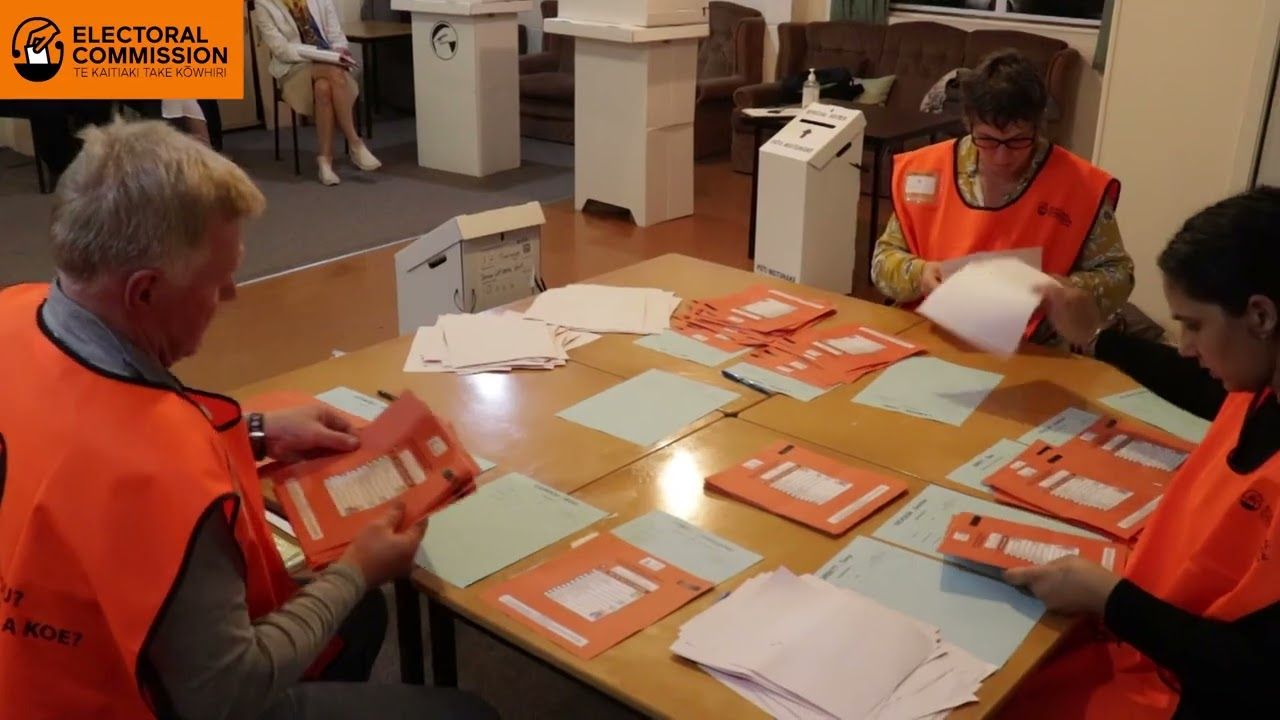
Electoral officers work through the final checks and counting of special votes ahead of New Zealand’s official election results. Photo/Vote NZ
That matters because the difference between a government being able to command confidence in Parliament and needing another party's support could come down to just one or two seats.
Special votes have changed the make-up of Parliament at previous elections. In 2017, 2020 and 2023, National lost two seats after special votes were counted, while Labour, the Greens and Te Pāti Māori gained seats.
Special votes have tended to favour left-leaning parties, although that is not guaranteed.
Massey University politics professor Richard Shaw says special voters are often “typically younger; typically more mobile (e.g. renters) typically a little less attached to institutional politics”.
He says those groups don't always break left but they tend to. Or they tend not to engage at all.
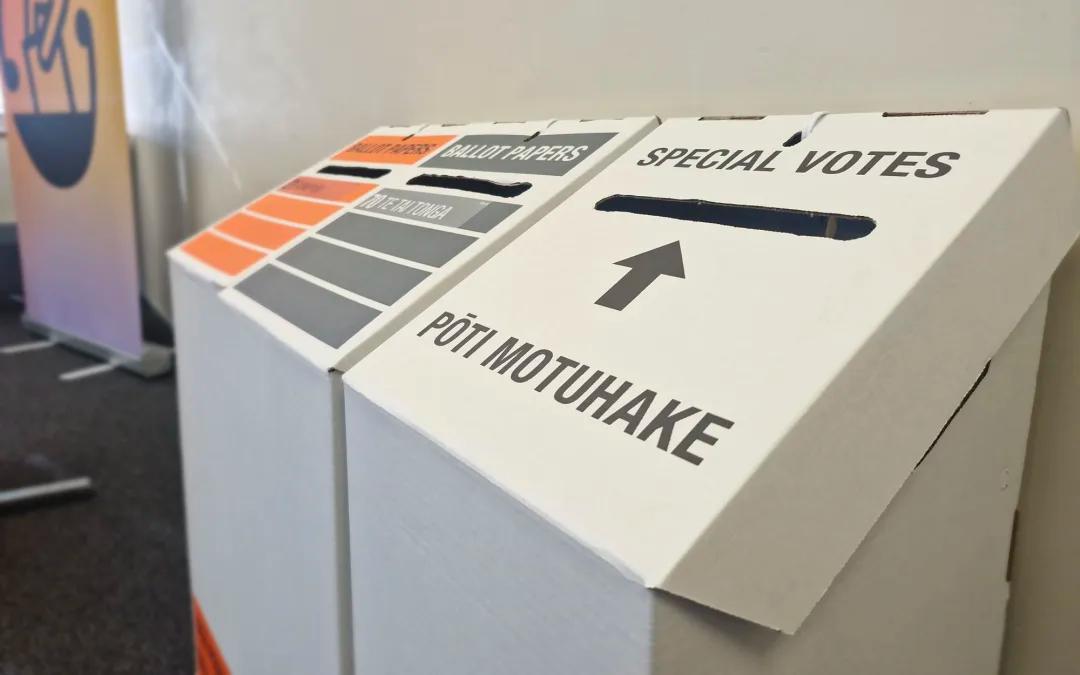
Special votes are being counted as New Zealand waits for the official 2026 election result. Photo/RNZ/Russell Palmer
There are extra checks for special votes while overseas votes can take longer to arrive. By law, up to 10 days are allowed for overseas votes to be returned.
The Electoral Commission says accuracy is more important than speed.
“We understand how important it is to deliver timely results, and we also need to make sure they are accurate,” Chief Electoral Officer Karl Le Quesne said.
This year's election also introduced a change to the enrolment deadline, with voters required to enrol by 25 October rather than being able to enrol up to election day.
The government said the change would help improve the electoral process, while opposition parties criticised it as making voting harder for some people. The Electoral Commission says it has not yet completed its analysis of the lower-than-expected number of special votes.
Not necessarily. If the final numbers remain close, a recount could be requested in an electorate where the margin is tight.
Then come the coalition talks. In 2023, National, ACT and NZ First negotiated for three weeks after the final results before reaching a government agreement.
This time, Opportunity could be the party both sides need to win over, depending on where the final numbers land.
For Pacific communities, the make-up of the next Parliament matters well beyond the election result itself. The incoming government will shape policy on cost of living, housing, immigration, climate change and New Zealand's relationship with Pacific nations.
So Friday's count should finally show which parties have the strongest hand.
But if the numbers are close enough, the election may be decided by the votes counted last and the government may not be decided until the negotiations that follow.