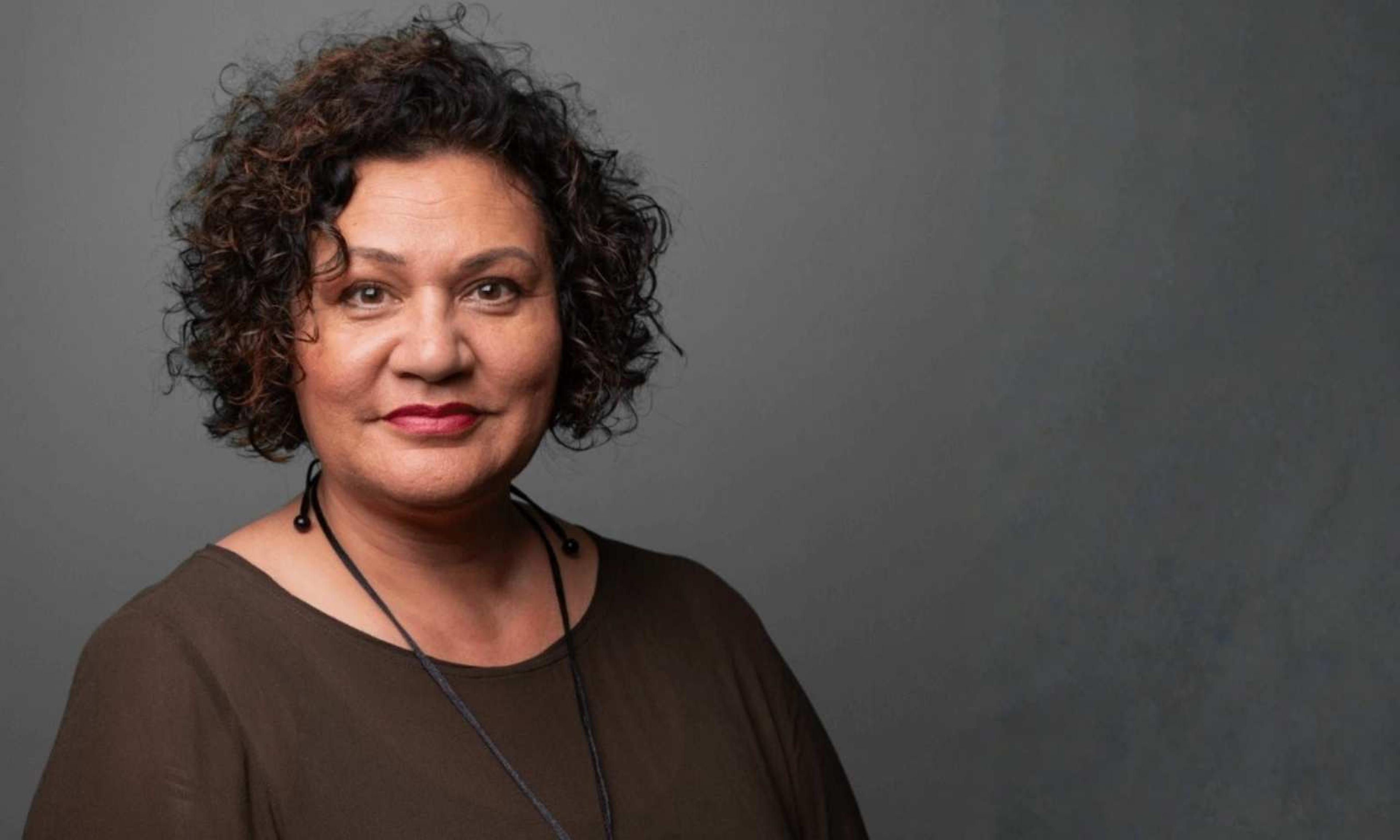
Professor Tracie Mafile’o.
Photo/Mana Pacific Consultants
Community
Academic Tracie Mafile’o acknowledges her late father’s legacy
Recognised in the New Year Honours, she reflects on those who influenced her lifelong commitment to education, community, and research.

Aui'a Vaimaila Leatinu'u
Published
02 January 2026, 9:41am
Share
Copy Link
Top stories
Fiji's army chief warns the gun must never overrule the ballot
Christine RovoiMon, 12 Oct

When Professor Tracie Mafile’o reflects on her appointment as a Member of the New Zealand Order of Merit (MNZM), her thoughts turn first to her late father and the values he carried with him from Tonga.
A Tongan-Pālagi academic and social researcher, Mafile’o has been recognised in the 2026 New Year Honours for her services to Pacific and tertiary education.
The annual honours acknowledge people who have made major contributions to their communities, with 177 recipients named this year, including 63 appointed as a MNZM.
Of those recognised, only eight are of Pacific descent, five women and three men, representing about four per cent of all recipients.
For Mafile’o, a professor of social work and co-founder of Mana Pacific Consultants, the recognition promps reflection more than celebration.
“It feels odd because in a way this is just what we do,” she says. “I feel a bit reflective and a little bit awkward, just trying to make sense of it.”
Listen to Tracie Mafile'o's full interview below.
Her career spans over 30 years across academic, social services, and research, with a consistent focus on amplifying Pacific voices and advocating for Pacific-led approaches.
A significant achievement in that work has been the co-development of the cultural humility framework, designed to support the children’s workforce to be more responsive to families.
Mafile’o says the framework makes a tangible difference by focusing on both individual practitioners and the organisations and systems they work within, encouraging reflection, accountability, and culturally grounded practice.
Mafile’o attributes her success to the foundations laid long before her academic journey began. Her late father, Mohetau (Joe) Mafile’o, migrated from Tonga to New Zealand in the late 1960s, carrying with him a deep belief in education as a pathway to opportunity.
“I acknowledge my late father, who really embedded for me a passion for education. I've always loved learning. I've had the privilege of learning in different spaces and having great mentors. I think of Emeritus Professor Robyn Munford, Dr Leland Ruwhiu, Wheturangi Walsh-Tapiata,” she says.
“And Reverend Mua Strickson-Pua, who created some important moments and workshopped with us Pasifika Bachelor of Social Work students about relearning and bringing our cultural knowledge and our lived experience into our work as well.
“Those are such important foundations and kind of shaping how I've continued on or what I've chosen to do, you know, since that time in the early 1990s.”
Having worked in universities for 25 years, Mafile’o says there is a vital need for Pacific communities to lead their own research agendas. She says this shift toward self-determination allows for "bringing our ways of knowing into our academic work".
“When I was coming through my degree, there weren't a lot of academic leaders in the university who were Pacific. I think that's really changing. When I look at the work that a lot of the younger people coming through are doing in Master’s and PhDs, it's so exciting,” Mafile’o says.

Mafile’o says Pacific communities leading their own academic research agendas is crucial. Photo/Unsplash
“To be a part of this community of Pacific scholars who are forging into new spaces, contributing to the broader disciplines and the global knowledge, but bringing their lived experience.”
For Pacific people entering university in 2026 and beyond, Mafile’o encourages an approach to learning that goes deeper than just completing a qualification.
“A lot of the time, you can complete a university course, but not really own your own learning. Sometimes that means pushing back on things, going an extra mile, leaning into the support you need, but finding your own passion in your learning. Sometimes that's about remembering where we've come from and where we want to go.”
For more details about the other Pacific recipients, click here.