
Tofiga Fepulea’i brings the laughs while taking top honours at Arts Pasifika Awards
Aui'a Vaimaila Leatinu'uFri, 23 Oct

Greg Traill says strong labour laws and employer oversight mean Fijian seasonal workers in NZ are well supported, with help available if issues arise.
Photo/Supplied/RNZ Johnny Blades
Greg Traill says strong labour laws and close employer oversight mean most Fijian seasonal workers are well looked after, with support in place if problems arise.




Fijian seasonal workers in New Zealand face fewer problems than in some other countries, according to Fiji’s new Country Liaison Officer (CLO) for the Recognised Seasonal Employer (RSE) scheme.
Greg Traill, who has been in the role since December, tells Elenoa Turagaiviu on PMN Fiji that while issues can arise, they are not on the same scale as concerns reported elsewhere.
“There’s maybe one or two issues but nothing major compared to some of the other countries (like) in Australia, from what they experience,” he says.
“New Zealand is very rigid and the law is very strong in New Zealand. The companies are well monitored for any issues or irregularities that may occur.
“So I can assure everybody that our workers are being looked after,” he says.
The RSE scheme has operated in New Zealand for about 20 years. It allows Pacific workers, including Fijians, to fill labour shortages in horticulture and viticulture while earning income for families back home.
Watch the full interview with Greg Traill on PMN Fiji's Facebook page.
There are currently just under 1000 Fijian workers in the country under the scheme.
Most are based in Hawke’s Bay and Marlborough, with smaller numbers in Otago and Palmerston North.
Traill focuses on “pastoral care, compliance, mediation and safeguarding the welfare” of Fijian workers.
“I’m there as their go-to person, as a Fijian representative of the Fijian government, to ensure that they are well looked after and listened to,” he says. “It was so exciting to them to have our first Fijian CLO.”
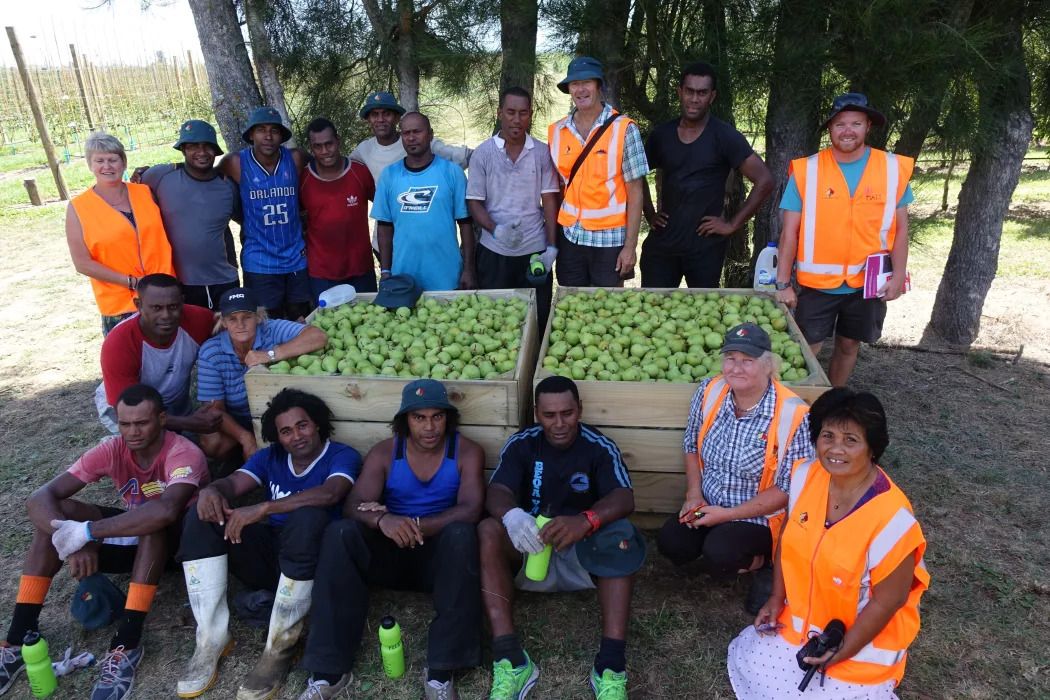
Recognised Seasonal Employers scheme workers from Fiji taking a short break from picking pears in a Twyford orchard owned by RJ Flowers. Photo: RNZI/Johnny Blades
Many Fijian workers return for multiple seasons, some up to seven or eight times, which Traill says shows the scheme is working for both workers and employers.
When concerns arise, workers are encouraged to first approach their company pastoral care teams and supervisors. If issues remain unresolved, Traill steps in to help mediate and advocate.
“There’s always going to be some issues. We try and solve them,” he says.
During his visits, he reminds workers to follow New Zealand laws and stay focused on their goals.
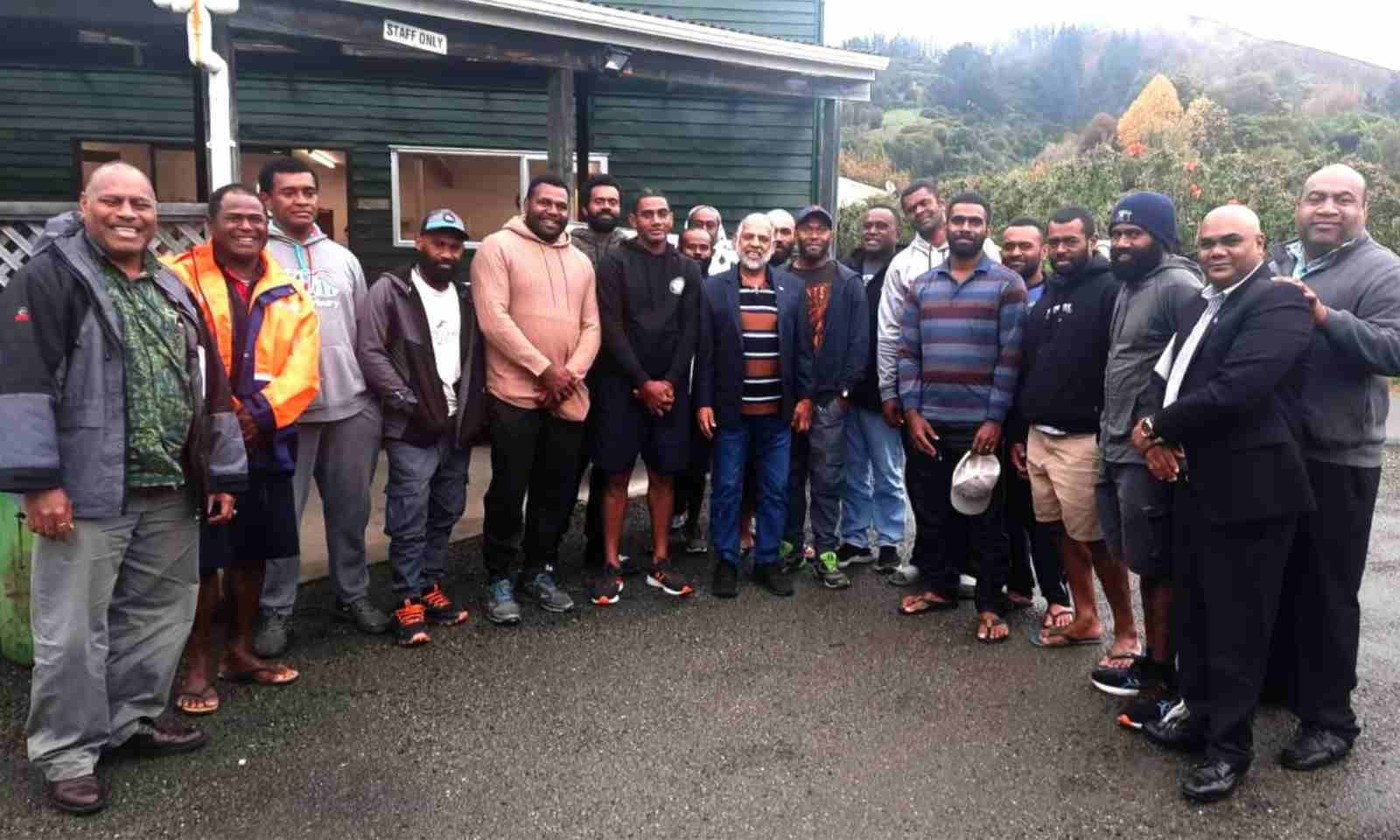
Fiji's Employment Minister Agni Deo Singh, centre, and officials from other Fijian government departments, including the high commission in Wellington, visit their RSE workers in NZ in May 2024. Photo/Fiji Government.
He also encourages workers to use training opportunities available while in New Zealand. In Hawke’s Bay, free courses through the Eastern Institute of Technology (EIT) provide training in forklift operation and machinery.
“Those courses are free, so a lot of them are encouraged to take up these free courses so that their skill level is enhanced for when they return back.”
For Fijians considering applying to the RSE scheme, Traill says the programme provides an opportunity to earn, save and return home with a plan.
“I would encourage them very much to apply, come and experience working in New Zealand, saving money, having a project to go back to and building your house as a result of your hard work,” he says.