

Pacific workers are at the crossroads of tradition and technology as AI adoption surges across Asia. UN warns the region risks being left behind without urgent investment in skills and digital access.
Photo/dionhinchcliffe.com/DALL*E 3
Business
Pacific workers at risk as AI boom widens inequality, UN warns
Pacific nations could be left behind in the global AI race, with women and young people most exposed to job losses as wealthier countries surge ahead.

Christine Rovoi
Published
03 December 2025, 4:20pm
Share
Copy Link
Top stories

Tongan mother turns to sign language to rebuild life with deaf daughter
Khalia StrongFri, 08 May


‘Saumolia’ brings ocean kings, curses and identity battles to South Auckland stage
Atutahi Potaka-DewesFri, 08 May
Top stories
Tongan mother turns to sign language to rebuild life with deaf daughter
Khalia StrongFri, 08 May
‘Saumolia’ brings ocean kings, curses and identity battles to South Auckland stage
Atutahi Potaka-DewesFri, 08 May
Pacific workers face an uncertain future as artificial intelligence (AI) sweeps across the region, threatening millions of jobs in countries already struggling with limited digital access and infrastructure, the United Nations Development Programme (UNDP) has warned.
From farmers in Fiji to office staff in Papua New Guinea (PNG), the UN says communities risk being left behind while wealthier nations reap the economic rewards of AI.
Philip Schellekens, Chief Economist for UNDP in the Asia and Pacific region, says that while countries such as Singapore, South Korea, and China are reaping massive benefits from AI investment, poorer nations with limited digital infrastructure and literacy face “significant exposure” to job losses and economic inequality.
“Countries that invest in skills, computing power and sound governance systems will benefit; others risk being left far behind,” his statement reads. “We’re not starting from a level playing field in this region… this is the most unequal region in the whole world.”
The UN report highlights that women and young people, groups that make up a large portion of the Pacific workforce, are most at risk. Without intervention, the wider gains in health, education and income could stall, leaving already vulnerable communities further behind.
For many Pacific countries, the challenge is not just automation, but the lack of basic digital access. In PNG, Vanuatu, Fiji, and other island nations, frontline health workers, teachers, and farmers depend on rudimentary technology, making high-tech AI developments largely inaccessible.
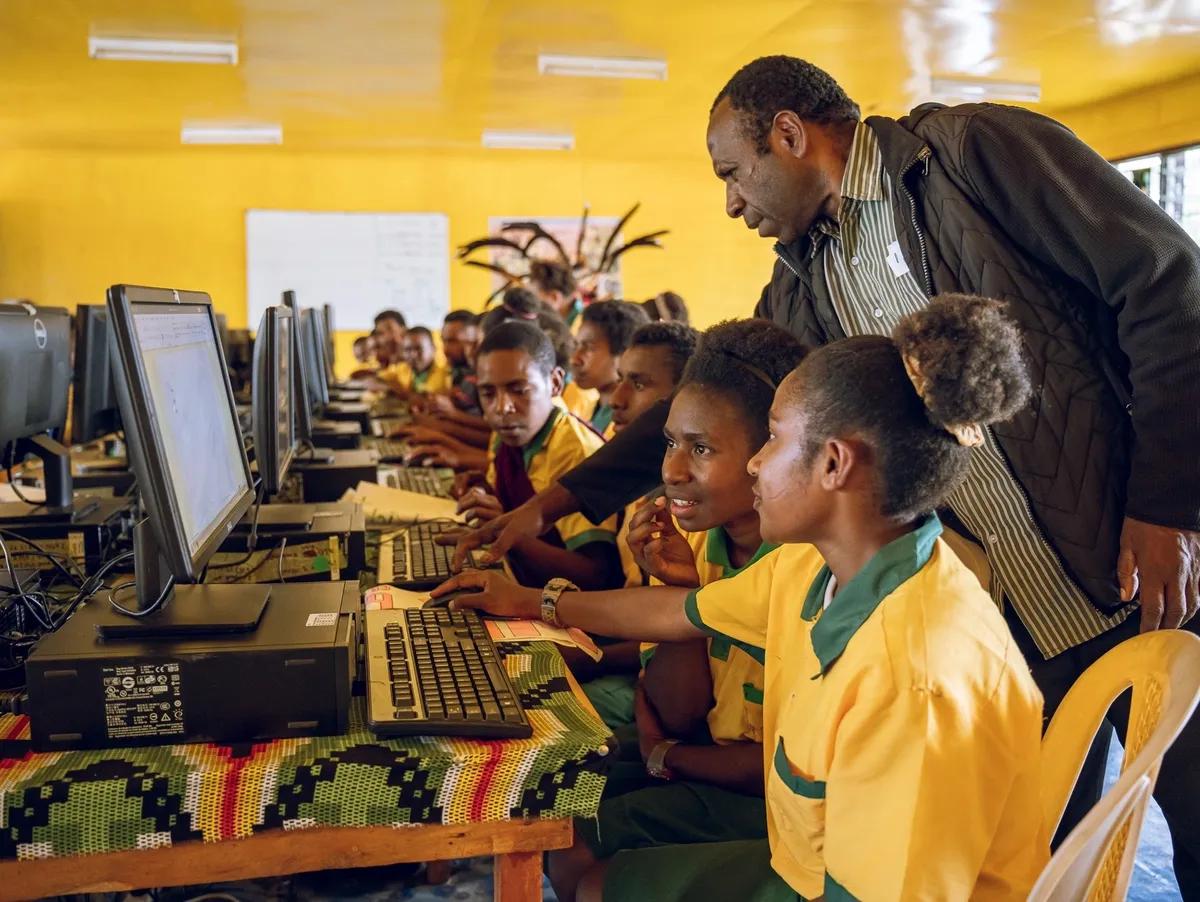
USP students say clear AI guidelines are needed to ensure young people like these from PNG build skills rather than become dependent on automated tools. Photo/litehausinternational.org/pacific
Leaders at the University of the South Pacific (USP) say the region must urgently prepare its workforce for an AI-driven future, warning that the technology carries both opportunity and risk for communities already facing digital and economic disadvantage.
Professor Pal Ahluwalia, USP's former Vice-Chancellor, says the university has been integrating AI across its programmes, but stressed that the Pacific cannot afford to adopt these tools uncritically.
He warned earlier this year that without safeguards, the region could lose “cultural sensitivity” and human agency, with workers, especially young learners, vulnerable to data privacy breaches and over-reliance on automated systems.
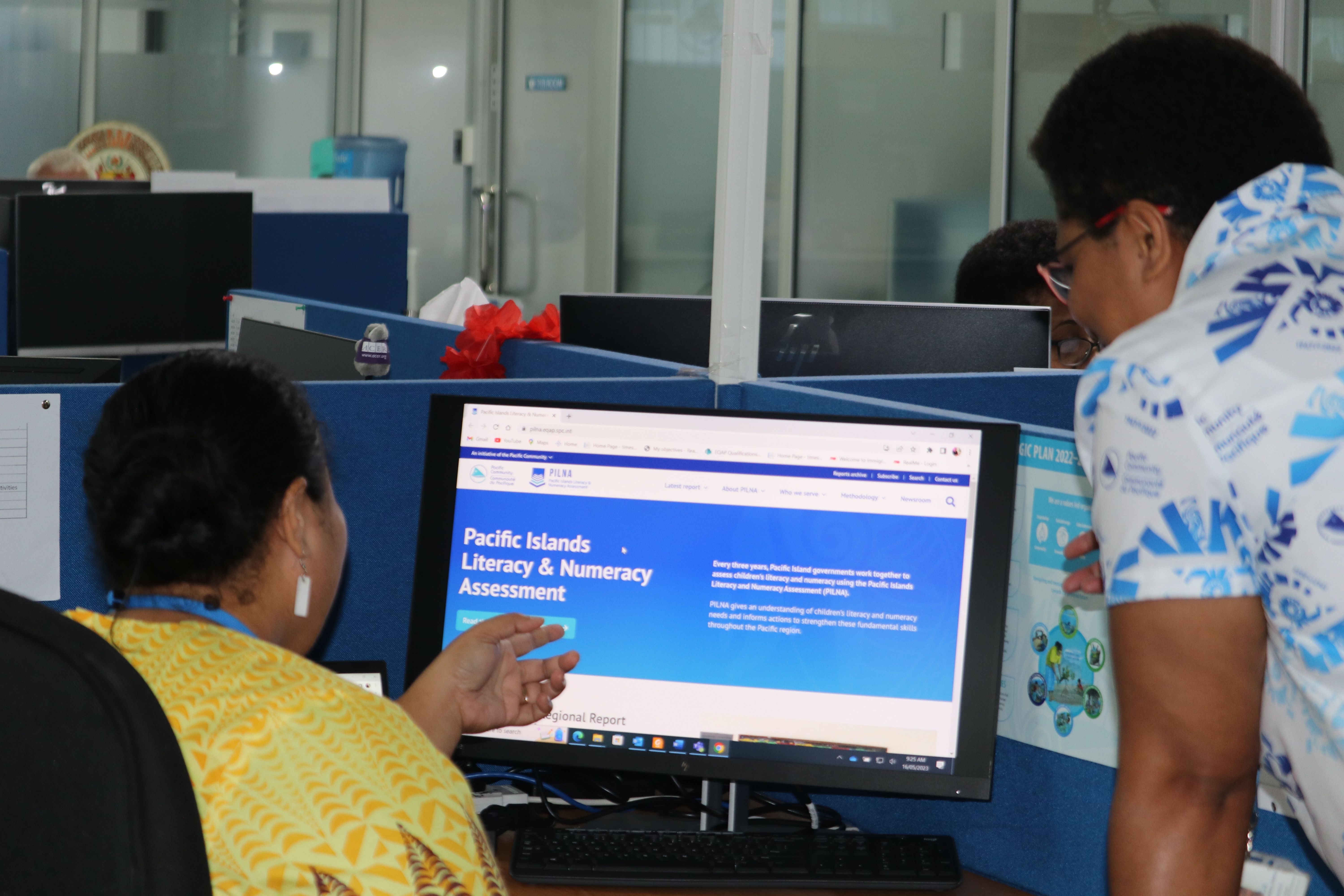
In many Pacific nations, frontline workers still rely on basic tools, highlighting the widening digital gap as wealthier countries accelerate into the AI era. Photo/Pacific Community
He says researchers at USP are already tackling some of the most pressing labour-market issues linked to the AI transition, including how to design and deploy ethical AI systems and develop curricula that teach critical thinking and ethical reasoning, skills he adds Pacific workers will need to remain competitive as automation accelerates.
He says AI could also create new opportunities in ocean and land resource management, sectors central to Pacific economies.
Students share similar concerns. A USP Student Representative reports that young people want clear, formal policies to guide how AI is used in education, warning that without them, students risk becoming dependent on AI rather than developing the creative and analytical skills needed in a changing job market.
At a recent workshop, one educator warned that AI could reinforce existing colonial power structures and even appropriate place-based Indigenous knowledge. "Used carelessly, AI could cause 'intellectual paralysis', leaving Pacific workers doubly disadvantaged as global industries move ahead.
Kanni Wignaraja, the UN's Assistant Secretary-General and UNDP Regional Director for Asia and the Pacific, warned: “AI is racing ahead, and many countries are still at the starting line. The Asia and Pacific experience highlights how quickly gaps can emerge between those shaping AI and those being shaped by it.”
The UN agency estimates that AI could contribute nearly US$1 trillion (NZ$1.74t) in economic gains across Asia over the next decade, lifting annual GDP growth by around two percentage points and boosting productivity in sectors such as health and finance.
But it adds that these benefits are concentrated in countries with advanced infrastructure, leaving Pacific workers at risk of displacement without targeted skills training.
The UNDP is urging governments across the region to prioritise inclusive policies, ethical deployment of AI, and investment in digital literacy to ensure that the technology benefits all citizens, not just those in wealthy urban centres.
“Basic voice-based tools and offline-capable applications could make a real difference for Pacific communities,” Schellekens says. “The priority isn’t necessarily building the most advanced AI, but ensuring people can use the technology available to improve daily lives and livelihoods.”
With over 55 per cent of the world’s population living in the Asia-Pacific, the stakes are high.
UN economists have warned that without urgent action, the AI revolution risks deepening long-standing inequalities between rich and poor nations - a modern echo of the industrialisation divide of the 19th century.
This story has been updated to state that Professor Pal Ahluwalia is the former Vice Chancellor of the University of the South Pacific, and not VC as earlier reported.