Fiji's government defends electoral reforms as Law Society warns of ‘chilling effect’
Christine RovoiThu, 12 Nov

Fiji Communications Minister Manoa Kamikamica has urged government agencies and businesses to take a closer look at the technology providers they rely on, as the global Microsoft outage disrupts services in Fiji.
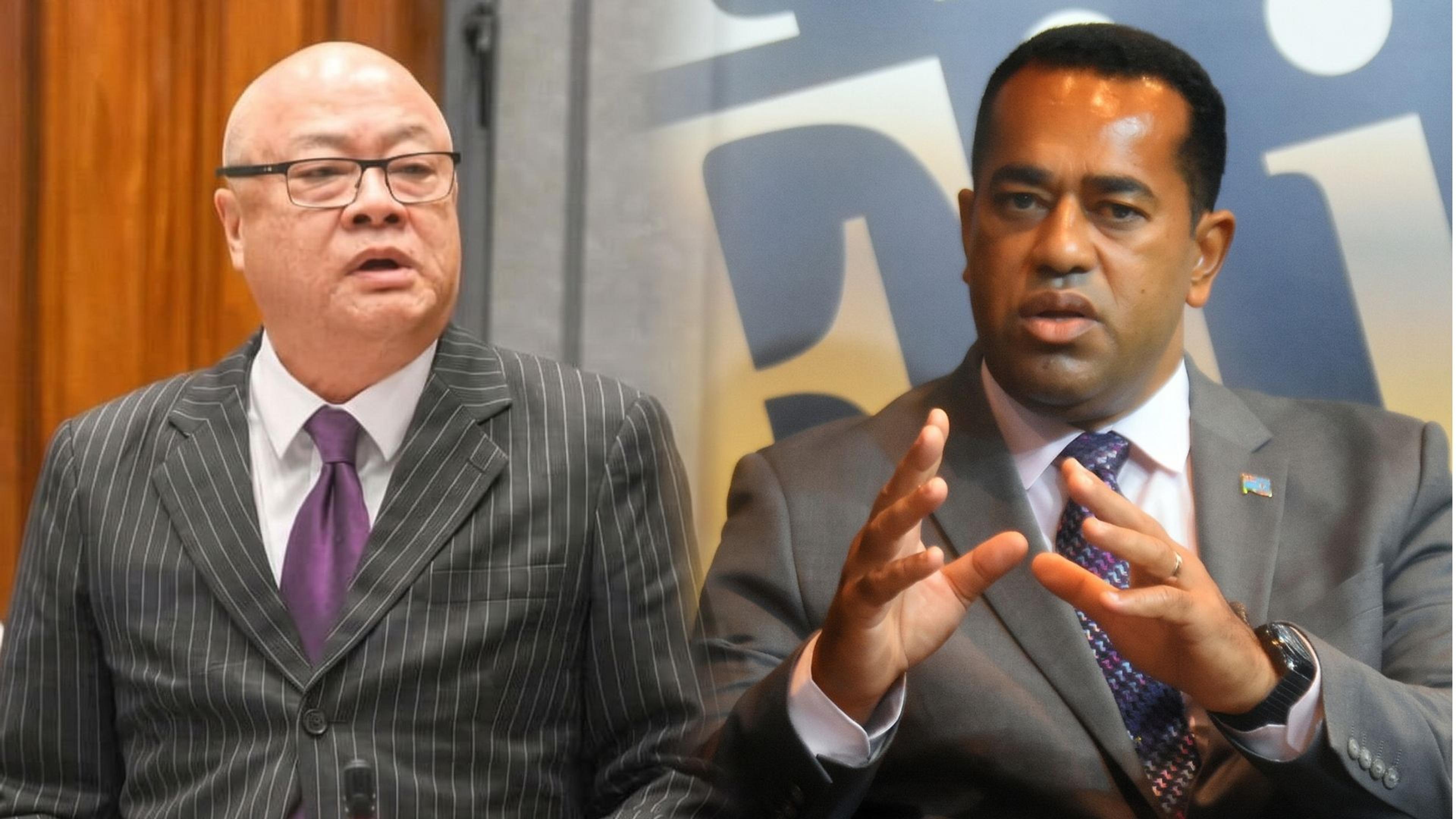
Photo/PMN News composite
Fiji agencies are among those dealing with disrupted services, raising fresh questions about the region’s reliance on overseas tech giants.




The global Microsoft outage is beginning to ease but its effects are already being felt in the Pacific.
Key government agencies in Fiji were forced to warn customers that services have been disrupted.
The Land Transport Authority (LTA) and the Fijian Competition and Consumer Commission (FCCC) confirmed service interruptions on Friday, apologising to customers and directing people with urgent queries to their online channels while the issue was being addressed.
The disruption came just a day after Communications Minister Manoa Kamikamica announced plans for a 24-hour government security operations centre to help protect Fiji’s critical digital infrastructure.
Kamikamica also urged government agencies and businesses to take a harder look at the technology providers they rely on before signing contracts.
“To government buyers and private companies alike, ask the security question before you sign the contract,” he said.

Microsoft is working to restore services after a global outage disrupted Outlook and Microsoft 365, with the company reporting limited recovery in some regions. Photo/Microsoft
Microsoft says it has started bringing some affected servers back online and is seeing limited recovery in some regions.
“We've begun returning a portion of the affected servers to service, and they're remaining stable so far. We've also shifted traffic and connections to alternative pathways wherever possible and have observed limited recovery in some regions.”
For Pacific countries, where government services, businesses and everyday communications can depend heavily on a small number of global technology companies, the outage is more than an inconvenience.
It has exposed how quickly a problem with one major provider can flow through to services people rely on.
In New Zealand, the disruption has affected Outlook and Microsoft 365 with concerns about the knock-on effect for businesses trying to keep payments, contracts and other work moving.
“There'll be lots of businesses who have financial commitments to make, and some of those will involve, you know, email actually operating for it to work properly, or access to varying other, you know, Microsoft systems," Paul Spain, chief executive of Gorilla Technology, told RNZ.
He said the outage could have an immediate impact on business operations. But the disruption has also reopened a bigger question for New Zealand and the Pacific: whether countries should be doing more to build their own digital capability rather than relying so heavily on overseas providers.
Don Christie, managing director at local software development firm Catalyst, said: “The thing about those countries is that they've been very deliberate about their IT strategy. They haven't just waited for the next thing to come out of Amazon or the next thing to come out of Microsoft. They've actually gone out. They've stimulated their local digital sectors.”
Christie said New Zealand's dependence on large overseas technology companies was part of the problem. “But the market is two things. One, it's dominated effectively by monopolies that are not New Zealand-based. And number two, the government itself is effectively a monopoly buyer.”

Don Christie says New Zealand's reliance on overseas technology giants leaves the country exposed when major global platforms experience outages. Photo/Catalyst IT
New Zealand's Public Service Commission said agencies experiencing problems had been told to work with Microsoft as the Government Digital Delivery Agency assesses the impact on public services.
Australia is also dealing with the fallout, with cybersecurity experts warning that the biggest risks could continue even after services return.
“Out of frustration or urgency, employees may turn to personal email accounts, unmanaged devices or unapproved messaging and file-sharing services to keep working," Associate Professor Ali Yavari of Swinburne University of Technology warned. “Those consequences can outlast the outage itself.”
For Fiji and the wider Pacific, Friday's disruption is a reminder that when a major global platform goes down, the impact does not stop at the borders of the companies that run it.