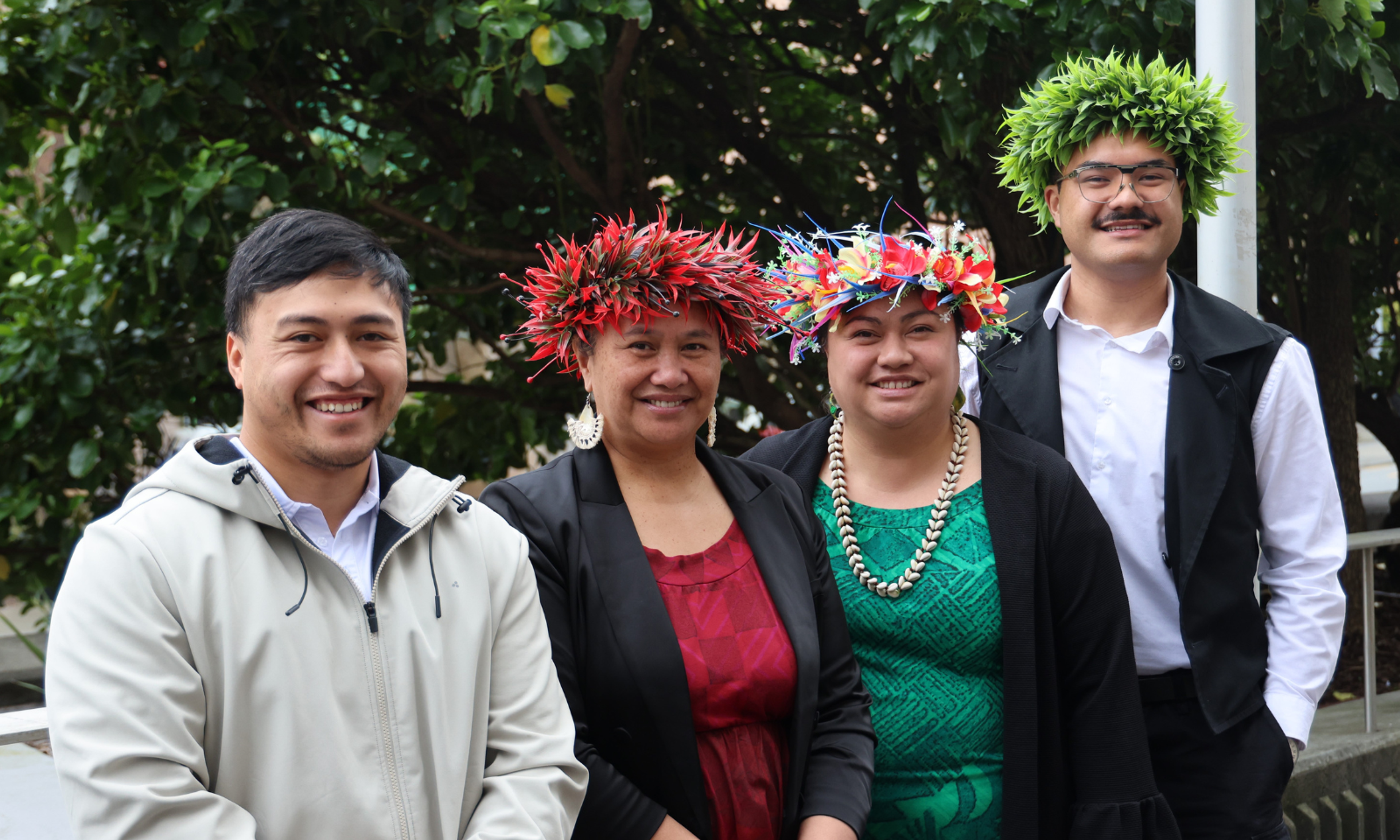
Kauri Tearaura (right) says leadership through service is a key value of Pacific culture.
Photo/Supplied
Summer
Why Pacific values could be your career advantage in 2026
As the new year begins, Pacific leaders say cultural strengths like service, empathy, and community may open doors for workers.

Khalia Strong
Published
14 January 2026, 11:17am
Share
Copy Link
Top stories
‘Vanuatu is not for sale’: Government hits back at New Caledonian MP
Christine RovoiTue, 06 Oct
Pacific women have waited long enough for equal pay in NZ, says former commissioner
Thomas Tarurongo WynneTue, 06 Oct
Tonga uses anti-terror law for the first time to convict gang leader
Christine RovoiTue, 06 Oct
Top stories
‘Vanuatu is not for sale’: Government hits back at New Caledonian MP
Christine RovoiTue, 06 Oct
Pacific women have waited long enough for equal pay in NZ, says former commissioner
Thomas Tarurongo WynneTue, 06 Oct
Tonga uses anti-terror law for the first time to convict gang leader
Christine RovoiTue, 06 Oct
Summer is officially underway. This year's calendar has something for everyone - from sports, art, music, faith, and food to families and friends enjoying a fun day out and creating lasting memories.
Your Pacific heritage isn’t just part of who you are, it could be one of your biggest strengths at work this year.
As people take a breath over summer and think about the year ahead, many Pacific workers are reflecting on the hard moments of 2025, from the cost-of-living pressure to the challenge of balancing work, family, and community.
But Pacific leaders say cultural values may be the key to opening new doors in 2026. Pacific people now make up 8.9 per cent of New Zealand’s population, and the push for stronger representation in leadership continues.
Kauri Tearaura, diversity, equity and inclusion lead at the Department of Internal Affairs, says Pacific people bring strengths that are increasingly needed across Aotearoa’s workforce.
“Pacific peoples bring this very innate and intrinsic understanding of service and understanding of leadership through service.
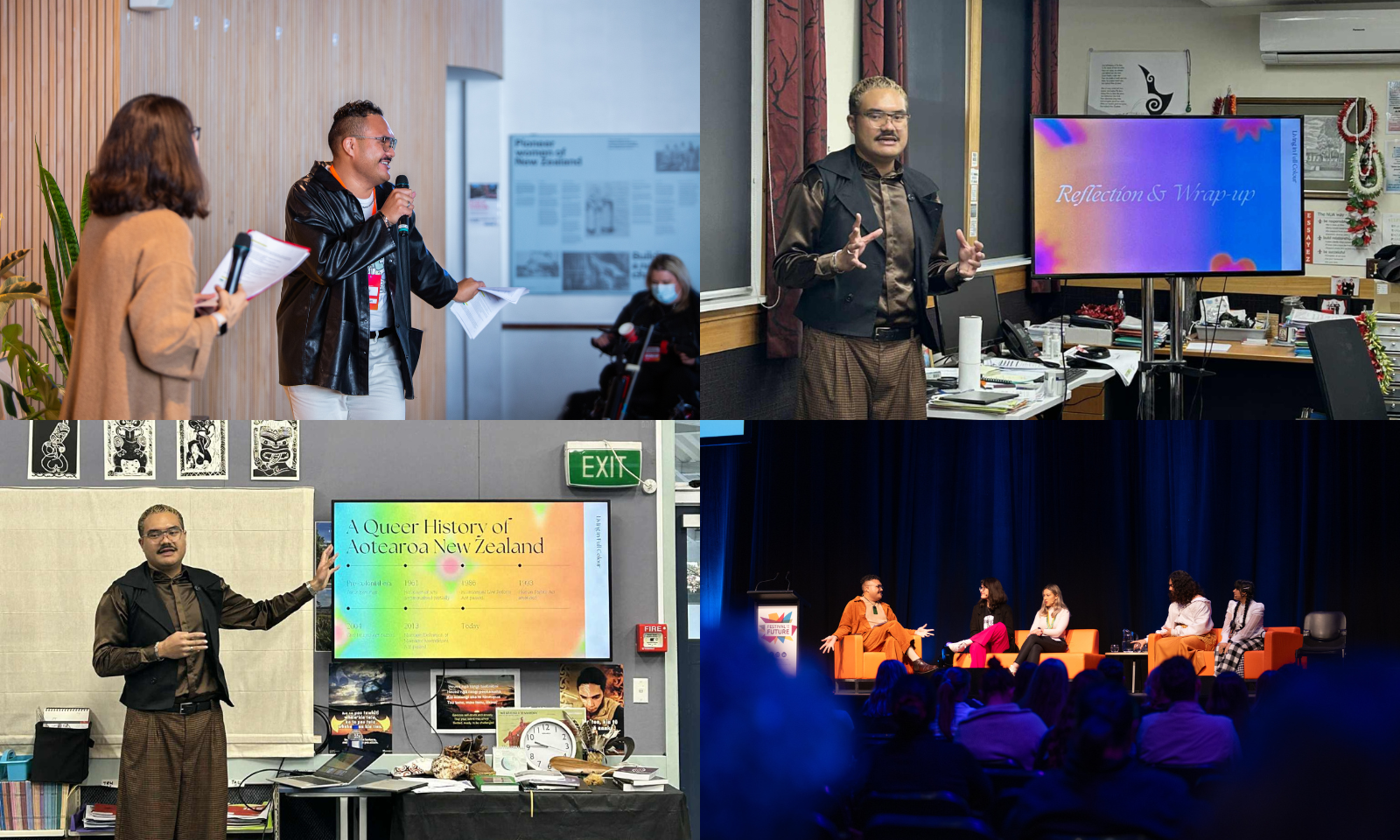
Kauri Tearaura says Sāmoan values of service is a key leadership skill. Photo/Supplied
"If you're growing up very closely to your Pacific peoples and Pacific communities, that’s something that shows up naturally, that doesn't necessarily show up elsewhere.”
The Sāmoan proverb is often quoted as a mantra: O le ala i le pule o le tautua - The path to leadership is through service.
Tearaura, who has family links to Tongareva and Avarau in the Cook Islands, urges Pacific workers to embrace their cultural strengths and take bold action to overcome self-doubt or imposter syndrome.
“You have nothing to lose and everything to gain. Every opportunity that I've had has come from hitting the submit button… earlier than my self-doubt had set in,” he says.
“When I felt like I didn't belong… the change came from realising that taking a risk on myself was an act of service. To push the imposter syndrome and seize the opportunities in front of you, you also have to serve yourself.”
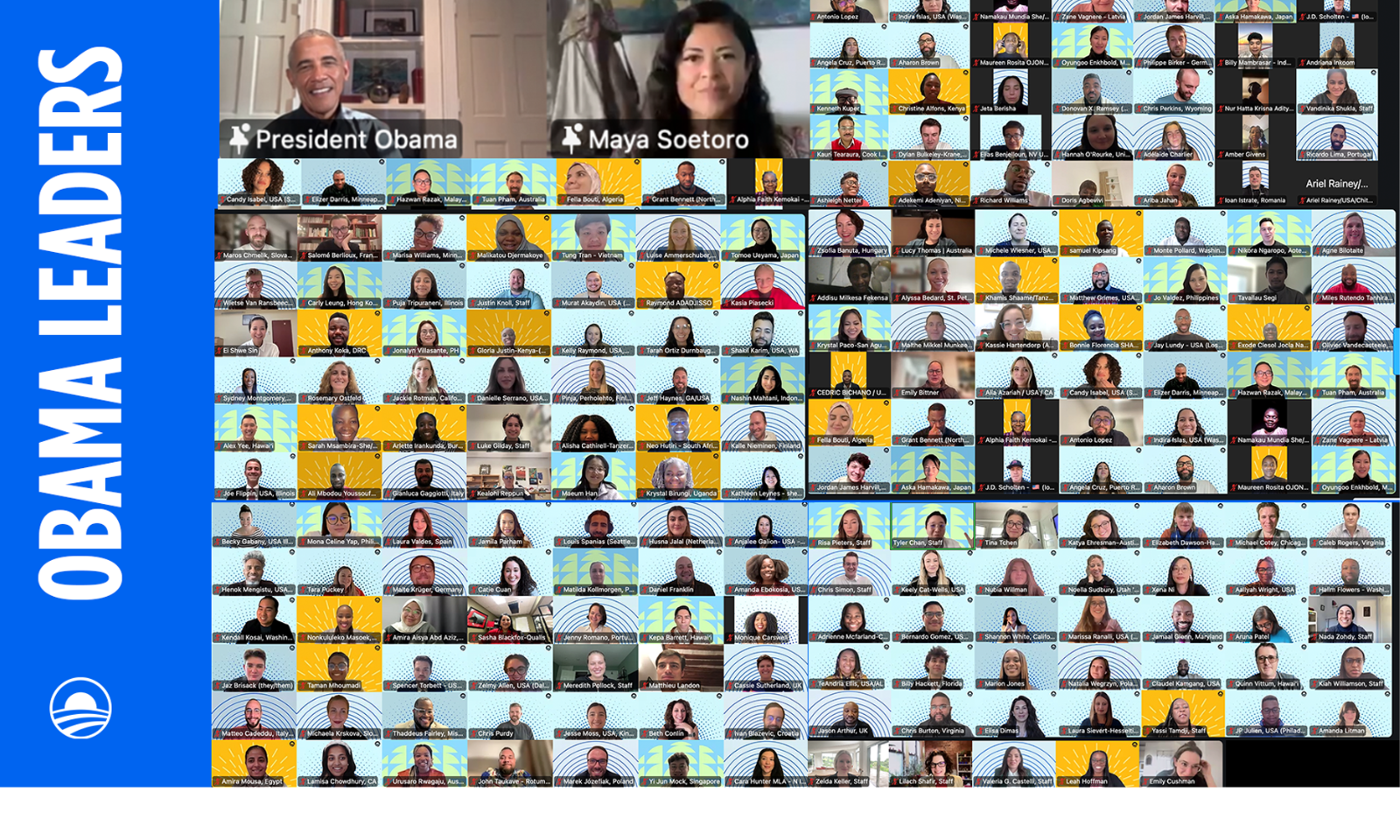
Kauri Tearaura was selected to be the 2025-2026 Obama Leader for the Asia-Pacific region. Photo/Supplied
Tearaura only realised how distinct these values were when they stepped onto the world stage as the 2025-2026 Obama Leader for the Asia-Pacific region. Tearaura credits their community and upbringing for fueling their success.
“I found that I'd taken my understanding of service and servant leadership for granted because it's not necessarily so intrinsic to everyone everywhere. I often don't necessarily lead with confidence. But with purpose. So long as you have a strong conviction, a strong community behind you, you have all that you need to move forward into whatever it is that you're wanting to pursue.”
Tearaura says these cultural strengths, service, empathy, humility, and strong community values, are especially vital as workplaces evolve.
“AI can’t replace that person-to-person, human-to-human connection. We're always going to need those kinds of skills,” he says.
"But AI can help by making our work easier, such as recognising patterns or providing us with information. The key is combining technology with the strengths that Pacific peoples naturally bring to the table: empathy, service, and leadership.”
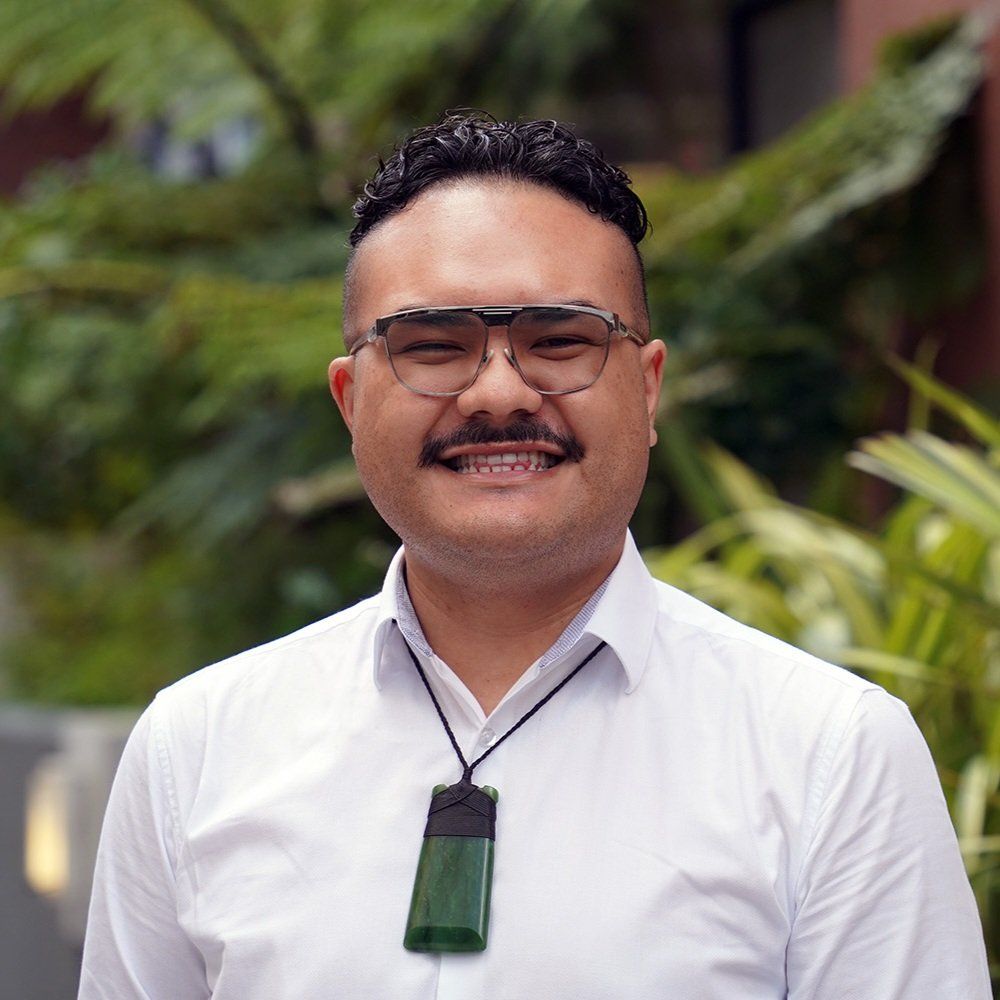
Kauri Tearaura says change is possible if organisations invest in real support and visibility. Photo/Supplied
Pacific representation in leadership
Despite these strengths, Pacific workers are still concentrated in low-paid roles. The Inland Revenue Department reports Pacific people make up 9.3 per cent of the country’s workforce; however, only 3.7 per cent are in management positions and 2.9 per cent in senior leadership.
The report notes: “In the past year, there has been a reduction in representation in all leadership roles, and as a result, an increase in the pay gap, although minimal. This highlights a need to continue focusing on representation of Pacific peoples in leadership roles.”
Tearaura says this is “incredibly frustrating”, but change is possible if organisations invest in real support and visibility.
“We’re trying to tell the story of existing Pacific leaders… because we are here, but our stories aren't necessarily being told. All across the public service system, we're seeing consistently that Pacific peoples have the highest pay gap of any ethnic group. More often than not, they're working in our kind of entry-level positions and not necessarily progressing through leadership.”
Representation at senior levels is also crucial for inspiring the next generation. Tiana Epati, recently appointed King’s Counsel, says seeing Pacific leaders in high-level roles shows others what is possible.
Listen to Tiana Epati's full interview below.
“When you see someone who is part of the conversation, at the table, or holding the most senior role in the room, it gives someone comfort that they'll be understood, that they'll be heard and seen,” she says.
Reflecting on her own journey, Epati recalls a conversation with young Pacific lawyers a few years ago.
“I just said, ‘What about one of us as a King's Counsel?’ and it hadn't even crossed their minds. They couldn't even conceive of it, which was a little bit sad. And I just remember thinking, ‘right, we have to do this’.”
Tearaura and Epati’s experiences show that leaning into cultural strengths and pursuing opportunities boldly can open doors for both individuals and communities.