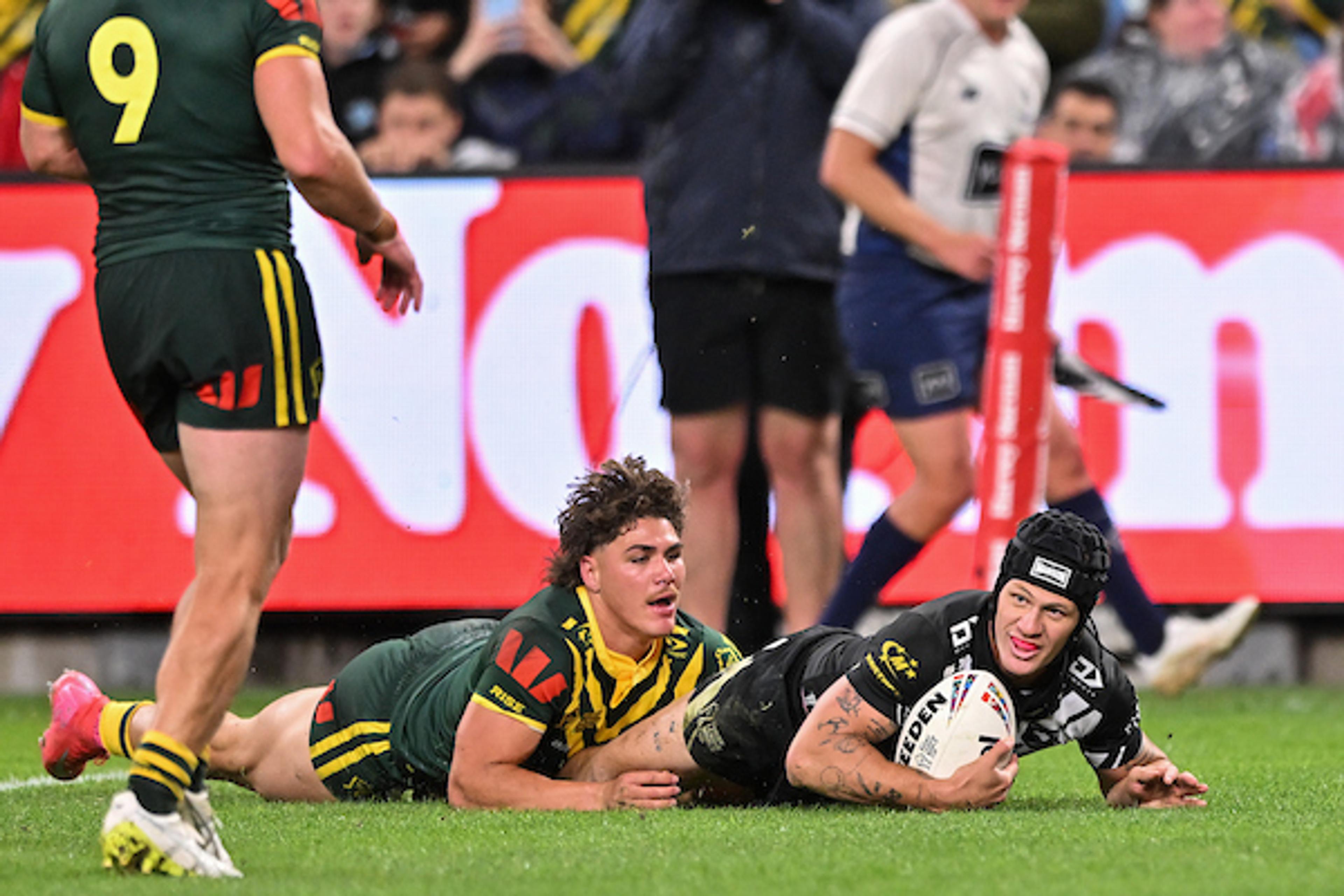
Kiwis suffer last-gasp heartbreak as the Kangaroos snatch World Cup opener
Christine RovoiFri, 16 Oct
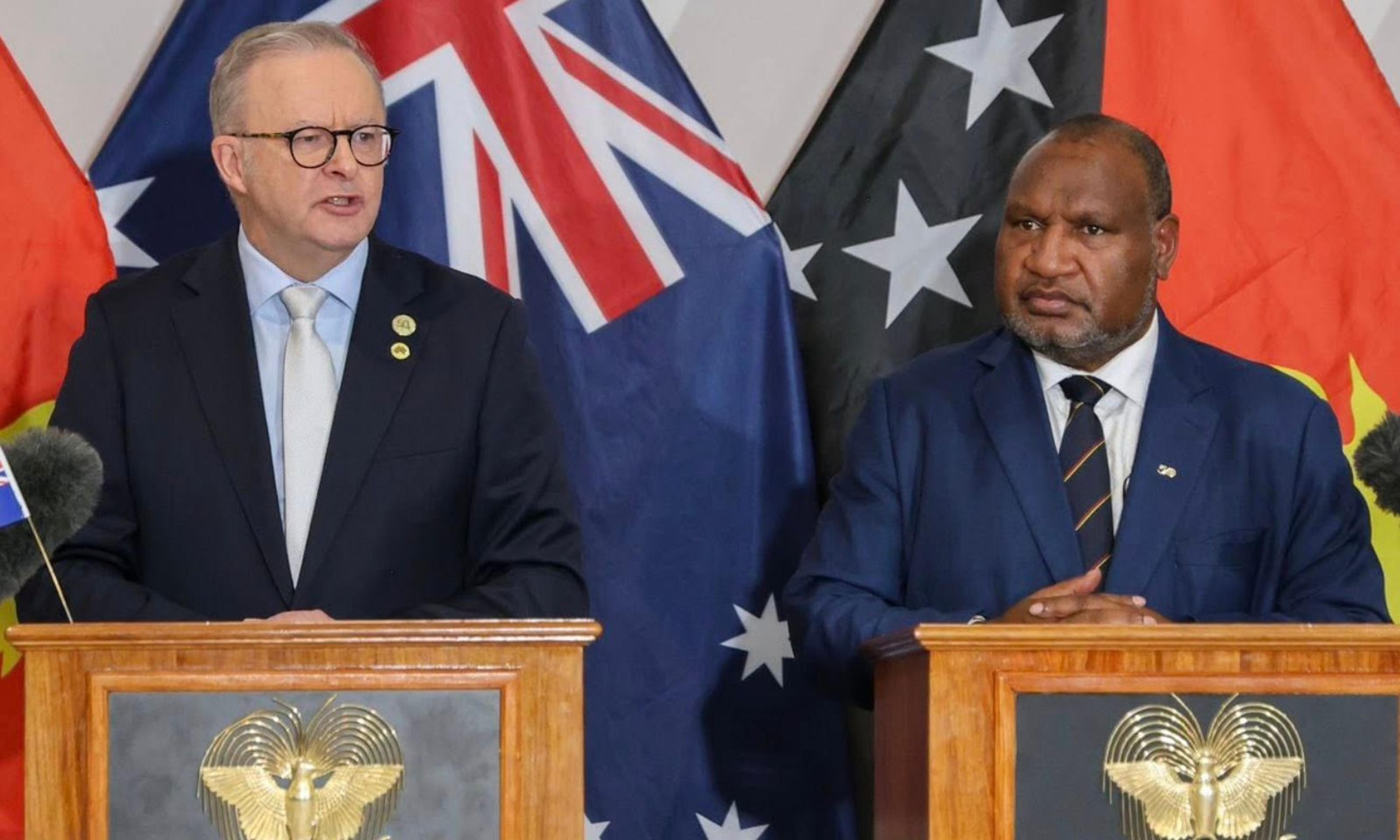
Australian Prime Minister Anthony Albanese and Papua New Guinea Prime Minister James Marape in Port Moresby in 2025: Both leaders are backing the Pacific Rugby League Partnership launched last week and wider investment in the sport across the region.
Photo/Pat Conroy/file
Canberra is using sports as a strategic tool to deepen its influence in the Pacific but critics warn the focus on league could leave rugby union nations such as Fiji looking elsewhere, including China.



Australia's biggest sporting investment in the Pacific is about far more than rugby league.
The ABC has reported that behind Australia's recent A$600 million (NZ$720.08 million) Pacific rugby league partnership sits what it describes as an "invisible string".
The network says this is an unwritten understanding that Papua New Guinea's National Rugby League (NRL) franchise could be withdrawn if the country signs a security pact with China.
According to ABC defence and national security correspondent Tom Lowrey, Australian and PNG officials have this unwritten understanding although it is not part of the formal agreement.
The understanding has never been written into the deal but reflects the growing strategic competition between Australia and China across the Pacific.
The 10-year package will fund the launch of the PNG Chiefs while also supporting rugby league development in Papua New Guinea, Sāmoa, Tonga and Fiji.
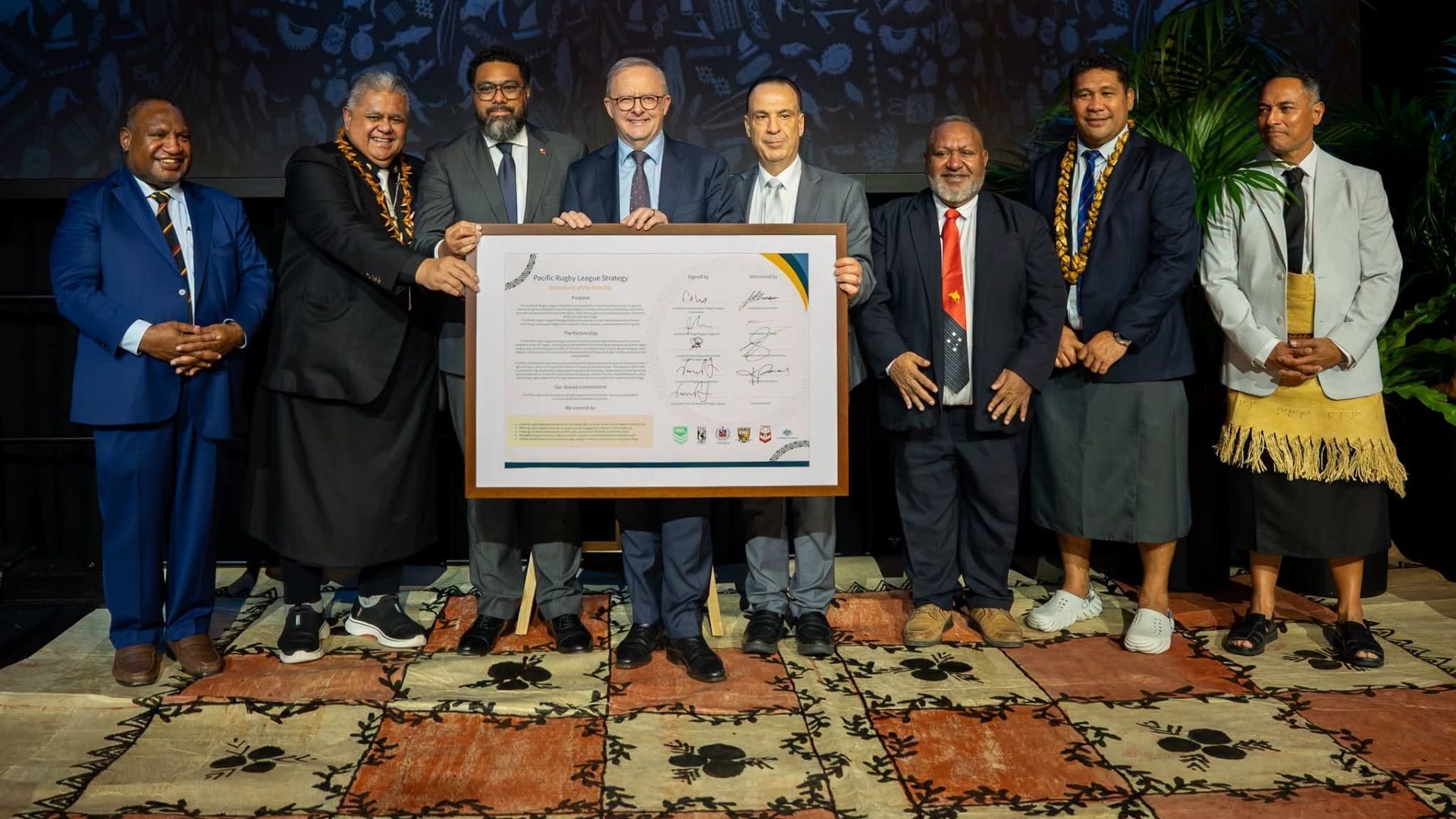
From left: Pacific leaders James Marape (PNG), Laaulialemalietoa Leuatea Polataivao Schmidt (Sāmoa) and Lord Fakafanua (Tonga) join Australian Prime Minister Anthony Albanese, centre, in Brisbane to launch the Pacific Rugby League Partnership in Brisbane on 8 July 2026. Photo/Australia govt
The PNG Chiefs are officially scheduled to join the NRL in 2028 and have since secured big names like Jarome Luai and Alex Johnston. The Chiefs will become the league's 18th team and will operate out of Port Moresby.
The scale of the investment is unprecedented, with more than half the funding (A$350m or NZ$420m) going towards establishing the PNG Chiefs and the remainder (A$250m or NZ$303m) supporting the game across four Pacific nations.
Across the Pacific, leaders have welcomed the investment as more than a sporting package.

The PNG Chiefs have secured NRL stars like Sāmoan international Jarome Luai, left, and Rabbitoh Alex Johnston, who holds the record for the most tries scored in the NRL. Photo/Photosport/AAP/Dan Himbrechts
Sāmoa Prime Minister Laʻaulialemalietoa Leuatea Schmidt called the 10-year partnership a "dream come true" for the region, saying it would help communities as much as the game itself.
"Investing in sport is also investing in stronger community, and more prosperity for our future and our region...," he said following the signing in Brisbane on 8 July.
"Rugby league is more than a game, it is a source of national pride, the way we bring community together and a powerful platform to develop our young people and presentation for new opportunities."
Tonga Prime Minister Lord Fakafanua said at the launch that the new PNG Chiefs franchise would create opportunities across the Pacific, not just for Papua New Guinea.
"There's a saying in Tonga, 'When the chief has spoken, there's nothing else to say'. We're definitely with you, my brother from Papua New Guinea (PM James Marape), and the Chiefs will be a platform and a pathway for players from Sāmoa, players from Fiji, and also from Tonga."
For Papua New Guinea, the arrival of an NRL team fulfils a dream that has been pursued for almost two decades.
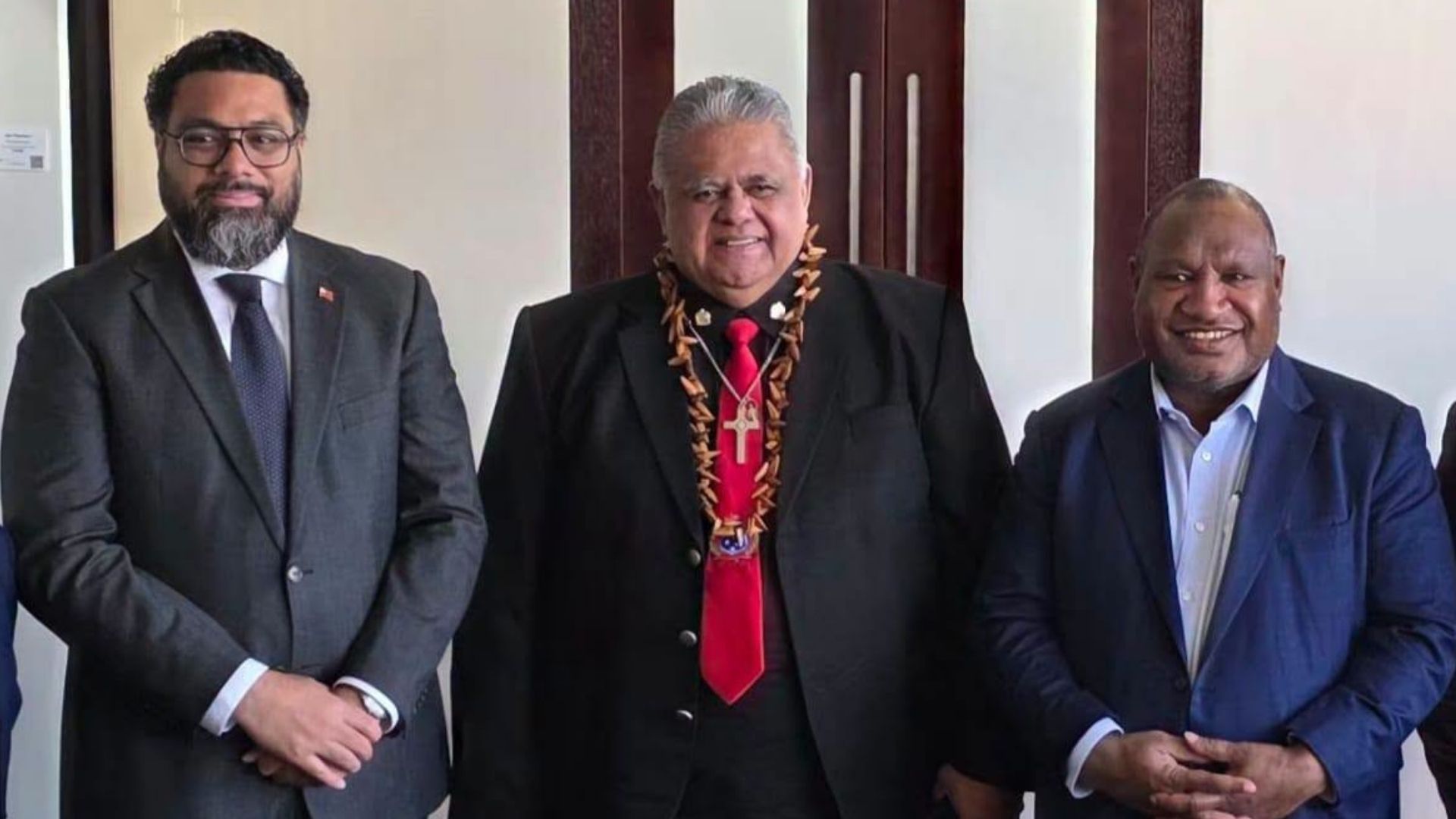
Leaders from Tonga, Sāmoa and Papua New Guinea in Brisbane for the launch of the Pacific Rugby League Partnership last week. Photo/Prime Minister's Office, Tonga
Marape has previously described the club as more than a sporting project, calling it "nationhood expressed through rugby league".
"This is more than sport, it is nationhood expressed through rugby league," he said at the launch.
"Papua New Guinea alone is home to more than 800 languages but everyone speaks rugby league."
In Fiji, the investment has received a more mixed response. While the government is part of the regional grassroots programme, Fiji Rugby has also signed a financial agreement with China Rugby.
In the ABC report, Australian Minister for Pacific Island Affairs, Pat Conroy, said the A$600m investment was never just about football.
"Part of [the case for the funding] was a strong recognition within Australia that we needed to move closer to the Pacific Island region," he said.
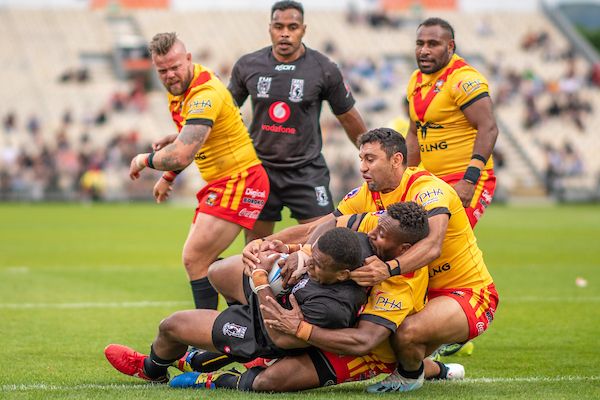
Ben Nakubuwai scores a try for the Fiji Bati against the PNG Kumuls during the Oceania Cup in Christchurch in 2019. Photo/Photosport/Steve McArthur
"That we need to work closer with the Pacific family, and use every avenue of statecraft to do that. [That] created the space for this deal to be done."
But the ABC analysis suggests the deal also highlights how sports has become part of the wider contest for influence in the Pacific.
Stuart Murray, a sports diplomacy expert at Bond University, said in the report that Australia was using one of its strongest international assets.
"A country like Australia is, in terms of its economy, trade and security, a sort of middle power," Murray said.
"But when we think about sport, we're an absolute superpower in terms of our success, our assets, our expertise in coaching and developing sport and the business of it. So other countries want that. It's something we can trade. It's also part of our image and our brand."
Watch Sāmoa Rugby League president Fiu Fa'aolatane Ponifasio Vasa's address to the media following the launch of the Pacific Rugby League Partnership in Brisbane.
But the strategy has exposed another debate in the region.
While Australia has focused heavily on rugby league, critics argue rugby union risks being left behind in countries where it remains the dominant code like Fiji.
Rugby union also remains hugely important in Sāmoa and Tonga.
Last year, the Fiji Rugby signed a memorandum of understanding with China Rugby, with the FRU saying the move was driven by financial need and not politics.
"It's not more diplomacy for us; it's more the financial security of Fiji Rugby," Fiji Rugby's Jenny Seeto told the ABC.
Australian Liberal senator Jess Collins warned the approach could backfire.
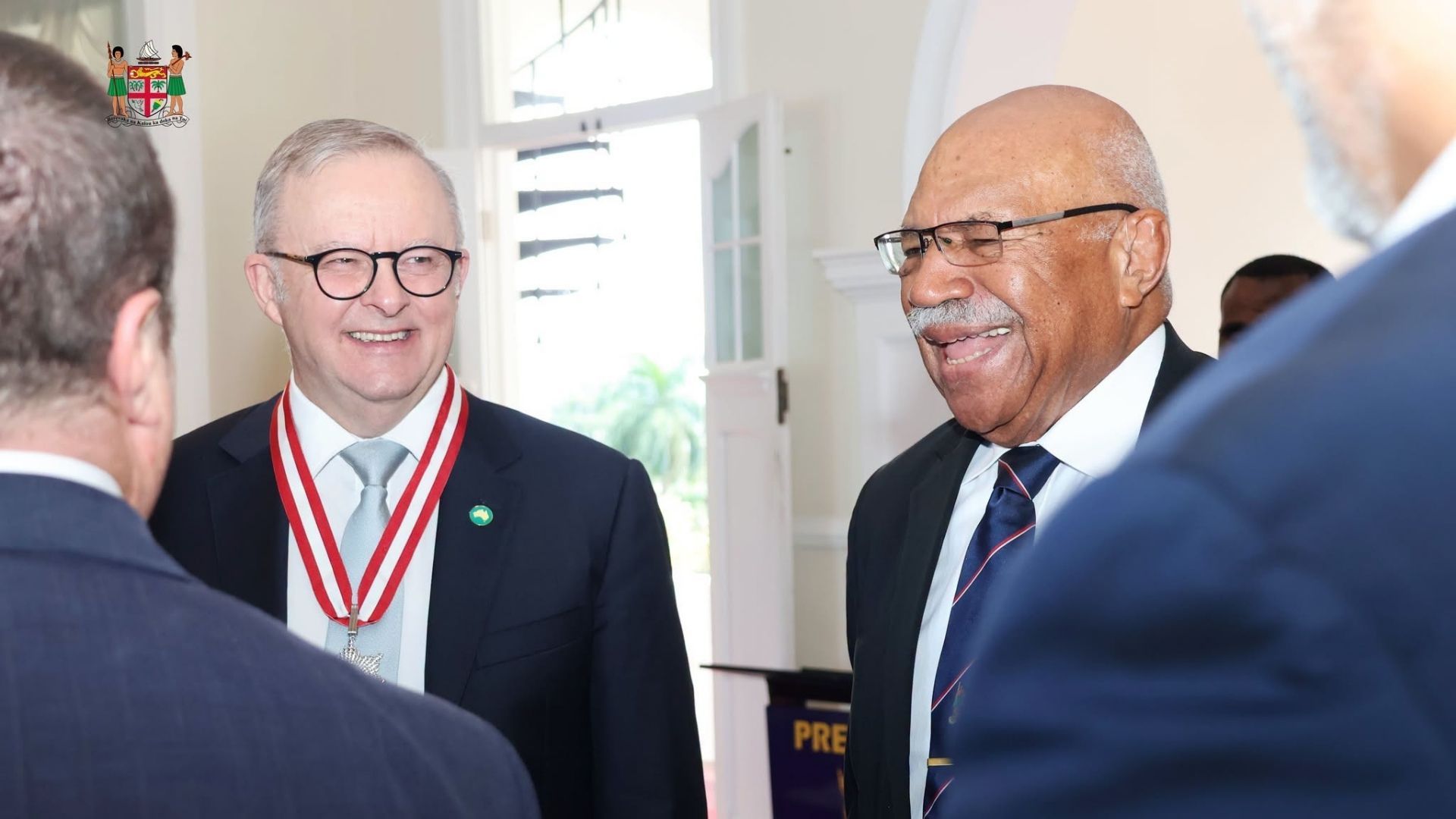
Australian Prime Minister Anthony Albanese and Fiji Prime Minister Sitiveni Rabuka signed a defence and security deal known as the Vuvale Union agreement alongside the broader “Ocean of Peace” framework in Suva last week. Photo/Fiji govt
"Anthony Albanese has joined forces with [Australian Rugby League Commission Chair] Peter V'landys to replace the national sport of Fiji, Sāmoa and Tonga with NRL," Collins said in the report.
"Rugby Union will be driven further into the arms of China, and we have Albanese's clumsy approach to Pacific diplomacy to blame."
While the new funding promises major investment and opportunities across the region, the ABC's analysis suggests it also underlines a new reality: that in today's Pacific, sports is no longer just about what happens on the field.