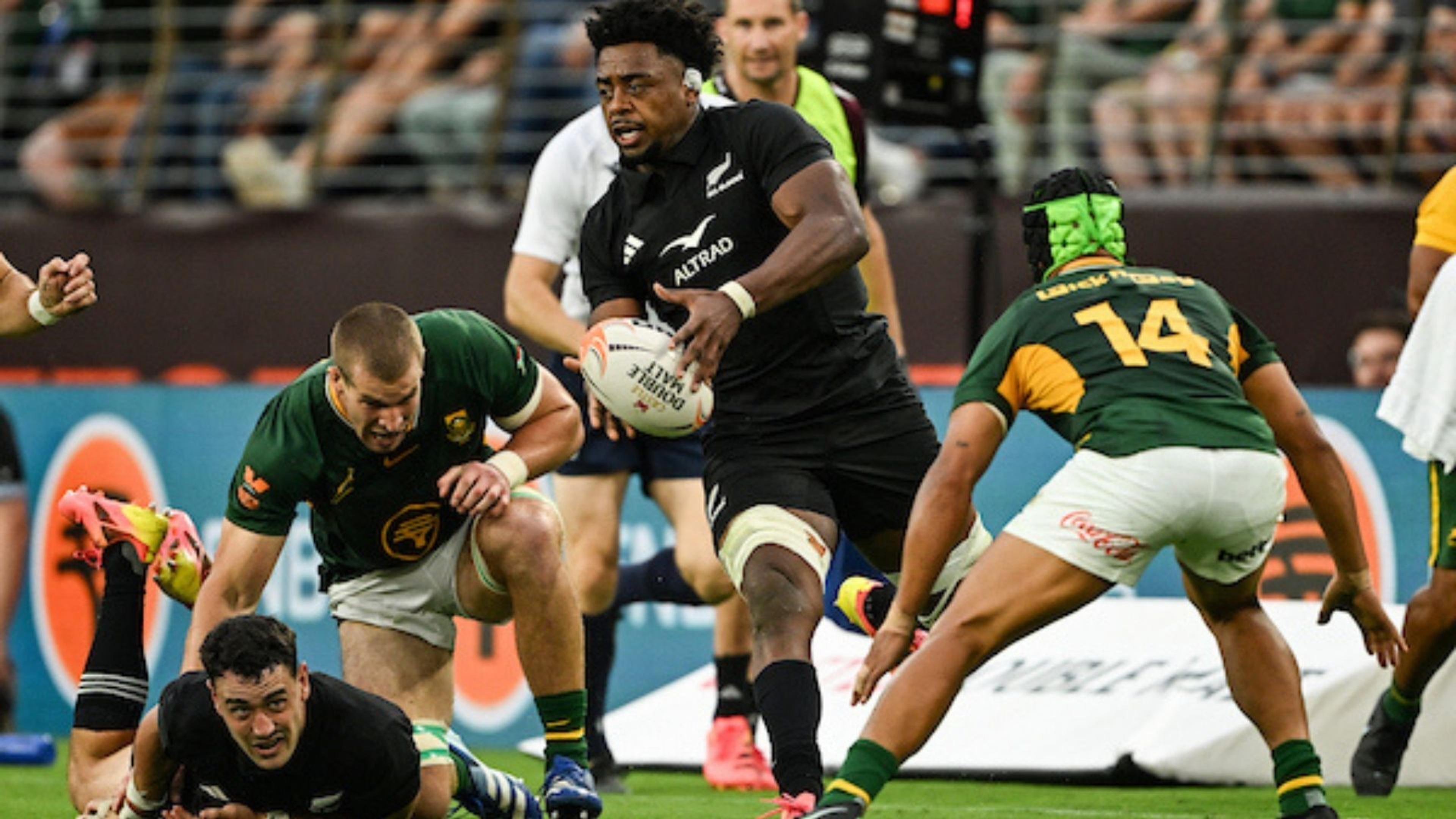
All Black Peter Lakai: Pacific players were central to the All Blacks’ Rugby’s Greatest Rivalry campaign, making an impact in South Africa and the United States.
Photo/Photosport/Dylan Davies
Opinion
Pacific rugby helps build the All Blacks. When does it get to share the rewards?
The Greatest Rivalry Tour has delivered a huge win for NZ and South African rugby. But it has also forced a bigger question about the Pacific players and communities helping drive the game's success.

Christine Rovoi
Published
14 September 2026, 6:45pm
Share
Copy Link
Top stories
Tonga community partnership wins global environmental award
Khalia StrongFri, 09 Oct
From cleaning a home to the Kiwis: Laban’s World Cup call-up
Christine RovoiSat, 10 Oct

NZ's billionaires and beneficiaries: Bashing a path to the ballot box?
Thomas Tarurongo WynneFri, 09 Oct
Top stories
Tonga community partnership wins global environmental award
Khalia StrongFri, 09 Oct
From cleaning a home to the Kiwis: Laban’s World Cup call-up
Christine RovoiSat, 10 Oct
NZ's billionaires and beneficiaries: Bashing a path to the ballot box?
Thomas Tarurongo WynneFri, 09 Oct
The All Blacks and Springboks have finished their Greatest Rivalry tour but for Pacific rugby, the bigger conversation is only just starting.
South Africa can celebrate a 3-1 series win after beating the All Blacks 43-28 in the final Test in Baltimore, United States, on Sunday (NZ time).
All Blacks captain Ardie Savea missed the match after returning home with a dislocated shoulder. Codie Taylor took over the captaincy.
New Zealand Rugby and South African Rugby can also point to packed stadiums, huge crowds, and a tour that has shown this old rivalry still has plenty of pulling power.
The final Test drew more than 70,000 people and took the rivalry to a new audience. And there are plans to do it all again. The next tour coming to Aotearoa in four years.
For the All Blacks and Springboks, that is a success. But what does Pacific rugby get from it? That is the question worth asking now. Because Pacific players were not a side story on this tour. They were right in the middle of it.

The Springboks celebrate their 43-28 win over the All Blacks in the fourth and final Test of Rugby’s Greatest Rivalry at M&T Bank Stadium in Baltimore. Photo/Photosport/Dylan Davies
Richie Mo'unga, Patrick Tuipulotu, Tupou Vaa'i and Wallace Sititi were among the Pacific players who played important roles for the All Blacks.
Mo'unga's return to the black jersey was one of the biggest stories of the tour. Tuipulotu brought his experience and leadership. Vaa'i continued to show why he has become such an important part of the All Blacks pack while Sititi showed what the next generation can bring.
This is not about asking whether Pacific players belong in the All Blacks. They clearly do. The bigger question is whether Pacific rugby is getting enough back.
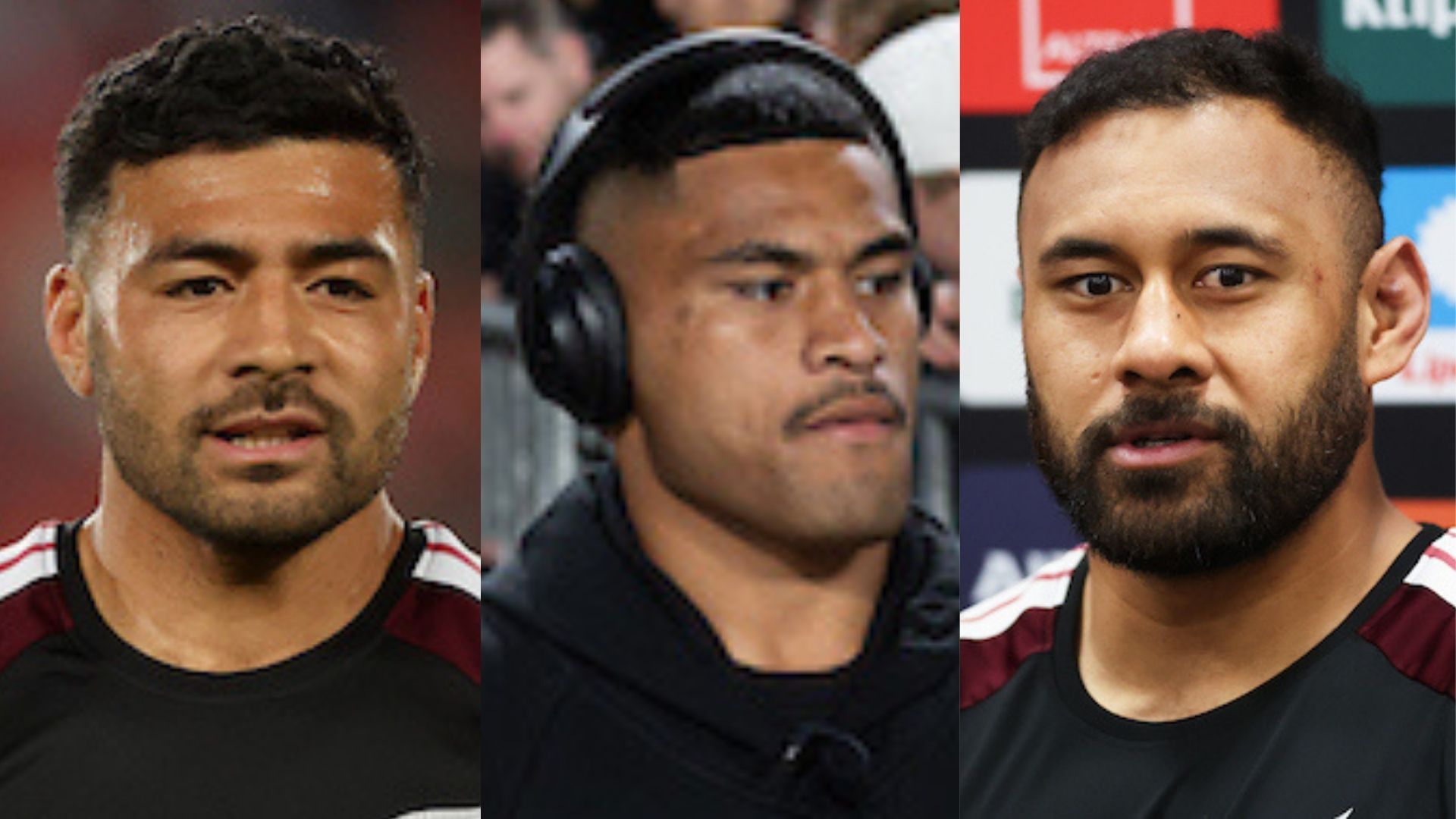
Richie Mo’unga, Tupou Vaa’i, and Patrick Tuipulotu were among the Pacific players in the All Blacks’ starting side for the fourth Test against South Africa in Baltimore. Photo/Richie Mo’unga, Tupou Vaa’i and Patrick Tuipulotu, will start for the All Blacks as they look to level their series against South Africa in Baltimore on Sunday (NZT). Photo/Photosport/Shaun Roy/Brett Phibbs
Rugby's Greatest Rivalry was built around two of the biggest teams in world rugby. It brought back the old touring style. The All Blacks playing eight matches, including four Tests against the Springboks.
The tour has been described as a major commercial success. Both unions are set to benefit from the money and interest it has created. That is good for rugby.
But Pacific rugby has been part of that success for years.
Pacific families fill stadiums. Pacific communities follow the All Blacks and Springboks. Pacific players bring their skill, culture and identity to some of the biggest games in the world.
So where is the bigger return for the islands? Where are the stronger pathways?
Where is the long-term investment in Pacific competitions, coaches, facilities and young players, so they do not always have to leave home to find their best chance of reaching the top?

From left: Wallace Sititi, Asafo Aumua, and Xavier Numia, were among the Pacific players involved in the All Blacks’ final Test of the Greatest Rivalry tour.
And where is the Pacific voice when decisions are made about the future of the game?
That is not an attack on the All Blacks. It is about asking what the game could look like if Pacific rugby was treated as more than a place to find talent.
If New Zealand rugby is serious about its future, it should also be serious about the Pacific rugby system that continues to produce players good enough to wear the black jersey.
The Pacific should not just be a talent pool. It should have a bigger say in the game. It should have stronger competitions of its own, better coaching, and better support for young players.
Most importantly, young Pacific players should have more reasons to believe they can build a future in rugby without having to leave their islands first.
Every generation produces players good enough to make it at the highest level. But for many, the pathway still means leaving home, moving overseas, and hoping to be noticed by a bigger rugby system.
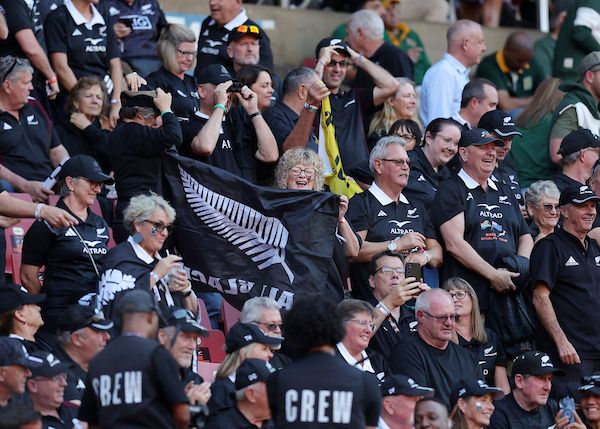
All Blacks fans turn out in force to support New Zealand during the Greatest Rivalry tour. Photo/BackpagePix/Photosport/Samuel Shivambu
Imagine what Pacific rugby could look like if more of that investment happened closer to home.
Imagine young players in Fiji, Tonga, and Sāmoa having regular access to quality coaching, facilities and high-level competition.
Imagine Pacific unions having the resources to keep more of their best players connected to their home countries.
That would not weaken the All Blacks. It could make the whole region stronger.
The Greatest Rivalry Tour has shown what can happen when two powerful rugby nations put their resources behind a big idea. So why can't some of that thinking be used to build Pacific rugby too?
The All Blacks now have a much bigger job ahead of them.The 2027 Rugby World Cup in Australia is just over a year away, and this tour has given Dave Rennie and his players plenty to think about.
South Africa have shown they are going to be very hard to beat while New Zealand still have work to do if they want to go into the World Cup as genuine title contenders.
The next All Blacks-Springboks tour is already on the horizon. By the time the Springboks return to New Zealand, another group of Pacific players will be pushing for selection.
Another generation will be dreaming of the black jersey. And another group of young players will be deciding whether to stay home or leave to find a better pathway.
The question is whether anything around them will have changed.
Pacific rugby should not have to wait for another Richie Mo'unga, Patrick Tuipulotu, Tupou Vaa'i or Wallace Sititi to prove its value before the game pays attention.
The players have already done that. Now it is time to build something for the players coming behind them.
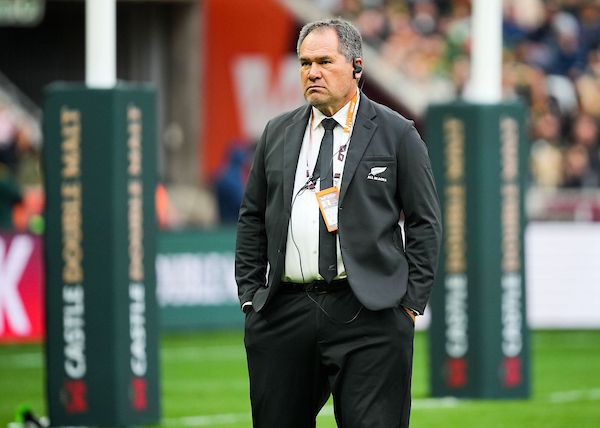
All Blacks head coach Dave Rennie made a number of changes for the Baltimore Test, including recalling Richie Mo’unga and handing the captaincy to Codie Taylor. Photo/BackpagePix/Ryan Wilkisky/Photosport
The Greatest Rivalry may belong to the All Blacks and Springboks. But Pacific rugby should not only be supplying some of the players who make it great. It should have a bigger stake in what comes next.
After a short two-week break, the All Blacks will regroup in New Zealand for the Bledisloe Cup, with the first Test against Australia at Eden Park on 10 October.
For the Pacific players in and around the squad, it is another chance to push their claims with the 2027 World Cup now less than a year away.