
'Watch out': Silver Ferns issue clear warning to Diamonds ahead of Christchurch clash
Brooke FonotiMon, 19 Oct
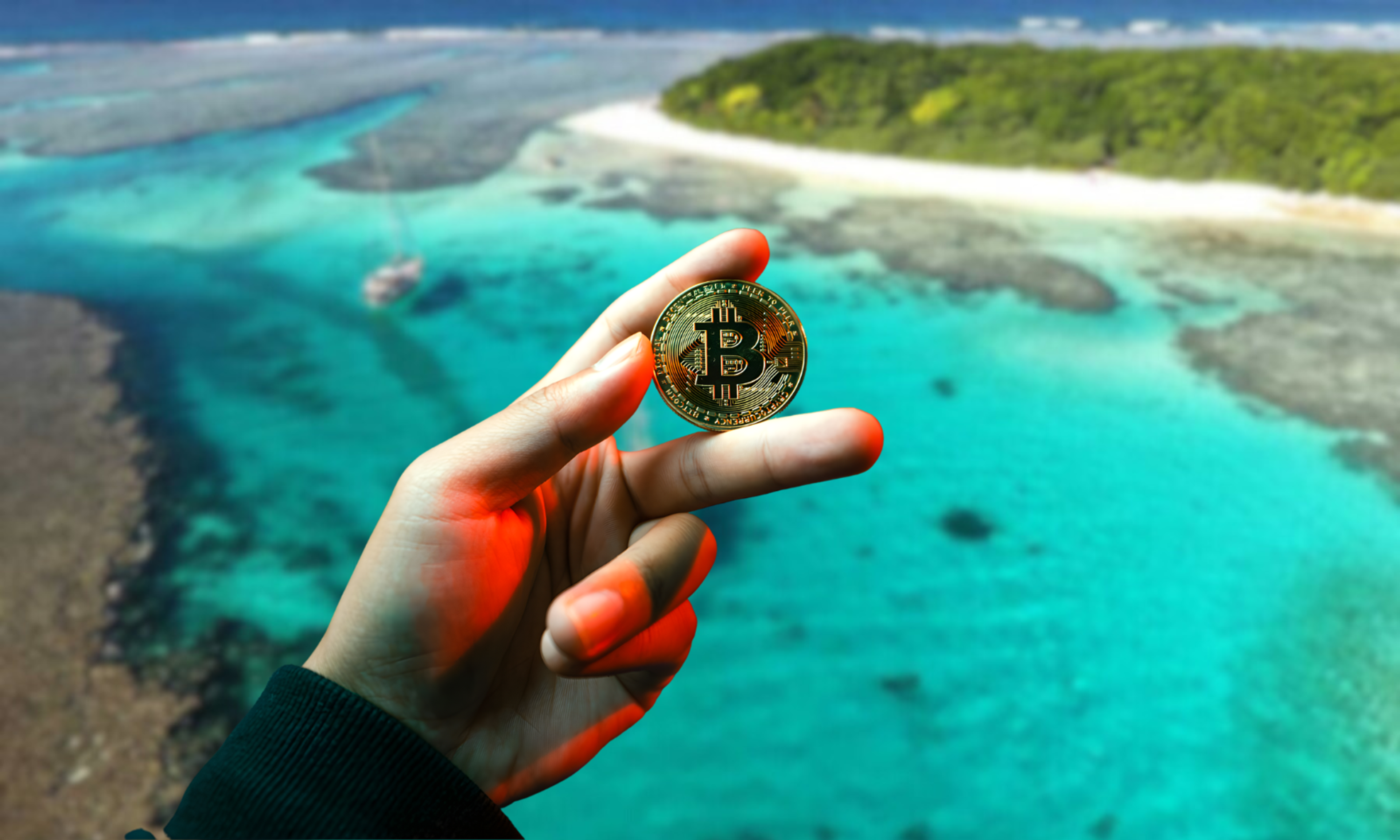
Despite global crypto volatility why are some Pacific nations pursuing digital currencies to regional fast-payment systems?
Photo/PMN montage/Supplied/Unsplash
From digital currencies to regional fast-payment systems, long-standing challenges such as remittance costs and limited banking access are driving the region’s digital-finance agenda.




Despite a global cryptocurrency sell-off that has erased hundreds of billions of dollars in recent weeks, some Pacific countries are pressing ahead with local and regional digital-finance initiatives.
Precious metals were also affected, with silver falling about a third from its late-January record and gold retreating from its January 29 peak.
Bitcoin, often referred to as digital gold, dropped into the low US$60,000s (about NZ$100,000), its weakest level since October 2024, before stabilising.
So why are some Pacific countries still actively pursuing digital-finance projects despite volatile markets?
Many policymakers say the drive comes less from short-term price swings and more from long-standing structural challenges: high remittance costs, limited banking access in remote communities, and the need to modernise cross-border payment systems.
But Pacific governments and central banks are interested in utilising the technology behind cryptocurrencies, not the volatile market-driven assets themselves.

The Pacific Islands Forum hosted a three-day Pacific Fast Payments Workshop in December 2025 which included participants from from central banks, senior finance officials and policy leaders to examine ways and share best practices on enabling seamless payment systems. Photo/Pacific Islands Forum.
Pacific governments are moving forward with blockchain technology, the framework behind cryptocurrencies, which functions as a decentralised digital ledger that records transactions across a network of computers.
Once recorded, transactions are difficult to alter, allowing direct transfers between users without traditional banking intermediaries.
This feature appeals in the Pacific, where remote geography and limited banking services make cross-border payments expensive and slow.
Pacific governments are taking a wide range of approaches. Some are examining digital-payment systems and central-bank digital currencies, while others remain cautious about cryptocurrency because of volatility, regulatory challenges, and concerns about financial crime.

In July 2025, Nauru named Australian banking and financial markets executive Brian Phelps to head the authority that will regulate virtual assets including cryptocurrency. Photo/Government of Nauru.
Cryptocurrencies like Bitcoin or Ethereum are privately created and market-driven, while digital cash issued by central banks is fixed to a country’s national currency.
The Marshall Islands is experimenting with blockchain-based public finance tools, including digital wallets and a stablecoin-linked payment system used to distribute government benefits across its widely dispersed islands.
In 2025, Nauru established the Command Ridge Virtual Asset Authority, creating a regulatory framework for licensing cryptocurrency exchanges, digital-asset services, and other fintech operators. The initiative is designed to position Nauru as a regional digital-finance hub and diversify its economy.
Palau is piloting a government-backed digital currency, known as the Palau Stablecoin, which is pegged one-to-one with the US dollar and designed to test secure digital payments. Developed in partnership with Ripple and built on the XRP Ledger, the initiative aims to improve financial inclusion and reduce transaction costs while remaining fully regulated and backed by government reserves.

Leaders and representatives from Papua New Guinea and Japan came together in February 2025 to mark the successful completion of the Digital Kina Proof of Concept for the PNG’s Central Bank Digital Currency. From left: George Awap, Assistant Governor of the Bank of Papua New Guinea; Hideaki Matsuoka, Chief Representative of the Papua New Guinea Office of the Japan International Corporation Agency; Nobuhisa Nishigata, Counsellor of the Cabinet Secretariat of Japan; Elizabeth Genia, Governor of the Bank of Papua New Guinea; Hisanobu Mochizuki, Japanese Ambassador to Papua New Guinea; Makoto Takemiya, Group CEO of Soramitsu, and Takayuki Himeno Mitsubishi Research Institute. Photo/Bank of Papua New Guinea.
Papua New Guinea is advancing its Digital Kina project. Following the successful completion of its proof of concept in early 2025, the Bank of PNG is now moving toward a broader regulatory framework to extend financial services to remote, unbanked communities.
At one time Tonga was seen as a potential leader in Bitcoin adoption after proposals were put forward to make the cryptocurrency legal tender. This was largely driven by the late MP Lord Fusituʻa.
However, following his passing in February 2024, the movement lost its primary architect. The plan subsequently stalled after the Reserve Bank warned of financial risks and the legislation failed to advance in Parliament.
Fiji has prohibited virtual-asset service providers, including cryptocurrency exchanges and wallet services, citing financial-stability, consumer-protection, and anti-money-laundering risks.
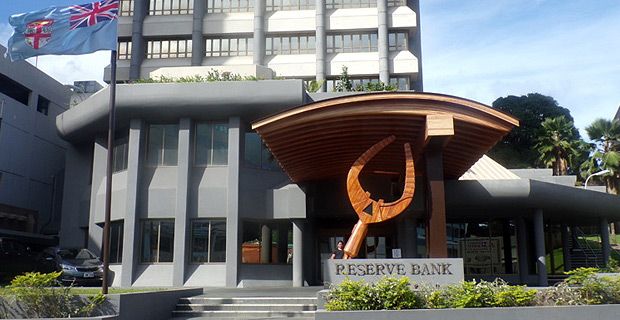
The Fiji Reserve Bank announced that from 30 August 2025, virtual-asset service providers, including cryptocurrency exchanges and wallet services, were prohibited. Photo/Fiji Reserve Bank.
Sāmoa is maintaining a cautious stance on digital currency, allowing discussion and monitoring of blockchain innovation while warning that cryptocurrencies are not legal tender and remain high-risk financial assets.
Remittances are cited as a key driver of digital-currency initiatives across the Pacific, with the potential to lower the cost of money sent home by overseas workers despite the risks associated with emerging technologies.
Remittances represent a major source of income for many island economies. According to the World Bank, remittances can account for about 40 per cent of Tonga’s GDP, around 30 per cent in Sāmoa, and about 15 per cent in Vanuatu. An estimated US$1.3 billion (about NZ$2.15 billion) is remitted annually across the Pacific, with roughly US$100 million (NZ$165 million) paid in fees.
International organisations, including the International Monetary Fund, say digital-money systems could improve cross-border payments and financial inclusion if supported by strong governance and regulation.

The 2025 Forum Economic Ministers Meeting (FEMM) was convened on 22 – 23 July at the Pacific Islands Forum Secretariat, Suva, Fiji. Photo/Pacific Islands Forum.
Pacific countries are also looking to a collective solution. Following the 2025 Forum Economic Ministers Meeting (FEMM) in July, the Pacific Islands Forum moved the “Regional Fast Payments System” from an idea to formal policy.
The plan aims to aggregate regional transaction flows, lower remittance costs, and set shared technical and regulatory standards for banks and digital-payment providers.
The initiative is inspired by international examples such as India’s Unified Payments Interface (UPI), a government-supported network that enables near-zero-cost transfers via phone numbers or QR codes.
While India’s UPI expands through one-on-one partnerships, the Pacific is attempting a more ambitious, multi-nation, interoperable payment zone.
This collective approach allows small island states to pool economic weight, creating a unified financial architecture that could rival fragmented banking systems in larger nations.
While the recent global sell-offs highlight the risks of volatility, they are unlikely to halt digital-finance exploration in the Pacific, where the focus is increasingly on regulated payment infrastructure rather than speculative assets.
For governments facing limited economic diversification and climate-related pressures, the development of sovereign digital payment networks is increasingly being treated as a long-term strategy for economic resilience.