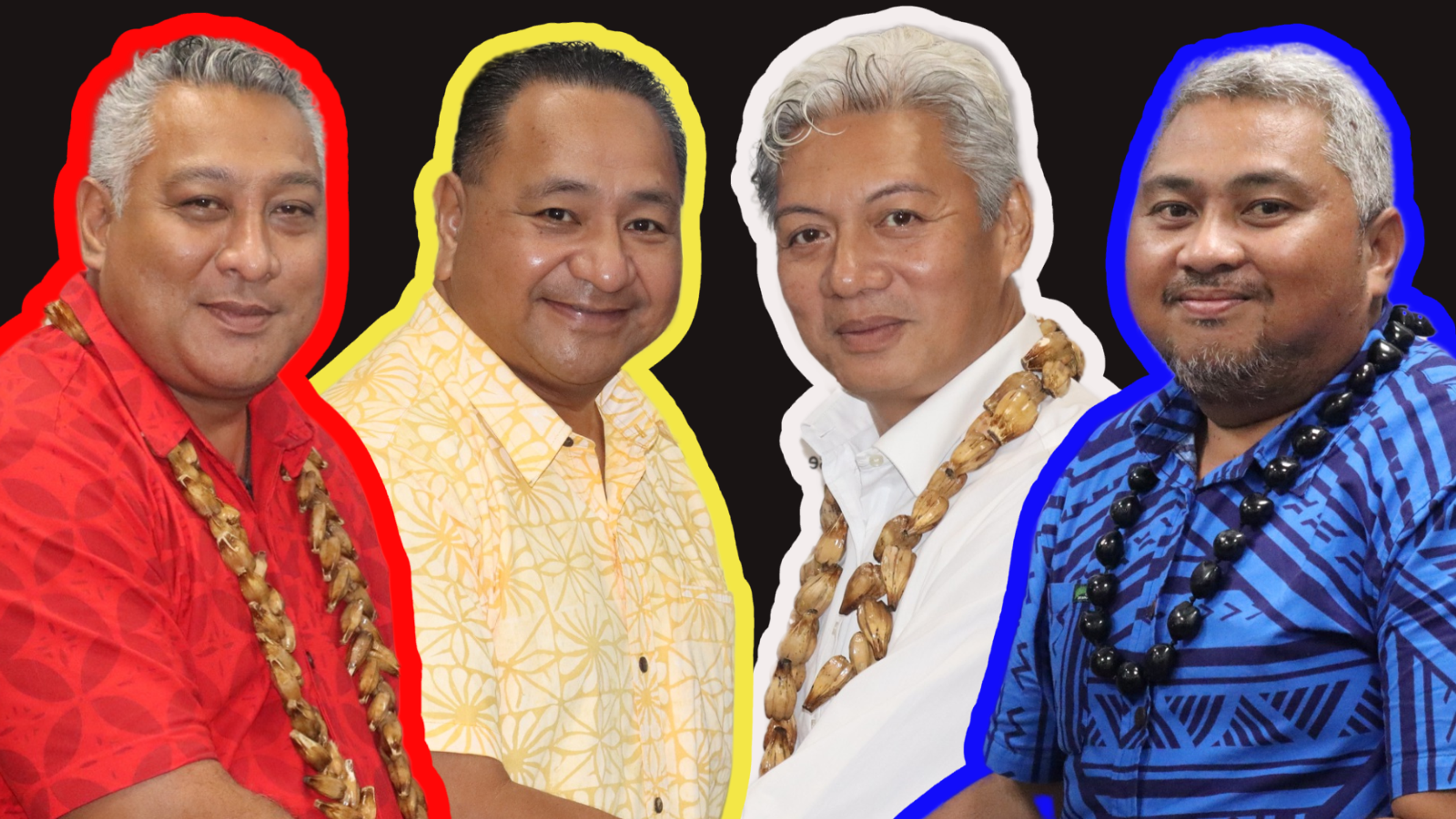
Candidates vying to win the Vaimauga III seat. (L-R) Taioaliʻiseu Fiti Aimaʻasu (FAST), Lautimuia Uelese Vaʻai (Independent), Puaʻalatamai Tupuola Filemoni (Independent) and Tuʻumaʻaliʻi Foma’i Sapolu (HRPP).
Photo/PMN composite image
Politics
Water, roads and ‘party-hopping’: Vaimauga III voters head to the polls
A high-stakes by-election in Sāmoa is putting the spotlight on a controversial question: do you have to vote for the government to get basic services?
Renate Rivers
Published
30 April 2026, 2:00pm
Share
Copy Link
Top stories
Fiji's army chief warns the gun must never overrule the ballot
Christine RovoiMon, 12 Oct

Voters in Vaimauga III, one of Sāmoa’s largest constituencies, head to the polls this Friday.
While the political talk in Apia is about party-hopping MPs, the talk in the villages is about water supply, street lighting for students, and the state of the roads.
The by-election was triggered after former MP Taioaliiseu Fiti Aimaasu resigned from the Human Rights Protection Party (HRPP) to join the ruling Faʻatuatua i le Atua Samoa ua Tasi (FAST) party.
Under the Electoral Act, this party switch requires a fresh vote.
At the heart of the campaign is the District Development Programme (DDP), which handles millions in funding.
Starting in July, annual support for each district will rise from ST$1.8 million to ST$2 million (NZ$1.25m).
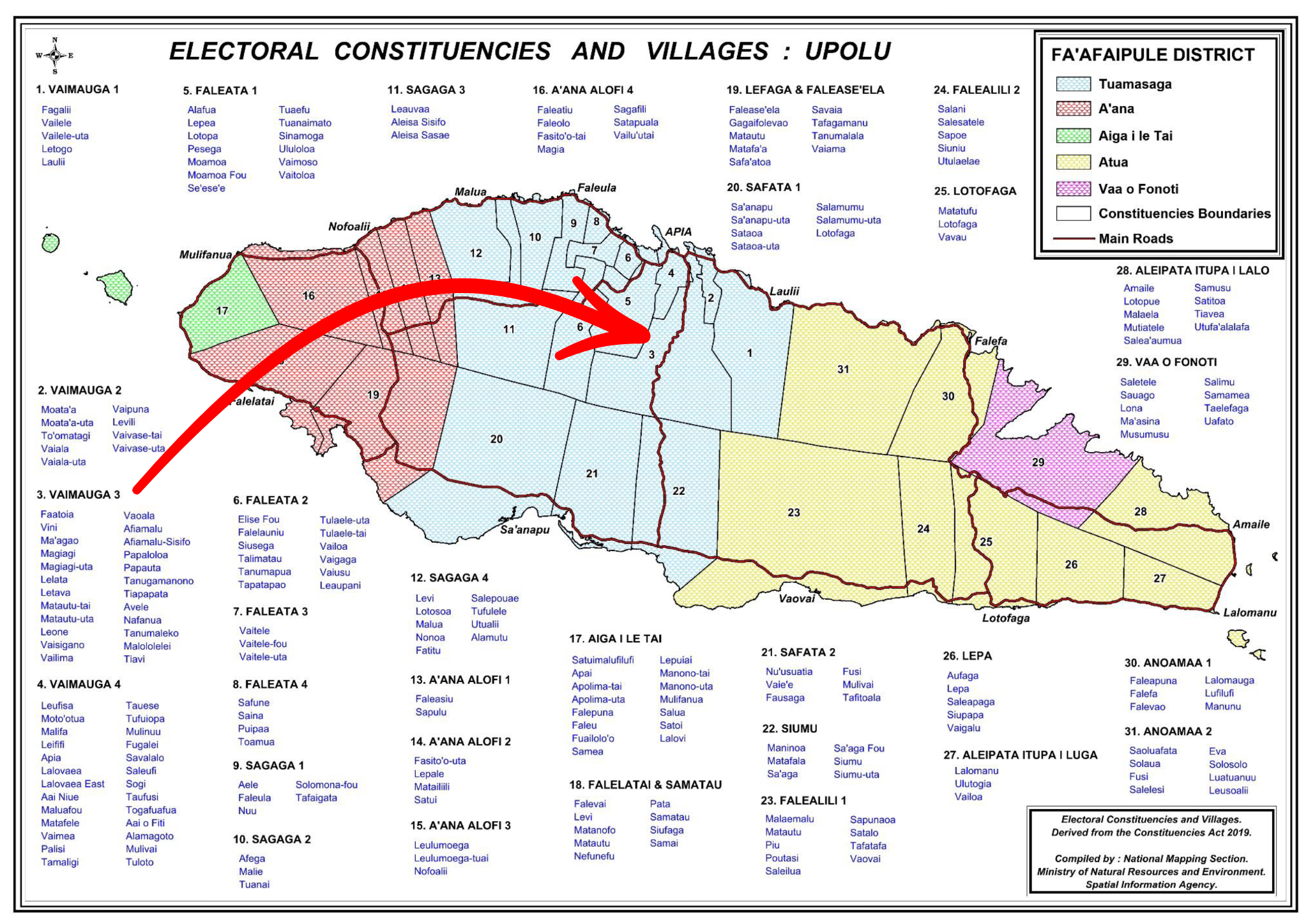
Vaimauga III is one of 31 electoral districts in Upolu. The Vaimauga and Faleata districts have the largest electoral rolls across the country, and the urban areas are densely populated due to the proximity to Sāmoa's capital of Apia and the business districts. Photo/Office of the Electoral Commission.
Taioaliiseu, now running for the government-aligned FAST, says being aligned with the government is the only way to ensure the community doesn’t miss out.
“People have to be aligned with the ruling party… for the district constituents to have better access to those funds,” he told the Samoa Observer.
But independent candidate and former Minister of Finance, Lautimuia Uelese Vaʻai, has criticised that suggestion as “misleading”.
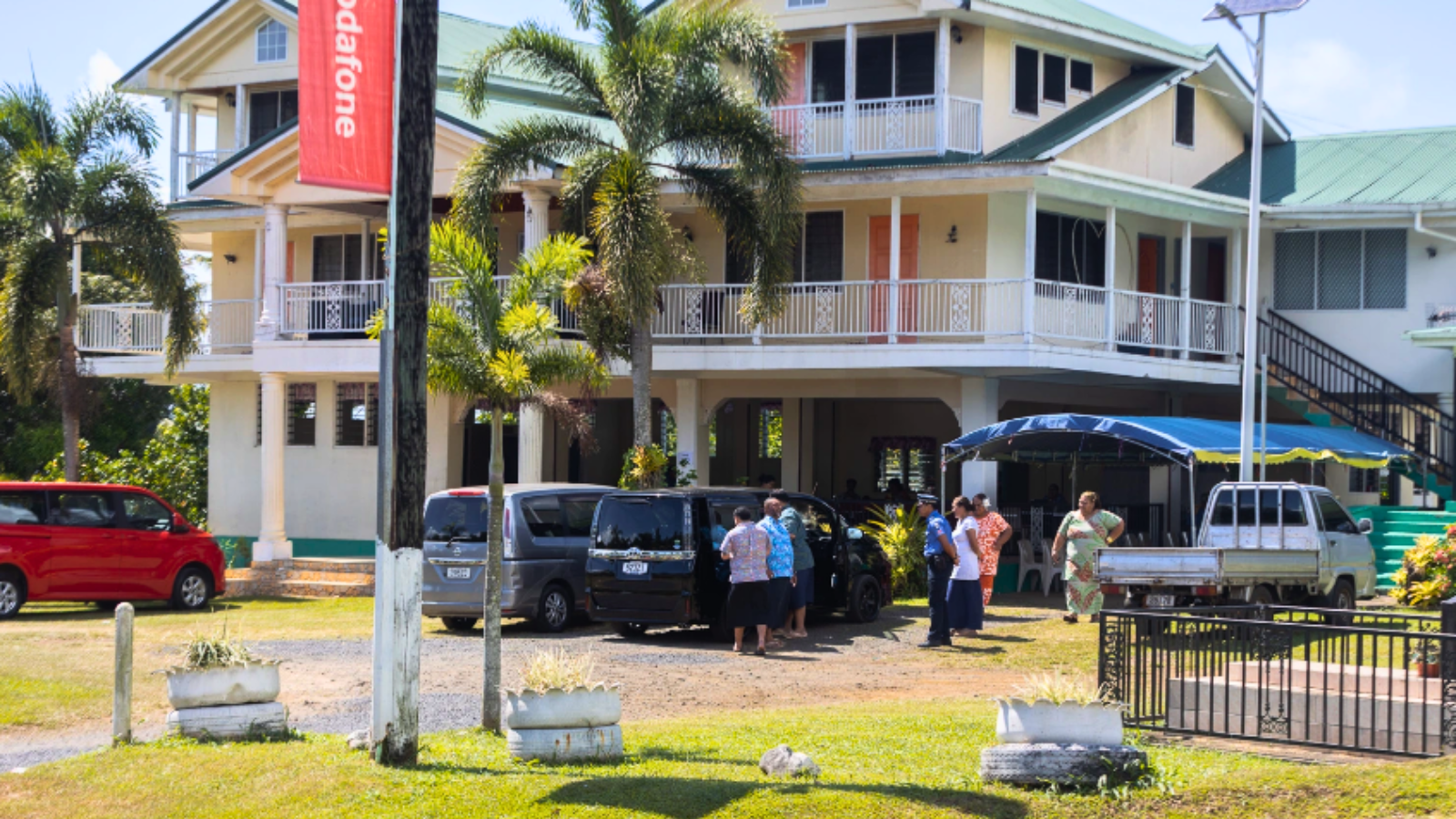
Pre-polling on 29 April in Tanugamanono. Photo/Sāmoa Observer/Keith Ropati
“The suggestion that if an MP doesn’t join the government, their district will get nothing, is a weak and misleading idea,” he told a press conference on 24 April.
“Government is for everyone, and there is no preferential treatment in development.”
This is the third by-election in Sāmoa this year after votes in Safata I and Vaisigano II in February.
Electoral Commissioner Tuiafelolo Alexander John Stanley told the Observer that each by-election costs taxpayers roughly ST$170,000 (NZ$106,000).
With a fourth by-election looming in Safata II after MP Tuia Paepae Leota announced earlier this month he intends to switch from HRPP to FAST, some candidates argue that successive switching of allegiances is a burden on public finances that confuses the community.
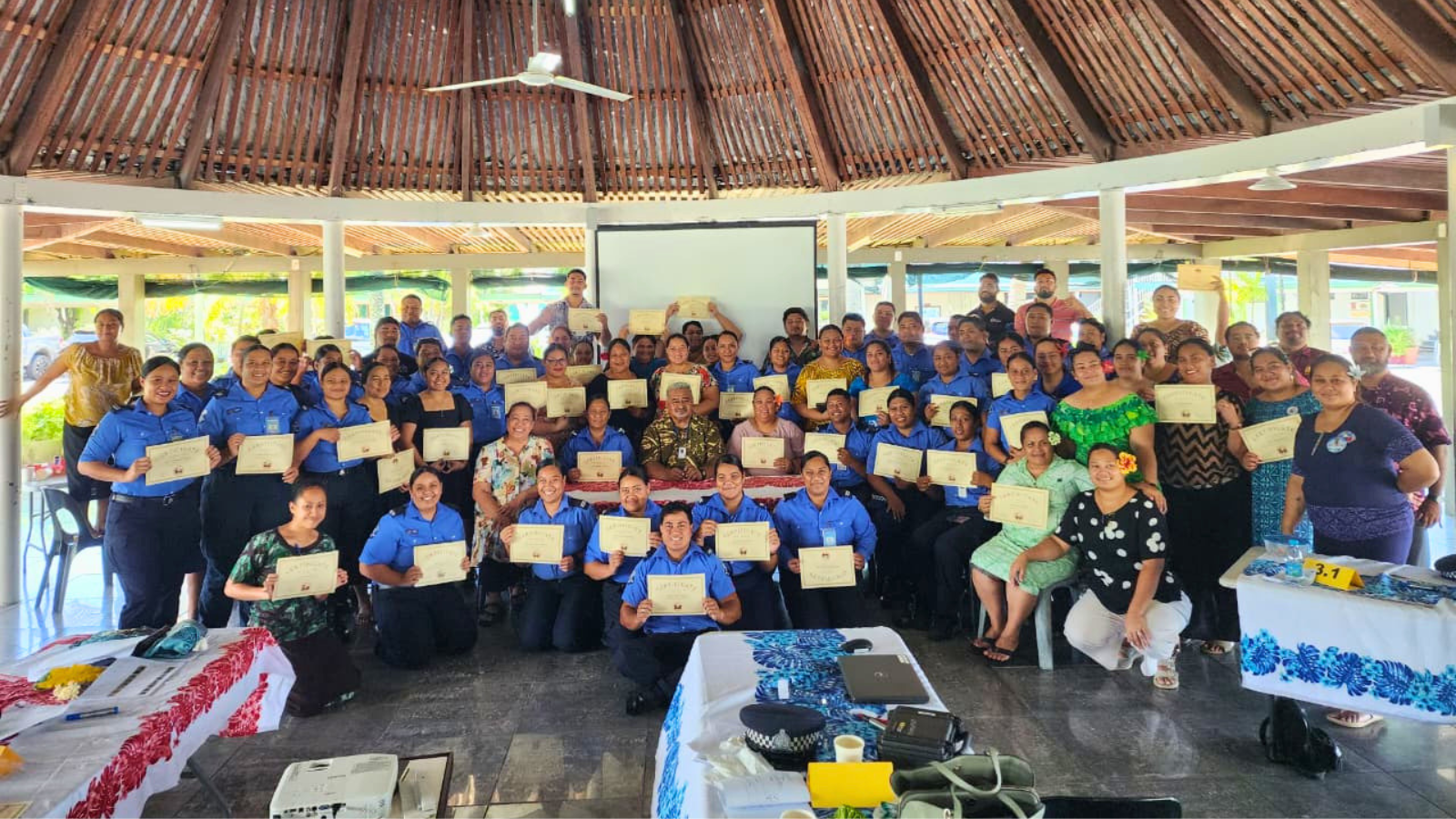
Sāmoa's Electoral Commission provide training for polling officials for each by-election. Training for the Vaimauga III by-election was completed on 24 April. Photo/Office of the Electoral Commission, Samoa.
Four candidates are contesting the Vaimauga III seat:
Taioaliʻiseu Fiti Aimaʻasu (FAST)
Tuʻumaʻaliʻi Foma’i Sapolu (HRPP)
Lautimuia Uelese Vaʻai (Independent)
Puaʻalatamai Tupuola Filemoni (Independent)
HRPP candidate Tuuamaalii has focused his campaign on party loyalty and making sure support is spread fairly across a district with more than 20 villages.
Independent candidate Puaalatamai says his candidacy is about tautua (service) rather than detailed policy.
“I am chosen to lead, but I never lead with an iron fist,” he told the Observer, describing his candidacy as an extension of his lifelong tautua to the community.
Watch (Sāmoan) Radio 2AP coverage of the Vaimauga III by-election below.
For the families of Vaimauga III, the result isn’t just about a seat in Parliament. It is a test of whether their access to clean water and safe transport is a right for every citizen or a reward for political alignment.
Polling day is Friday, 1 May, with pre-polling having already taken place on 29 April. Results are expected to be announced shortly after the booths close.