Tofiga Fepulea’i brings the laughs while taking top honours at Arts Pasifika Awards
Aui'a Vaimaila Leatinu'uFri, 23 Oct
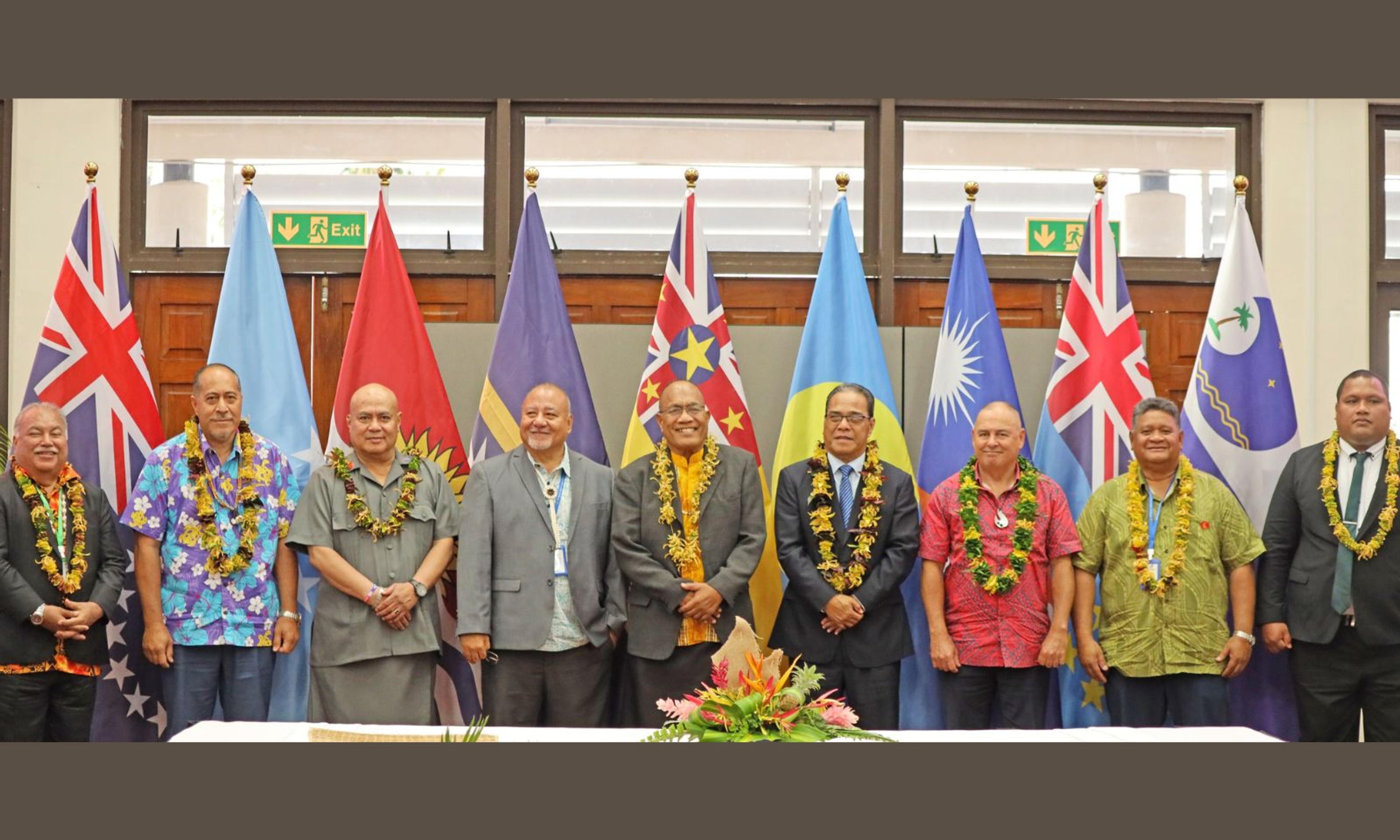
Pacific Islands Forum leaders at the PIF54 meeting in Honiara, where calls for stronger regional unity were a major focus.
Photo/Pacific Islands Forum
A new report warns Pacific Island countries that the long-held “friends to all” foreign policy is no longer sustainable, urging stronger regional unity as global competition intensifies and climate threats grow.


Pacific leaders are being urged to reconsider the long-standing “friends to all” foreign policy, as new geopolitical pressures and climate challenges push the region towards deeper collective action.
A new report by Hansley Gumbaketi of the Lowy Institute titled, Pacific Islands: “Friends to all” is no longer pragmatic, argues that Pacific Island countries can no longer rely on a global system that once protected small states, warning that the old diplomatic approach is “no longer fit for purpose in a world that is less accommodating”.
The call comes as the Pacific Islands Forum (PIF) seeks to rebuild unity following tensions around membership, dialogue partners and growing great-power interest in the region.
At their meeting in the Solomon Islands in September, Forum leaders reaffirmed that climate change remains the region’s “single greatest threat” and pledged to strengthen regional cooperation ahead of COP31 in 2026.
Gumbaketi says the shift in global politics leaves small island states exposed.
“Unlike larger states that can navigate and rapidly adapt, Pacific Island countries have always been reliant on a multilateral system that gave them a voice and an ability to exert influence.
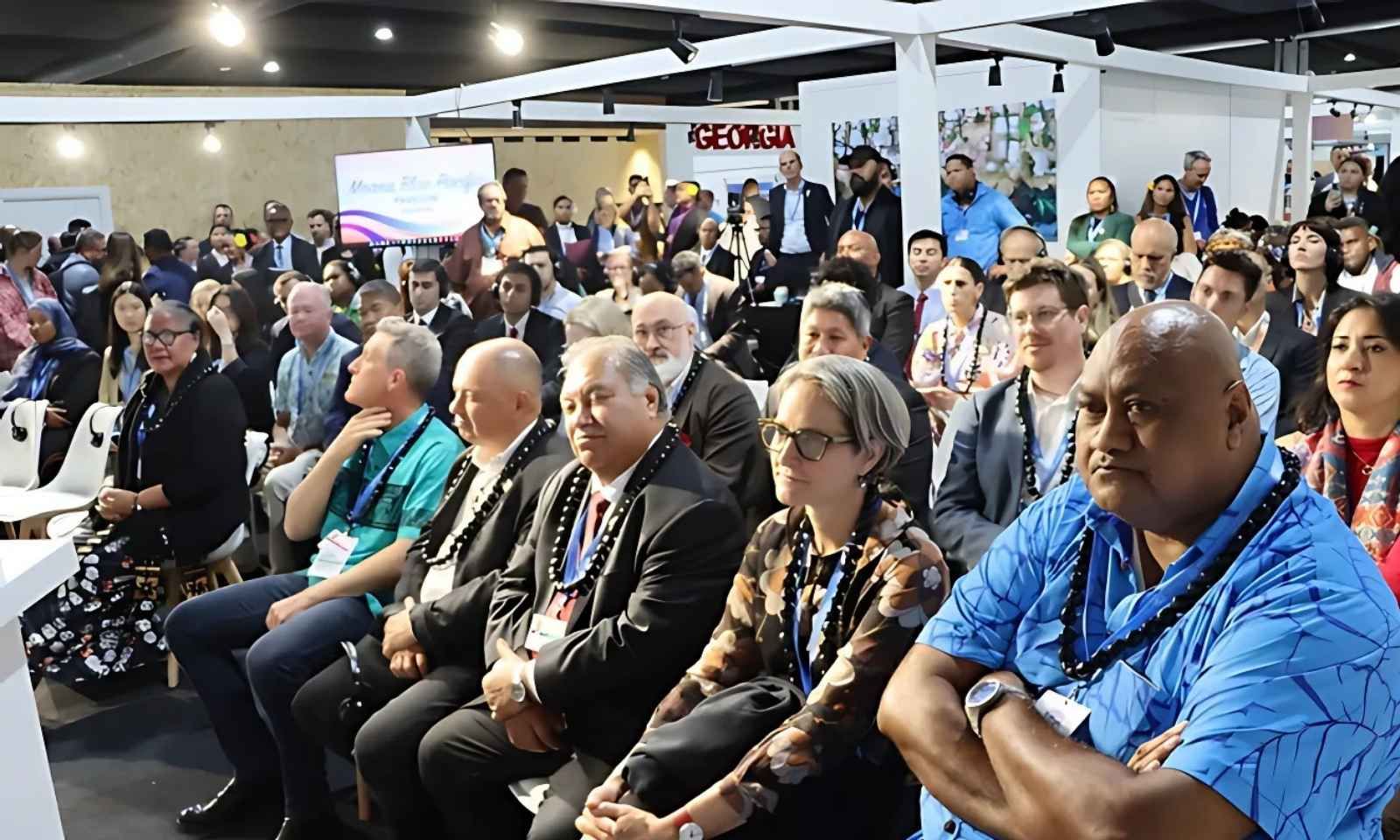
Pacific delegates at a climate meeting. Analysts say small island states must work more closely together as global power competition intensifies. Photo/PIF
“But that is no longer the case,” Gumbaketi writes.
He argues that the “rules-based order” once underwritten by the United States is weakening, pointing to what Singapore’s Foreign Minister Vivian Balakrishnan has described as a “geostrategic climate change… characterised by profound unpredictability, instability and volatility”.
According to the report, Pacific states now face a world where no major power will “risk its domestic politics to foster global ambitions”, and where regional players must rely more heavily on one another.
Listen to Palau’s Foreign Minister Gustav N. Aitaro's full interview below, following the PIF leaders' meeting in Honiara in September.
Pacific leaders themselves have recently acknowledged this shift. The PIF54 communiqué stressed the need for “collective regional strength” amid increasing geopolitical competition and fragmentation.
Fiji’s Prime Minister Sitiveni Rabuka has been one of the strongest supporters of a “friends to all, enemies to none” foreign policy, linking it to his wider goal of keeping the Pacific peaceful.
During a visit to Australia, he described this approach as part of a push for non-alignment. “We would like to develop the concept of a Zone of Peace and the concept of friends to all, enemies to none.”
Rabuka has warned Pacific leaders about growing pressure from major powers. In 2023, and says big countries “are trying to polarise the Pacific into their own camps,” adding that there was a need for the region to stay
“a zone of peace, a zone of non-aligned territories”.
At the same time, he says Fiji feels more “comfortable” working with long-standing partners such as Australia, pointing to shared democratic values and legal system.
Papua New Guinea has long followed a “friends to all, enemies to none” foreign policy, a position its leaders say remains unchanged despite new security partnerships.
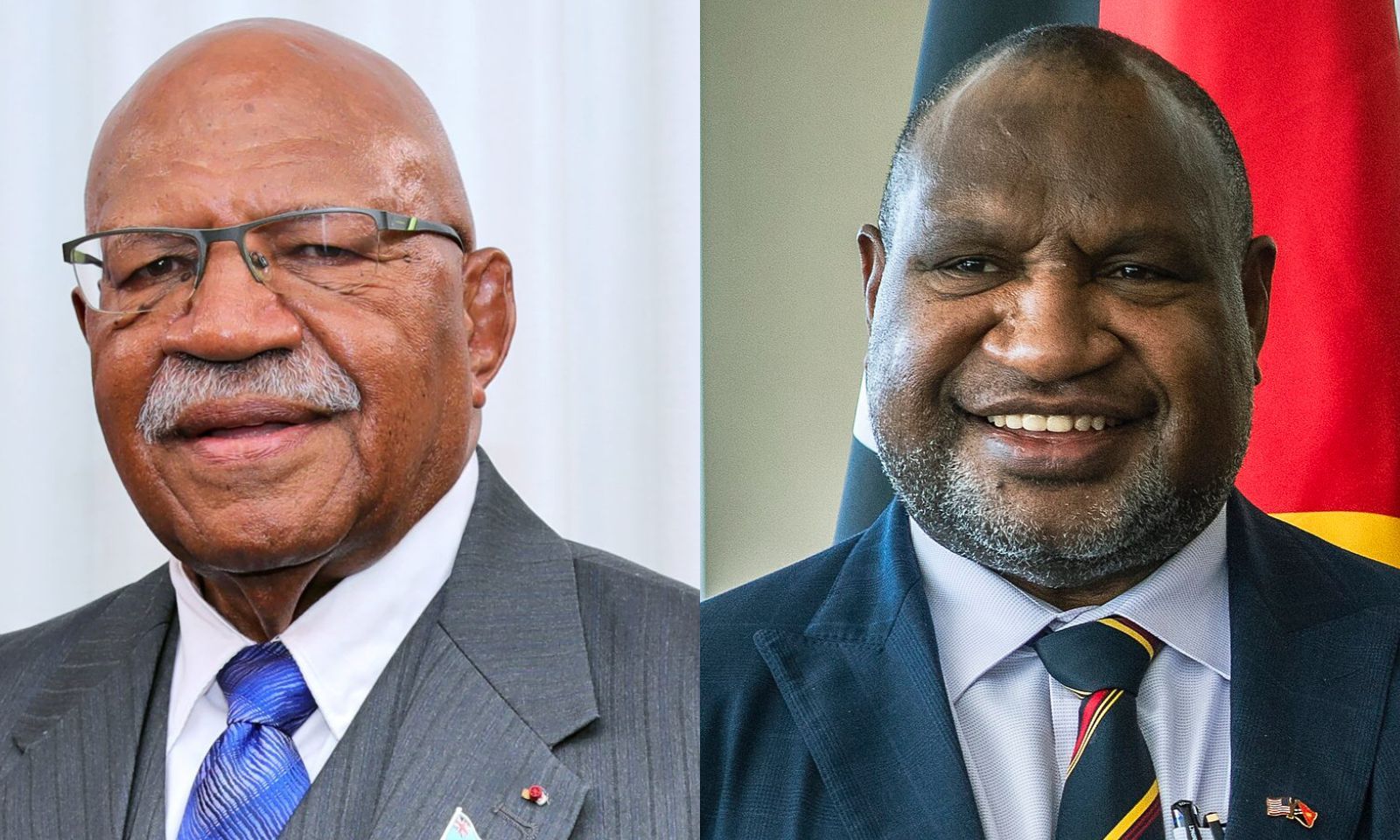
Fiji's Prime Minister Sitiveni Rabuka, left, and Papua New Guinea's Prime Minister James Marape. Photo/Supplied
Prime Minister James Marape has repeated that the policy, first set out at independence in 1975, is still the foundation of PNG’s foreign relations. The government recently released a new Foreign Policy White Paper that “reaffirms the long-held principle of ‘Friends to All, Enemies to None',”
while updating it to meet today’s strategic challenges.
During talks on a defence treaty with Australia, Marape told officials PNG would remain neutral and would not take sides in the competition between China and Western countries.
Australia has also signalled a change in approach, moving beyond its traditional role as a donor and positioning itself as an active Pacific partner. The country is preparing to lead regional negotiations ahead of COP31, which Pacific leaders have already framed as a “Pacific COP”.
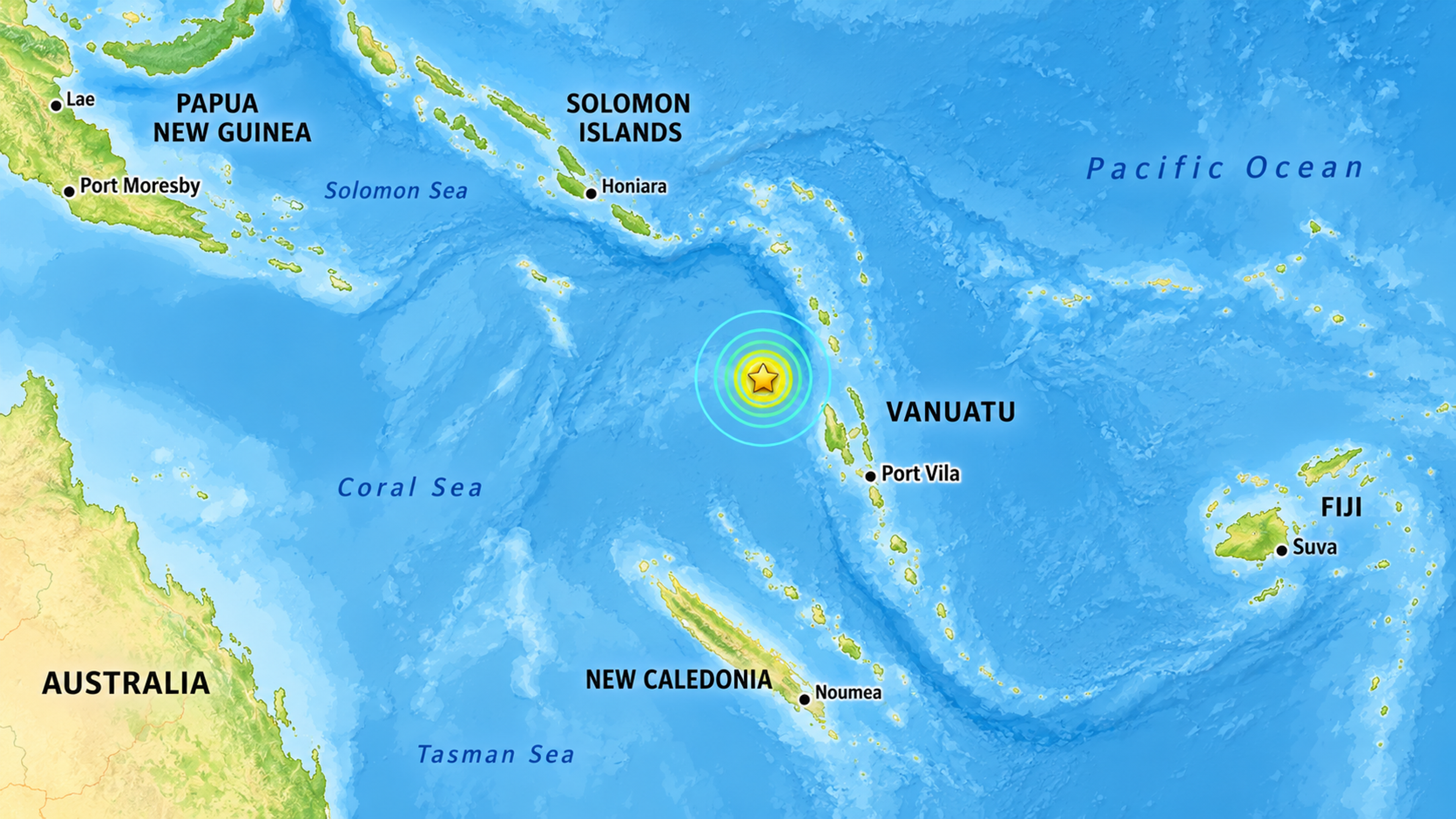
But Gumbaketi warns that unity depends on tackling internal tensions. Tuvalu, Palau, and the Marshall Islands considered boycotting PIF54 after Taiwan was excluded as a dialogue partner, a move Forum Secretary-General Baron Waqa earlier reflected “the limits of consensus diplomacy”.
Even so, the Forum’s recent steps are seen as signs of progress. Gumbaketi identifies three major decisions as potential turning points: the Pacific Resilience Facility, a new Review of the Regional Architecture to manage external engagement, and the creation of the Pacific Islands Standards Committee to set shared regional benchmarks.
These moves, he says, represent “a quiet assertion of agency: setting the standards to which outsiders must adapt”.
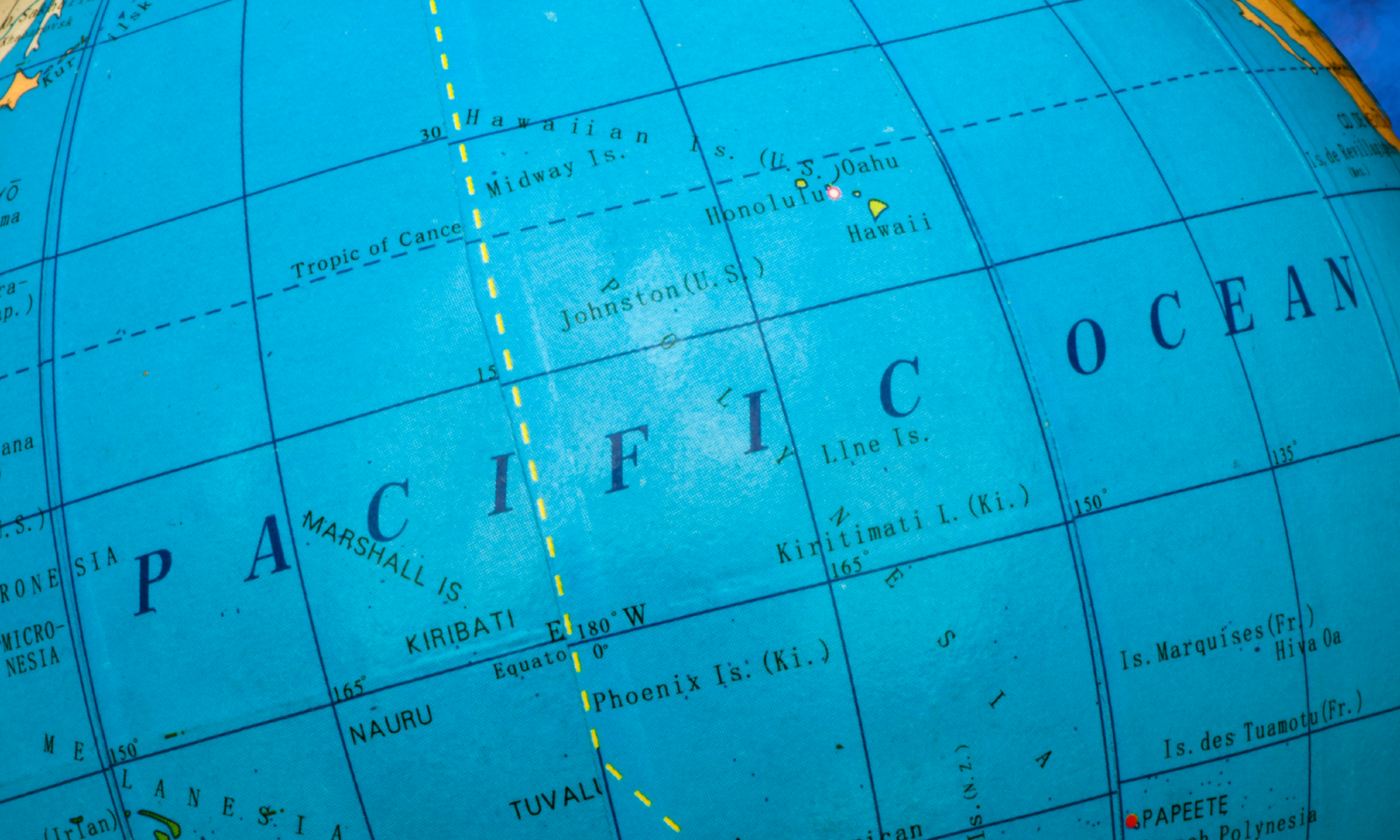
The Pacific region is facing growing pressure from major powers. The Lowy Institute report argues that deeper collaboration is now essential for protecting Pacific interests. Photo/natureweb.co
But tensions remain between regional collaboration and national sovereignty. “Integration sits uneasily alongside each state’s desire for sovereignty and freedom to manoeuvre,” Gumbaketi reports.
Analysts say the region is at a crossroads. With climate change intensifying and global powers seeking influence, Pacific nations may no longer be able to stay neutral without risking their own interests.
“The proposition here is quite simple, if provocative,” Gumbaketi says. “Being ‘friends to all’ is out of step with the current climate. Surviving and thriving in the region now depends on a willingness to work together despite outside influences.”
As preparations begin for COP31 in Türkiye (formerly Turkey) and a new era of climate diplomacy, the question now is whether Pacific leaders can build the unity needed to meet a rapidly changing geopolitical landscape.
Listen to William Terite's Word below ahead of the PIF leaders' meeting in Honiara in September.
Hansley Gumbaketi is a Papua New Guinean urban planner and infrastructure specialist involved with the Lowy Institute's Australia-Papua New Guinea (Aus-PNG) Network as an Emerging Leaders Dialogue alumnus, focusing on urban development, governance, and Pacific growth, using his expertise in property, logistics, and arts to bridge development gaps in PNG.