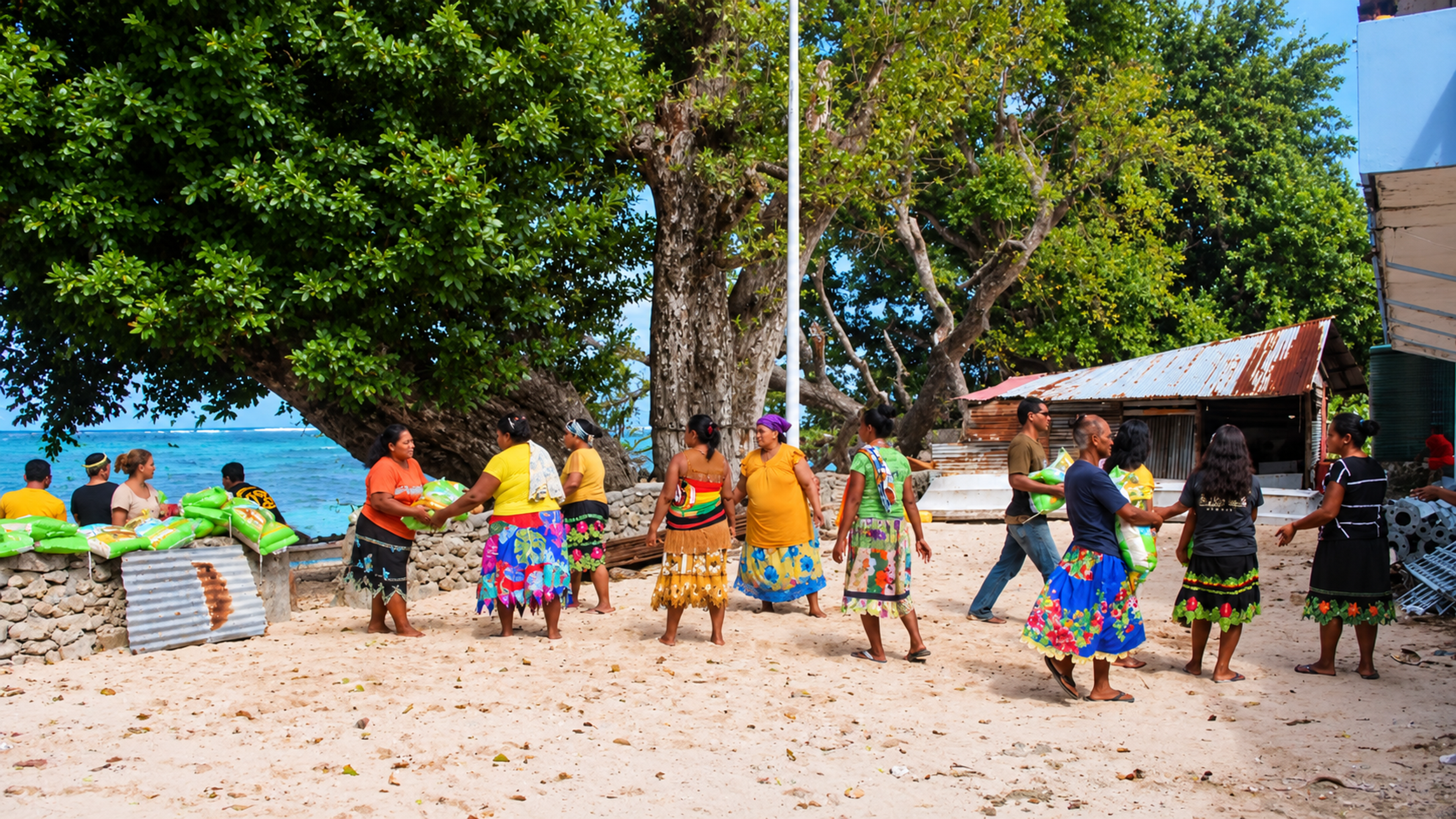
El Niño tightens grip on Pacific as authorities warn of drought and extreme weather
Lachlan EddieFri, 23 Oct
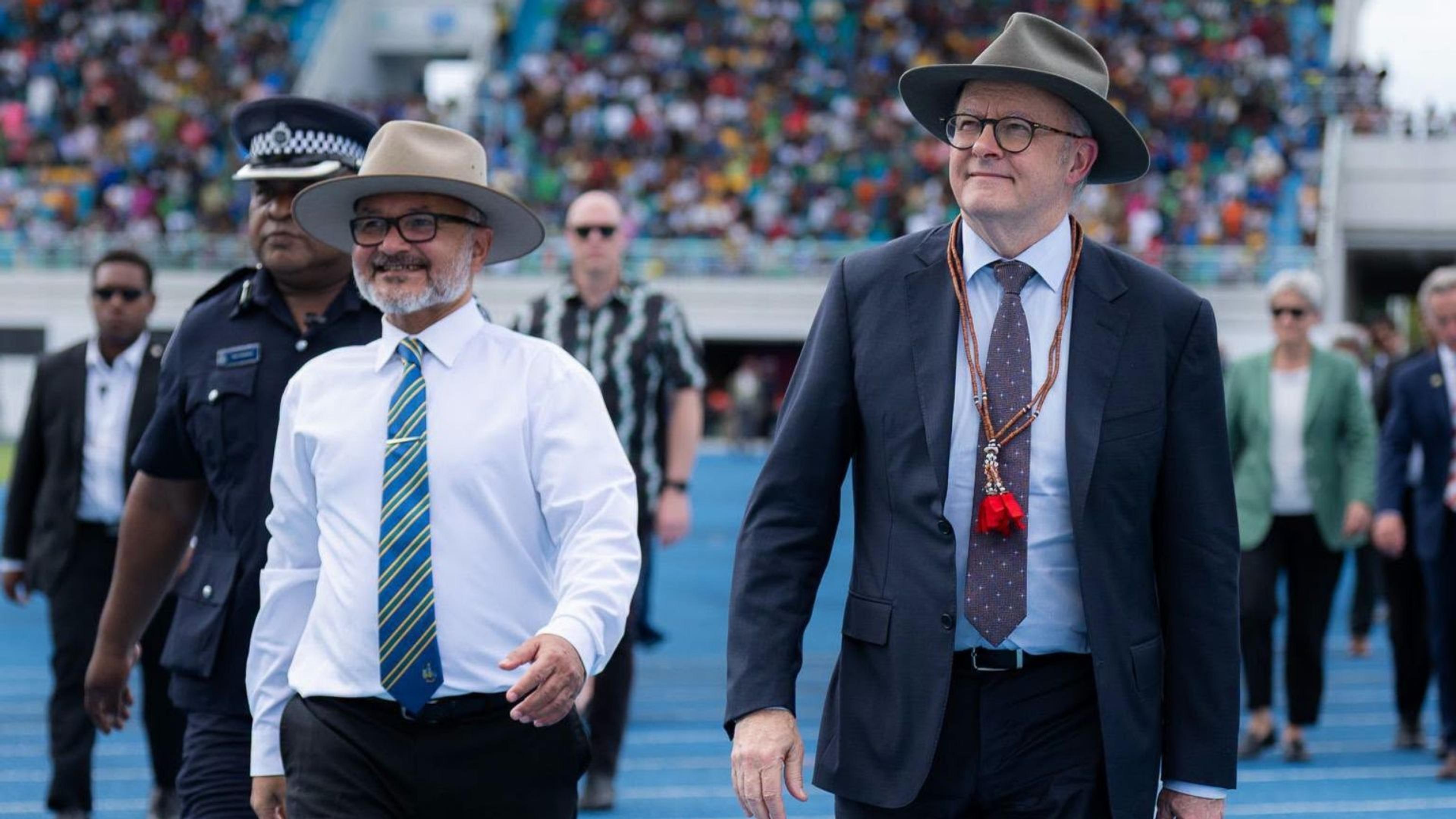
Solomon Islands Prime Minister Matthew Wale and Australian Prime Minister Anthony Albanese in Honiara as the two leaders discuss strengthening ties and future cooperation during Solomon Islands’ 48th Independence celebrations.
Photo/Australian High Commission, Solomon Islands
Australia pushes new defence pact in Honiara as Pacific experts warn regional voices must remain at the centre of security decisions.

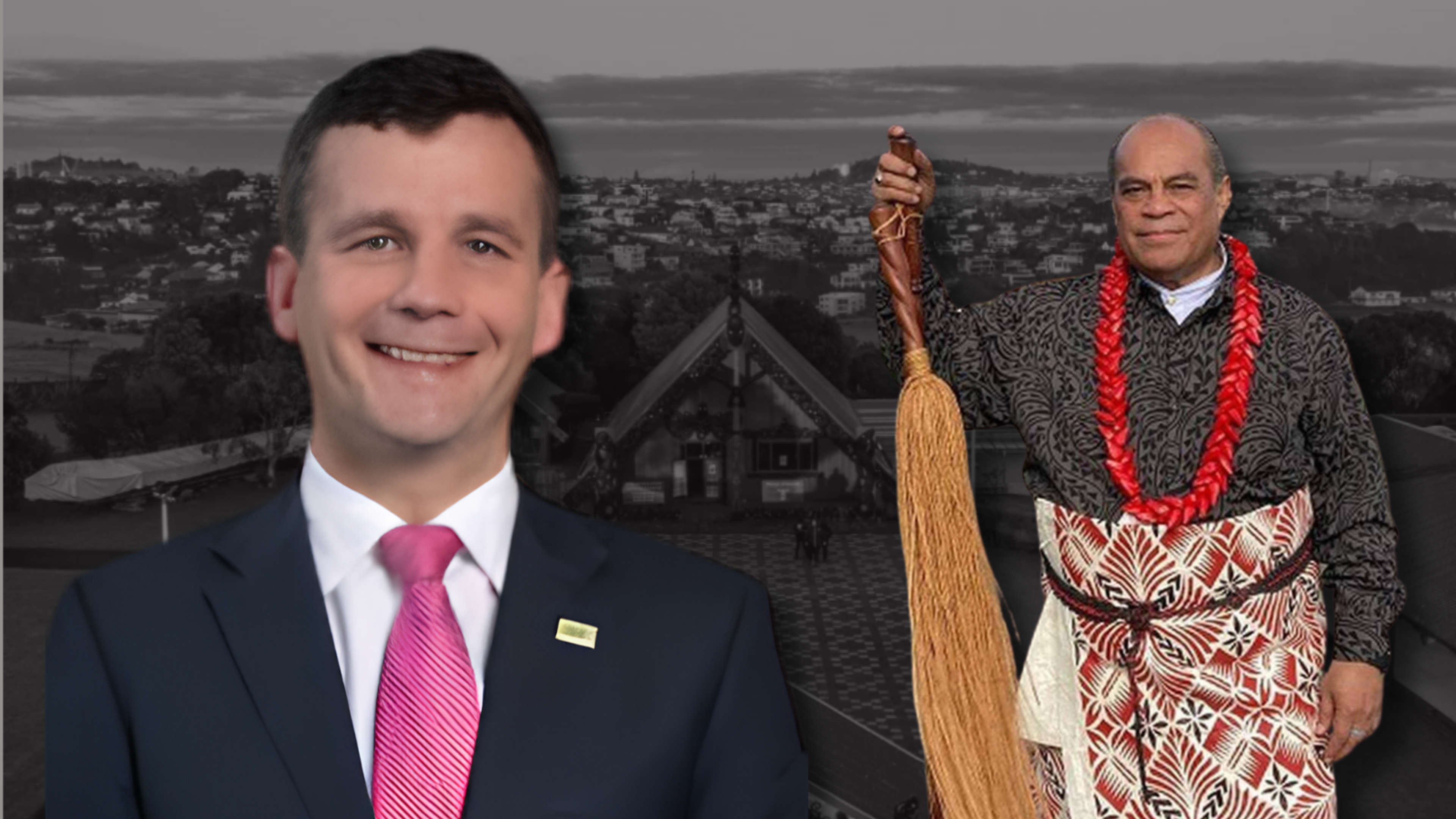
Solomon Islands’ new government is signalling a renewed focus on traditional partnerships, with Australian Prime Minister Anthony Albanese visiting Honiara on Tuesday for the country’s 48th Independence Day celebrations.
The visit comes as the Pacific faces renewed security discussions following a Chinese missile test and a new Australia-Fiji defence agreement signed in Suva on Monday.
The Solomon Islands’ new government has signalled a renewed focus on relationships with traditional partners including Australia and New Zealand, although analysts say it remains too early to know how this will shape future policy.
Speaking during his arrival in Honiara after meeting Solomon Islands Prime Minister Matthew Wale, Albanese said the two countries had “much more that we need to do together”.
This includes work towards a comprehensive treaty.
“We will task our ministers to continue to do work on that and hopefully to conclude that by the end of the year,” Albanese said.
Wale welcomed Albanese’s visit, saying the two countries had important issues to discuss.
“We have much to transact, so we look forward to great conversations,” he said.
Wale visited Canberra in June, weeks after taking office, where he met Australian leaders as both countries looked to strengthen ties.
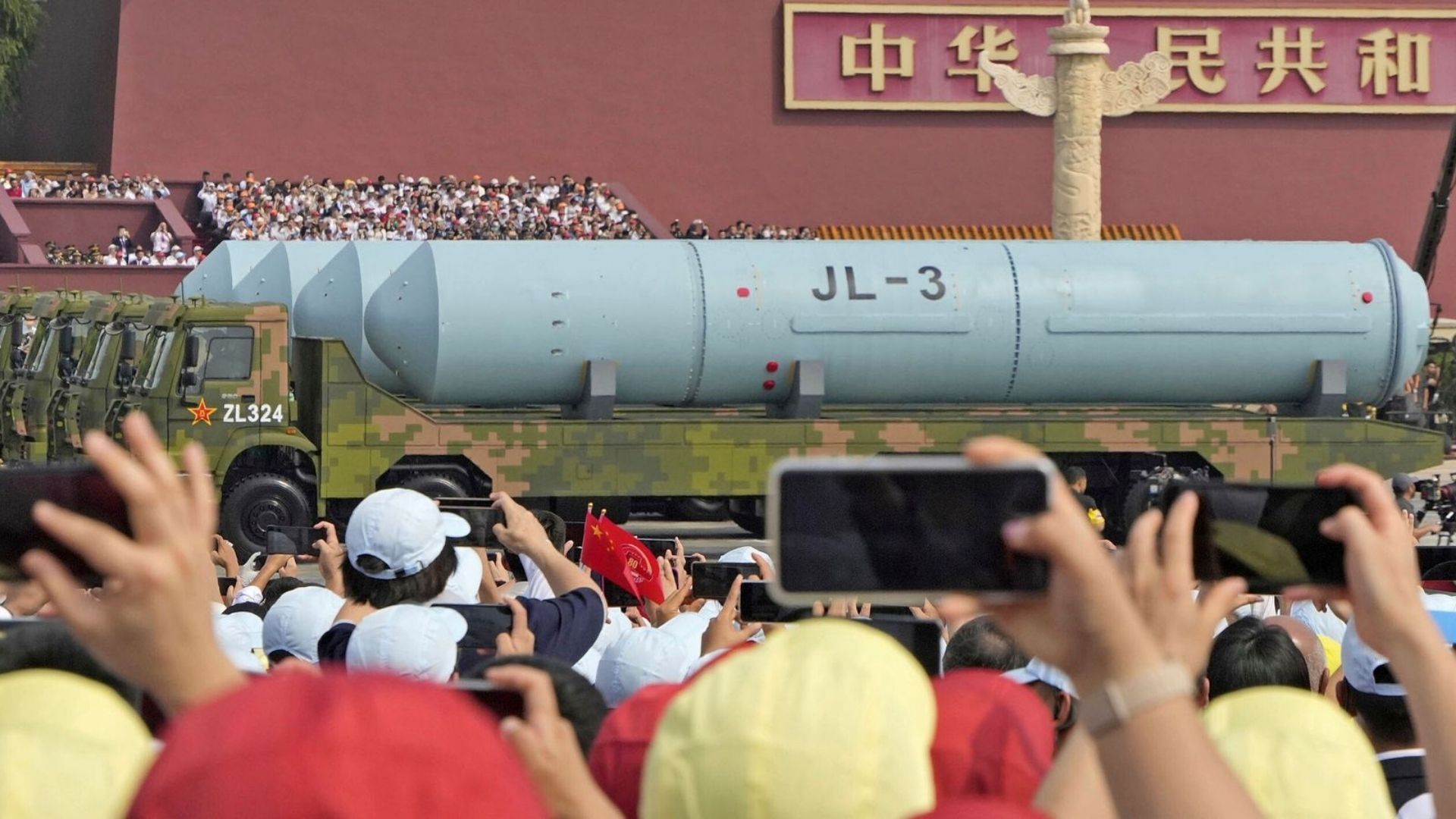
China’s missile test over the Pacific has renewed regional discussions about security, strategic competition and the need for Pacific countries to remain at the centre of decisions affecting the region. Photo/SkyNews/screengrab
Tuesday's visit marked the first time a foreign leader has addressed Solomon Islands’ Independence Day celebrations with Albanese joining Wale at the national stadium for the 48th anniversary celebrations.
The trip comes at a time of renewed debate about Pacific security after China carried out a missile test over the Pacific Ocean on Monday.
China said the launch was part of routine military training and involved a missile carrying a dummy warhead.
But the timing of the test, shortly after the Australia-Fiji defence agreement was signed, has raised questions about growing strategic competition in the region.
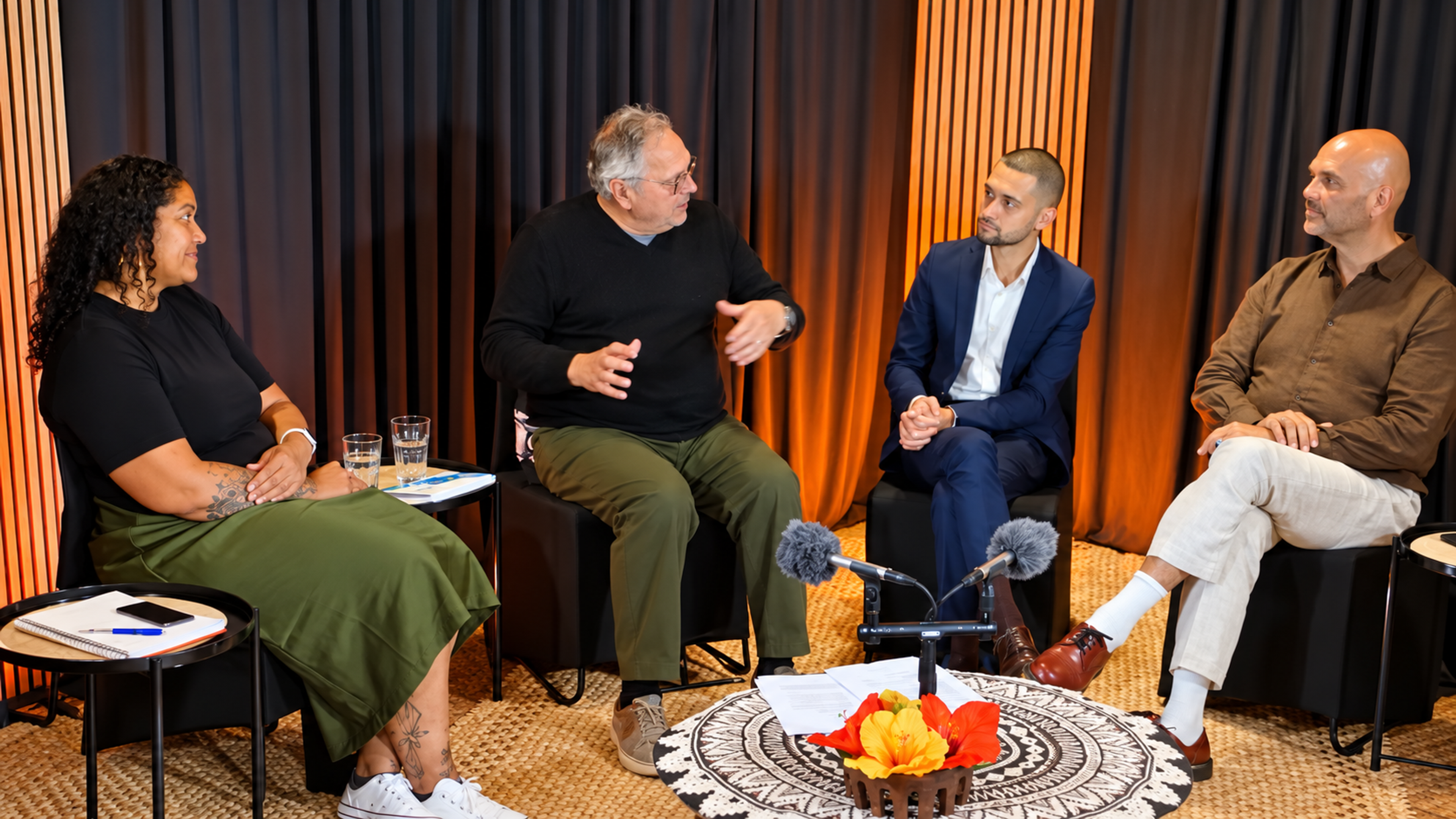
Associate Professor Gordon Nanau, a Pacific Studies expert at Auckland University, said Albanese’s visit was significant because of the wider regional security discussions and the Solomon Islands 48 years of independence.
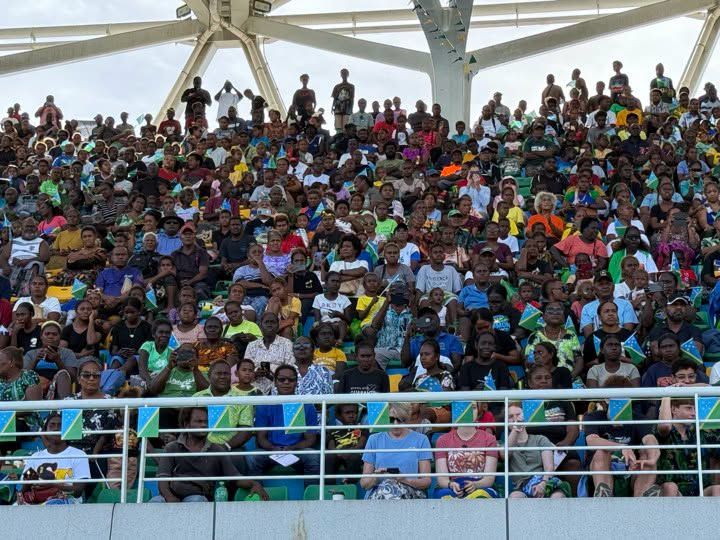
Solomon Islanders mark the country’s 48th Independence anniversary, with celebrations bringing together communities and leaders to reflect on the nation’s journey and future direction. Photo/Facebook
“The visit is very important. Firstly, because Solomon Islands is celebrating its 48th anniversary of independence today,” Nanau told William Terite on Pacific Mornings.
“And as we all know, there is also this geopolitical tension. And reaching out to partners in the Pacific is also a very important aspect of the visit.”
Nanau said the new Solomon Islands Government had placed greater emphasis on rebuilding relationships with traditional partners, but cautioned that it was still too early to know how those statements would translate into policy.
“I think for me personally, I hear the statements coming out from the new government very positive. But I think there is a difference between statements and what will actually happen when time passes. So I think it’s a wait and see kind of situation.”
Watch Gordon Nanau's full interview below.
Nanau said Wale’s approach appeared to be about reinforcing regional relationships than choosing sides.
“The current government re-emphasises the importance of traditional partners to the Solomons, I would say, and of course the region because Prime Minister Matthew Wale is currently the chair of Pacific Islands Forum.”
The security debate has also highlighted wider concerns among Pacific leaders about outside powers competing for influence in the region.
Nanau said Pacific countries did not want the region to become a battleground for competing interests.
“Most Pacific people and countries would say that I think we do not want the Pacific to be a battleground for other interests.”

Pacific leaders are navigating growing security conversations as countries balance relationships with traditional partners while calling for Pacific-led solutions. Photo/PIFS
“I think the important question to be asking is what matters to Pacific Islanders and what is it that they gain out of all these discussions at the regional level.”
The Solomon Islands visit follows Australia’s signing of the Ocean of Peace treaty with Fiji, which includes a mutual defence commitment and allows other Pacific nations to join.
Fiji Prime Minister Sitiveni Rabuka said the agreement was not aimed at any third country.
“It does not threaten Fiji’s relationship with China nor Australia’s relationship with China. And as we have made it very clear in the past, your enemies are not necessarily my enemies,” Rabuka said.
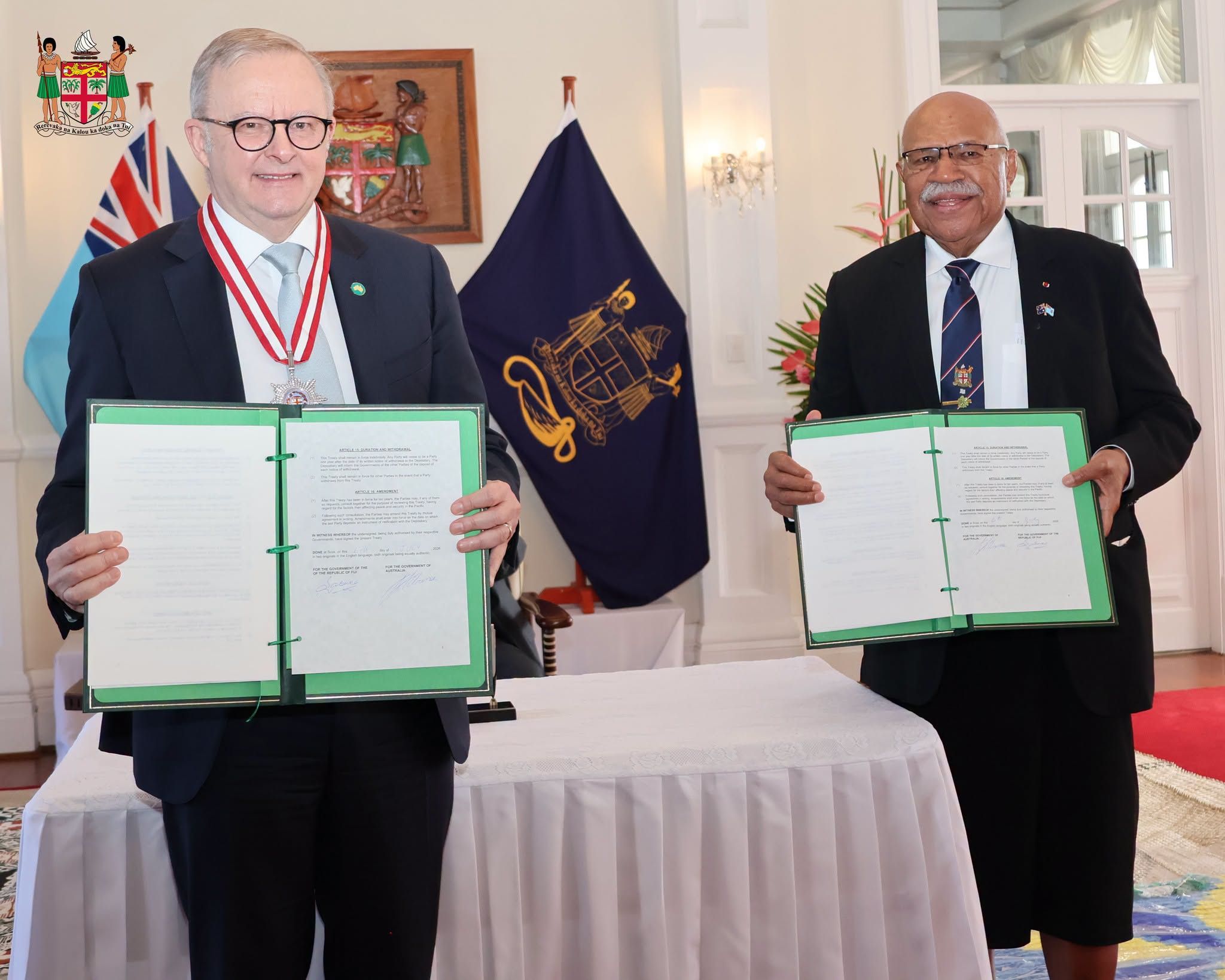
Australian Prime Minister Anthony Albanese and Fiji Prime Minister Sitiveni Rabuka signed the Ocean of Peace treaty in Suva on Monday, a new defence agreement that has sparked wider discussion about Pacific security partnerships. Photo/Fiji govt
China responded by saying it hoped countries would respect Pacific nations’ independence and avoid actions that harmed the interests of others.
As Solomon Islands prepares to take on the Pacific Islands Forum chair role, Wale has also argued that regional security decisions must be guided by Pacific priorities and collective action rather than outside pressure.
Nanau said the biggest question should remain how Pacific communities themselves view these developments.
“For them what is actually happening on the ground or the tangible things that affect their lives on the ground is much more important and critical to them.”
For many Pacific communities, Nanau said, the measure of these regional decisions will be whether they deliver real benefits and security for people at home.
Prime Minister Albanese returns home on Wednesday.