
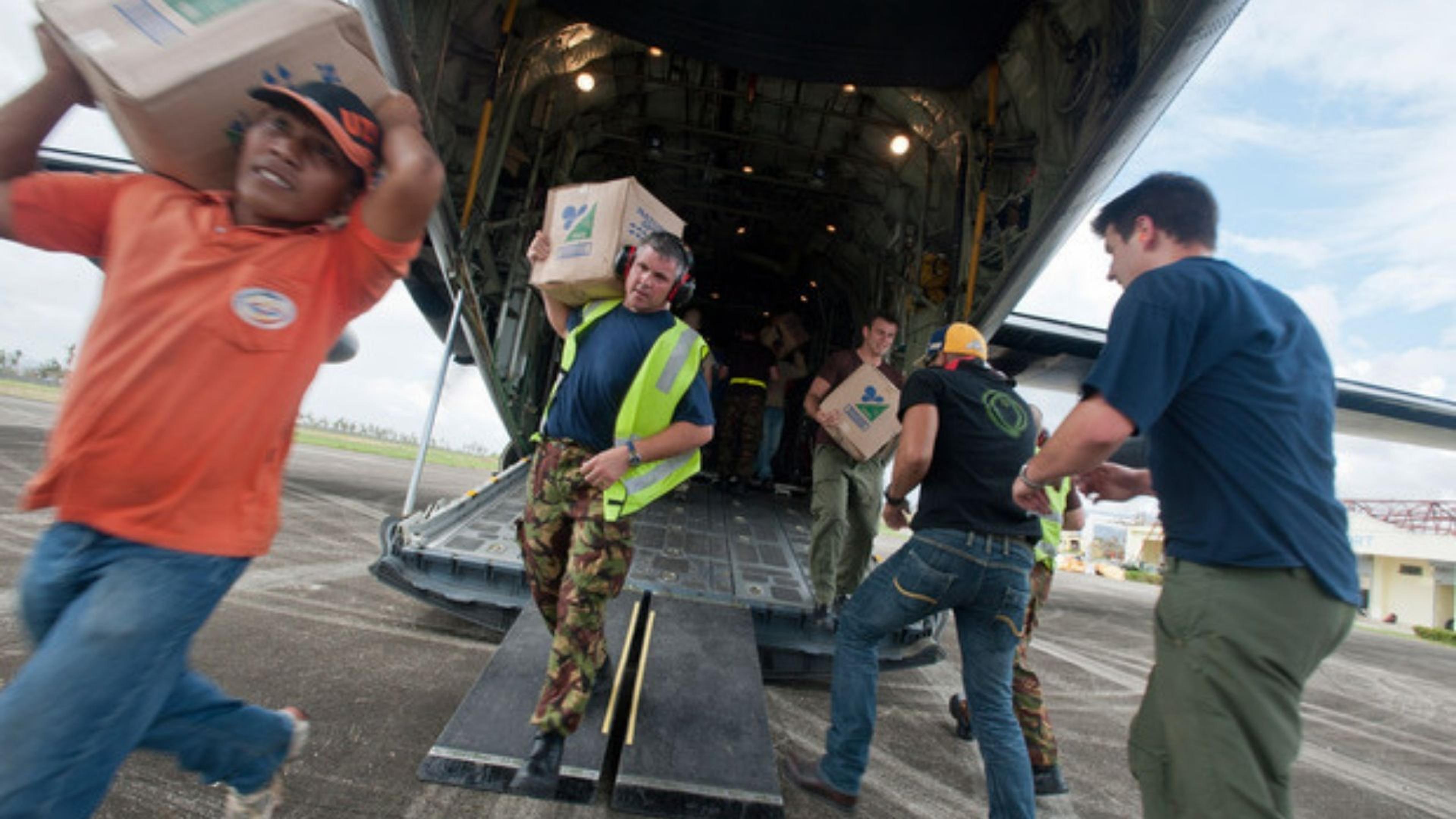
OECD data shows Pacific island nations facing some of the steepest aid cuts globally as development funding falls to a decade low.
Photo/NZDF/file
Pacific Region
Pacific at risk as global aid falls to lowest level in a decade - report
Small Island Developing States are facing steep aid cuts as global development funding drops sharply and a US-led push shifts focus from grants to trade.

Christine Rovoi
Published
02 July 2026, 3:59pm
Share
Copy Link
Top stories

Tonga community partnership wins global environmental award
Khalia StrongFri, 09 Oct

From cleaning a home to the Kiwis: Laban’s World Cup call-up
Christine RovoiSat, 10 Oct
Top stories
Tonga community partnership wins global environmental award
Khalia StrongFri, 09 Oct
From cleaning a home to the Kiwis: Laban’s World Cup call-up
Christine RovoiSat, 10 Oct
Small island nations in the Pacific could face deep economic and health pressure as global aid spending falls to its lowest level since 2014, a new report from the Organisation for Economic Co-operation and Development (OECD) warns.
The report says Small Island Developing States (SIDS) in Asia and the Pacific are “among the hardest hit individually” with projected losses of 33.4 per cent in Overseas Development Assistance (ODA) between 2024 and 2026.
Pacific leaders have previously warned that shrinking global aid risks increasing pressure on already stretched public services across the region, particularly in health, climate resilience and disaster response.
Regional institutions such as the Pacific Islands Forum have consistently called for more predictable and coordinated development funding to avoid sudden shocks to national budgets.
It comes as the Trump Administration lobbies United Nations members to back a “Trade Over Aid” approach.
The move would push donors to prioritise market reforms and economic restructuring over traditional humanitarian and health grants.
Health funding is expected to be hit particularly hard with global support for public health and disease control falling back to pre-pandemic levels.
According to the OECD, funding for malaria programmes is set to drop by 59.6 per cent, tuberculosis by 57.2 per cent, and other infectious disease control by 40.4 per cent.
Humanitarian aid is projected to fall by 40.3 per cent while support for multilateral institutions will drop by 31 per cent.

Small Island Developing States across the Pacific are warning that sharp global aid declines could put pressure on health systems and disaster response capacity. Photo/OECD
The report also highlights how dependent many Pacific countries are on a small number of donors.
“A single provider accounts for most ODA in several LDCs and small island developing states (SIDS), such as the United States in Marshall Islands and Micronesia, or Australia and New Zealand in Tonga and Tuvalu,” the OECD said.
It warned this dependence means “a shift in aid could therefore spill over quickly into broader macroeconomic and societal stress".
In the Pacific, Australia and New Zealand have kept their aid budgets largely steady in recent updates.
Both offer some short-term stability compared to wider global cuts. New Zealand has also brought forward NZ$160 million in unspent aid funding to be used this year.
But development experts say the global trend still points to growing pressure on already stretched systems.
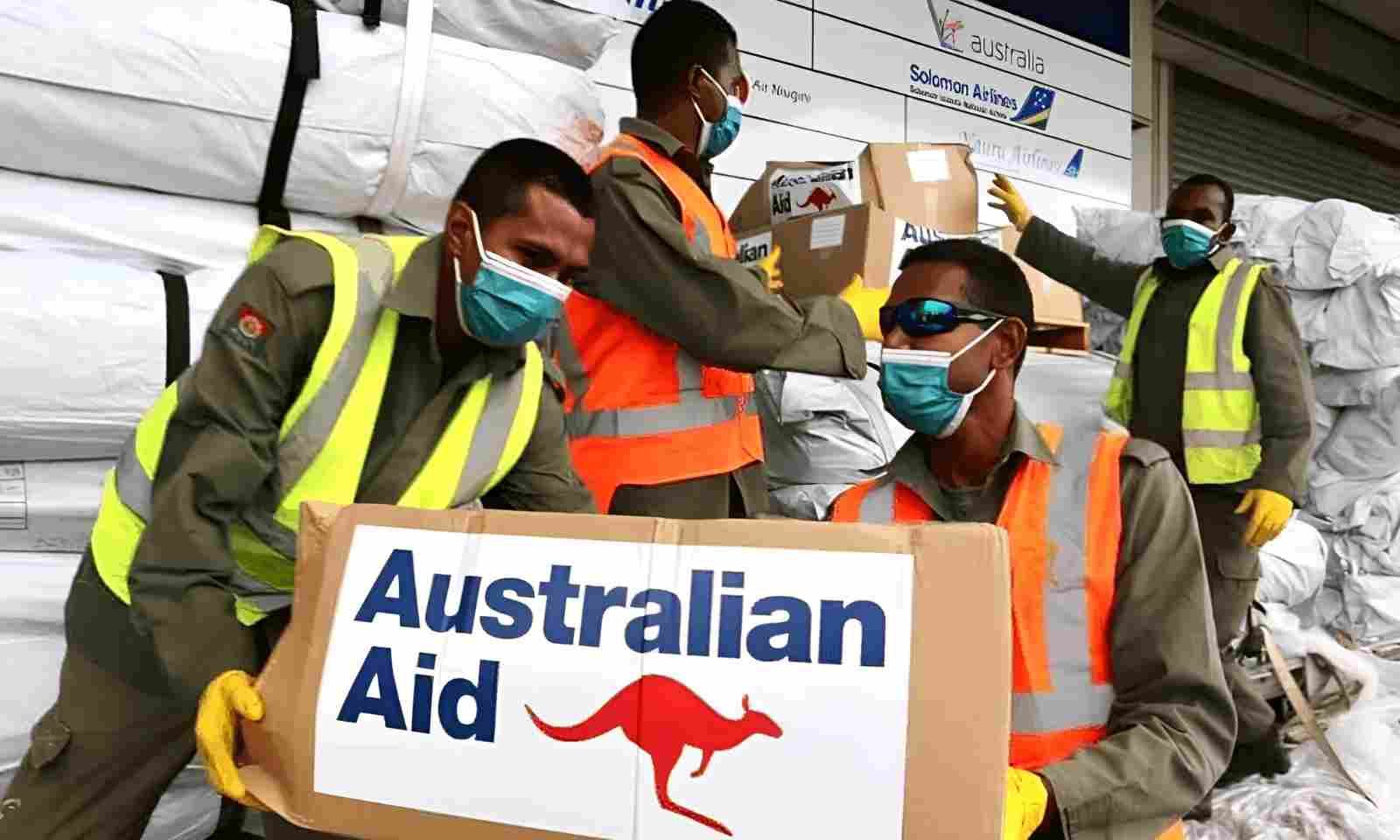
Photo/Supplied
Josie Pagani, ChildFund New Zealand chief executive, says global aid cuts are already being felt across the Pacific.
She warns that while Australia and New Zealand have maintained their aid budgets, they cannot make up for reductions by other major donors.
Speaking with William Terite on Pacific Mornings, Pagani said the latest decline in aid was "not a surprise" and described it as the third straight year of cuts.
"The good news for the Pacific is that Australian aid and New Zealand aid have pretty much stayed the same... But overall, aid in the Pacific has dropped because the EU has dropped its funding, the UK, the USAID."
She said the impact was already visible on the ground and recalled a recent visit to Solomon Islands where an aid organisation shut its office immediately after US funding cuts were announced.
"So it has a direct impact on the Pacific for sure."
Listen to Josie Pagani's full interview below.
Pagani warned that cuts to global aid could affect essential health programmes including malaria treatment, HIV/AIDS medication and immunisation.
But she said the crisis should also drive a rethink of how aid is delivered.
"I hear that in the Pacific all the time... Pacific leaders are saying we need to lead this. It needs to be locally led. It needs to be aligned between what's happening with trade and the private sector and investment as well as aid."
She said donor countries should back ambitious, Pacific-led goals such as universal access to clean water or digital connectivity across the region, rather than relying on traditional aid models alone.
While commending New Zealand for maintaining its aid budget, Pagani said, "It's cushioning the blow a bit... But it's not enough."
She also questioned the growing shift by some governments from aid to defence spending, arguing that investment in development is itself a form of security.
Listen to Canterbury University PhD student Ashalya Noa's earlier interview on her research into foreign aid and soft power in the Pacific below.
"The defence forces see aid as part of the solution to secure and violence-free world. So I think cutting aid budgets for defence is not the right thing to do."
The OECD says the biggest cuts are coming from major donor countries in Europe and the United States, pushing global aid to its lowest level in more than a decade.
Washington’s push for a “Trade Over Aid” model is raising concern among some development and Pacific observers, who warn it could shift funding away from health, crisis response and governance support.
While Australia and New Zealand have kept aid levels largely flat, this may soften the immediate blow for the Pacific and the OECD warns the wider system is becoming more fragile and uneven with heavy reliance on a small number of partners leaving many countries exposed to sudden shocks.
For Pacific leaders and aid agencies, the concern is not just the size of the cuts, but what they signal: a long-term shift away from predictable grants toward a more conditional, trade-focused model of development support.