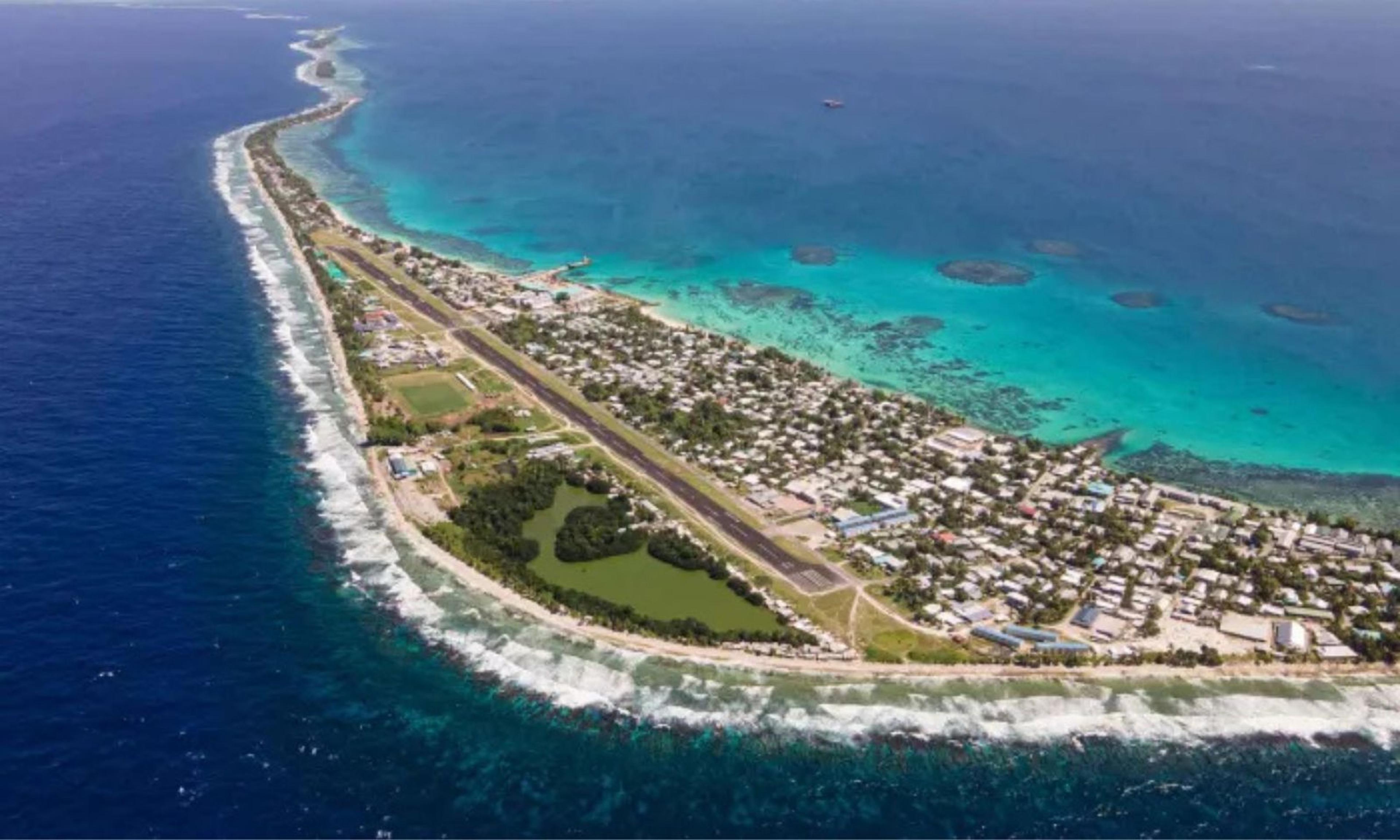
Funafuti Atoll in Tuvalu.
Photo/Supplied
Pacific Region
Beyond Beaches: Story of the Pacific's hidden geology comes to life
A new UN project is helping Pasifika uncover the true value of their landscapes: from active volcanoes to ancient reefs, exploring geotourism and geoparks.

Christine Rovoi
Published
08 December 2025, 7:40pm
Share
Copy Link
Top stories


Auckland teen turns a trip to Fiji into a mission to fight period poverty
Elenoa TuragaiviuThu, 15 Oct
Top stories
Auckland teen turns a trip to Fiji into a mission to fight period poverty
Elenoa TuragaiviuThu, 15 Oct
When we think of the Pacific Islands, images of palm-lined beaches, turquoise lagoons, and gentle waves often come to mind.
But beyond that postcard-perfect picture lies a deeper, older story - one written in rock, lava, reef, and tectonic movement.
According to the United Nations Educational, Scientific and Cultural Organization (UNESCO), the Pacific Islands are “geological treasures”, with landscapes shaped by ancient forces, ripe for conservation, education, and sustainable development.
Thanks to a new animated short film released by UNESCO in partnership with the Pacific Community (SPC) and the Pacific Tourism Organisation (SPTO), people across the region are invited to imagine what a “geopark” might look like among the islands. And why that matters.
A “geopark” is not just another kind of tourist reserve. As defined by UNESCO’s Global Geoparks (GGGp) programme, it is a single, unified area where landscapes and sites of geological importance are actively protected but also celebrated.
Through geotourism, education, community involvement, and sustainable development, geoparks aim to connect the Earth’s history to people’s lives.
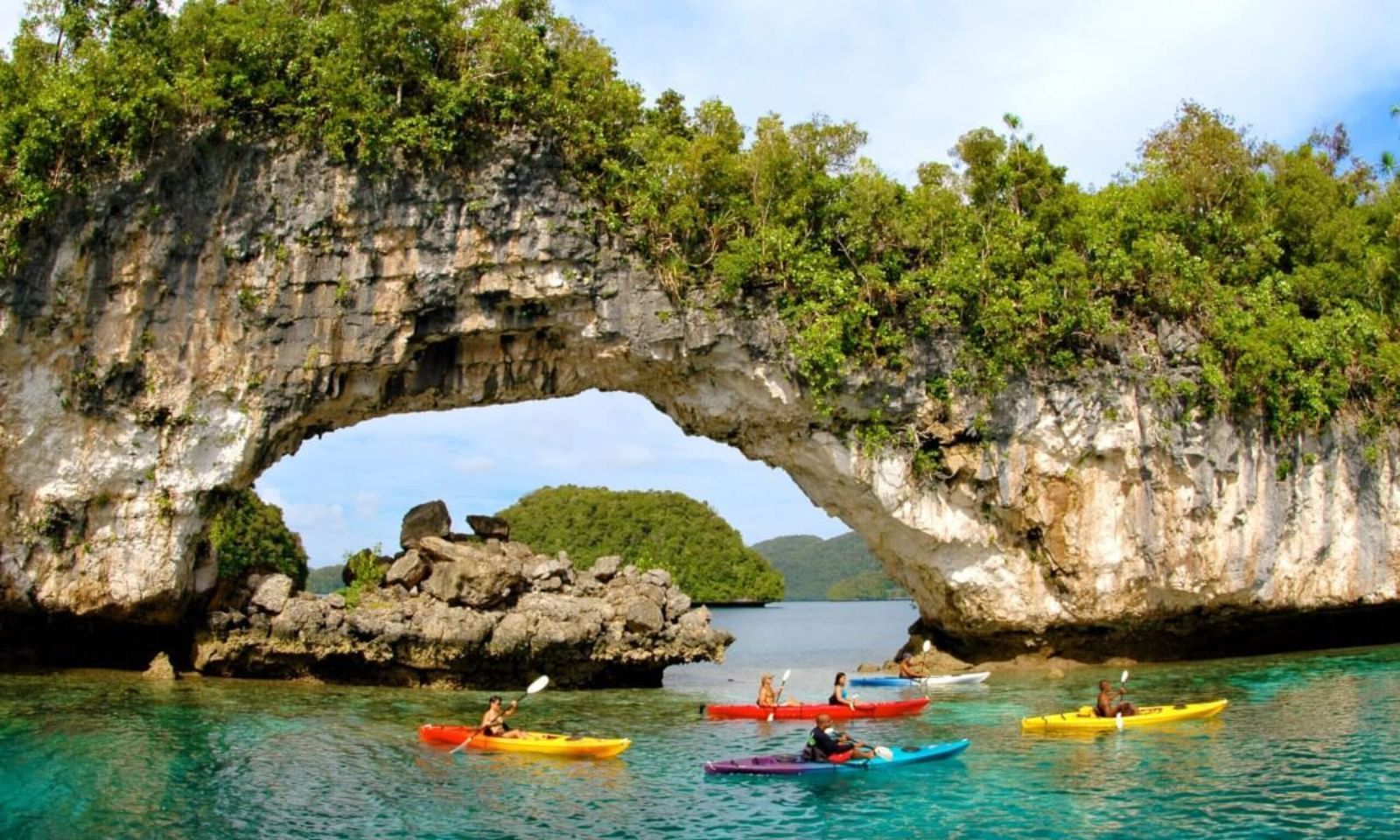
UNESCO's World Heritage Rock Islands in Palau. Photo/UNESCO
Globally, there are 229 such geoparks across 50 countries. But as of now, only one geopark in the entire South Pacific has received the official UNESCO designation, and that is the Waitaki Whitestone UNESCO Global Geopark, on New Zealand’s South Island.
This scarcity helps to explain why many Pacific Islanders are still unfamiliar with the geopark idea. But the new film and ongoing work by UNESCO, SPC, and SPTO aim to change that.
They aim to plant a seed of recognition that geology, not just scenery, can become the source of local pride, jobs and long-term sustainability.

Map of Pacific tectonic. Photo/NASA
The many faces of Pacific geology
The geological stories of the Pacific are varied and dramatic. Some islands like those in Sāmoa, the Cook Islands, French Polynesia, and Micronesia rose long ago above “hotspots”, where plumes of magma pushed through the Earth’s crust.
Over time, the slow movement of the Pacific tectonic plate caused these to drift, forming island chains stretching across the ocean floor.
Other islands such as those in Tonga, Vanuatu, the Solomon Islands or Papua New Guinea, were born through violent collisions and subduction at the boundary of tectonic plates, in the zone known as the Pacific Ring of Fire.
There, the Earth’s crust dives under another plate, melts, and sends magma upward, building volcanoes, mountains, and sometimes raising ancient reef systems out of the ocean.
This process can even transform coral reefs into raised limestone islands, such as the famous Rock Islands of Palau, now recognised for their natural and cultural value.
Most remarkable is that the same Pacific geography also gives birth to coral atolls. Islands across Tuvalu, Kiribati, and the Marshall Islands were once volcanic peaks, slowly sinking away under the sea.
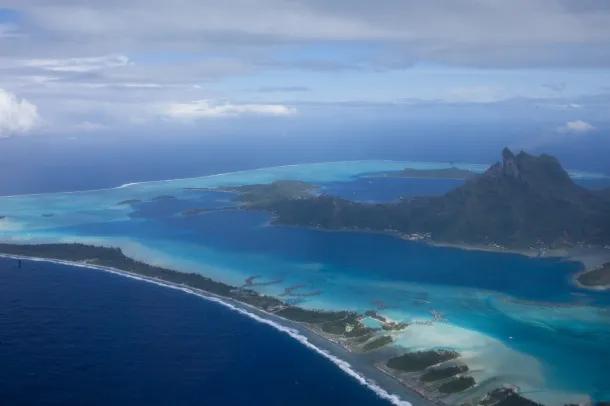
An aerial view of Bora Bora, an island in French Polynesia, renowned for its stunning beauty and turquoise lagoons. Photo/The TerraMar Project
As they subsided, coral communities grew upward, ultimately building rings of reef that now form low-lying atoll islands.
From volcanic peaks with fresh lava flows to ancient coral reefs turned to rock, the Pacific Island chain is like a living museum of geology, with each island telling a different chapter of Earth’s story.
Local heroes leading the way
One of the people pushing this geological renaissance is Aleni Fepuleai, a geologist from Sāmoa. Since 2017, he has worked with the SPC to create the first formal inventory of “geosites” on Sāmoa’s largest island, Savai’i.
Among the sites he identified were the volcanic area formed by the eruption of Mt Matavanu between 1905 and 1911, a landscape marked by lava flows, craters, blowholes, and lava tubes.
In the UNESCO report, local leaders in the village of Safotu told Fepuleai about how a powerful sign of how geotourism could benefit everyday people.“Proper walking tracks, signage, toilets and safety features like guardrails around the crater could bring back tourism that once supported our community.”
Since 2020, UNESCO, SPC, and SPTO have been working together to help countries in the Pacific region identify geosites and explore the possibility of establishing geoparks.
Already, several volcanic parks, including Matavanu (Sāmoa), Yasur Volcano (Vanuatu), and Hunga Volcano (Tonga), have been designated as geological heritage sites by the International Union of Geological Sciences (IUGS).
The Pacific region is part of the Ring of Fire: home to most of the world’s active volcanoes and a hub for earthquakes, tsunamis and other geohazards.
The UN report states that by recognising and protecting its geosites and potentially creating geoparks, Pacific communities can forge a better understanding of the land beneath their feet: its beauty, its power, and its dangers.
It says geoparks could become places not only of learning and tourism, but of resilience and safety, where people learn about earthquakes, volcanoes and rising seas, turning knowledge into preparedness and resilience.
“At the same time, geotourism offers a path to new livelihoods: jobs as guides, educators, conservation managers, or hospitality providers, in a way that values local culture and heritage, not just transient visitors.”
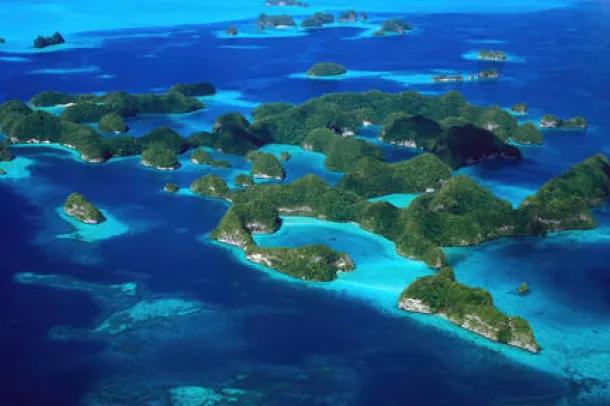
An aerial view of the Rock Islands Southern Lagoon in Palau. Photo/UNESCO
Imagining the Pacific’s geopark future
The new UNESCO film offers a powerful invitation: imagine a network of geoparks across the Pacific, islands connected not just by sea, but by a shared geological memory. It invites locals and visitors alike to see beyond beaches and resorts, and to appreciate the Earth’s long story.
If the Pacific embraces geoparks, it could become a global model for:
Protecting fragile geology and coral reefs, for fostering respect for natural history
Blending culture, science and sustainable development, and
Building resilient communities that understand and honour the earth beneath their feet.
Because in the Pacific, every island is a chapter in Earth’s story and geoparks might help ensure those stories remain alive for generations to come.