
Semo Sititi: Making the All Blacks and Black Ferns is the easy part
Christine RovoiSun, 23 Aug
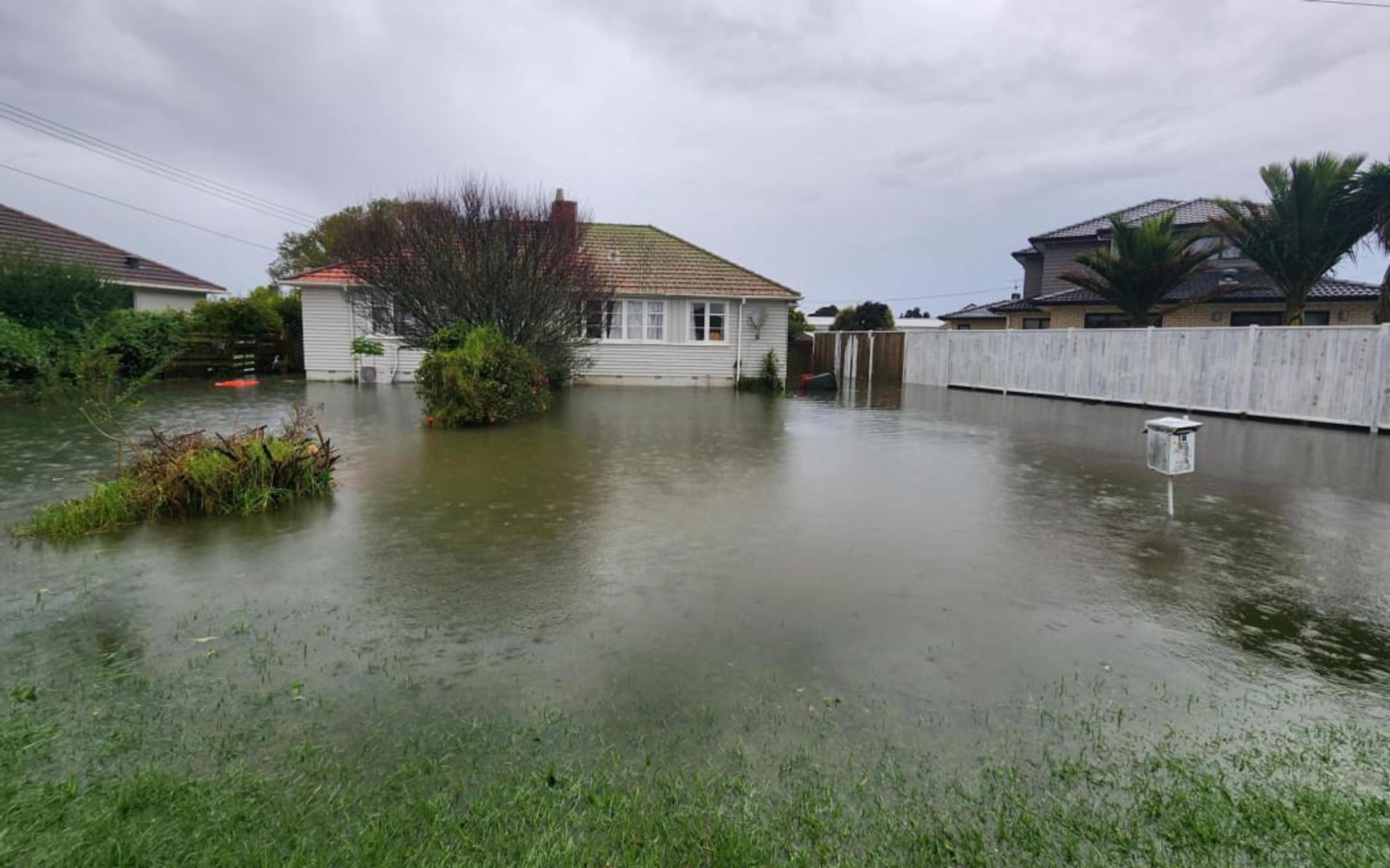
Oakley Creek overflowed at Walmsley Park in Mt Albert, flooding nearby properties on 9 May 2023.
Photo/RNZ/Finn Blackwell
Councillors have agreed to raise per-household flood mitigation funding from 25 to 40 per cent.




As Auckland Council’s storm recovery programme moves into its final phase, councillors have agreed to lift the cap on flood mitigation spending per household in a bid to avoid more expensive property buyouts.
At Tuesday’s governing body meeting, councillors approved changes to the Category 2P Property Risk Mitigation Scheme, increasing the maximum grant from 25 per cent to 40 per cent of a property’s pre-storm capital value where mitigation is considered the best practicable way to reduce risk to life.
The motion was moved by Deputy Mayor Desley Simpson and seconded by Councillor Andy Baker.
Council staff advised the change was needed to prevent more properties from being pushed into Category 3 voluntary buyouts, which would significantly increase costs for ratepayers.
Estimates showed keeping the 25 per cent cap could cost up to $14 million, compared with about $1.2m under the revised approach.
“One option has a $14 million price tag and the other is about $1.2 million,” Simpson said, referring to figures provided by council staff.
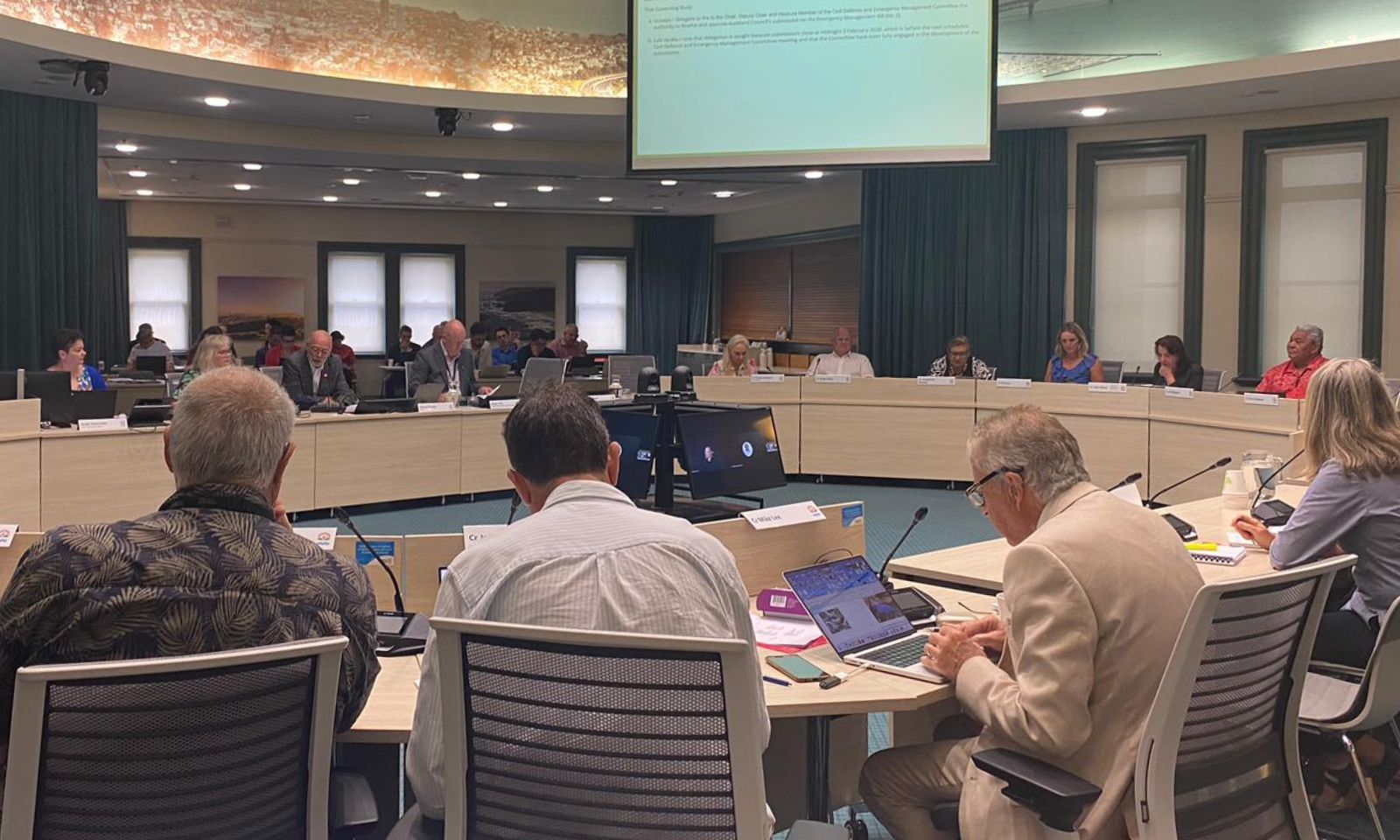
Auckland Council’s governing body meets to consider changes to the Category 2P flood mitigation scheme. Photo/PMN News/Taelegalolo'u Mary Afemata
Tanya Stocks, Auckland Council’s Head of Strategy and Integration in the Group Recovery Office, said the figures reflected the net cost difference between buying out properties and funding mitigation.
“We’ve looked at the estimated cost of having to purchase properties under the Category 3 buyout scheme and netted off what the impact would have been if we’d had to adopt the 2P scheme.”
The Category 2P scheme applies to properties where flood or land instability risks can be mitigated rather than requiring full buyouts. It was introduced after the 2023 storms to allow people to remain in their homes while reducing intolerable risk to life.
Mace Ward, the council’s Group Recovery Manager, told councillors the overall recovery programme is now more than 90 per cent complete. About half of the Category 2P mitigation projects have been delivered with the remainder well advanced.
“We didn’t know as much in November 2023 as we know now,” Ward said.
Updated feasibility assessments show some remaining projects would exceed the original 25 per cent cap, even though mitigation remains achievable and cheaper than buyouts.
“At this point, 13 further projects are expected to land somewhere between 25 and 40 per cent,” Ward said. He said the approach had delivered a net public benefit of more than $12m.
Concerns were raised about fairness for homeowners assessed earlier under stricter rules. Councillor Ken Turner questioned whether council was “changing the goalposts” late in the process and how many property owners might have benefited had the revised settings applied earlier.
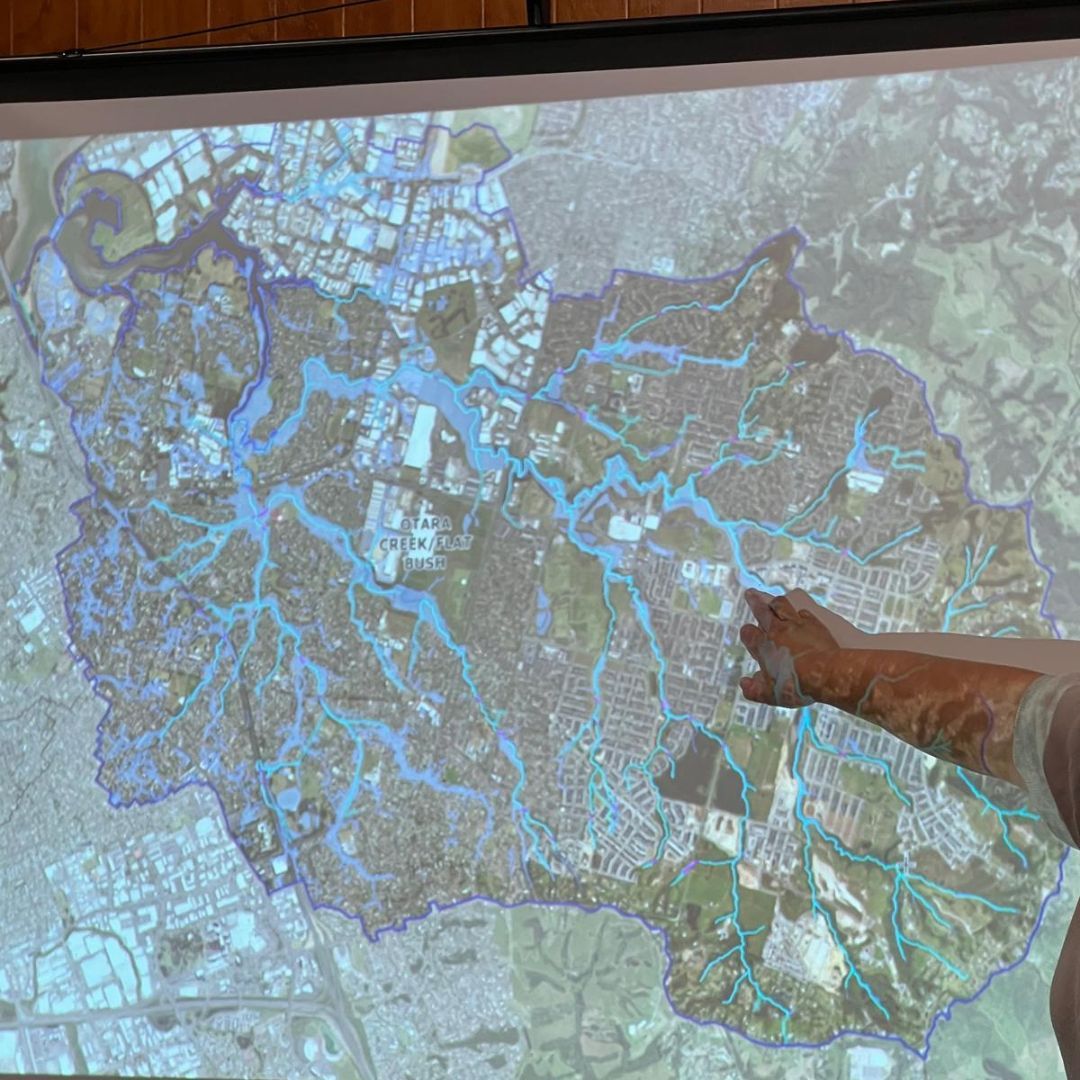
Residents can use Auckland Council’s flood viewer to check the flood risk of their property. Photo/PMN News/Taelegalolo'u Mary Afemata
Stocks said four property owners had already agreed to cover costs above the original cap, totalling $58,000, while a further nine properties had shifted from Category 2P to Category 3 after mitigation costs exceeded the threshold.
Simpson said the change was about reaching a cost-effective conclusion while staying true to the scheme’s original intent.
Councillor Shane Henderson raised concerns about the use of staff discretion under the revised scheme, with those concerns addressed later by council officers.
Councillor Alf Filipaina raised concerns about the ongoing stress and anxiety faced by homeowners still navigating the recovery process.
“These storms we’ve had in the past 10 days would likely have been really triggering for communities and for individuals, so we’re very sensitive to that,” Ward said.
Under the revised settings, council will have sole discretion over whether mitigation funding can rise to 40 per cent.
Henderson also asked how council would respond where homeowners preferred buyouts. Ward said staff would continue working with affected residents but stressed mitigation remained the scheme’s primary objective where feasible.
The Storm Recovery Office is expected to close later this year, with the Category 3 buyout scheme targeted to finish by May, and the Category 2P programme running through to December 2026.
More than 500 homes have already been removed under the buyout programme, with more than 170 currently under contract.
Mayor Wayne Brown said the expanded mitigation approach was unlikely to be repeated.
“We’re not the insurer of last resort,” he said. “This will be the last of these that ever happens, I’m sure, in New Zealand.”
Councillors also agreed to reinstate the Storm Recovery Political Advisory Group to provide political oversight and guidance as the recovery programme moves toward closure.
LDR is local body journalism co-funded by RNZ and NZ On Air.