
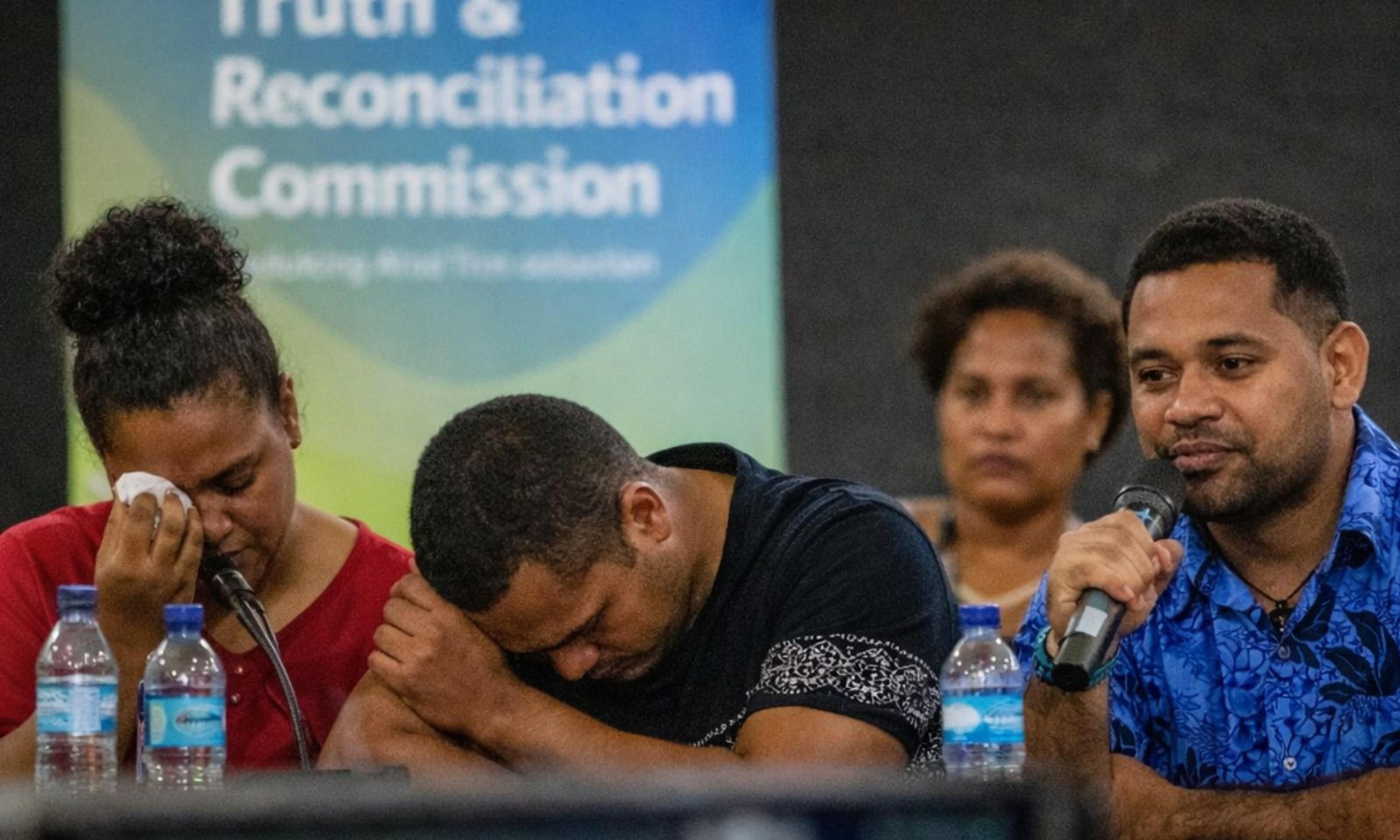
A Fijian family shares their painful story at a Truth and Reconciliation Commission hearing.
Photo/RNZ Pacific/Kelvin Anthony/file
Pacific Region
Testimonies in truth and reconciliation commission lay bare Fiji’s painful history
Emotional testimonies before the TRC are forcing Fijians to confront decades of silence, pain, and political trauma.

Christine Rovoi
Published
23 February 2026, 7:28pm
Share
Copy Link
Top stories
World Vision warns children will pay for aid cuts beyond the Pacific
Thomas Tarurongo WynneMon, 12 Oct
Mate Ma’a Tonga’s 40-year legacy lives on through generations
Elton Lonaratha JnrMon, 12 Oct
Top stories
World Vision warns children will pay for aid cuts beyond the Pacific
Thomas Tarurongo WynneMon, 12 Oct
Mate Ma’a Tonga’s 40-year legacy lives on through generations
Elton Lonaratha JnrMon, 12 Oct
Stories shared before Fiji’s Truth and Reconciliation Commission (TRC) are forcing the nation to face chapters of its history that many had preferred to forget.
From families torn apart by imprisonment to mothers fleeing into the bush with newborn babies, the stories emerging from the commission are reshaping how the nation remembers its past.
In hearing rooms across the country, long-silenced experiences of political upheaval and personal loss are finally being spoken aloud, some for the very first time.
Commissioner Ana Laqeretabua says some accounts over the past year have left her, even as a citizen, “stop and wonder how Fiji could have inflicted such pain on itself".
The hearings, she told the FBC, have not been easy but they are necessary.
One of the most powerful accounts came from the Malani family, who shared their trauma together before the commission.
The children spoke about their father’s imprisonment and later death, in some cases hearing each other’s pain for the first time.
Laqeretabua told the state broadcaster she remembers the youngest son speaking about how much he still misses his father. “That was quite a difficult one,” she says.
In another hearing held during a workshop organised by FemLINKpacific, a rural woman described fleeing into the bush with her six-week-old baby during political unrest, hiding for hours in fear.
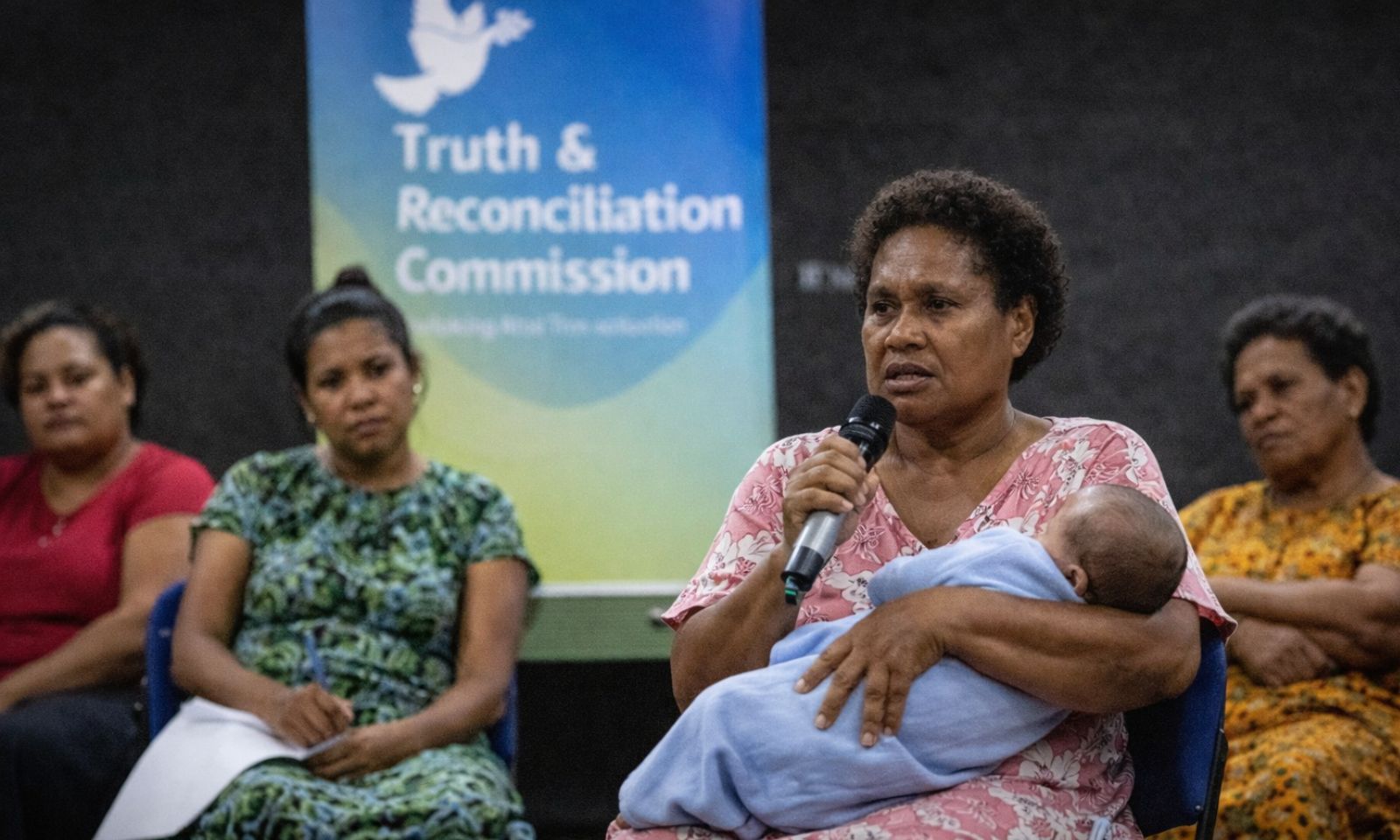
A woman clutches her six-week-old baby as she speaks at a Truth and Reconciliation Commission hearing organised by FemLINKpacific. Photo/RNZ Pacific/Kelvin Anthony
Laqeretabua says the image of a mother clutching her infant in silence remains with her.
She added that many may never have spoken publicly if the commission had not created a safe space.
Joaquim Da Fonseca, commission chair, also stressed to journalists that while some experiences appear more extreme than others, every story matters.
He said each testimony acts as a mirror for society, allowing families who have stayed silent to see their own pain reflected.
As the hearings continue across the country, the commission maintains that confronting the truth, however uncomfortable, is essential for national reconciliation.
Da Fonseca also made it clear that the commission will not act as a shield for politicians or serve any political agenda.
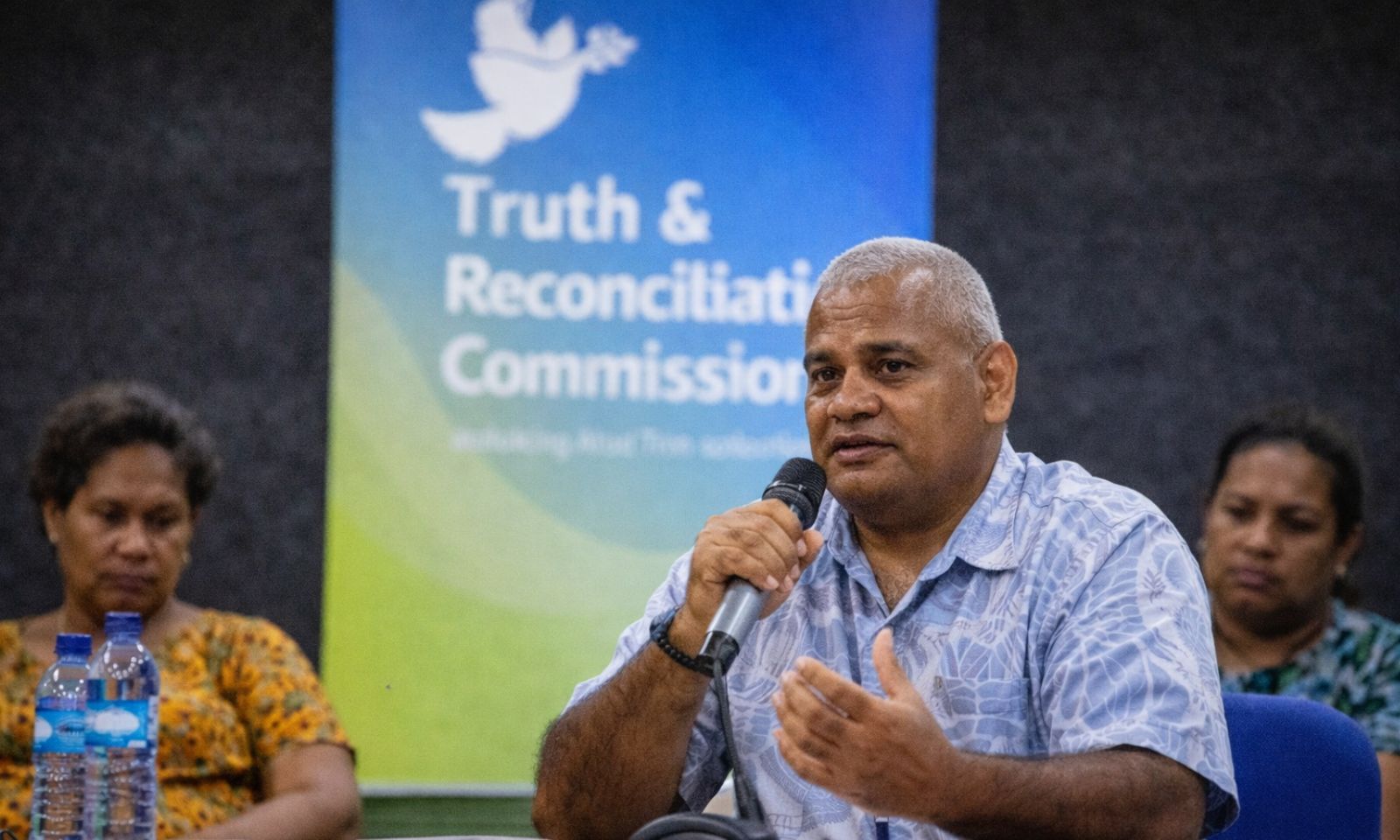
TRC chair Joaquim Da Fonseca speaks during a commission session. Photo/RNZ Pacific/Kelvin Anthony
“The commission’s sole responsibility is to uncover the truth, nothing more, nothing less,” he said.
He says the commission’s task is not to protect politicians, whether they are powerful or not, and that politicians themselves do not believe the commission needs to do that.
“I think we are not in a war," he said. "It is a commission conducted according to the law of the land. And we just try to conduct our work as impartially as humanely possible.”
Laqeretabua also said that while the commission did not have the authority to compel individuals to appear, it could formally invite them to share their accounts.
She stressed that documenting personal stories was central to healing.
“But it’s only through documenting and people telling their stories that we’re able to do that," she said. "You know, burying it and acting and pretending that we didn’t come through this and just keep going without confronting what we’ve been through is not actually very helpful.”
The commission insists its mandate is rooted in truth-telling, not politics, as it continues its work across Fiji, asking the country to listen, reflect, and reckon with its past.
The Truth and Reconciliation Commission Act 2024 was passed in December 2024, with the commission's members sworn in on 30 January 2025. It began its operational phase in May 2025 following a preparatory period.
The commission is designed to operate for 18 months following its preparatory phase, with hearings scheduled throughout this time. It is scheduled to wrap up its work and submit its final report to the President by February 2027.