LEAO claims Silver Scroll with first pure Gagana Sāmoa winner
Brooke FonotiWed, 21 Oct
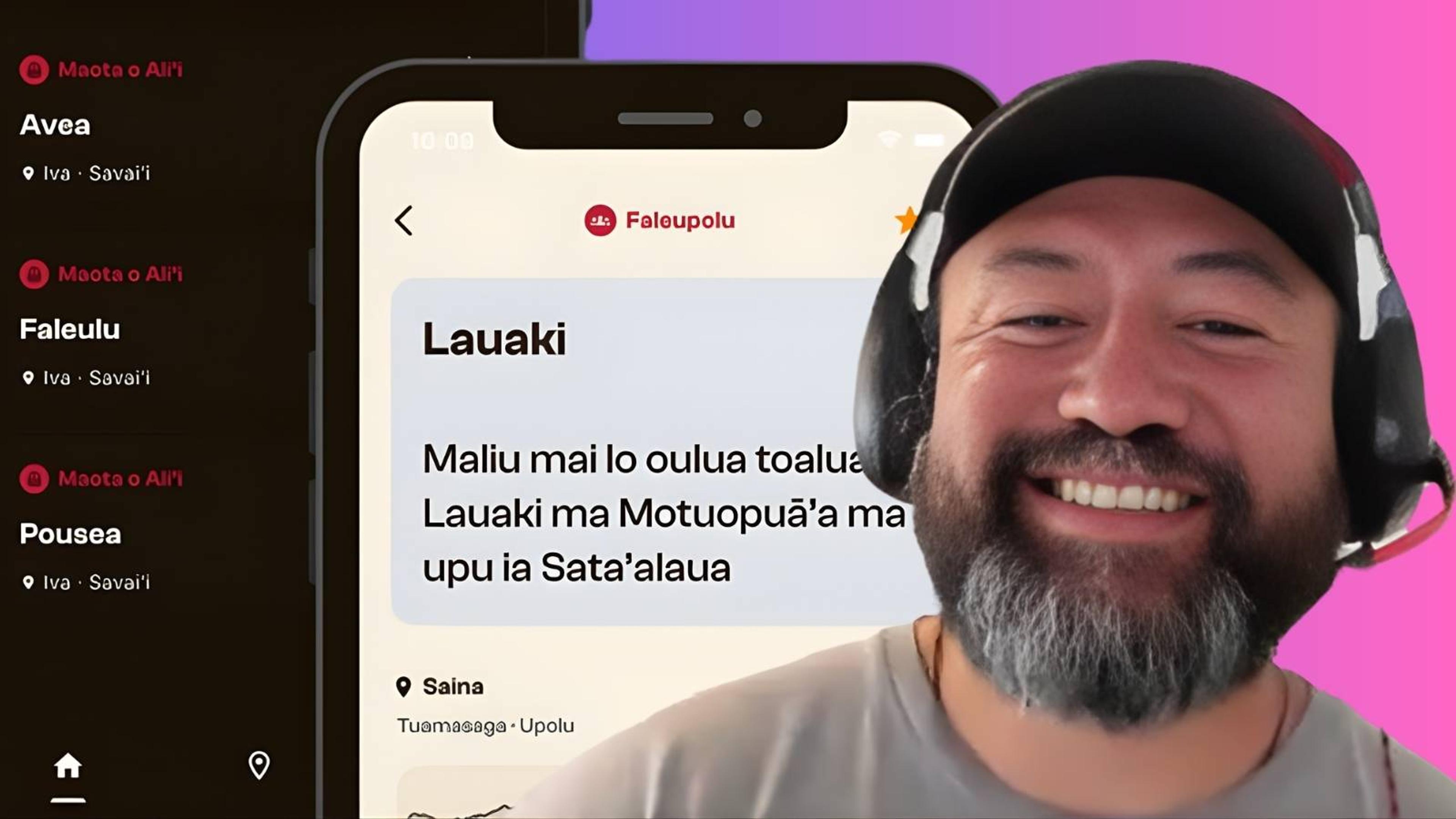
Julius To’o, the software developer behind the app Fa’alupega.
Photo/Supplied
A Sāmoan developer has turned centuries-old oral traditions into a mobile app, giving Sāmoans overseas a shame-free way to learn fa’alupega.

For Sāmoans growing up outside their villages, knowing one’s ancestral titles and family lineages can feel impossible. But a new mobile app is changing that.
Fa’alupega, the sacred practice of chiefly honorifics, is now searchable, private, and available on a smartphone. It puts the map of Sāmoan identity literally in the palm of your hand.
Fa’alupega links people to their village, ancestral lands, and familial hierarchies, forming a foundation of fa’asāmoa, the Sāmoan way of life.
Traditionally, this knowledge is learned from matai (chiefs) and shared in ceremonies. The practice has also appeared in printed works like O le tusi fa’alupega o Sāmoa, first published in 1915.
Julius To’o, a software developer with over 15 years’ experience, launched the Fa’alupega app to digitalise these records into a modern, searchable database.
“Fa’alupega is not just words. It is the map of who we are and where we come from,” To'o says.
The Fa’alupega app. Photo/Supplied
The app addresses a growing risk of cultural loss among Sāmoans living abroad.
Census data from 2023 shows around 91.4 per cent of Sāmoan children under the age of 15 years in New Zealand were born in the country, but with limited exposure to traditional knowledge.
To’o describes the fa’alupega app as a "tool in a toolbox", adding to already existing resources such as networks and books.
2023 Census data reveals over 90 per cent of Sāmoans under 15 years old in Aotearoa were born within the country. Photo/Unsplash
“As someone who is trying to reconnect with culture a bit more, as I get a bit older and I've got kids now, for me to try and pass that knowledge on, it gets harder without my parents around,” To’o says.
“As uncles, aunties and grandparents move on, it's just another tool for us to try and understand our Sāmoan worldviews, lineage and things, and try and keep that alive.”
The project began in 2022 after discussions with his late mother about handwritten fa’alupega and gafa (genealogy) notes.
Seeing the fragile records inspired him to use his technical skills to safeguard the information digitally.
Listen to Julius To’o’s full interview below.
Since then, To’o has consulted trusted family friends to verify records across villages in a respectful way.
“There's been some consultation since mum passed with a family friend who's been a trusted resource for me over the last year, to go through village by village, in a respectful way. Making sure it's not too biased.”
Digitalising fa’alupega brought challenges like differing versions of history between families.
By going digital, the app becomes “living technology”, meaning updates can be made easily without costly reprints.

The Fa’alupega app digitises carefully sourced records to transform the Sāmoan tradition of chiefly honorifics into an accessible, searchable mobile resource. Photo/Unsplash
The app also addresses the mā (shame) some diaspora Sāmoans feel when struggling with language or cultural knowledge.
To’o says it provides a safe space for people to build their knowledge base privately. He adds users can focus on their own village or explore multiple islands.
“If you just want to learn your own village and be comfortable in a bit of identity around what that brings to you, then you can use it that way too. Or if you're an experienced person and you want to build your knowledge across villages and islands.”
Available on iOS and Android, the app includes a full database of Sāmoa’s chiefly titles and supports macrons and diacritics to preserve cultural integrity.

By providing a private space to learn village lineages, the app aims to reduce the mā (shame) factor felt by Sāmoans in the diaspora who struggle with cultural connection or language. Photo/Unsplash
It provides a private, accessible way for young Sāmoans raised abroad to learn their heritage and engage confidently in cultural spaces.
“The app is just trying to position itself to say, ‘here's a safe space where you can look across any village on any island in Sāmoa, and slowly build up your knowledge base that way’,” To’o says.