

Saunoamaalii Dr Karanina Sumeo and Brook Turner say food and wage insecurity must be addressed for Pacific communities.
Photo/Vision West/EEO
Community
Six in 10 Pacific families struggling to afford food, new report finds
Pacific households in Aotearoa are facing food hardship at nearly twice the national rate, with community groups warning the crisis is deepening.

Khalia Strong
Published
13 March 2026, 12:21pm
Share
Copy Link
Top stories

‘Vanuatu is not for sale’: Government hits back at New Caledonian MP
Christine RovoiTue, 06 Oct

Pacific women have waited long enough for equal pay in NZ, says former commissioner
Thomas Tarurongo WynneTue, 06 Oct

Tonga uses anti-terror law for the first time to convict gang leader
Christine RovoiTue, 06 Oct
Top stories
‘Vanuatu is not for sale’: Government hits back at New Caledonian MP
Christine RovoiTue, 06 Oct
Pacific women have waited long enough for equal pay in NZ, says former commissioner
Thomas Tarurongo WynneTue, 06 Oct
Tonga uses anti-terror law for the first time to convict gang leader
Christine RovoiTue, 06 Oct
More than six in 10 Pacific households in Aotearoa New Zealand struggled to afford enough food last year, highlighting a growing crisis for many families.
The annual Hunger Monitor report, released this week by the New Zealand Food Network, found 64 per cent of Pacific households experienced food insecurity in 2025, almost double the national average of 33 per cent.
Community groups say the numbers reflect what they see every day.
Brook Turner, director of partnerships at Vision West in West Auckland, says more parents are skipping meals so their children can eat.
Turner says the pressure is now hitting families who are working but still cannot keep up with rising costs.
“More and more adults and parents are going without food themselves or going without paying core bills so the kids have enough food in their bellies,” he tells Pacific Mornings.
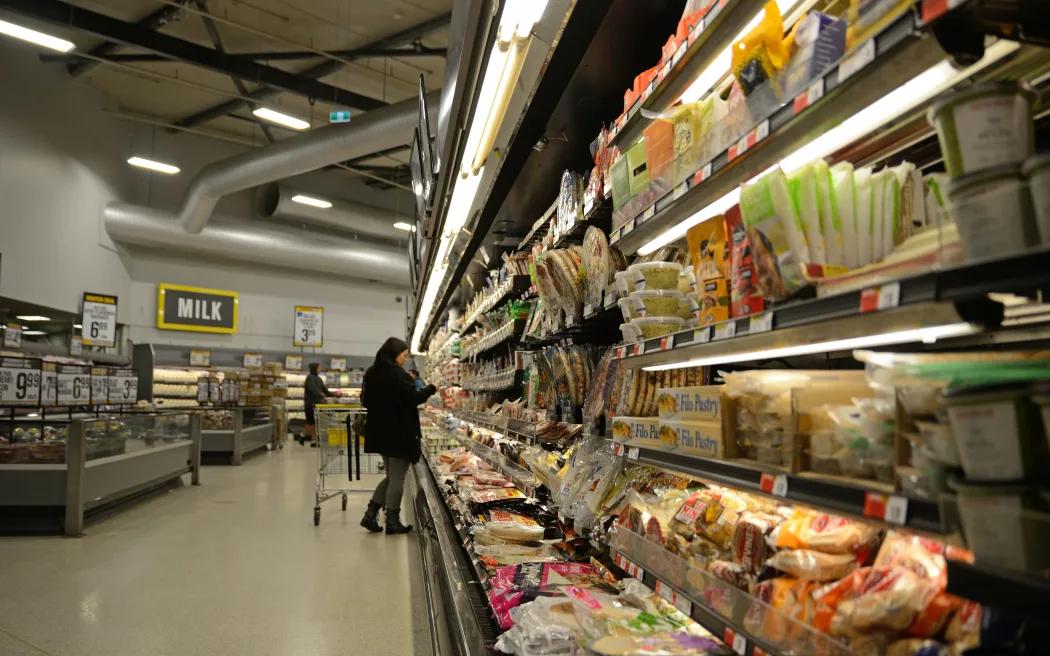
Photo/File
"Six years ago, we would have very few wage earners seeking food support from us. But we're seeing hardworking Pasifika households who are on two incomes with their tamariki, that even with all those dollars coming in, there's not enough kai to go around the table at dinner time."
The Hunger Monitor surveyed 3000 households across the country. It identified sickness, low income, unemployment, and reduced access to government support as key drivers of food hardship.
Pacific communities are being hit hardest by these pressures.
Watch Brook Turner's full interview below.
Stats NZ data shows unemployment among Pacific people rose to 12.3 per cent at the end of last year, compared with 4.2 per cent for Europeans.
Pay gaps also add to the strain. Saunoamaalii Dr Karanina Sumeo, a member of the Still Minding the Gap advisory group, says Pacific workers are mostly paid less than others.
Research highlighted in the Still Minding the Gap report shows Pacific workers earn about 19 to 25 per cent less than European male workers. In an earlier interview, Saunoamaalii said the average Pacific household income sat at just under $52,000 a year.
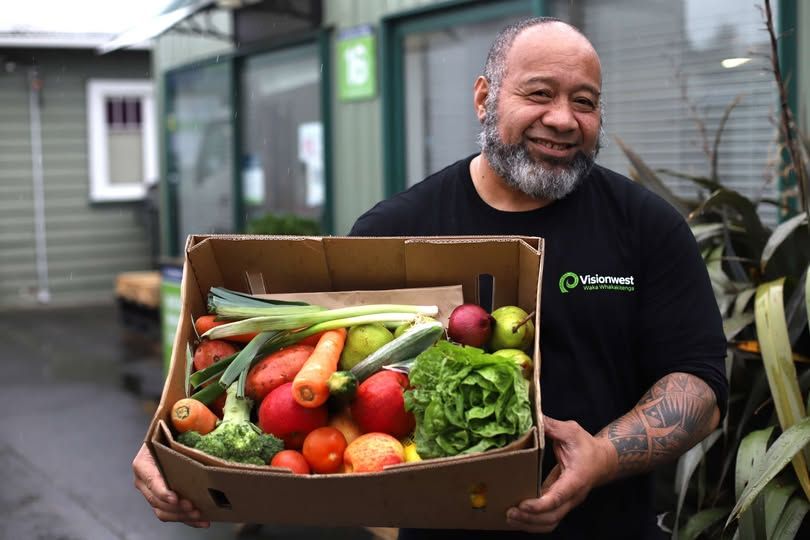
Vision West staff member Adam helps distribute food supplies. Photo/Supplied
“We work hard, we contribute to this economy, and it’s really unfair that our people tend to earn the lowest when we compare ourselves to others,” she said “If people on six-figure salaries are struggling to make ends meet, imagine how our households are doing right now.”
Growing demand for help
Food banks are seeing the impact first-hand. Vision West supported 822 households with food in the past year, up 50 per cent on the previous year.
But Turner believes the real level of need may be even higher. “One of the most common things we hear about is the shame barrier for Pasifika households and other families taking the step to reach out for support, and the other thing is just tiredness and despair.”
Watch Saunoamaalii Dr Karanina Sumeo's full interview below.
He says in a fair system, families should not have to rely on food banks to eat. "We need adequate benefit levels for households so they don't need to fall on the mercy of a food bank. But we also need government support for community food organisations like Vision West so that when households find themselves at their wits’ end, they've got somewhere to go."
Social Development Minister Louise Upston says she is seeking further advice on the Hunger Monitor findings and acknowledges the cost-of-living crisis.
In a statement, Upston says the Government is focused on economic growth and easing pressure on families by lowering inflation and interest rates, and reducing taxes to increase household incomes.
Advocates say without stronger action, many Pacific households will continue to face the daily struggle of putting food on the table.