Green Party targets South Auckland youth as poll support climbs
Thomas Tarurongo WynneWed, 07 Oct

A patient undergoes dialysis treatment, which can be a lifeline for people living with kidney failure.
Photo/Supplied/diariodoamapa.com
The Tongan man was granted a visa to continue treatment in Aotearoa as Te Whatu Ora tries to recover unpaid costs from visitors and migrants.




A Tongan man who needed dialysis three times a week is among several patients from overseas whose cases have highlighted the difficult question of who pays when people need life-saving treatment in New Zealand.
The 57-year-old patient had four previous undisclosed convictions and was granted a 12-month visa so he could continue dialysis for end-stage renal failure at Manukau Super Clinic.
For Pasifika living with kidney disease, long-term dialysis can also mean years of regular treatment.
Faálaeo Feliuai, a Cook Islands Māori and Sāmoan social worker in Wellington, spent nearly a decade on dialysis before receiving a kidney transplant in 2025.
She described the treatment as something she had to keep doing to stay alive.
“It did affect my life a lot, but I was like ‘It has to be done, because if I don't do it, I'm going to die’,” Feliuai told PMN News.
Listen to Faálaeo Feliuai's full interview below.
The issue also points to a wider challenge for Pacific countries where specialist treatment is not always available.
Professor Dave Peebles, director of the Pacific Security College at the Australian National University, wrote in July that Pacific countries need stronger regional arrangements around access to health services.
“The need for Pacific citizens to travel to countries outside the region for advanced medical care isn’t sustainable,” Peebles wrote.

Professor Dave Peebles says Pacific countries need stronger regional arrangements to improve access to specialist healthcare. Photo/pacificsecurity.net
Information provided to RNZ by Immigration officials said the dialysis treatment for the Tongan man was permanent and life-sustaining and was not available in kingdom.
“This treatment is a permanent and life-sustaining treatment. The applicant's medical treatment is not funded by his home government and treatment costs are not covered under New Zealand's Official Development Assistance programme.
"The applicant has provided evidence of a payment agreement for the debt outstanding between the applicant and Health New Zealand.”
The Tongan man's case comes as Health New Zealand/Te Whatu Ora says it is chasing more than $70 million in unpaid public healthcare bills from tourists and migrants.
Health NZ chief financial officer Bevan McKenzie said between 25 and 30 per cent of outstanding debts are typically written off as unrecoverable.
“The amount written off varies from year to year; however, our experience is that between 25 and 30 per cent of outstanding debts will typically be written off as unrecoverable,” McKenzie said in the RNZ report.

Health NZ chief financial officer Bevan McKenzie says between 25 and 30 per cent of outstanding healthcare debts are typically written off as unrecoverable. Photo/Health NZ
Health NZ says it uses invoices, reminders, payment arrangements, sponsors, insurers and debt collection agencies to recover the money.
Recovery can be difficult when patients leave Aotearoa, have limited insurance or face financial hardship.
Most visitors with visas lasting less than 12 months are not eligible for publicly funded healthcare. Some Pacific citizens can access publicly funded treatment depending on their circumstances and the agreements or arrangements that apply to them.
New Zealand also has reciprocal healthcare agreements with Australia and the United Kingdom.
Immigration officials have identified seven cases in the year to December 2024 involving people who sought urgent dialysis or treatment for renal failure soon after arriving on visitor visas.
According to information provided to RNZ by Immigration officials: “All individuals were receiving treatment for end stage renal failure within a month of arriving in New Zealand."
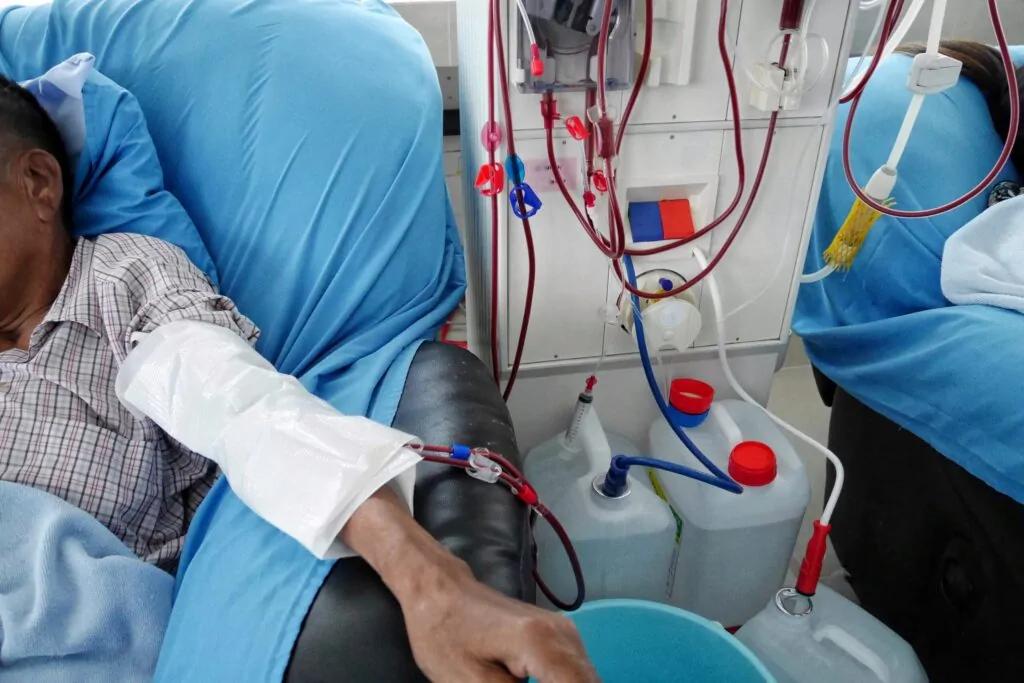
Dialysis can require patients with kidney failure to receive treatment several times a week. Photo/doralhw.org
Officials said at least two of those patients knew about their health conditions before travelling and had provided false information in their visa applications while others were diagnosed after arriving.
All seven later applied for medical treatment visas to remain in New Zealand for renal care.
Another case involved a man with end-stage renal failure who arrived in June 2024 on a visitor visa and became unwell after arriving. Immigration approved visas for him and his family so he could continue treatment.
In a separate case, a man who had not disclosed diabetes, end-stage renal disease and two criminal convictions built up a Health NZ debt of $174,746.
Health NZ says the unpaid debt figure is up from $45.6 million in 2022/23, with officials pointing to increased travel since the pandemic as one possible reason.
Clinical decisions are not based on whether someone can pay and patients receive care regardless of their eligibility or immediate ability to pay.
The cases are now being reviewed across Immigration New Zealand, Health NZ and the Ministry of Foreign Affairs and Trade, with Immigration's Pacific teams also being briefed.