Fiji's young people, women and children are increasingly caught up in the HIV crisis that is putting growing pressure on the country’s health system.
PMN News Composite
Health
Fiji’s HIV crisis spreads fast as health system struggles to keep up
The epidemic is now affecting the wider population with young people and children among those bearing the growing burden as health services try to cope.

Elenoa Turagaiviu
Published
08 September 2026, 6:19pm
Share
Copy Link
Top stories


Top stories
Fiji’s human immunodeficiency virus (HIV) epidemic is spreading beyond the groups initially most affected, with young people, women and children increasingly caught up in a crisis that is putting growing pressure on the country’s health system.
The HIV prevalence among Fijians aged 15 to 49 has reached 1.6 per cent, meaning about one in every 60 adults in that age group is living with HIV. The rate has risen from 0.6 per cent over the past five years.
“Five years ago, one in 167 people or 170 people would be HIV infected,” Dr Jason Mitchell, Chair of the National HIV Outbreak and Cluster Response Taskforce, tells PMN News. “Now, in the space of 5 years alone, one in 60 now impacted with HIV.
“I don't think we should be taking that number lightly, all of this is preventable, we just need to get on top of it.”
According to the Ministry of Health, 2016 new HIV diagnoses were recorded last year, the highest annual figure since national surveillance began.
The United Nations agency, UNAIDS, estimates about 9100 people were living with HIV in Fiji in 2025, with the figure potentially as high as 12,000.
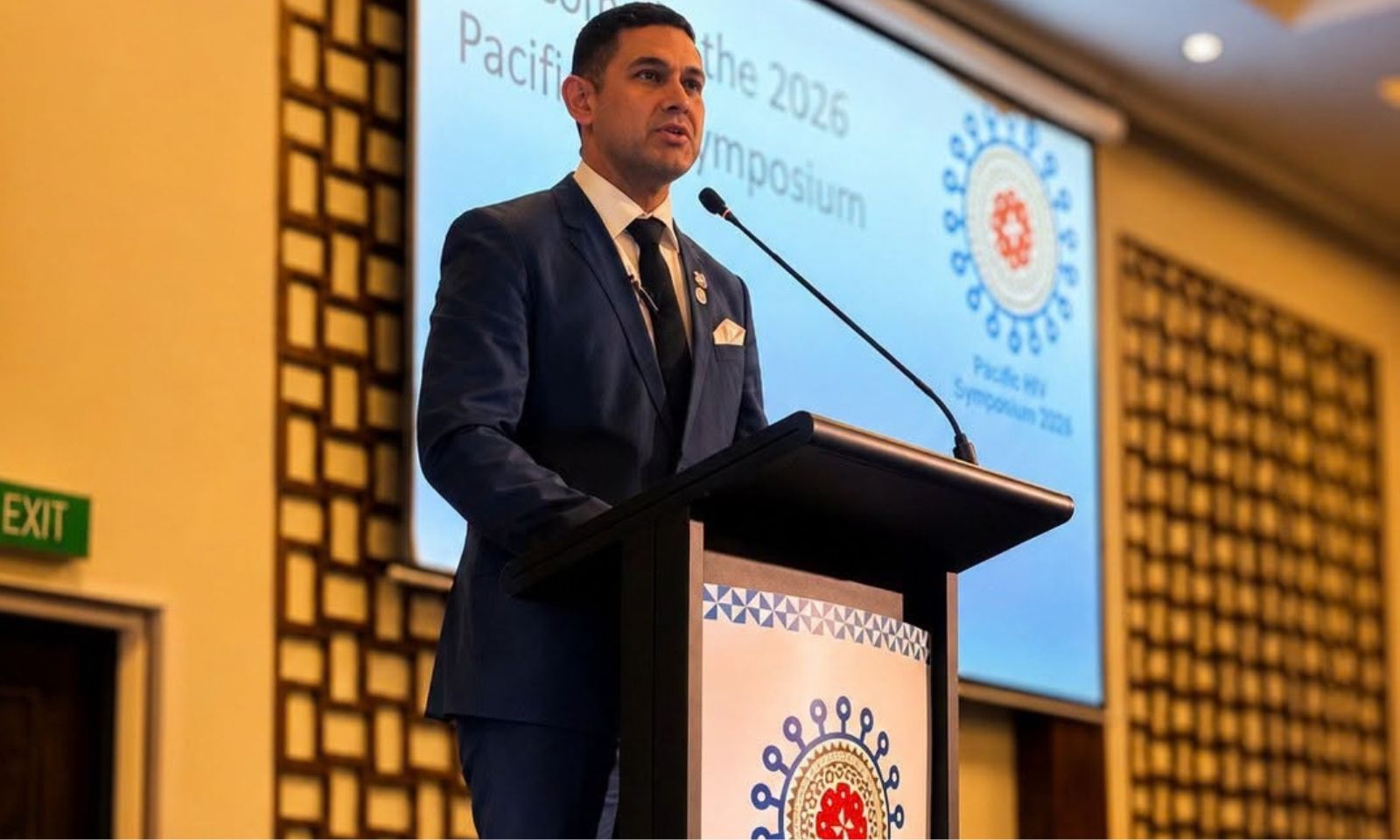
Dr Jason Mitchell, Chair of the National HIV Outbreak and Cluster Response Taskforce. Photo/SRH HIV Unit Fiji
Mitchell says the recorded diagnoses are only part of the picture.
"The epidemic is no longer confined to any one population group or geographical area. It is now impacting young people, women, people who are pregnant, and children."
Fiji recorded over 100 HIV-related deaths last year including 17 children aged under 15.
The United Nations agency, UNAIDS, estimates about 9100 people were living with HIV in Fiji in 2025, with the figure potentially as high as 12,000. Photo/Facebook
“One hundred and seventeen people dying in 2025 is significant for us, so all of this could have been prevented. It's a serious human cost and that really reflects on how the situation is on the ground,”
The outbreak has been strongly linked to unsafe injecting practices with shortages of sterile equipment increasing the risk of HIV and hepatitis C transmission among people who inject drugs.
But says the crisis cannot be reduced to drug use alone:
“The new risk factor for our population is the risky behavior associated with injecting drug use. It is the unsafe injecting practices that are currently in place," he said.
Young Fijians are at the centre of the outbreak. People aged 20 to 34 account for about 67 per cent of new HIV diagnoses in 2025.
The number of diagnoses among 10 to 19 year olds has also surged, adding to concerns about prevention and early testing among adolescents..
People aged 20 to 34 account for about 67 per cent of new HIV diagnoses in 2025. Photo/MOH
The impact on children and pregnant women is another major concern.
Fiji recorded 67 new HIV diagnoses among children aged under 15 in 2025 including 56 children aged under five..
The Ministry of Health says the figures highlight ongoing gaps in preventing mother-to-child transmission.
A separate health ministry briefing reported a vertical transmission rate of 18 per cent in 2025.
“One child dying of HIV should not be happening at this day and age when there's effective treatment out there,” Mitchell said. “So, whatever's happening should be seen as a systems issue.”
Mitchell says more testing during pregnancy is needed to identify women ;living with HIV early and get them onto treatment.
HIV impact on children and pregnant women is another major concern. Photo/PHCC
“We need to improve the testing that's happening during pregnancy, because there's only one way we know if a mother is HIV positive with HIV, and that's to do HIV testing,” he said.
“Last year, we found that we were only testing one time in pregnancy. We are now recommending that we need to test a minimum of two times in pregnancy because testing tells us who's got HIV, and therefore benefits from the treatment that's freely available in the country.”
Treatment is free but access remains a major challenge.
Special HIV care is concentrated in Suva, Lautoka and Labasa, creating barriers for people living outside the main centres.
Stigma, privacy fears, and a lack of social support can also make it harder for people to remain in care.
"The short answer to that is that the epidemic is so large and the system is still catching up," Mitchell said when asked if Fiji's infrastructure could cope.
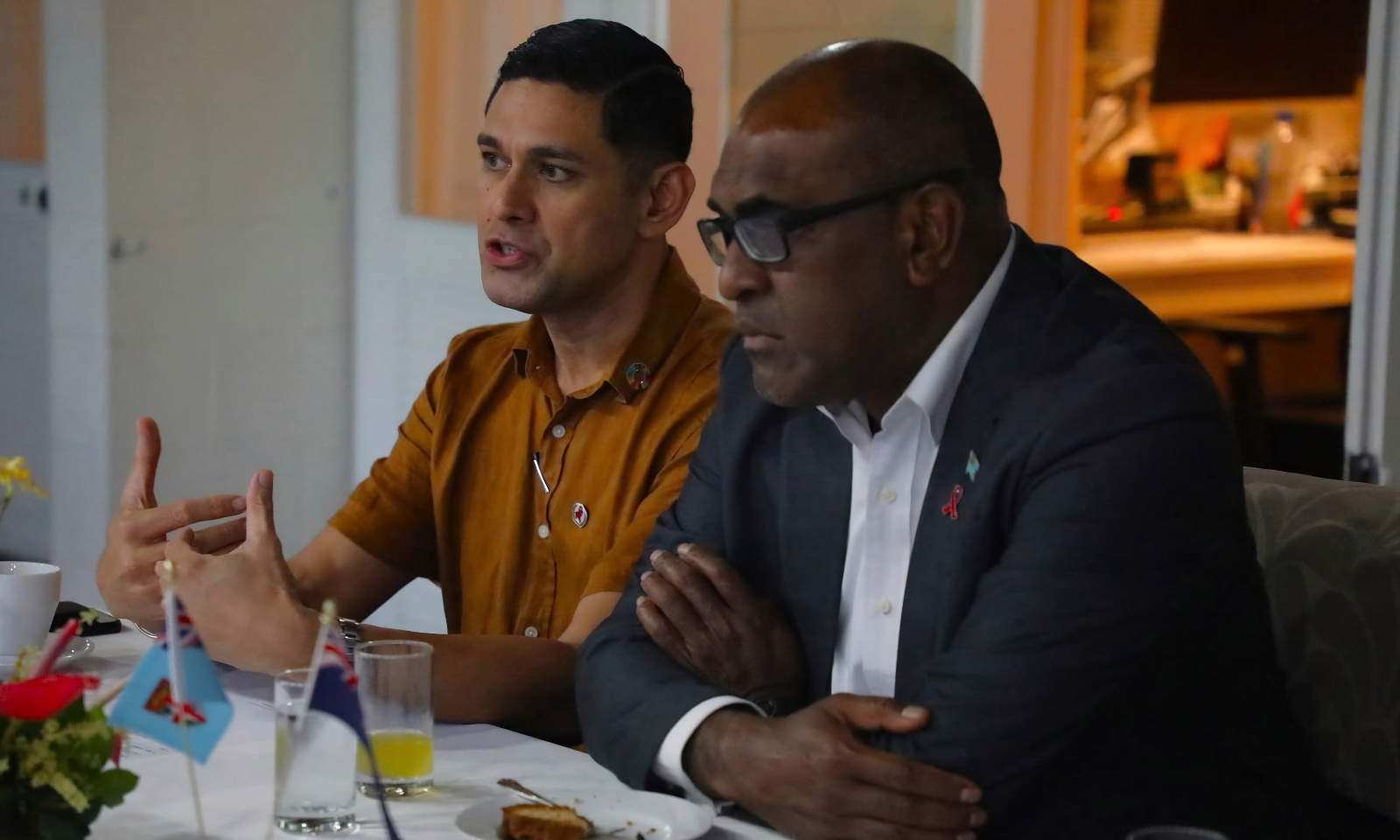
Dr Jason Mitchell, Chair of the National HIV Outbreak and Cluster Response Taskforce with Fiji's Minister for Health Dr Antonio Lalabalavu. Photo/HIV Unit Fiji
"People keep continuing to be dropped out of the treatment program, and that’s as a result of something that’s going on in the individual’s life itself,” he said. “We need to strengthen the supporting systems to make sure that they don't actually fall out of treatment."
Health authorities are expanding HIV services beyond the main centres, with treatment being decentralised to 15 subdivisional health facilities.
Mitchell says prevention must grow alongside treatment, and this includes better access to sterile injecting equipment, condoms and HIV medicines.
"We must not get carried away with the whole idea about treating our way out of the epidemic... We must focus on prevention," he said. "We cannot do without this. This needs to happen at scale."
The rapid growth of Fiji’s epidemic is also raising concerns across the Pacific.
Dr Sharon McLennan from Victoria University of Wellington says Fiji’s position as a regional hub means the impact could extend beyond its borders.
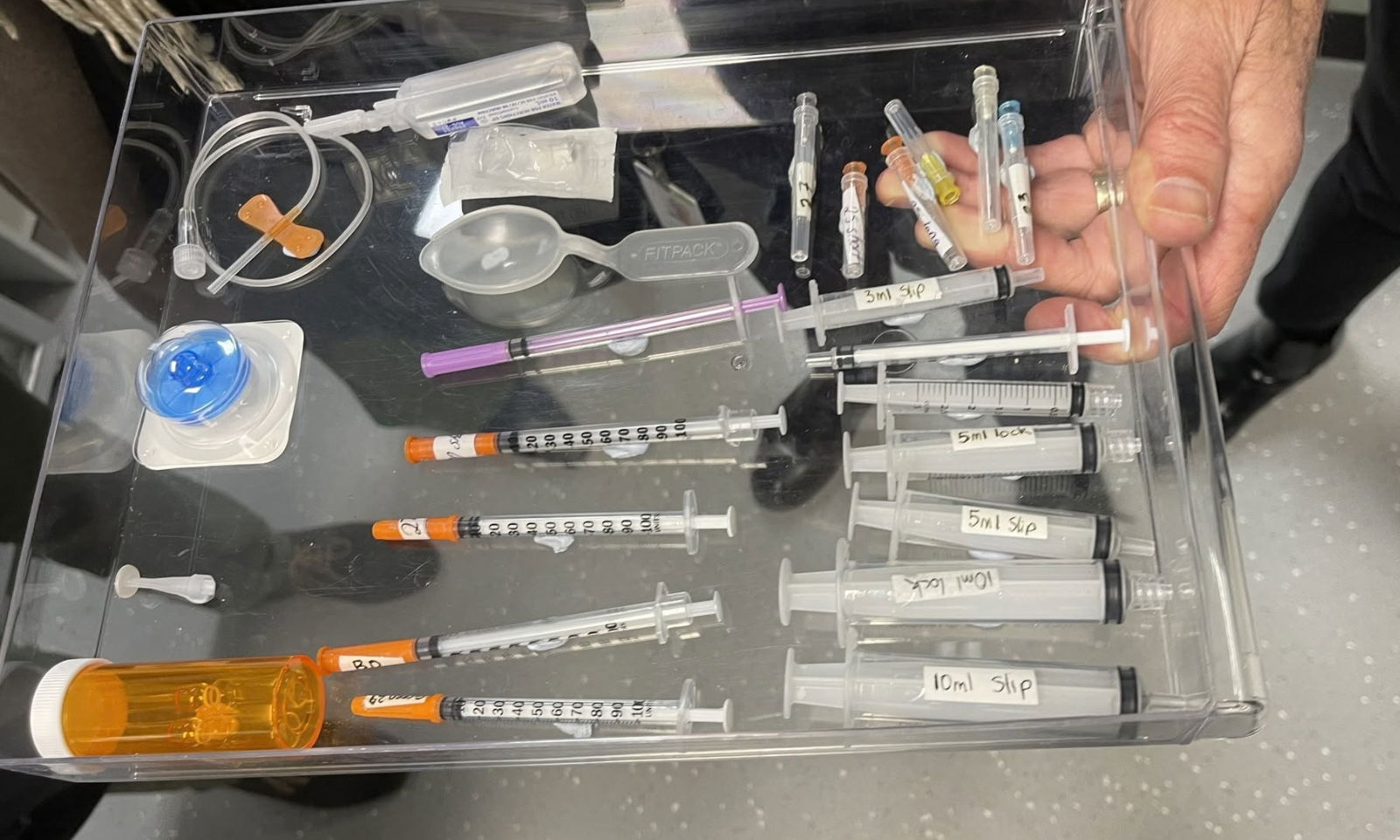
The outbreak has been strongly linked to unsafe injecting practices with shortages of sterile equipment increasing the risk of HIV and hepatitis C transmission among people who inject drugs. Photo/HIV Unit Fiji
‘Fiji is a real hub for the Pacific, so you get a lot of people from other islands coming into Fiji to study and to work, or traveling through or from Fiji on to Aotearoa and Australia so, we have this kind of movement of people and close connections,” McLennan told William Terite on Pacific Mornings.
“That means that anything that's a problem in Fiji has a likelihood of affecting other places in the region.”
But McLennan says there is still reason for hope.
“There's a lot of optimism around Fiji's ability to turn the tide but it's not happening yet, and you might not see it happening for a while because you'll see increasing numbers for a while as they step up the testing regime in particular,” she said.
“More people can get tested, you'll see more positives but hopefully, that will then start to turn the tide as people get onto treatment.”
Health authorities are now scaling up testing, treatment and prevention as Fiji responds to the growing HIV burden.
Listen to Dr Sharon McLennan's interview with William Terite on Pacific Mornings below.