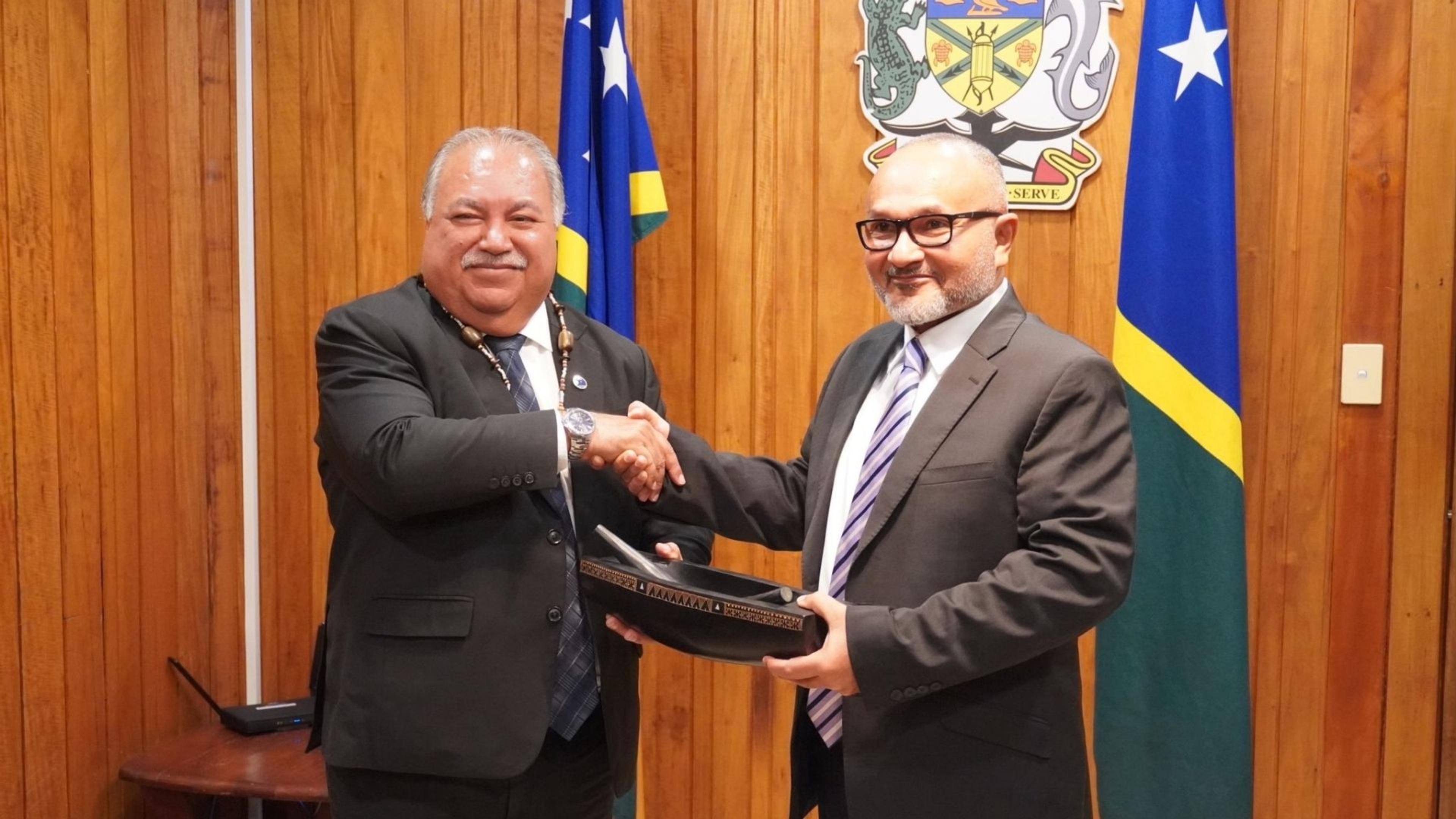
'Pacific is watching': The Solomon Islands leadership change draws regional focus
Christine RovoiSun, 24 May
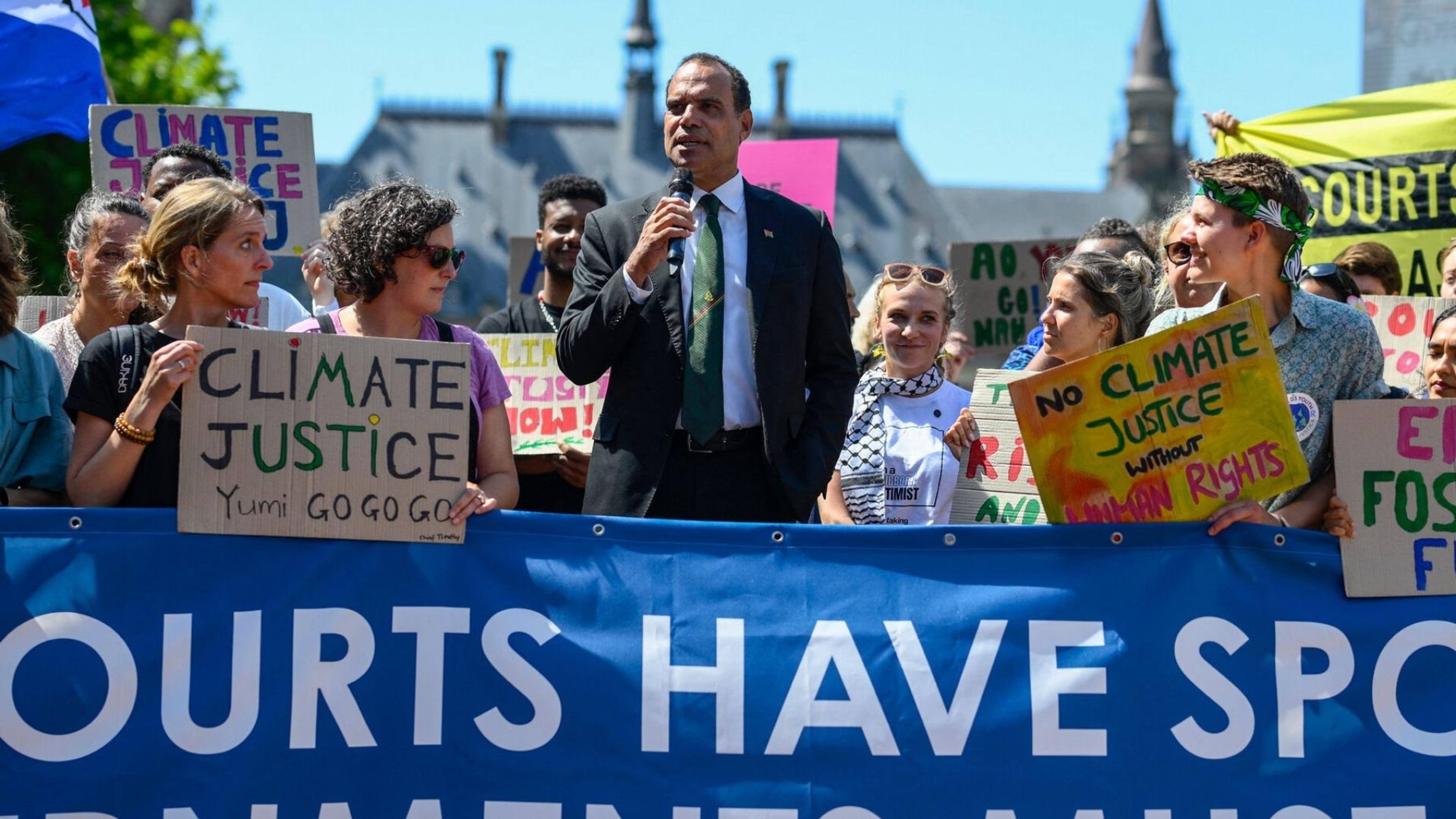
Vanuatu Climate Minister Ralph Regenvanu joins climate justice supporters at a rally ahead of the historic United Nations vote backing the International Court of Justice advisory opinion on climate change.
Photo/PINA
Leaders, youth activists, and global allies back the world court’s opinion on climate obligations as Fiji warns rising sea levels must not erase Pacific nations’ sovereignty and maritime rights.




Pacific nations are celebrating a historic United Nations vote backing stronger global legal obligations on climate change.
Fiji has declared that rising seas must never threaten the sovereignty or statehood of island nations.
The United Nations General Assembly adopted the landmark resolution by 141 votes to eight in New York last week.
The vote reinforces that countries have legal responsibilities under international law to tackle climate change and prevent environmental harm.
While the resolution passed overwhelmingly, eight countries including the United States, Russia, and Saudi Arabia, voted against it.
They argued that it risks going beyond the scope of the ICJ advisory opinion.
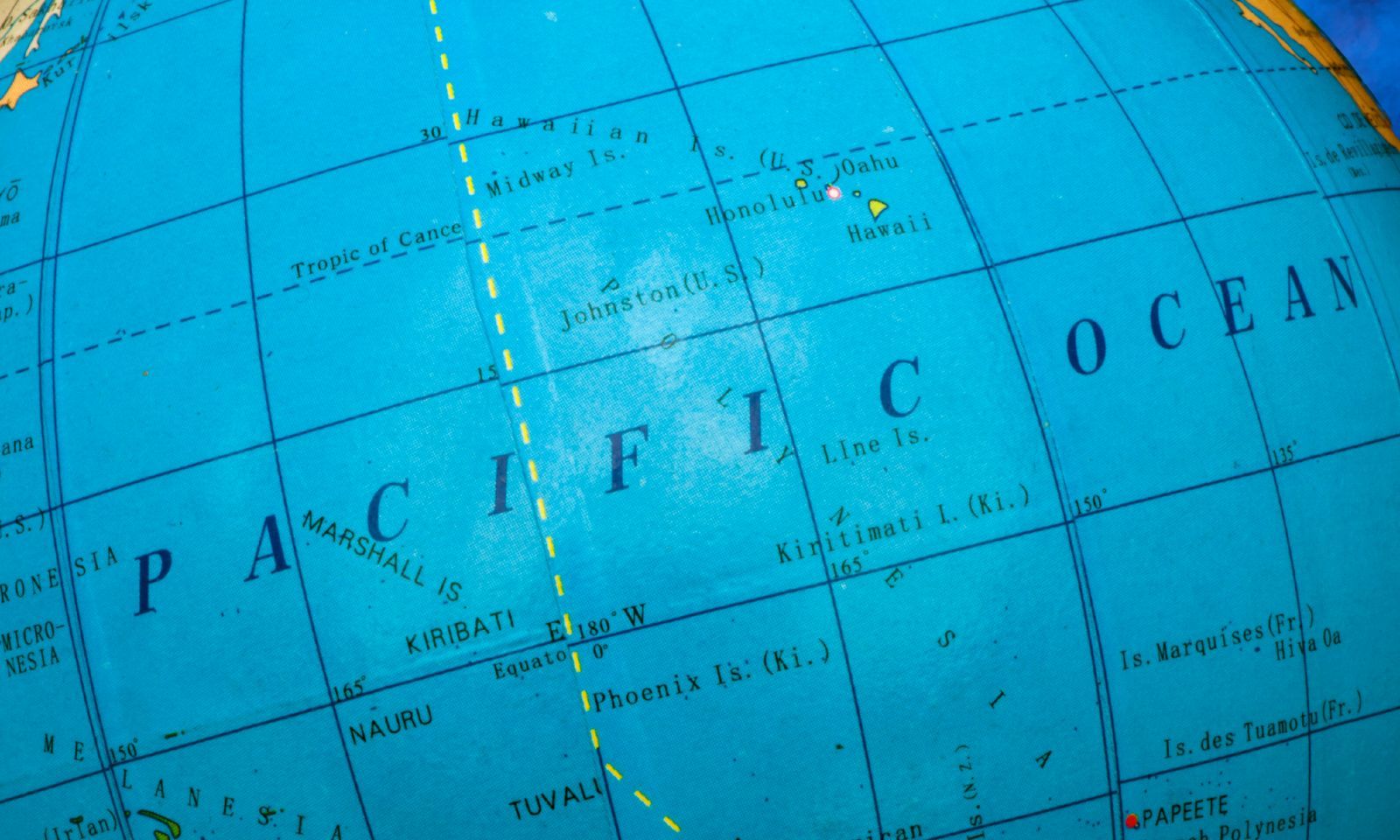
Pacific nations have welcomed a landmark United Nations vote backing stronger legal obligations on climate change, with island states calling it a major step for climate justice and accountability. Photo/natureweb.com
Another 28 countries abstained including several major developing and fossil fuel-producing nations.
Speaking on behalf of Pacific Small Island Developing States (PSIDS), Filipo Tarakinikini, Fiji’s Permanent Representative to the UN, said the resolution was especially significant for Pacific countries already facing the impacts of sea-level rise.
“For the PSIDS, the operative provisions on maritime zones and the continuity of statehood stand among the most consequential in this text,” Tarakinikini said during the debate.
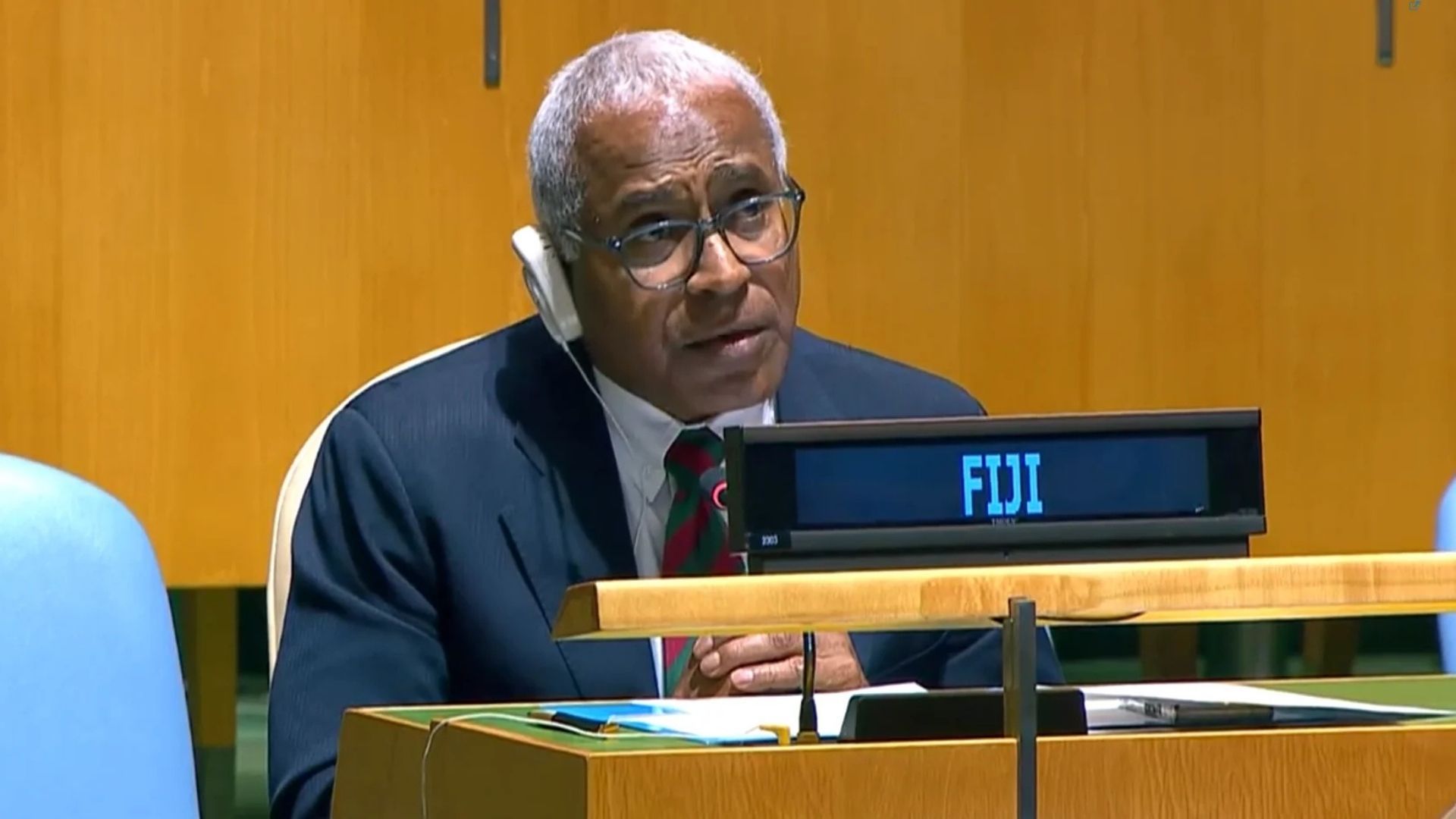
Fiji’s Permanent Representative to the United Nations, Filipo Tarakinikini, said Pacific nations would continue defending their sovereignty and maritime rights despite rising sea levels. Photo/UN
He said Pacific nations remained determined to protect their sovereignty and maritime boundaries despite the threats posed by climate change.
“That is our maritime zones, established and notified in accordance with UNCLOS [the United Nations Convention on the Law of the Sea] and the rights and entitlements that flow from them, shall continue to apply without reduction, and that our statehood and sovereignty will be maintained, notwithstanding any physical changes connected to climate change-related sea-level rise.”
The resolution follows the International Court of Justice’s (ICJ) advisory opinion issued last year, which confirmed climate protection is a legal obligation under international law.
Vanuatu, which led the global push for the case, described the vote as a defining moment for climate accountability.
“The Opinion does not invent new law; it clarifies the law that already binds us,” Vanuatu’s UN Ambassador Odo Tevi told the General Assembly.
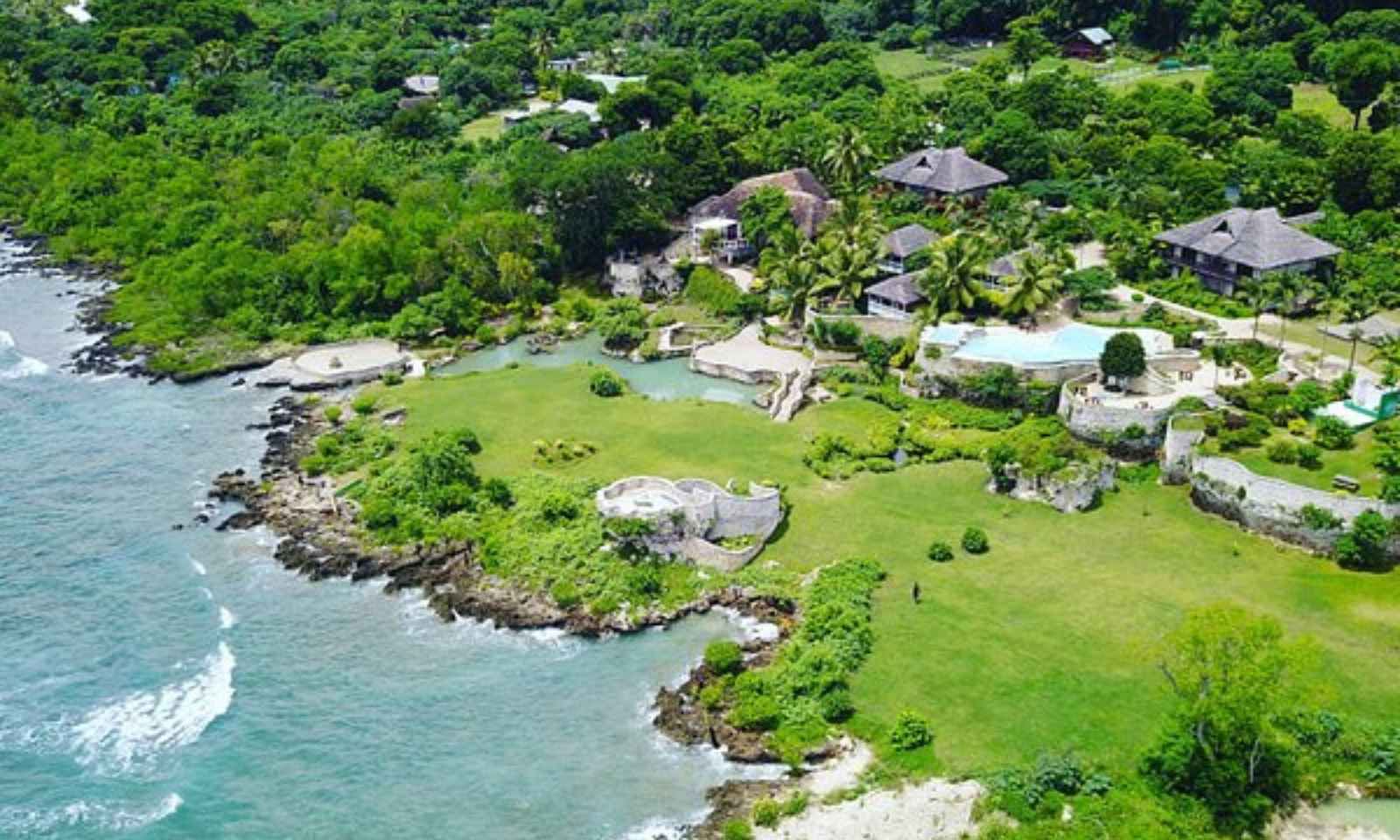
Vanuatu led the global push for the International Court of Justice advisory opinion, which confirmed climate protection is a legal obligation under international law. Photo/tripadvisor.com/Tanna Evergreen Resort & Tours
“It confirms that the protection of the climate system is a matter of legal obligation, not political discretion.”
Tevi said the ruling reflected the realities already being experienced across vulnerable nations.
“The States and peoples bearing the heaviest burden are, very often, those who contributed least to the problem.”
Several major oil-producing nations, including the United States, Saudi Arabia, and Russia, attempted to weaken the resolution with late amendments, but the Assembly rejected those efforts.
Pacific youth groups and environmental organisations also welcomed the outcome.

Pacific youth activist Vishal Prasad said the historic vote showed how Pacific-led action could influence global climate decisions. Photo/GlobalCitizen/Noa Moko
Vishal Prasad, whose Pacific-led youth movement first pushed for the ICJ advisory opinion, called the vote a breakthrough for frontline communities.
“The world has not only reaffirmed that ruling, but committed to making it a reality," Prasad said in a statement.
“This must be a turning point in accountability for damaging the climate. Communities on the frontlines, like in the Pacific, have been waiting far too long and continue to pay too high a price for the actions of others.”
“The journey of this idea from classrooms in the Pacific to The Hague and the United Nations gives us continued hope that when people organise, the world can be moved to act.”
The Global Climate and Health Alliance also praised the resolution and called it a strong signal that governments could no longer ignore climate harm.

Australia and the European Union backed the UN resolution while acknowledging the growing urgency of stronger global climate action. Photo/The Conversation/Celia McMichael
“UNGA resolution sends a clear message: the era of impunity for fossil fuel-driven harm is coming to an end,” Jeni Miller, the alliance's Executive Director, said in a statement.
Australia also backed the resolution and acknowledged Pacific leadership on climate action.
“Climate change affects every nation, but nowhere acutely than in the Pacific. For our region, this is not a distant warning, but a daily reality,” Australia’s UN Ambassador James Larsen said in a statement.
“Pacific countries have long led the world in calling for stronger climate action.”
The European Union (EU) welcomed the vote as a major step for international law and climate action, while also backing stronger moves away from fossil fuels.
“Climate change profoundly affects everyone,” the EU said in its statement to the Assembly.
The bloc also reaffirmed support for keeping global warming within 1.5 degrees Celsius and transitioning away from fossil fuels “in a just, orderly and equitable manner”.
For Pacific nations facing rising seas, stronger storms, and coastal erosion, the vote is being seen as another important step in holding major polluters accountable and protecting the future of island states.