
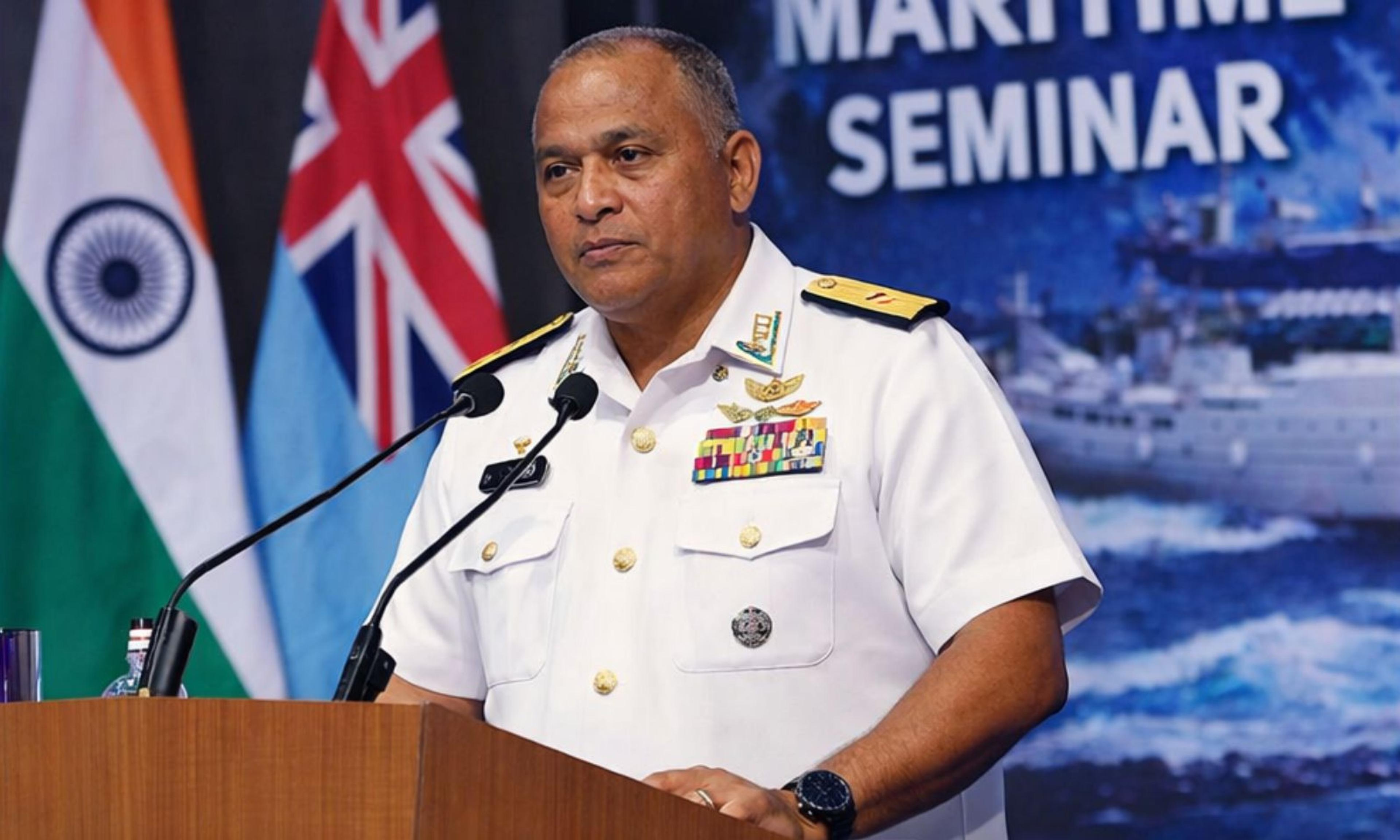
Commodore Timoci Natuva from the Fiji Navy addresses delegates at the Maritime Seminar in India.
Photo/Supplied
Environment
Pacific calls for action on climate change and illegal fishing at major ocean naval forum
From Fiji to Tonga and Papua New Guinea, Pacific leaders used one of the world’s largest maritime gatherings to press for stronger action on climate change, illegal fishing, and security across the region.

Christine Rovoi
Published
24 February 2026, 10:13am
Share
Copy Link
Top stories

Tofiga Fepulea’i brings the laughs while taking top honours at Arts Pasifika Awards
Aui'a Vaimaila Leatinu'uFri, 23 Oct

‘It kind of breaks my heart’: Kiwis run riot after Cook Islands’ brave start
Latonya LoleSun, 25 Oct
Top stories
Tofiga Fepulea’i brings the laughs while taking top honours at Arts Pasifika Awards
Aui'a Vaimaila Leatinu'uFri, 23 Oct
‘It kind of breaks my heart’: Kiwis run riot after Cook Islands’ brave start
Latonya LoleSun, 25 Oct
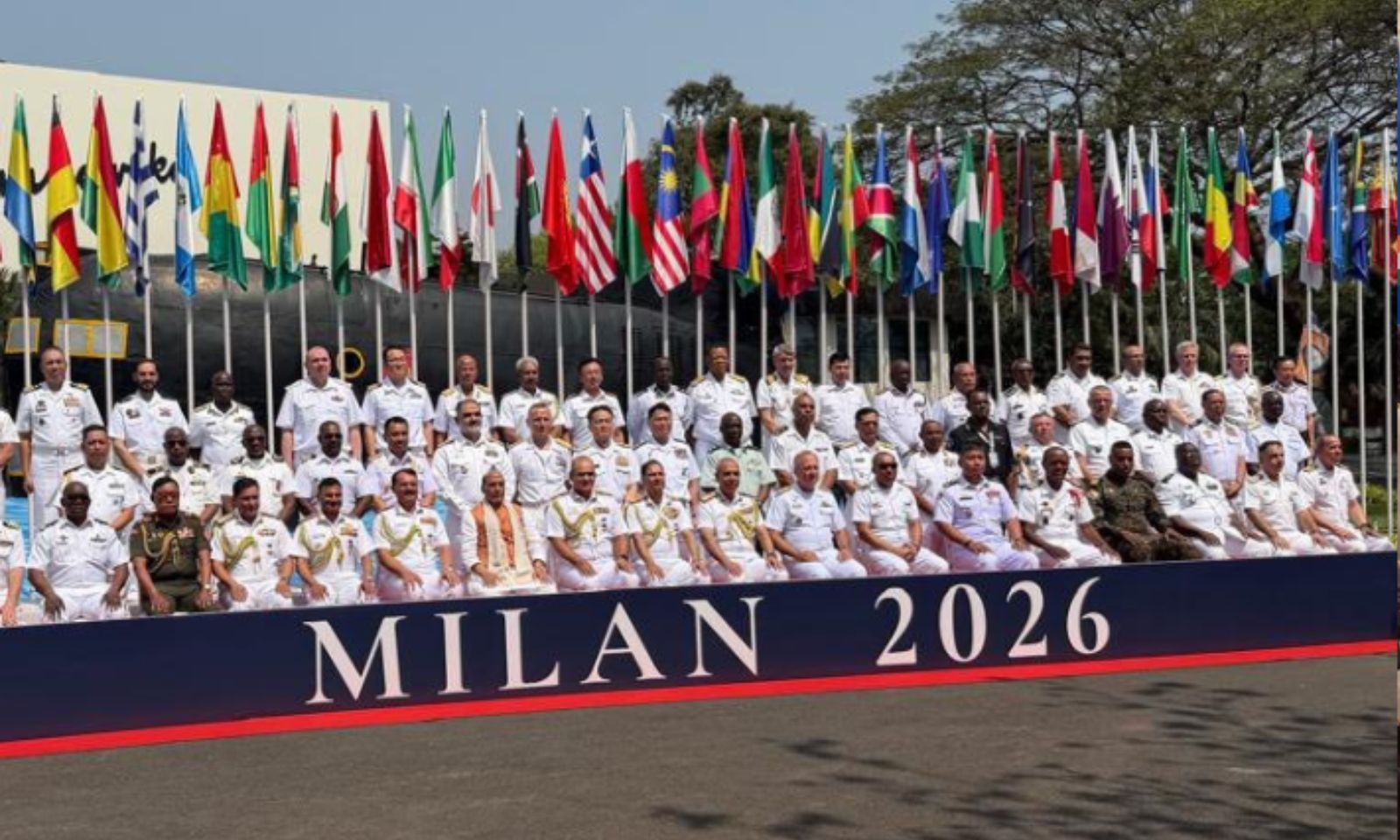
Pacific nations have taken their message on climate and ocean security to the global stage, joining 74 countries at one of the world’s largest maritime gatherings in India.
The Commander of the Fiji Navy, Commodore Timoci Natuva, represented the Pacific nation at MILAN 2026 and the International Fleet Review in Visakhapatnam, hosted by the Indian Navy.
The events brought together naval chiefs and defence leaders to strengthen cooperation across the Indo-Pacific region.
Speaking at the Maritime Seminar, Commodore Natuva set out the Pacific’s concerns about growing threats at sea.
He warned of the risks posed by illegal activities, including transnational crime and unauthorised fishing, as well as the rising impact of climate change on island nations.
These threats are not abstract for Pacific countries, Natuva added.
Photo/MILAN2026
Illegal, unreported, and unregulated fishing continues to cost the region millions each year, he says, while rising sea levels and stronger storms place pressure on coastal communities and maritime infrastructure.
On the sidelines of the forum, Natuva held talks with senior officials from the Indian Navy, the United States Pacific Fleet, the Tonga Navy, the Papua New Guinea Defence Force, the Royal New Zealand Navy, and the Royal Australian Navy.
Discussions focused on strengthening partnerships and improving coordinated responses to shared challenges.
Photo/Supplied
Other Pacific representatives also used the forum to highlight regional priorities.
According to the Post-Courier, PNG Defence Force representatives stressed the importance of “collective maritime security” and protecting fisheries resources that support local livelihoods.
Tonga’s naval delegation, as reported by the Tonga Broadcasting Commission, reaffirmed the kingdom’s commitment to regional cooperation, saying small island states depend on “strong partnerships to secure our ocean space”.
New Zealand defence officials, in comments published by RNZ, said Pacific security must include climate resilience and disaster response, alongside traditional naval cooperation.
For many Pacific nations, maritime security goes beyond defence. It is about food security, economic survival, and sovereignty over vast ocean territories.
Fiji’s participation at MILAN 2026 signals its ongoing commitment to working with both regional neighbours and global partners to protect its maritime domain.
As an island nation with a large exclusive economic zone, Fiji relies heavily on cooperation to monitor and safeguard its waters.
The International Fleet Review also provided an opportunity for countries to build diplomatic ties, with ships from around the world sailing together in a show of unity.
While the scale of the event was global, Pacific leaders made clear that the ocean challenges facing their region require urgent and practical action.
From illegal fishing fleets to climate-driven disasters, Pacific countries are increasingly calling for stronger enforcement, better surveillance, and deeper collaboration.
As the Indo-Pacific becomes a growing focus of global security discussions, Pacific voices at forums like MILAN are pushing to ensure that the region’s priorities: climate, fisheries, and community safety, remain at the centre of the conversation.