
Opinion: If we are at the climate table, why are we still on the menu?
Thomas Tarurongo WynneMon, 05 Oct
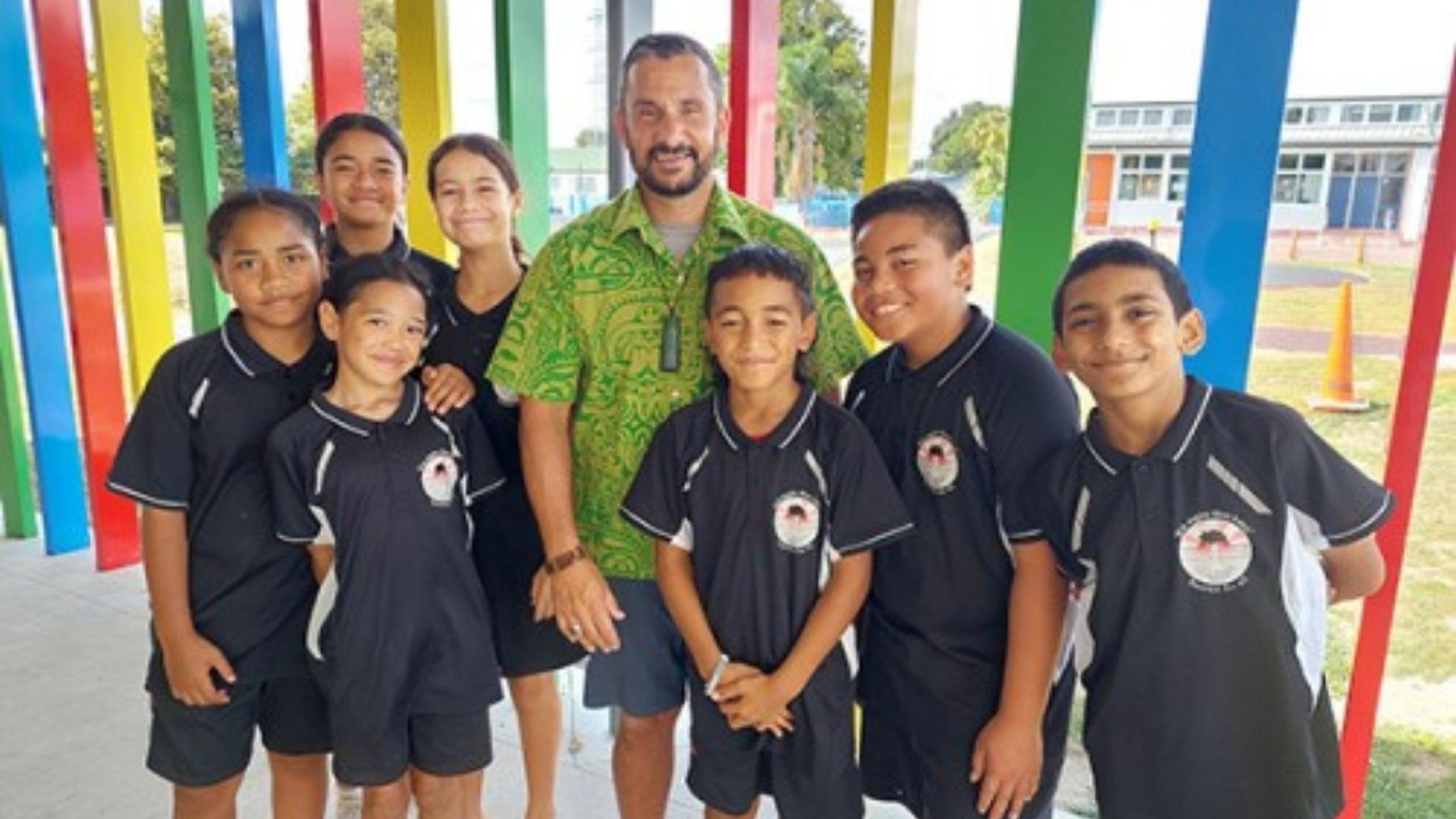
Flat Bush Primary School principal Banapa Avatea says the success of an open-plan classroom depends on the teaching approach, culture and relationships within the space.
Photo/Ministry of Education
Banapa Avatea says the success of a classroom depends less on walls and more on the teaching, culture and relationships inside it.


The Government's plan to put walls into open-plan classrooms is being questioned by a South Auckland primary school principal who says the model is working for his students.
Banapa Avatea, from Flat Bush Primary, says his school's Sāmoan bilingual unit has thrived in an open-plan learning space as he challenges the idea that the design itself is the problem.
Avatea, who is of Cook Islands and European heritage, has been principal of Flat Bush Primary School since 2016. The school has a predominantly Pacific roll, with Pasifika students making up about 82 per cent of its students.
The Government this week announced $31 million to put walls into open-plan learning spaces but Avatea says the experience at his school shows there is more to a successful classroom than its physical layout.
Education Minister Erica Stanford says the Government is responding to schools that have struggled with the open-plan model.
“Schools have been clear that these environments can be noisy, distracting and difficult to manage. We have listened, and we are acting. This is about closing the door on the failed experiment of open-plan classrooms.”
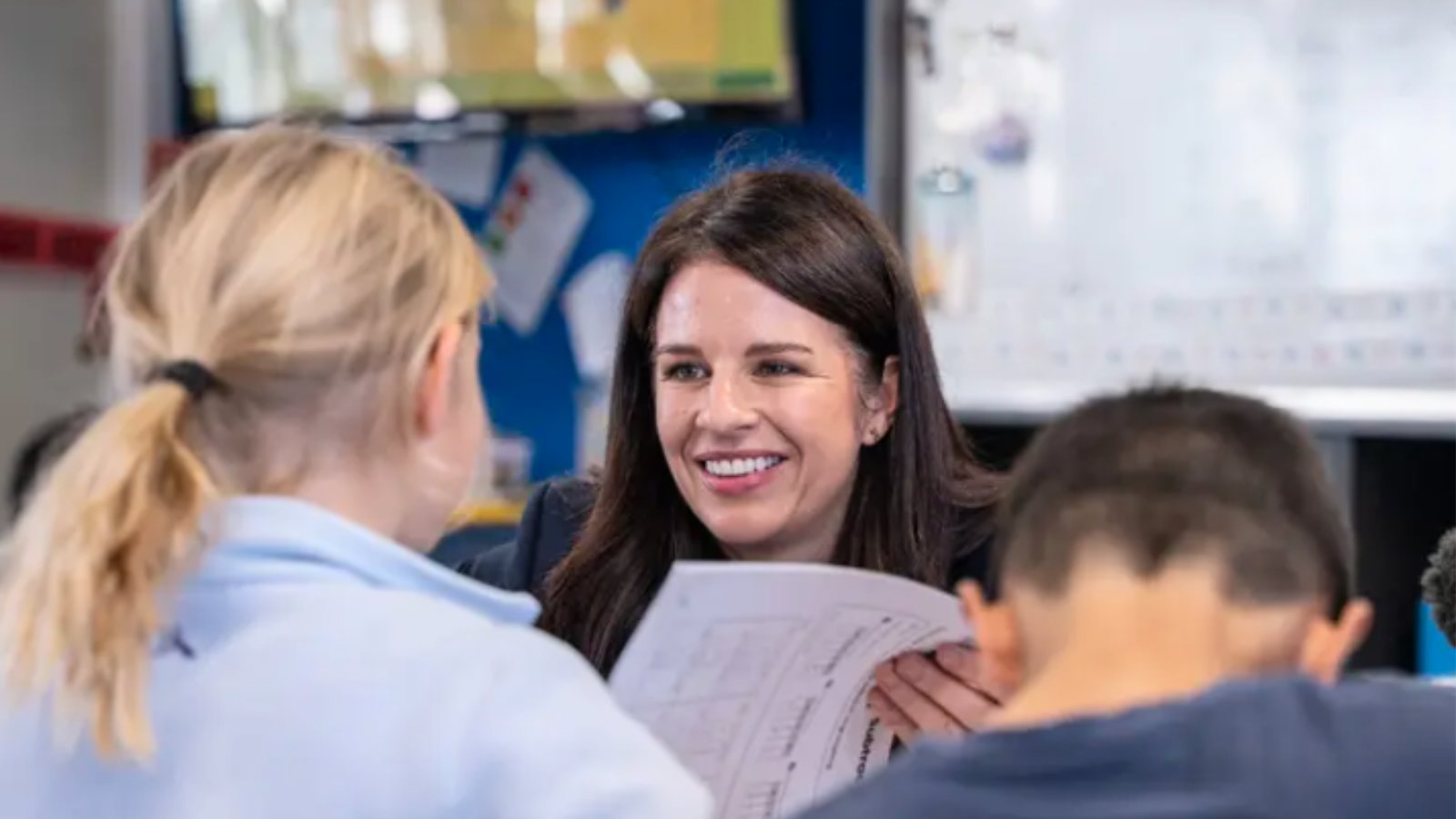
Education Minister Erica Stanford says the Government is moving to put walls into open-plan classrooms to create calmer and less distracting learning environments. Photo/National Party
In her July statement titled, Calmer, quieter classrooms as walls go up, Stanford said six schools had already had walls reinstated, and that teachers at those schools were reporting less noise and distraction, better concentration and engagement, and more flexibility in teaching.
“Children cannot be expected to learn well when surrounded by noise and distractions,” the minister said.
But in an interview with William Terite on Pacific Mornings, Avatea said Flat Bush's Sāmoan bilingual unit operates from a shared learning space known as Uleponga Waikati, meaning “one family, one canoe”.
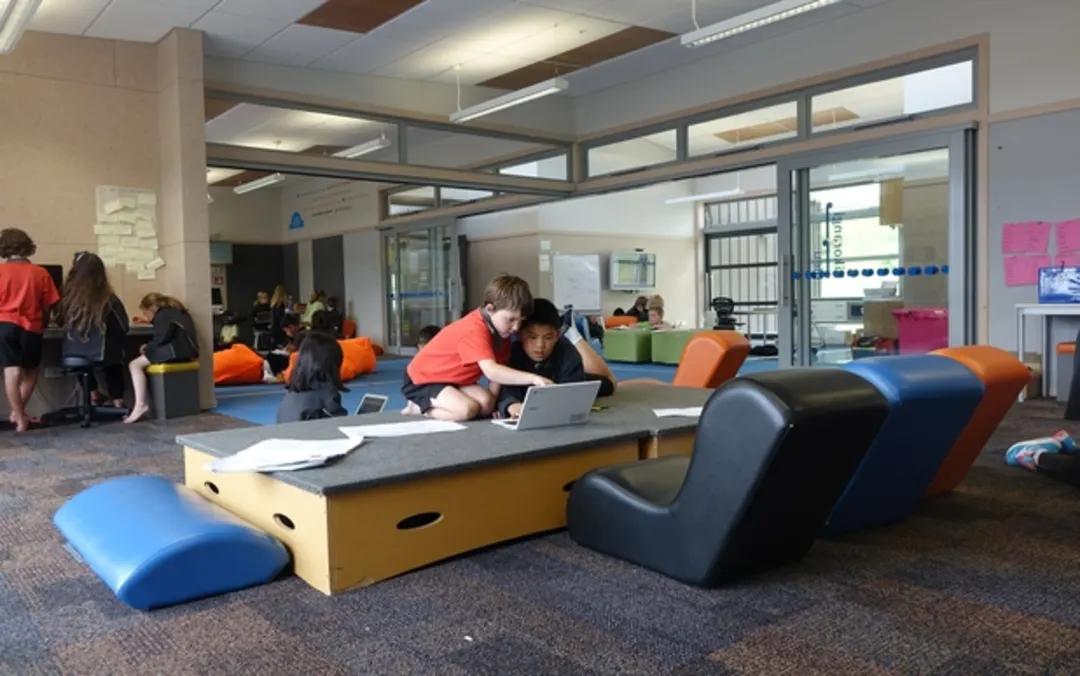
Open-plan classrooms are at the centre of a Government plan to put walls into learning spaces, but one South Auckland principal says the model is working well at his school. Photo/RNZ
“The space is known as Uleponga Waikati and this bilingual space that we have, it works.”
Avatea says the success of the space comes from the way teachers and support staff work together than simply whether there are walls.
“It is the pedagogy, the teaching philosophy that underpins how our teachers and support staff work together that make the space the effective and positive learning environment that it is.”
He says teachers have developed clear expectations and routines within the space, with time built into the school day to talk through any issues.
“Those norms and expectations, they were introduced and they have been strengthened over time.”
Avatea says the school's experience also shows why schools should have a say in how their learning spaces are designed.

Students take part in learning at a New Zealand primary school as debate continues over the design of classroom spaces. Photo/Supplied
“When this building was being designed and when it was being planned, we were able to have some input and conversations with the architects and then the team that ultimately helped us to be able to introduce Uleponga Waikati into Flatbush School.”
For Avatea, the debate should not simply be about whether classrooms have walls.
“Whatever the classroom space, whether it's single cell or if it's open panel or model learning environment, it will always come back to what underpins the philosophy of that building.”
Avatea says the open-plan space allows students from Years 1 to 6 to work across different year levels, which he adds supports a strong tuakana-teina approach where older and younger students learn alongside each other.
“What I see for us is that we've been able to provide for our tamaiti, you know, an innovative learning space, one in which they're from years one to six, they're able to move across the building.”
Avatea's comments come as schools also face major changes to the school lunch programme and the rapid growth of charter schools.
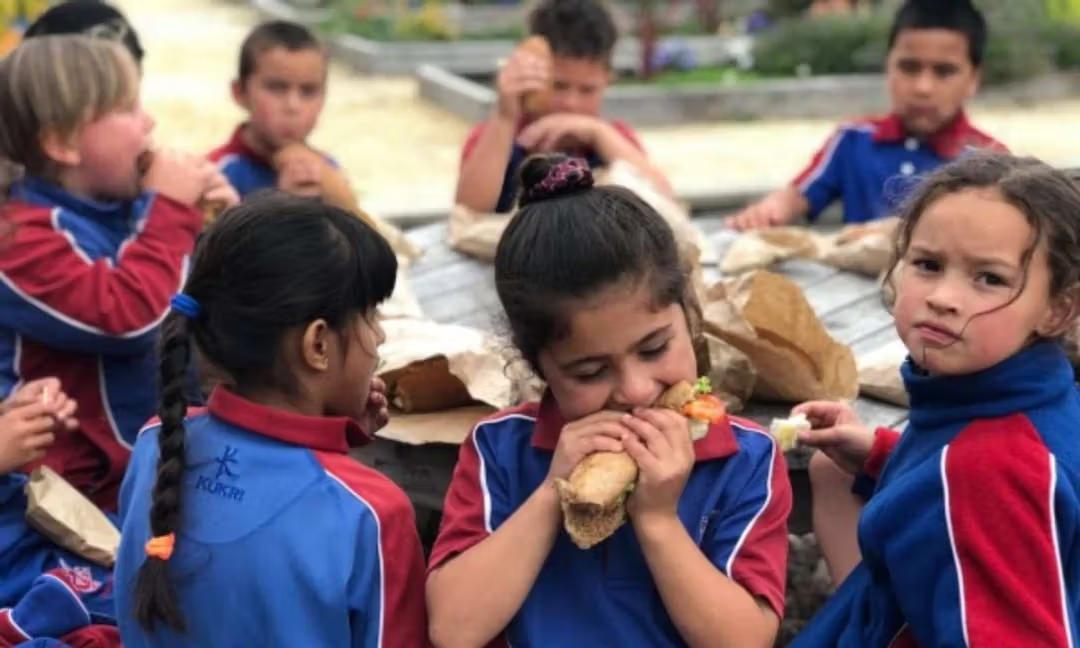
School lunches are continuing to be served to students across Aotearoa, with principals raising concerns about changes to the programme and the variety of meals available. Photo/Ministry of Education
On lunches, he says children at Flat Bush Primary are still eating what is provided, but there has been a clear change since funding was reduced.
He says the previous programme also gave students a say in what was served, something he believes made them feel part of the process.
“That was a really great part of the programme because it meant that our children felt like they were a part of it and it was being done with them rather than it just, you know, really being done to them.”
The ACT Party, which has defended the changes to the programme as a way to reduce costs, says it has saved more than $300 million.
“Since the beginning of Term 1 2025, the Programme has delivered over 48 million meals to over 1000 schools," ACT Leader David Seymour said in a statement.
"By the end of 2027 the Programme is expected to save about $360 million compared to how Labour funded it."
Listen to Banapa Avatea's full interview below.
On charter schools, Avatea says the increase from seven to 17 schools is still too small a sample to draw firm conclusions about their performance nationally. “For me, well, just to be fair, it's still a very small sample size.”
Seymour says the growing number of charter schools shows what can happen when schools have more freedom to shape their approach.
“What is different is the sense of mission, the leadership, the culture and the attitudes that come with the school because it's a project of choice,” he told Terite.
Seymour says a school does not have to follow the traditional model to succeed. “Schools can be just about anywhere if you've got the right leadership and the right attitude.”
But Avatea says the difference in funding between charter and state schools remains something he is watching closely.
Avatea has also been recognised for his actions outside the classroom. In 2014, while principal of Huntly West School, he was honoured at Government House after helping stop a moving truck when its driver passed out at the wheel.