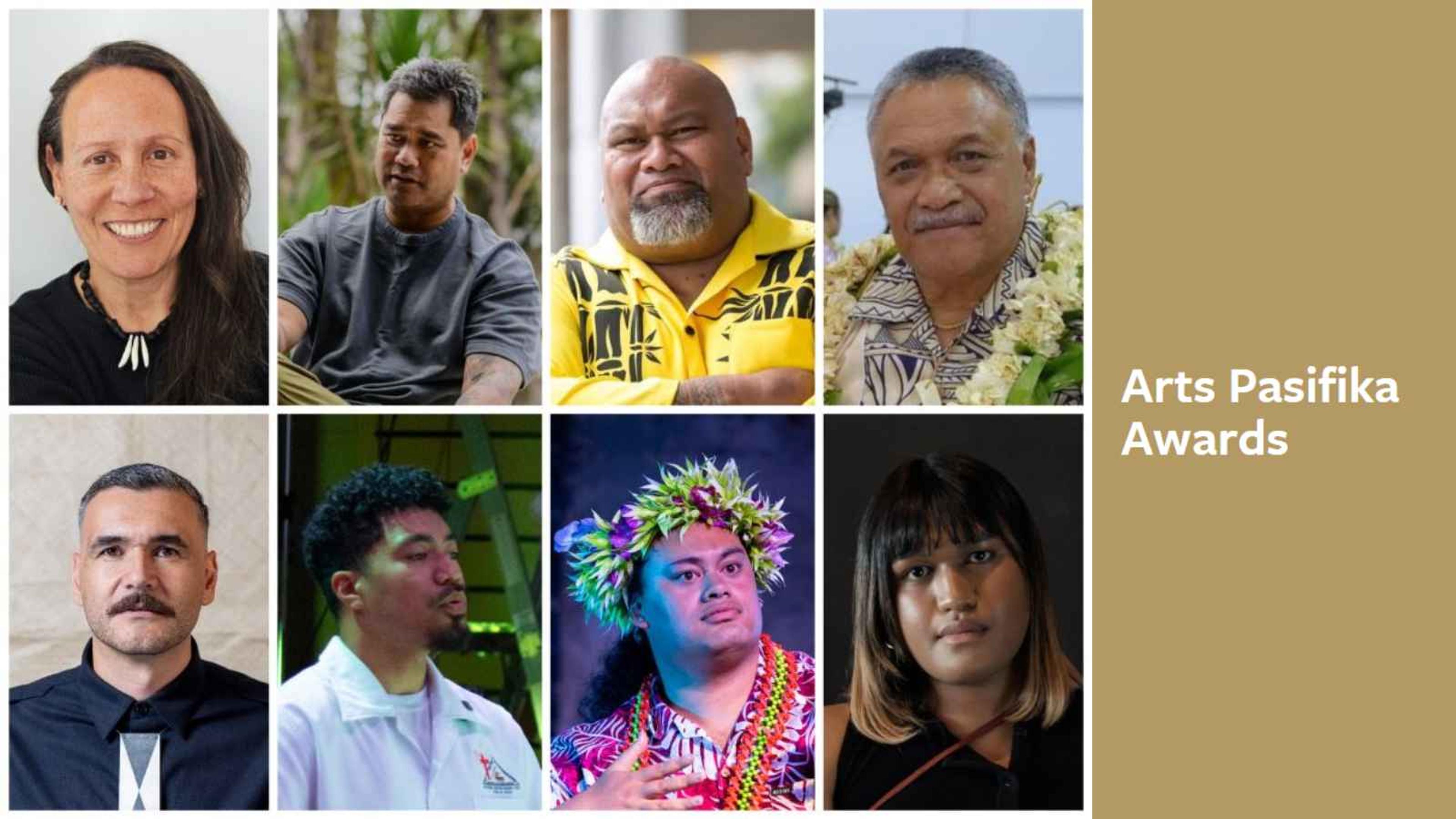
Tofiga Fepulea’i brings the laughs while taking top honours at Arts Pasifika Awards
Aui'a Vaimaila Leatinu'uFri, 23 Oct
A Pacific builder hopes to bridge the gap between artificial intelligence and endangered Pacific languages.
Photo/Unsplash
As New Zealand’s annual technology festival reaches its peak, an open-access platform aims to turn community elders into digital teachers to rescue endangered languages.




A Tongan builder behind a new language-centred artificial intelligence (AI) platform says the technology could make Pacific languages immortal for future generations .
Talai Tangifua is the founder of Talanoa AI, a free, no-signup platform that allows Pacific people to directly teach AI how to speak, understand, and preserve Pacific languages.
Speaking on Pacific Days, Tangifua says that the global big tech platforms leave Pacific languages digitally isolated.
AD
“If you speak English, the entire Internet works for you. Google works for you. AI works for you. Every digital service, government website, [and] health platform [are] built for you,” Tangifua says.
“But if your first language is Fijian, Sāmoan or Bislama, you are invisible to the digital world. Not because our languages are less important, but because nobody built for us until now.
“Talanoa AI is the first time the digital world has looked at our Pacific people and said, ‘you belong here too’.”
Watch Talai Tangifua’s full interview below.
Tangifua's story coincides with Techweek26, which runs from 18 to 24 May 2026.
Operating under the theme, "The Art of the Possible," Techweek26, has more than 200 events nationwide, inviting the country to shift focus onto the future and build towards it.
Tangifua’s hopes to make the Pacific more visible to the tech world. This coincides with the South Auckland to the Tech World 2(SATTTW2) event which launched on Tuesday at The Cause Collective in South Auckland.
Watch Tapuvakai Vea’s full interview below.
Tapuvakai Vea, from the South Auckland Tech Hub and The Cause Collective, coordinated the two-day event in Wiri.
Speaking on PMN Tonga, Vea says more than 600 students registered and participated in robotics, virtual reality, and artificial intelligence workshops.
“They had a spark in their eyes when they were playing with the toys. But then when we translate to the conversation like ‘this is something you can do as a job’,” Vea says.
“Our young people are like, ‘what? Are you sure’? What our intention was with this year is we're creating what that pathway may look like.”
Vea hopes that youth can see themselves working in the technology sector or even building their own businesses.

South Auckland to the Tech World 2 kicked off on Tuesday. Photo/Supplied
Muliagatele Danny “Brotha D” Leaoasavai’i, the Creative Lead of the tech showcase, told RNZ that Pacific people represent less than 4.4 per cent of the technology workforce.
He says structural sector shifts to accommodate Pacific family values rather than isolating youth from their backgrounds is key.
Regarding Talanoa AI, Tangifua says the AI “companion” will provide native-language translation of medical diagnoses, loan agreements, legal contracts, and educational tutoring.

Can AI help protect endangered languages? Photo/Unsplash
“You pick up any phone, iPad or computer and open your browser. You go to talanoaai.org, and you are in,” he says.
“From there, you choose your language, grandmother's language, village language, [or] the language you grew up hearing in the kitchen on Sunday mornings.
Talai Tangifua says community elders are the teachers while AI are the students. Photo/Unsplash
“Then you just talk like you are talking to a family member, saying your greetings, proverbs, [telling] a story your grandfather told you, [or singing] the first line of a song your mother sang. Talanoa AI listens.”
UNESCO data from 2024 shows that 40 per cent of the world's estimated 7000 languages are endangered, with one disappearing every two weeks.
But there are some caveats with AI and language preservation. The Canadian Geographic reports language experts say automated platforms and digital avatars are useful for independent practice outside a community.
Dr John Middleton, a linguistics lecturer at the University of Auckland, also told RNZ in 2024 that absolute preservation remains reliant on communities actively speaking, writing, and using those languages daily.