
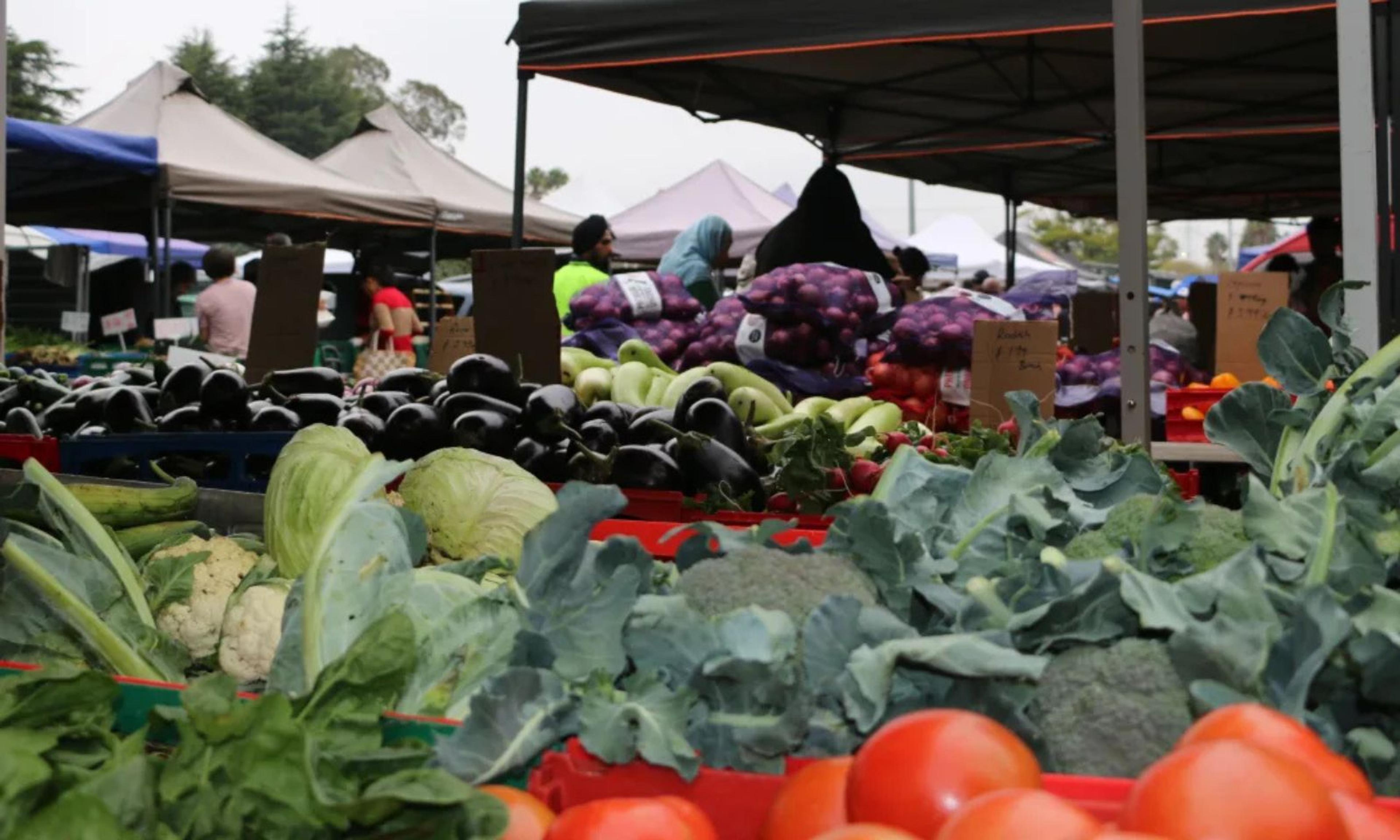
A new report shows nearly half of South Auckland children regularly go hungry, highlighting urgent gaps in access to healthy, affordable food.
Photo/RNZ/Luka Forman
Community
South Auckland report: We grow enough food so why are our children going hungry regularly?
A report is demanding urgent change after it found deep food insecurity in South Auckland with Pacific communities hit hard.

PMN News
Published
31 March 2026, 11:58am
Share
Copy Link
Top stories


'No more secrecy': Solomon Islands govt reviews China security deal as tensions grow
Christine RovoiMon, 10 Aug

Angee Nicholas faces key battle for National's Pacific representation
Khalia StrongMon, 10 Aug
Top stories
'No more secrecy': Solomon Islands govt reviews China security deal as tensions grow
Christine RovoiMon, 10 Aug
Angee Nicholas faces key battle for National's Pacific representation
Khalia StrongMon, 10 Aug
South Aucklanders grow up surrounded by food but too many families are still going without.
A new report is calling for urgent change, revealing that large numbers of children in the region are regularly going hungry despite Aotearoa producing more than enough food to feed its people.
The report, He kai kei aku ringa - There is food in my hands, was released by Health Coalition Aotearoa and Healthy Families South Auckland last week after a year of research alongside the Māngere community.
It lays out a clear message: the problem isn’t a lack of food, it’s a system that makes healthy food harder to access especially for low-income and Pacific families.
Professor Boyd Swinburn from the University of Auckland says the scale of the issue cannot be ignored.
"Aotearoa is an export nation excellent at growing kai - enough to feed 40 million people, in fact," he said in a statement.
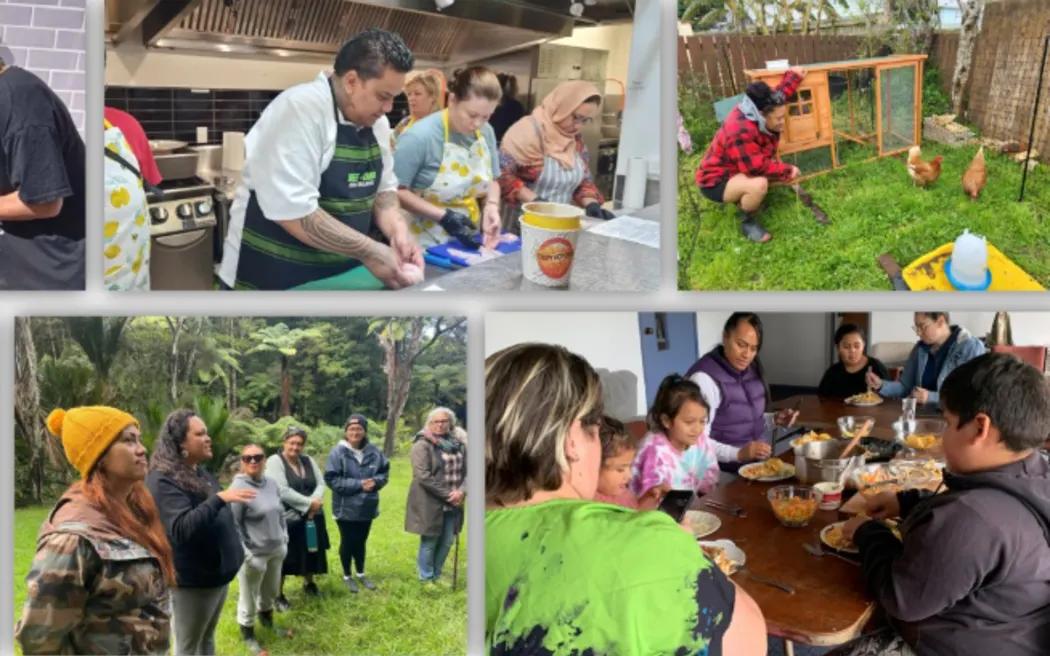
The He kai kei aku ringa report calls for more community gardens, stronger school lunch programmes, and limits on junk food outlets near schools. Photo/LDR
"And yet, we have 42 per cent of children in South Auckland regularly going hungry, which clearly isn’t primarily caused by the five per cent unemployment rate.
"We must debunk the narrative that our nation’s food issues are about parents not working hard enough," Swinburn said.
For many Pacific families in South Auckland, the rising cost of living, crowded housing, and easy access to cheap fast food all play a role.

Pacific families in South Auckland are among those most affected by rising food insecurity, despite Aotearoa producing enough kai for everyone.
The report points out that unhealthy food is often the most available and affordable option, while fresh, nutritious kai is harder to access.
It argues that real change will only come if government, councils, and communities work together to fix the system, not just focus on individual choices.
Matt Appleyard from Healthy Families South Auckland says the solutions are already there.
"The system analysis in He kai kei aku ringa reveals where we collectively need to strengthen the local food system to make the most impact for communities," his statement read.
"Our conclusion is that a coordinated and systems-oriented approach, in combination with targeted national-level and regional-level regulation and policy changes, will rebalance the food system, so everyone thrives.
"It’s time we stopped looking past food choices as individuals, and instead see they are part of an economic system with shared responsibility."
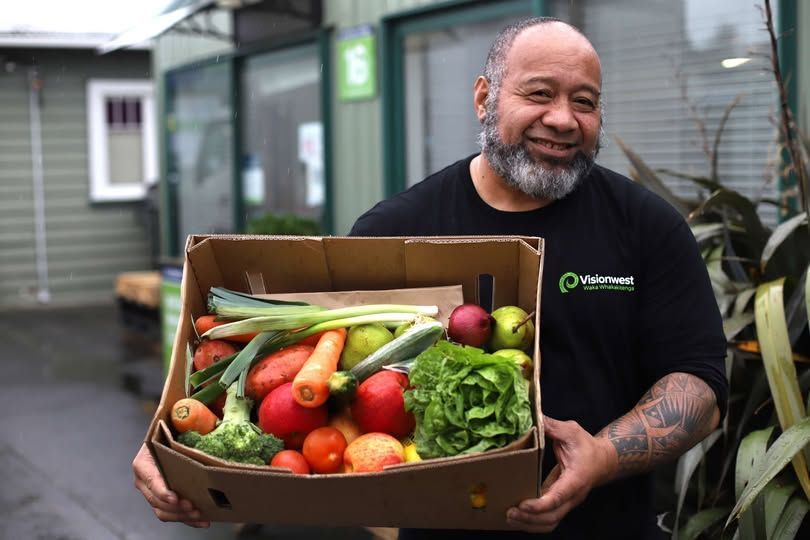
Vision West staff member Adam helps distribute food supplies. Community-led solutions, like local food initiatives and coordinated policies, could make a real difference if backed by government support. Photo/Supplied
Community-led solutions
The report highlights practical changes that could make a real difference for families.
These include:
Using unused public land for community gardens
Expanding the free school lunch programme
Giving communities more say over the number of fast food outlets in their neighbourhoods
Limiting junk food advertising, especially near schools
Many of these ideas are already being tested by local groups in Māngere, showing what works when communities lead the way.
A call for action
Swinburn says the next step is turning ideas into action.
"Many of the solutions are well-known - like more community gardens on unused public land and removing junk food advertising from Auckland Council and Auckland Transport contracts, and within 500 metres of schools.
"What we’re seeking now is show of hands from those bold enough to tackle New Zealand’s food issues. The community has provided some feasible solutions. Now we want to implement change."
This is about more than food for Pacific communities. It’s about dignity, health, and the future of the next generation.
With Pacific people making up a large share of South Auckland’s population, the report makes it clear: solutions must be led with the community, not imposed from the outside.
Because in a country that grows enough food for millions, no child should be going hungry.